400-Year-Old Painting Shows Bat Preying on Birds: Modern Science Confirms Rare Behavior
A 17th‑century painting reveals a hidden detail that mirrors a newly‑confirmed animal behavior discovered with modern technology.
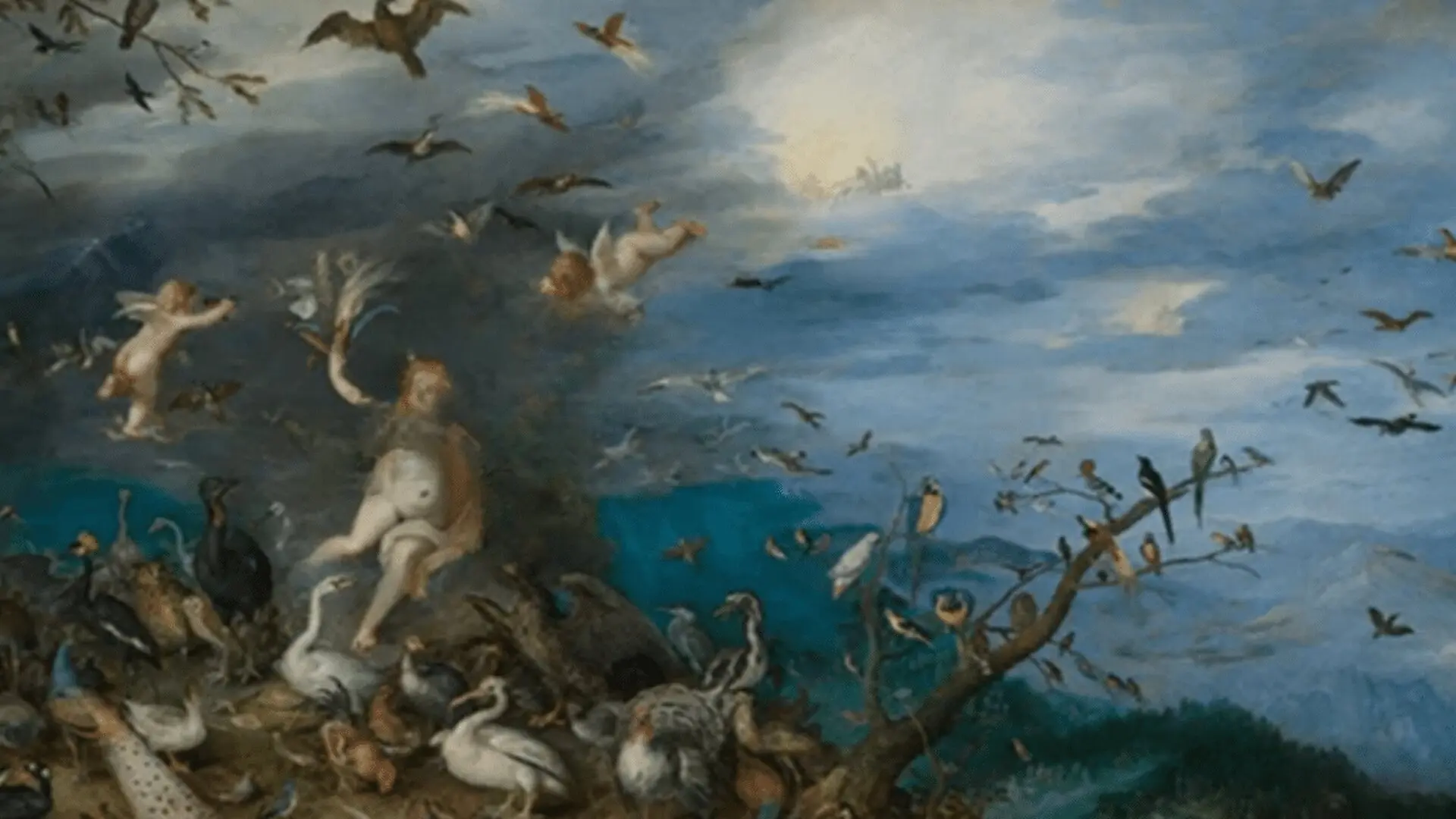
For more than four centuries a subtle clue has lingered within a celebrated Flemish canvas. New research shows that Jan Brueghel the Elder’s 1611 work Air appears to capture an unusual hunting tactic of the greater noctule bat, a behavior that modern tracking devices have only recently verified. The study, released in PNAS, illustrates how art can unintentionally archive precise natural‑history observations that later science can decode.
A Concealed Observation Enduring Four Hundred Years
At first glance the allegorical scene of Air is a bustling tableau of birds, mammals, mythic beings and symbolic motifs celebrating the element of wind. Amidst the myriad creatures, a single figure—a bat clutching a bird in its jaws—went unnoticed by scholars for generations. Contemporary biologists now recognize that illustration as a depiction of a rare predatory act: greater noctule bats (Nyctalus lasiopterus) are among the few chiropteran species documented to seize migratory passerines during nocturnal flights.
Only with the advent of sophisticated biologging tools that record altitude, movement and sound have researchers been able to confirm this aerial predation in the field.
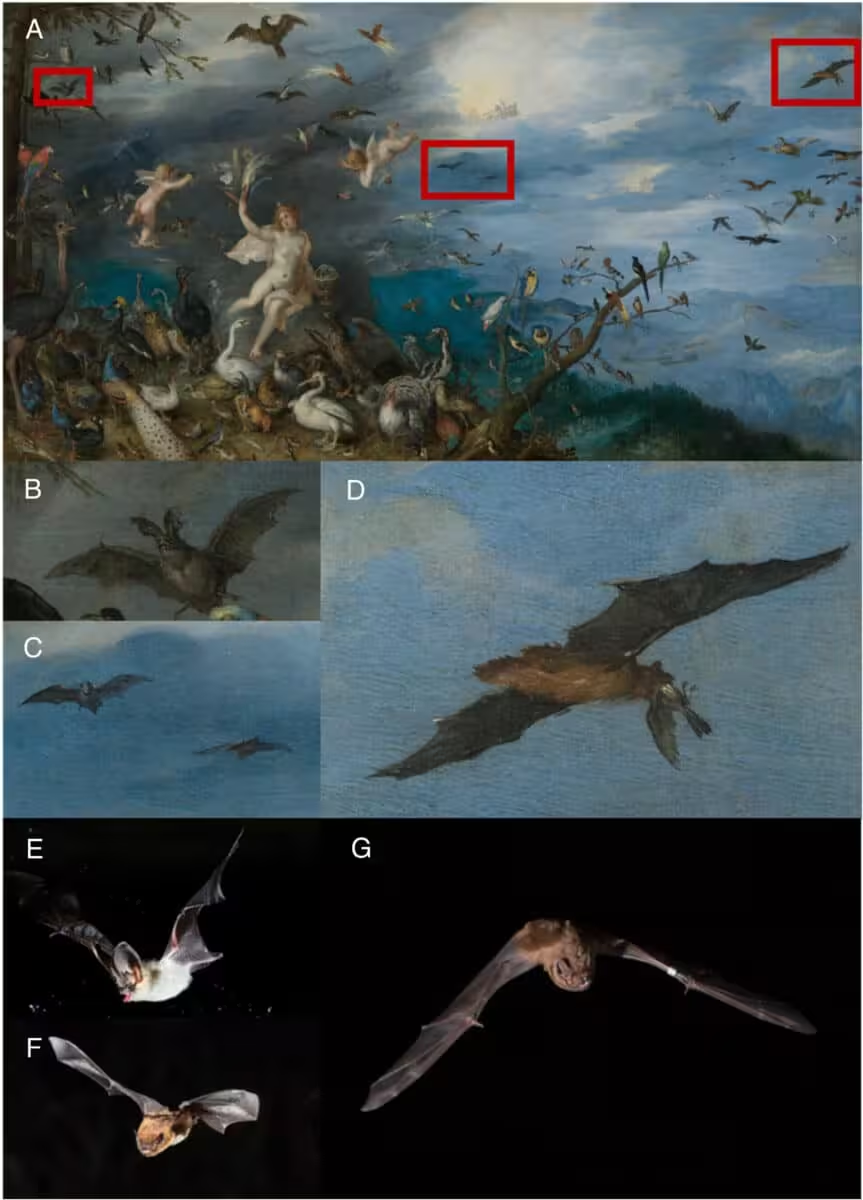
The authors suggest that Brueghel—or a collaborator who advised him—may have witnessed an event that would not be scientifically documented for centuries. As one of the investigators explains,
“Several versions of Air were produced – by Brueghel or apprentices – and only the version analyzed here includes the scene of noctule predation,” adding, “Yet the mere depiction of this now well‑known predation phenomenon centuries before the advent of modern biologging or ultrasound detectors constitutes a remarkable fact.”
Modern Sensors Confirm the Artist’s Observation
Documented bird‑eating by greater noctules stands out as one of the most surprising revelations in bat ecology. Prior to the deployment of miniature tracking devices, scientists gathered indirect clues such as feather fragments of robins and blue tits recovered from bat guano. The latest sensor data show bats snatching passerines mid‑air, removing wings and sustaining flight while consuming their prey for up to twenty minutes.
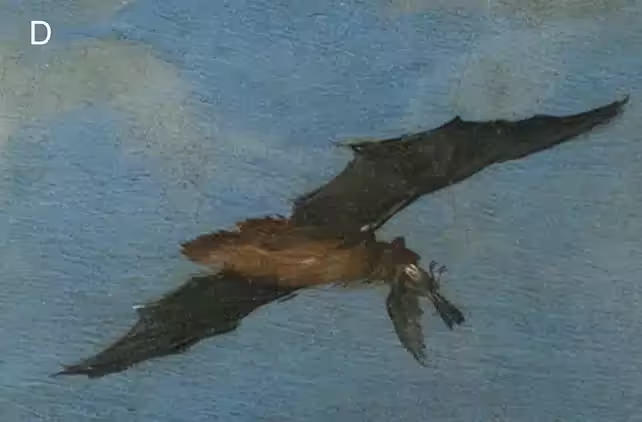
Only three bat species are known to incorporate birds into their diet, and the greater noctule is unique in accomplishing the feat entirely on the wing. The painting’s portrayal of a bat whose silhouette, hue and proportions match the Nyctalus genus reinforces the idea that Brueghel may have drawn on a real observation rather than pure imagination. While definitive proof of his source will likely remain elusive, the convergence of artistic detail and contemporary biological evidence has attracted interest across zoology, art history and heritage science.
Interpreting Historical Paintings Requires Careful Context
The researchers caution that centuries‑old artworks should not be treated as unequivocal scientific records. Allegorical compositions often blend symbolism with naturalistic rendering, complicating straightforward interpretation. Nevertheless, the authors note,
“We acknowledge interpretations of historical artworks must be cautious, particularly in the case of allegorical paintings, which often incorporated symbolic elements.” They immediately balance that warning with another observation: “However, the fact that a noctule bat, and no other bat species, is represented in the scene suggests an observational inspiration rather than purely symbolic convention.”
The canvas depicts more than sixty species—nearly forty identifiable European birds, fourteen exotic taxa and several domestic forms—demonstrating Brueghel’s meticulous approach to wildlife illustration. Such precision makes it harder to dismiss the noctule episode as mere artistic fantasy.
Turning Museum Collections into Scientific Databases
Beyond this single masterpiece, the study proposes that museums and digitized archives may harbor countless unnoticed natural observations. As high‑resolution imaging and artificial‑intelligence analysis become routine, scholars from ecology, zoology and art history can mine visual records for data on species distributions, inter‑species interactions, extinct habitats and seasonal behaviors that are absent from textual sources.
The authors conclude that the accelerating digitization of art, coupled with advancing analytical tools, will expand the utility of these visual troves as complementary resources for modern research.
“As the digitization of art collections accelerates and analytical tools continue to advance, the value of these sources to provide valuable data – previously difficult to extract and often overlooked – and complement modern research approaches will notably increase.”
The unexpected link between a seventeenth‑century allegory and twenty‑first‑century wildlife science underscores how discoveries can emerge from unexpected corners of cultural heritage, waiting centuries before revealing their scientific relevance.
This article has been fact checked for accuracy, with information verified against reputable sources. Learn more about us and our editorial process.
Last reviewed on .
Article history
- Latest version
Cite this page:
- Posted by Linda Wilson