Scientists Found Strange Green Stones in a Remote Cave 7,300 Feet High, They May Point to One of Europe’s Oldest Copper Workshops
Arqueólogos descobrem concentração inesperada de vestígios antigos em gruta escondida a 7300 pés acima do nível do mar
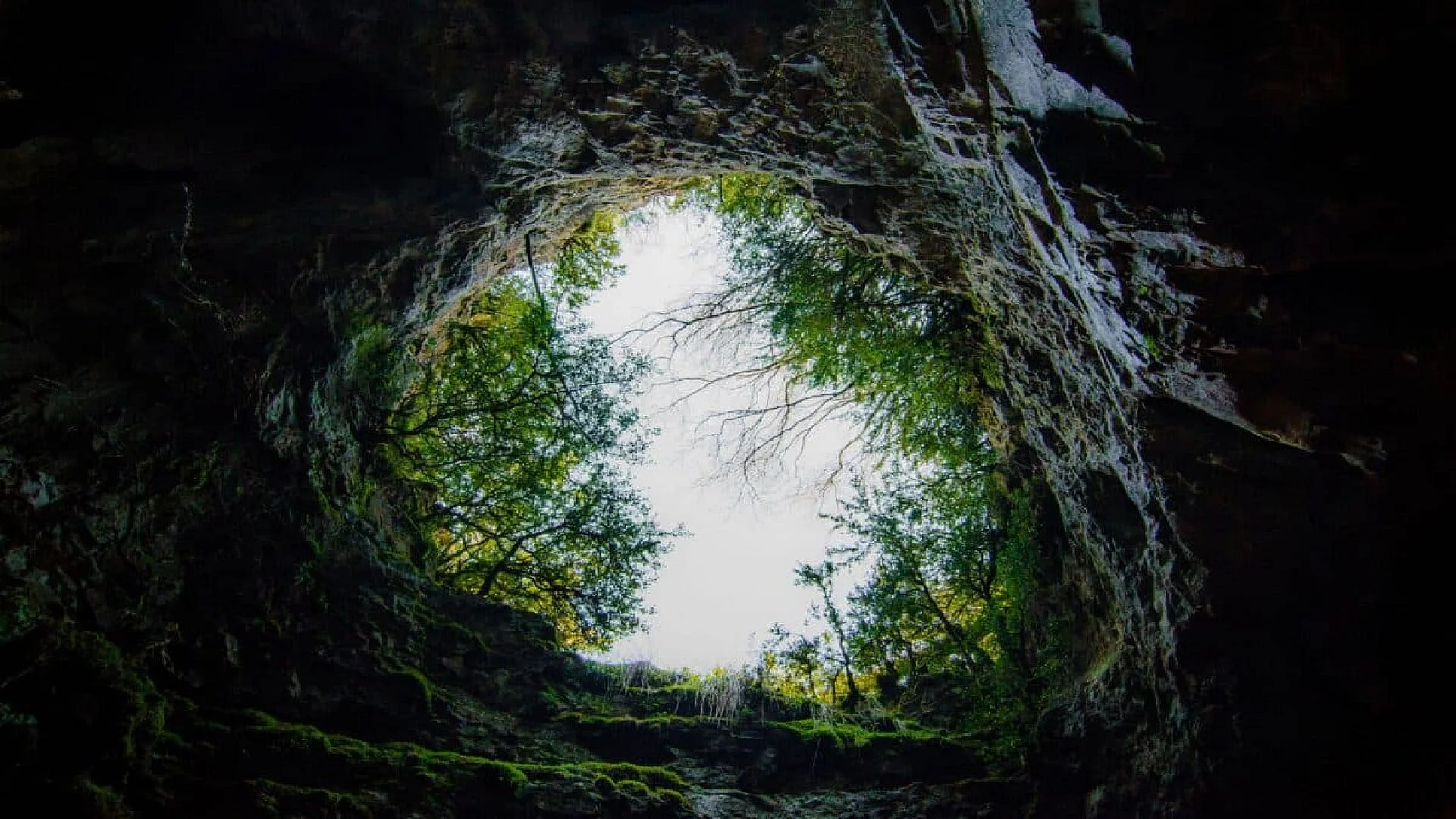
A high‑altitude cave in the eastern Pyrenees is reshaping assumptions about prehistoric settlement patterns. Situated over 7,300 feet (2,235 m) above sea level in the Freser Valley, Cave 338 has produced an unexpectedly dense archaeological assemblage that indicates repeated human use across millennia.
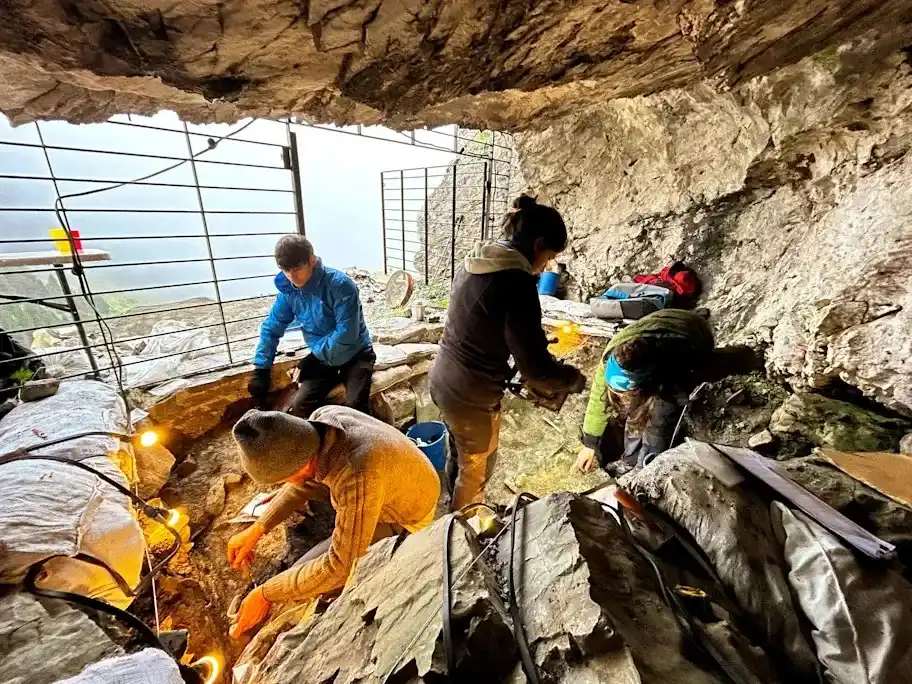
Excavations focused on a six‑square‑metre zone near the cave entrance revealed four stratigraphic layers of human activity. Charcoal fragments from the deepest layer date to roughly 6,000 years ago, while a thin upper stratum contains only a handful of later‑period artifacts, suggesting sporadic use in historic times.
Two Thousand Years of Intermittent Occupation
The bulk of the material derives from the second and third layers, where archaeologists uncovered numerous hearths and a dense concentration of burned deposits. Lead author Carlos Tornero of the Catalan Institute of Human Paleoecology and Social Evolution explained that the evidence points to “short to medium” stays repeated over long periods, even though exact occupation lengths remain uncertain.
“We found a really rich archaeological sequence, including multiple combustion structures and a very large number of green mineral fragments. We can’t say exactly how long people stayed each time, but the repeated use of the space and the density of remains suggest occupations that were short to medium in duration, but happening again and again over long periods of time.”
Radiocarbon analysis places a hearth from the second layer at about 3,000 years old, while hearths in the third layer span 5,500 to 4,000 years ago. Overlapping fire pits, each clearly distinct, indicate that groups returned to the same spot after significant intervals rather than maintaining a continuous presence.
Unusual Green Mineral Deposits
Among the most striking finds are 23 hearths containing abundant crushed and burnt green mineral fragments, potentially malachite—a copper‑rich ore that can be processed into metal. The identification is provisional; ongoing laboratory work aims to confirm the mineralogy.
“Many of these fragments are thermally altered, while other materials in the cave are not, which clearly suggests that fire played an important role in their processing and that there was a deliberate intention behind it,” as Dr. Julia Montes‑Landa of the University of Granada, co‑author, explained. “In other words, they weren’t burned by accident.”

If future analysis confirms malachite, the find could illuminate early copper‑related practices in a high‑altitude setting, adding a new dimension to our understanding of prehistoric metallurgy.
Human Remains and Personal Ornaments
The third layer also yielded skeletal material, including a finger bone and a baby tooth belonging to a child estimated to have been around 11 years old. While the remains are insufficient to determine a cause of death, their presence raises the possibility that the cave served a funerary function.
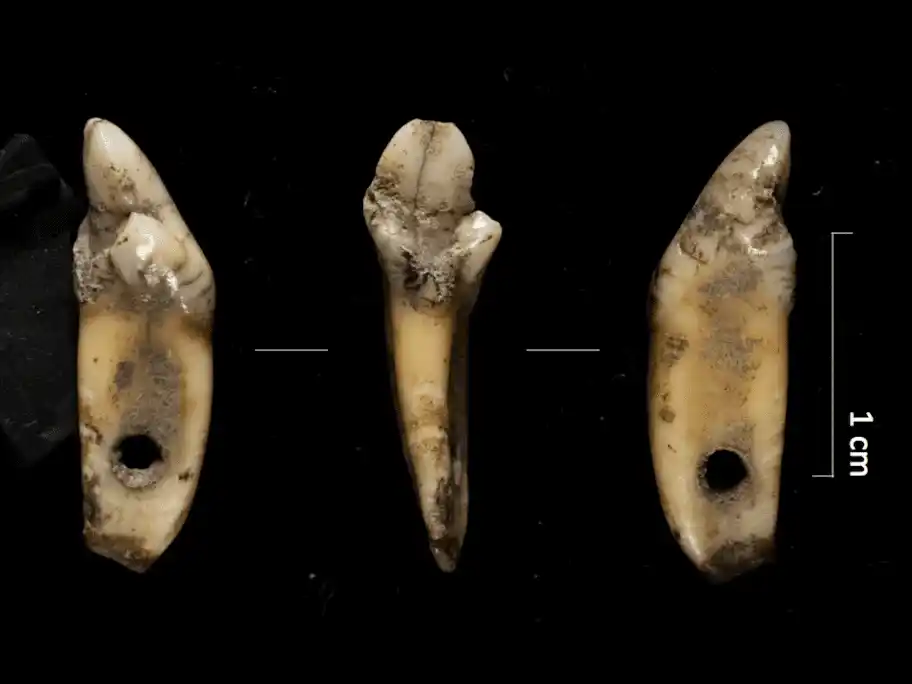
Two decorative pendants were also recovered. One, fashioned from a shell, aligns with similar artifacts from other Catalan sites, hinting at shared cultural traditions. The other, crafted from a brown‑bear tooth, is far rarer and may reflect a locally specific symbolic meaning.
“They come from prehistoric contexts, most likely around the second millennium BC. The shell pendant is interesting because it has parallels in other sites in Catalonia, which suggests shared traditions or connections between different communities. The bear tooth pendant is much less common. That might point to something more specific or symbolic, possibly linked to the local environment,” Tornero noted.
These findings, detailed in Frontiers in Environmental Archaeology, challenge the view of high‑altitude zones as peripheral in prehistoric lifeways, showing that mountain caves could hold lasting cultural significance for ancient communities.
This article has been fact checked for accuracy, with information verified against reputable sources. Learn more about us and our editorial process.
Last reviewed on .
Article history
- Latest version
Reference(s)
- “Tornero Dacasa, Carlos | Iphes.” <https://www.iphes.cat/en/tornero-dacasa-carlos>.
- <https://www.researchgate.net/profile/Julia-Montes-Landa>.
- Tornero, Carlos. “Beyond 2,000 meters, first evidence of intense prehistoric occupation in the Pyrenees.” Frontiers in Environmental Archaeology, vol. 5, May 5, 2026, pp. 1811493 Frontiers, doi: 10.3389/fearc.2026.1811493/full. <https://www.frontiersin.org/journals/environmental-archaeology/articles/10.3389/fearc.2026.1811493/full>.
Cite this page:
- Posted by Linda Wilson