Archaeologists Uncover A Forgotten Superhighway Covered With 8,000-year-old Human And Animal Footprints Along The UK Coast
After lying concealed beneath the sands of this English shoreline for millennia, footprints are now being uncovered.
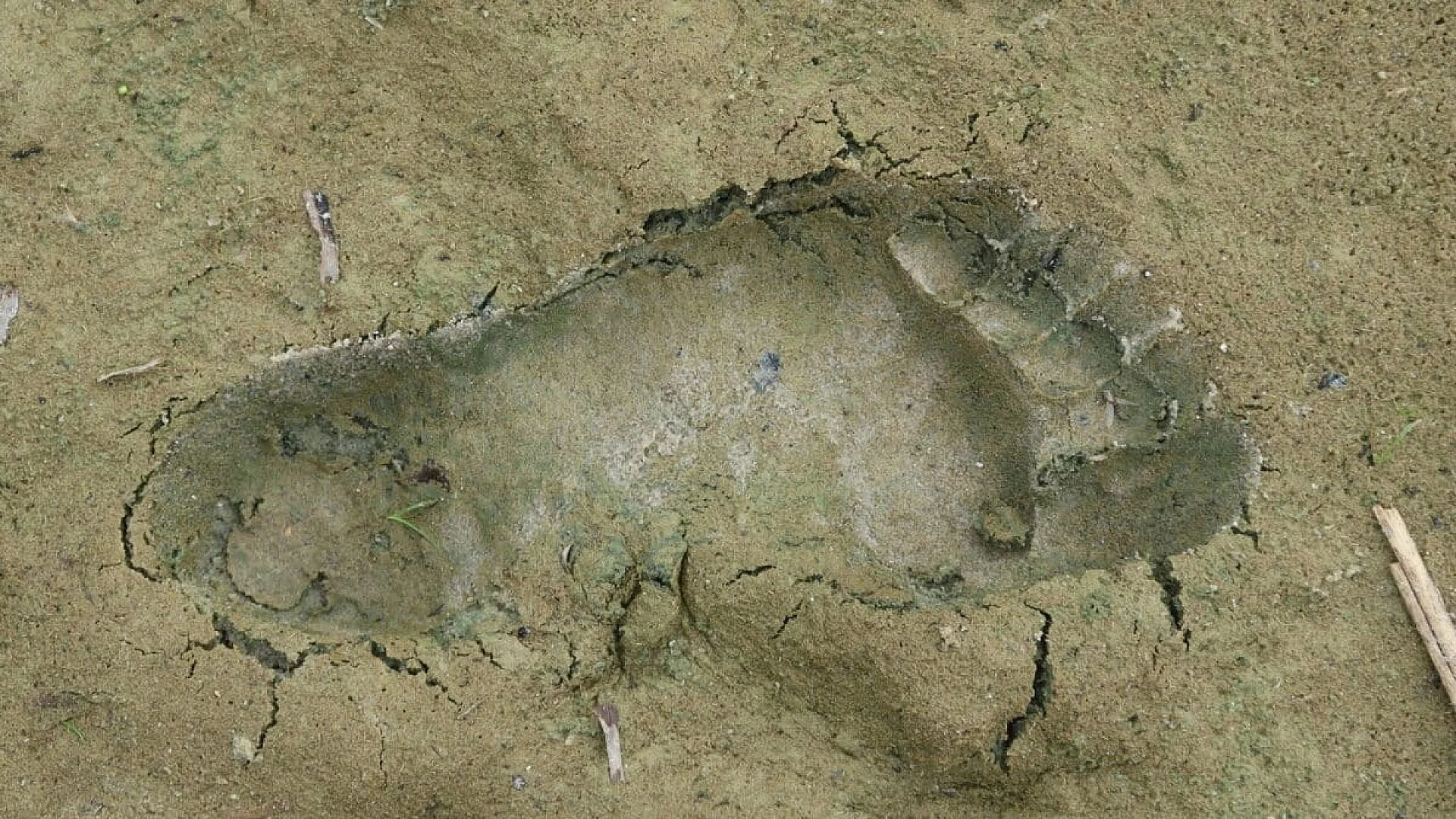
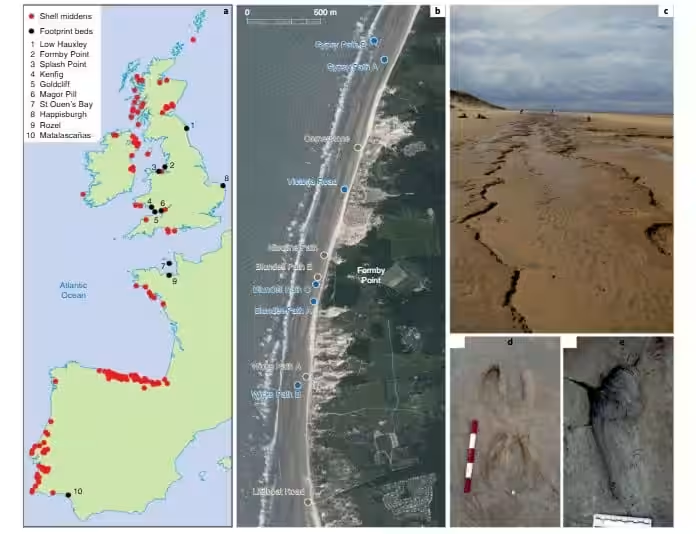
Along the coast of Formby, England, erosion has uncovered a remarkable discovery: thousands of ancient footprints left by humans and animals. This two-mile stretch of muddy path, once a bustling route, now offers a unique glimpse into the past, as researchers describe it as an “amazing snapshot of the past.”
Human and animal footprints have been preserved on this route for thousands of years, spanning from the Mesolithic period to medieval times. According to Alison Burns, lead author of a study in Nature Ecology and Evolution, as glaciers melted and sea levels rose after the last ice age, people and wildlife were forced inland, creating a hub of activity now preserved in mud and sand. The tracks include a variety of species, from humans to aurochs, red deer, wild boars, and even cranes.
Uncovering the Layers of the Past
At Formby, researchers have discovered approximately 36 layers of footprints, some stacked on top of one another, dating back from the Mesolithic period to medieval times, roughly 15,000 B.C. to 1450 A.D. Seeds from alder, birch, and spruce trees were found in the layers and radiocarbon-dated, providing valuable information about when these tracks were made.
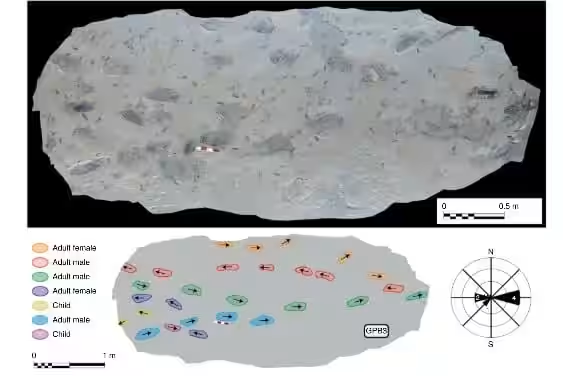
“They were barefoot, and the footprints were fantastic; the mud has oozed up between each toe, so you get all the features of the footprint. Immediately adjacent to them were prints from a crane. The person could very well have been looking for birds to hunt during a scouting expedition. And beside the crane, there is a clear set of adult red deer tracks nearby.”

In just two square meters, researchers say, the scene captures an entire moment of life thousands of years ago.
A Shared Landscape
As reported by the study, the site also preserves a mix of animal tracks. Burns noted footprints from aurochs, red deer, wild boars, wolves, lynx, and cranes. The overlapping prints show that humans and wildlife shared the same space, moving along the same routes over centuries.
Unlike most footprint studies that focus only on humans, Formby shows how people and animals coexisted. The variety of species and stacked layers reveal how the environment influenced where humans and animals moved, especially as sea levels rose and glaciers retreated.
Footprints That Withstood the Ages
The footprints were first noticed in the 1970s, but at first, they were thought to be cattle tracks. In the 1990s, a retired teacher started dating them and realized how old they really were. Burns said that ongoing coastal erosion keeps exposing new layers. The top layers are fragile, but deeper tracks remain well-preserved, giving researchers an incredible chance to study thousands of years of activity.
“When the tracks were made, they were filled with sand and then a layer of mud. That’s how you get these stacks [of footprints]. Once you have four or five beds on top of each other, the top layer is vulnerable [to erosion], but the ones beneath it are quite well preserved.”
Other ancient footprints have been found in England, such as 900,000-year-old human prints in Norfolk, but Formby is unique. Burns highlights that it not only shows humans moving through the landscape but also how multiple species shared the same environment.
This article has been fact checked for accuracy, with information verified against reputable sources. Learn more about us and our editorial process.
Last reviewed on .
Article history
- Latest version
Reference(s)
- Burns, Alison. “Footprint beds record Holocene decline in large mammal diversity on the Irish Sea coast of Britain.”, vol. 6, no. 10, pp. 1553-1563., doi: 10.1038/s41559-022-01856-2. <https://www.nature.com/articles/s41559-022-01856-2.epdf?sharing_token=4-PUT5DY-fVNPJjBd6YCgtRgN0jAjWel9jnR3ZoTv0OgMniEbSNSvblbuRi1nXu8CBT8TGg8B1PtXdVLUxrXu3zbRIAOLPPyHEIEHtvN0VVWtz0nVBDJ63h2rFP1uk4VIMQfX6kTD2dro88E7aEys86u26tWmc8tvsfoQIIpAP6E8tCckDdB-2fANb-Xwfwn6WfDpqQfdfklmsSnpFli8Q==&tracking_referrer=www.bbc.com>.
Cite this page:
- Posted by Linda Wilson