Wolves Do Not Just Compete With Cougars. They Often Take Their Food, Long-Term Study Finds
A long-term field study shows wolves frequently steal food from cougars, quietly reshaping predator behavior, energy use, and survival across shared landscapes.
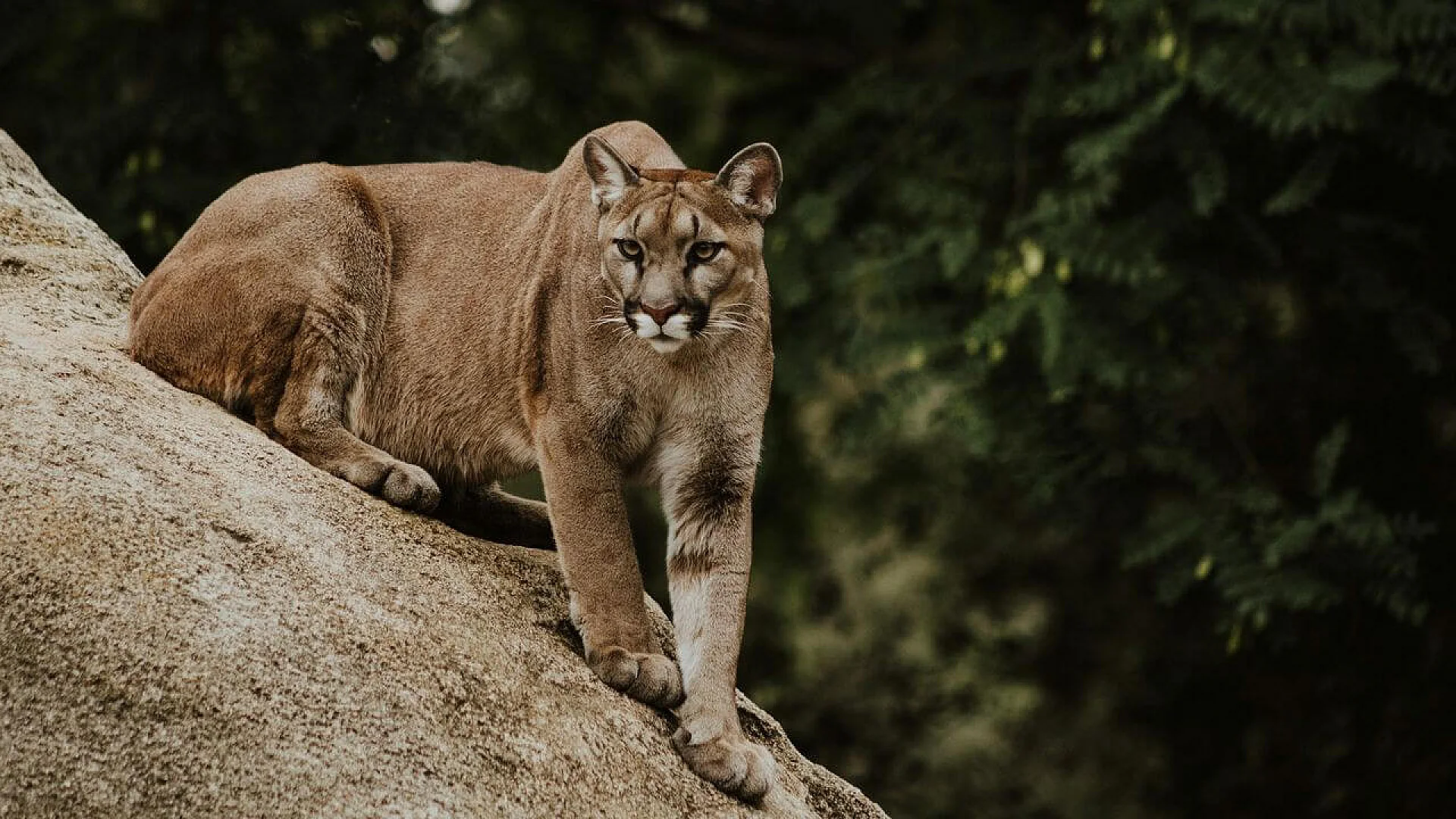
In many parts of North America, wolves and cougars live side by side. They move through the same forests, hunt the same animals, and often follow the same seasonal rhythms of prey.
At first glance, this overlap suggests competition in the usual sense. Two predators chasing the same food, reducing each other’s chances through sheer numbers.
But the reality on the ground turns out to be more direct and more uneven.
A long-running study published in Proceedings of the National Academy of Sciences shows that when wolves and cougars cross paths, the outcome is rarely balanced. Again and again, wolves end up with the food.
The research focused on something ecologists call asymmetrical interactions. In plain terms, this means one species benefits far more than the other during encounters.
Instead of asking whether wolves and cougars compete, the scientists asked how those encounters actually play out. Who keeps the food. Who walks away. And what that means over time.
To answer those questions, they examined three connected factors. These were shared diets, dominance relationships, and kleptoparasitism, which is the act of stealing food from another animal.
Together, these factors tell a clear story.
The study draws on years of fieldwork in regions where wolves and cougars naturally overlap. These are rugged landscapes with forests, mountains, and large populations of elk and deer.
Both predators were fitted with GPS collars. These devices recorded movement patterns, hunting locations, and time spent at kill sites.
When the tracking data suggested a kill had occurred, field teams visited the site. They identified which animal made the kill and looked for signs that another predator had arrived later.
This careful approach allowed researchers to observe interactions that usually happen far from human eyes.
Diet analysis confirmed that wolves and cougars rely heavily on the same animals. Elk were the most common prey, followed by deer and other large herbivores.
On paper, their diets looked remarkably similar.
In practice, access to that food was not shared equally. Cougars typically hunt alone, ambushing prey and then feeding over several days. Wolves hunt in packs and travel widely, increasing their chances of finding carcasses.
When wolves discovered a cougar kill, the result was often predictable.
The researchers found that food theft was common and repeated. Wolves frequently took over kills made by cougars, sometimes soon after the animal was brought down.
Cougars rarely stole food from wolves in return. The imbalance was striking.
In many cases, cougars left the area entirely once wolves arrived, even when a large amount of edible meat remained. This was not hesitation or chance. It was a consistent pattern.
One major reason for this imbalance is group size. Wolves operate as packs, while cougars live and hunt alone.
A pack of wolves poses a serious threat to a single cougar. Even if no physical fight occurs, the risk of injury is high enough to make confrontation a poor choice.
Wolves often approached kills confidently and stayed until the carcass was exhausted. Cougars, by contrast, tended to retreat quietly.
For a cougar, losing a kill is costly. Hunting large prey requires energy, patience, and risk. Injuries during a hunt can be life-threatening.
When wolves take over a carcass, the cougar must hunt again sooner than planned. Over time, these repeated losses add up.
Females with cubs are especially affected. They need reliable access to food, and interruptions can influence cub survival and growth.
The study found that cougars adjust their behavior in areas with frequent wolf activity. They often drag prey into dense vegetation, where wolves are less comfortable moving.
Some cougars reduce the time they spend feeding at kills. Others shift hunting locations toward steeper or more rugged terrain.
These adjustments help reduce encounters, but they also limit hunting options. Avoiding wolves comes at a price.
For wolves, stealing food is efficient. It saves energy and reduces the dangers of hunting large prey.
The study showed that a meaningful portion of wolf feeding events involved carcasses killed by cougars. This extra food likely supports larger packs and improves survival.
In this way, kleptoparasitism strengthens wolf dominance, making future takeovers even more likely.
The pattern creates a feedback loop. Wolves gain food without hunting. That food supports more wolves. Larger packs then gain even more power over solitary predators.
Cougars, meanwhile, survive by avoiding conflict rather than confronting it.
This dynamic helps explain how both species persist in the same landscapes, even though one consistently benefits more.
Classic ecological models often treat predators as separate actors connected only by shared prey. This study shows that direct interactions matter just as much.
Food theft, dominance, and risk avoidance all shape how energy moves through an ecosystem.
Understanding these relationships offers a clearer picture of predator communities as living systems, not abstract equations.
Large predators are returning to parts of their former range through conservation and natural recovery. As these populations grow, interactions like these become more important.
Managers often focus on predator numbers and prey populations. But relationships between predators themselves can quietly shape outcomes.
Ignoring those dynamics means missing part of the story.
The researchers note that their findings come from specific regions with particular prey and terrain. Different environments could produce different patterns.
Climate change, shifting prey movements, and human land use may also alter how these predators interact.
Future research will likely explore whether similar dynamics exist between other large carnivores.
Across years of data, one conclusion remained steady. Wolves consistently benefited from encounters with cougars. Cougars consistently adjusted to avoid harm.
Coexistence did not mean fairness. It meant adaptation.
In shared landscapes, survival depends not just on hunting skill, but on knowing when to step away.
The research was published in PNAS on January 26, 2026.
This article has been fact checked for accuracy, with information verified against reputable sources. Learn more about us and our editorial process.
Last reviewed on .
Article history
- Latest version
Reference(s)
- Binder, Wesley., et al. “Diets, dominance hierarchies, and kleptoparasitism drive asymmetrical interactions between wolves and cougars.” Proceedings of the National Academy of Sciences, vol. 123, no. 6, 26 January 2026, doi: 10.1073/pnas.2511397123. <https://www.pnas.org/doi/10.1073/pnas.2511397123>.
Cite this page:
- Posted by Dayyal Dungrela