Tiny Tracks in the Sand Reveal the Secret Lives of Africa’s Elephant Shrews
Scientists have developed a new way to identify elusive small mammals using only their footprints. This non-invasive technique can distinguish between different species and even determine the sex of an animal without ever touching it.
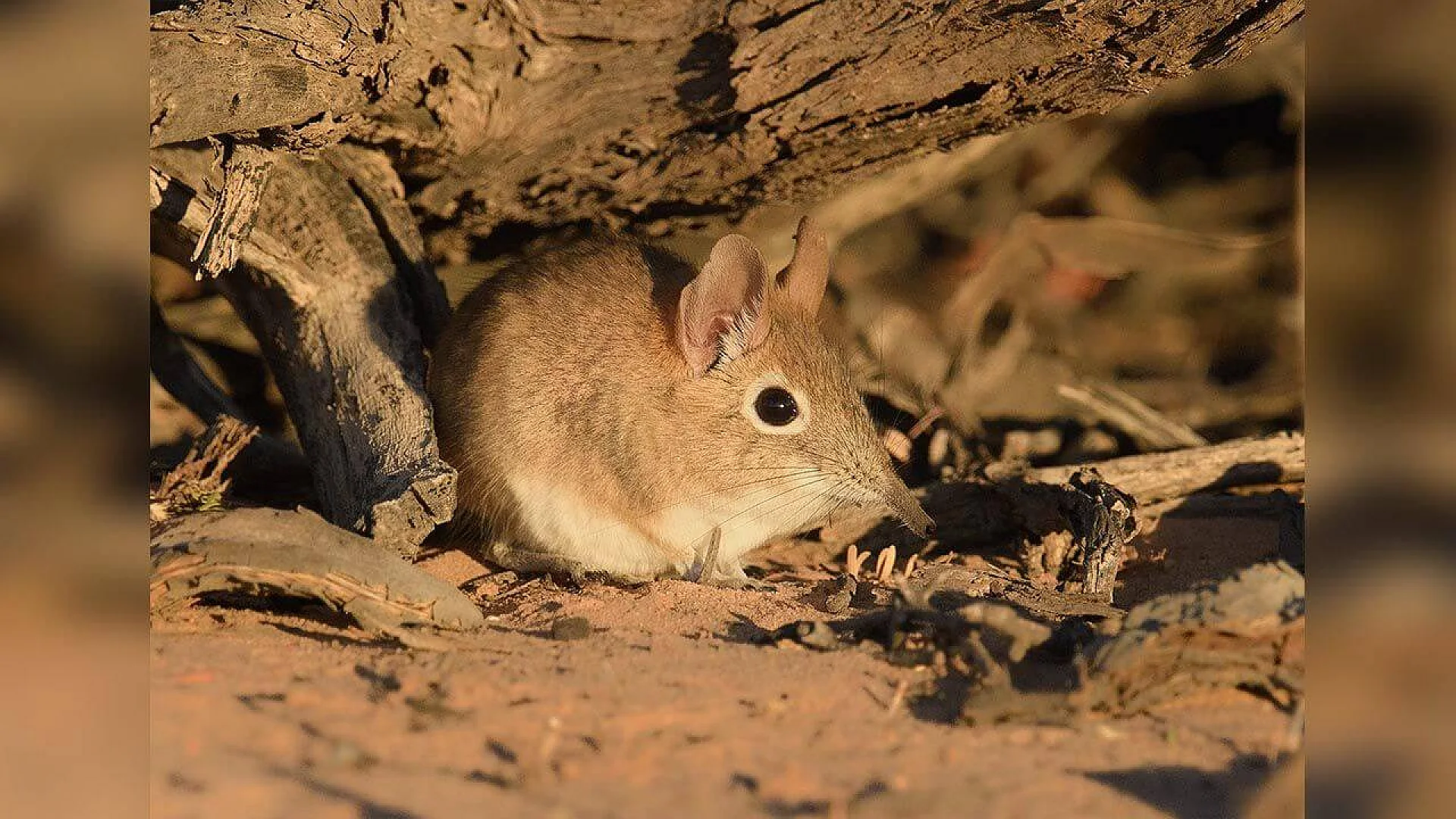
In the wild landscapes of Southern Africa, there is a special group of animals known as the Little Five. These creatures are the smaller counterparts to the famous Big Five safari animals, which include the lion and the elephant. One prominent member of this group is the sengi. While many people know them as elephant shrews, these small mammals are not actually shrews. They belong to a unique biological group called Afrotheria. This means that, surprisingly, they are more closely related to elephants and manatees than to the common shrews found in suburban gardens.
Sengis are famous for their long and flexible snouts. They use these tiny trunks to sniff out insects and seeds in the soil. They are also incredibly fast and can leap through the grass with great agility to escape predators. However, studying them is a very difficult task for scientists. Many sengi species look almost exactly the same to the human eye. They have similar shades of brown fur and nearly identical pointed noses. Scientists call these “cryptic” species because they are so well hidden by their physical similarities.
Understanding where these animals live is very important for protecting the environment. Small mammals act as bioindicators. This means that changes in their populations can tell us a lot about the health of the entire ecosystem. If the sengis begin to disappear, it might mean the climate is changing or the local plants are struggling. Identifying which species is which is the first step in any real conservation plan, but for a long time, this was much harder than it sounds.
The Stress of Traditional Research
For many decades, the only way to identify a sengi was to catch it in a trap. Researchers would go into the bush and set up metal or plastic boxes called Sherman traps. They often used a mixture of peanut butter, oats, and Marmite to lure the animals inside. Marmite is a salty yeast extract that sengis seem to find particularly attractive. Once an animal was caught, a researcher would have to handle it carefully. They would measure the length of its ears, its tail, and its body to figure out which species it belonged to.
This process is quite stressful for the animals. Being trapped in a small box and then picked up by a giant human causes a significant amount of fear. In some cases, the stress can even lead to injury for the tiny mammals. Trapping is also very expensive and takes a long time. It requires experts to spend weeks in the field, checking traps twice every day. Even then, an expert might not be 100 percent sure which species they have found because the differences are so small.
Some scientists have tried using DNA testing to solve this problem. They take a small sample of hair or a tiny piece of skin from the animal to look at its genetic code. While DNA is very accurate, it is also very costly. It requires expensive laboratory equipment and special chemicals that are hard to find in remote areas. This makes it difficult to use in many parts of Africa where resources and funding for science are limited.
A New Path Through the Dust
A team of researchers, led by Sky Alibhai and Zoë Jewell, decided to try a completely different approach. They wanted to see if they could identify sengis just by looking at the footprints they leave behind. They published their interesting findings on January 27, 2026. The study focused on two specific species: the Eastern Rock sengi and the Bushveld sengi. These two animals live in different parts of South Africa, but sometimes their territories overlap.
The Eastern Rock sengi, which has the scientific name Elephantulus myurus, loves to live in rocky places. It hides in the cracks and crevices of large boulders in the Telperion Nature Reserve. This reserve is located on the border of the Mpumalanga and Gauteng provinces. The area is filled with rolling hills and wide grasslands. The sengis there have to be very agile to move quickly over the steep and rocky slopes.
On the other hand, the Bushveld sengi, known as Elephantulus intufi, prefers a very different home. It lives in the sandy dunes of the Tswalu Kalahari Reserve. This area is much drier and hotter than the rocky hills. The ground there is covered in loose sand and scrubby bushes. Despite these different habitats, the two species look so similar that even people who study them for a living struggle to tell them apart in the field. This is why a new method was so desperately needed.
The Geometry of a Footprint
To start their study, the researchers needed to create a library of footprints from known animals. They used a clever tool called a SMART box. SMART stands for Small Mammal Reference Track box. It is a simple wooden box with a clear plastic roof so the researchers can see inside. The floor of the box is covered in adhesive paper, which is placed sticky-side up. At each end of the paper, the scientists brushed a very fine layer of non-toxic charcoal powder.
When a sengi entered the box to find a snack, it walked over the charcoal first. Its feet became coated in a thin layer of black dust. As it continued walking across the box, it left perfect black footprints on the sticky paper. This method allowed the researchers to get very clear, high-resolution images of the animal’s tracks. After the footprints were collected, the animal was immediately released back into the wild without any harm.
The team decided to focus specifically on the front footprints of the sengis. They found that the front feet were much more consistent and easier to read than the back feet. Sengis often use their back feet to drum on the ground to communicate with each other. This drumming behavior makes the back footprints look messy and blurred. The front footprints, however, were very clear and worked like a biological fingerprint for each animal.
Turning Photos into Scientific Data
Once the researchers had all the footprint images, they used a computer program called JMP to analyze them. They placed seven specific landmark points on each footprint image. These points were located on the tips of the toes and the different pads of the feet. The computer then used these points to calculate a wide range of measurements. In total, the program extracted 77 distances, 14 angles, and eight different areas from every single track it analyzed.
This process is known as geometric morphometrics. It is a scientific way of saying that the researchers measured the exact shape and size of the foot in a very detailed way. They found that certain measurements were consistently different between the two species. For example, a measurement they called V7 was very important. This is the distance between the middle toe and the pad on the side of the foot.
By looking at just nine of these specific measurements, the computer could tell the difference between the species with incredible precision. The researchers used a mathematical technique called Linear Discriminant Analysis. This is a formula that looks for patterns in a big pile of data. It works like a filter that separates one group from another based on specific traits that might be invisible to the human eye.
Breaking the 95 Percent Barrier
The results of the study were very impressive. The computer was able to identify the correct species with 96 percent accuracy. It was even able to tell the difference between male and female sengis just by looking at their tracks. This is a level of precision that is often much higher than what a human expert can achieve by just looking at the animal in a trap.
The researchers tested their computer model many times using different sets of data. They used some footprints to “train” the computer and then used a different set of footprints to “test” it. The accuracy remained very high across all the different tests. This proved that the Footprint Identification Technology, or FIT, was a very reliable tool for scientists to use. It worked perfectly regardless of whether the footprint came from a sengi living in the rocks or a sengi living in the sand.
One of the most exciting parts of the discovery was how much information a single footprint could provide. Scientists do not actually need to find a whole trail of tracks to identify an animal. Just one clear image of a single front foot is enough for the computer to make a correct identification. This makes the job of a field researcher much easier and much more efficient.
Correcting the Maps of Nature
The study also showed that our current maps of where these animals live might be wrong. The researchers compared their new findings with maps provided by the IUCN. The IUCN is an international organization that keeps track of endangered species all over the world. The scientists found that sengis were living in many places where the official maps said they should not be found.
In the Tswalu Kalahari Reserve, the researchers found both species living within only 120 meters of each other. This was a big surprise because the two species were previously thought to prefer very different environments. The ability to identify them accurately by their tracks helped the scientists see exactly where their habitats overlapped. This kind of information is vital for understanding how different species interact with one another.
Better maps always lead to better conservation efforts. If we know exactly where an animal lives, we can work much harder to protect that specific piece of land. We can also see if their range is shrinking because of climate change or because of human activity like farming. Accurate data is the foundation of protecting the world’s biodiversity, and footprints are a great way to get that data.
Empowering Local Communities and Science
One of the main goals of the research team was to make a tool that almost anyone could use. Traditional methods of studying animals require many years of university training and expensive equipment. However, taking a simple photo of a footprint is something a local guide or even a schoolchild can do. This opens the door for something called “community science.”
In many parts of Africa, local people have a huge amount of traditional knowledge about the animals living around them. They are out in the bush every single day and they see things that visiting scientists might miss. By using FIT, these community members can contribute to important global research. They can take photos of footprints and upload them to a central database for scientists to look at.
This technology is also very low-cost. It does not require a laboratory or any dangerous chemicals. A simple track plate and a smartphone camera are the only primary tools a person needs. This makes it a sustainable and long-term solution for monitoring wildlife in developing countries. It empowers local people to become the active guardians of their own natural heritage.
The Future of Tracking Technology
The researchers are not stopping with just sengis. They believe this footprint technology can be used for many other types of small mammals. There are thousands of species of mice, rats, and shrews that are currently very hard for scientists to monitor. Many of these animals are at high risk of going extinct before we even fully understand them. The team is already working on open-ended track tunnels that animals can simply walk through without being trapped at all.
They also plan to use machine learning to make the footprint system even smarter. Machine learning is a type of artificial intelligence that gets better and better as it sees more and more data. The more footprints the system analyzes, the more accurate it will become over time. Eventually, a scientist or a park ranger might be able to identify hundreds of different species just by using a simple app on their phone.
This non-invasive approach is part of a growing and important movement in wildlife research. Scientists are looking for ways to study nature without disturbing the very creatures they are trying to save. By listening to the sounds of the forest, analyzing water for traces of DNA, and looking at footprints, they can see the secret lives of animals. It is a much more respectful and ethical way to conduct science in the modern world.
A Lasting Legacy in the Sand
The study of sengi footprints might seem like a small thing to some people. However, it represents a major shift in how we monitor the health of our planet. Every single animal, no matter how small it is, plays a vital role in the ecosystem. Sengis help to control insect populations and they also help to spread seeds so new plants can grow. They are an important link in the food chain for many larger predators.
The work of Alibhai, Jewell, and their colleagues shows that technology and tradition can work together very well. They took the ancient skill of animal tracking and combined it with modern computer science. The result is a powerful and useful tool that helps us understand the natural world without causing it any unnecessary harm. This is the kind of science that builds a bridge between humans and nature.
As biodiversity continues to decline in many places around the world, we need these kinds of tools more than ever before. We cannot protect what we cannot identify or find. By looking closely at the dust beneath our feet, we can find the clues we need to save the creatures that share our world. The small and delicate footprints of the sengi are leading the way toward a more hopeful future for global conservation.
The research was published in Frontiers in Ecology and Evolution on January 27, 2026.
This article has been fact checked for accuracy, with information verified against reputable sources. Learn more about us and our editorial process.
Last reviewed on .
Article history
- Latest version
Reference(s)
- Alibhai, Sky., et al. “A non-invasive footprint technique for accurate identification of cryptic small mammal species: a sengi case study.” Frontiers in Ecology and Evolution, 27 January 2026, doi: 10.3389/fevo.2025.1719684. <https://www.frontiersin.org/journals/ecology-and-evolution/articles/10.3389/fevo.2025.1719684/full>.
Cite this page:
- Posted by Dayyal Dungrela