Drone Lidar Uncovers 300-Acre Medieval Iron City Hidden In Uzbekistan Mountains
Drone laser scans reveal a huge lost city in Uzbekistan’s mountains, uncovering a secret that could reshape Silk Road history.
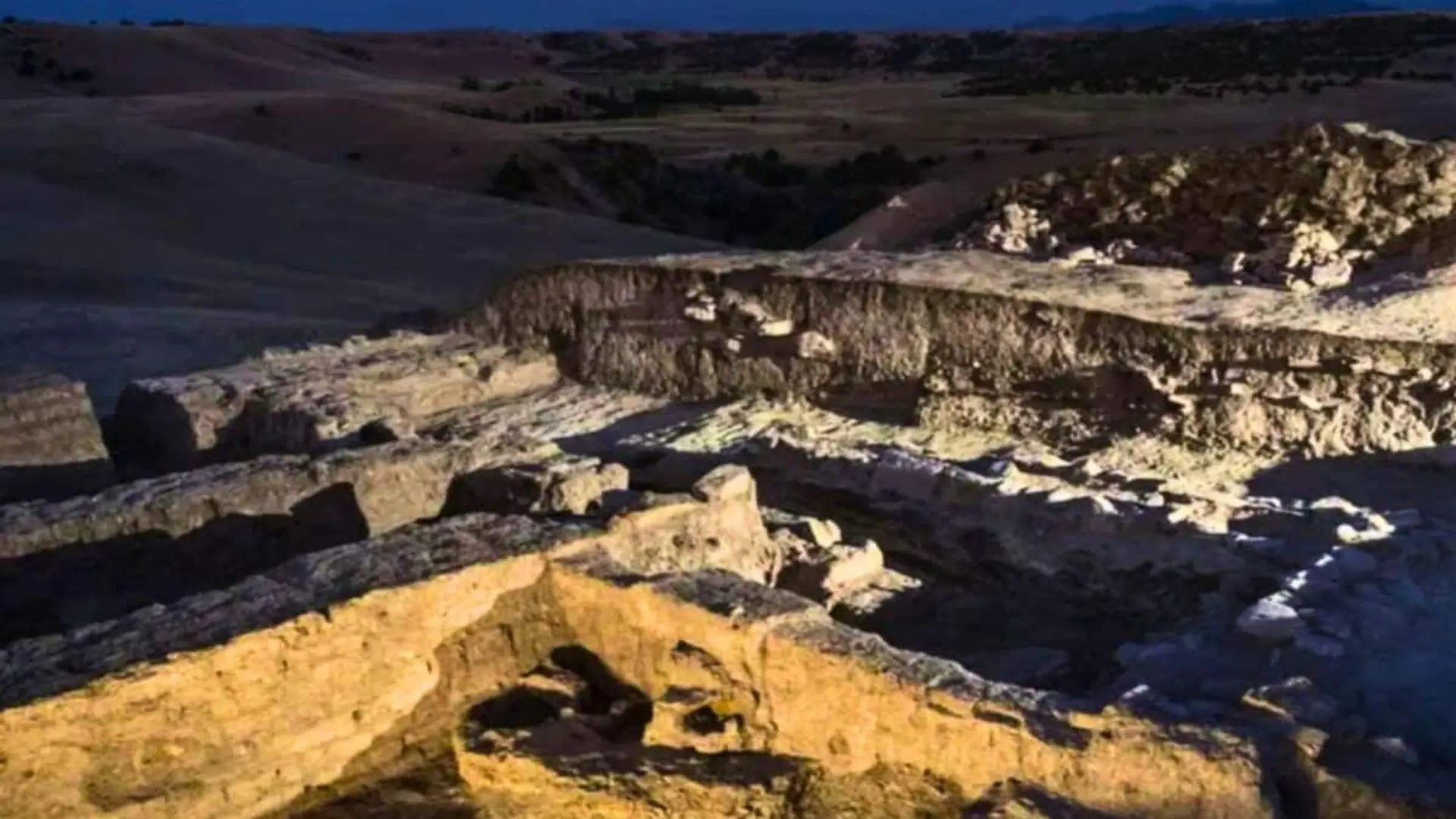
High above the rugged peaks of southeastern Uzbekistan, where the landscape is dominated by craggy slopes and scattered juniper, a new chapter of Central Asian history is emerging. A fleet of drones equipped with laser‑scanning lidar has turned what appeared to be a barren high‑altitude plateau into the outline of an extensive medieval urban complex.
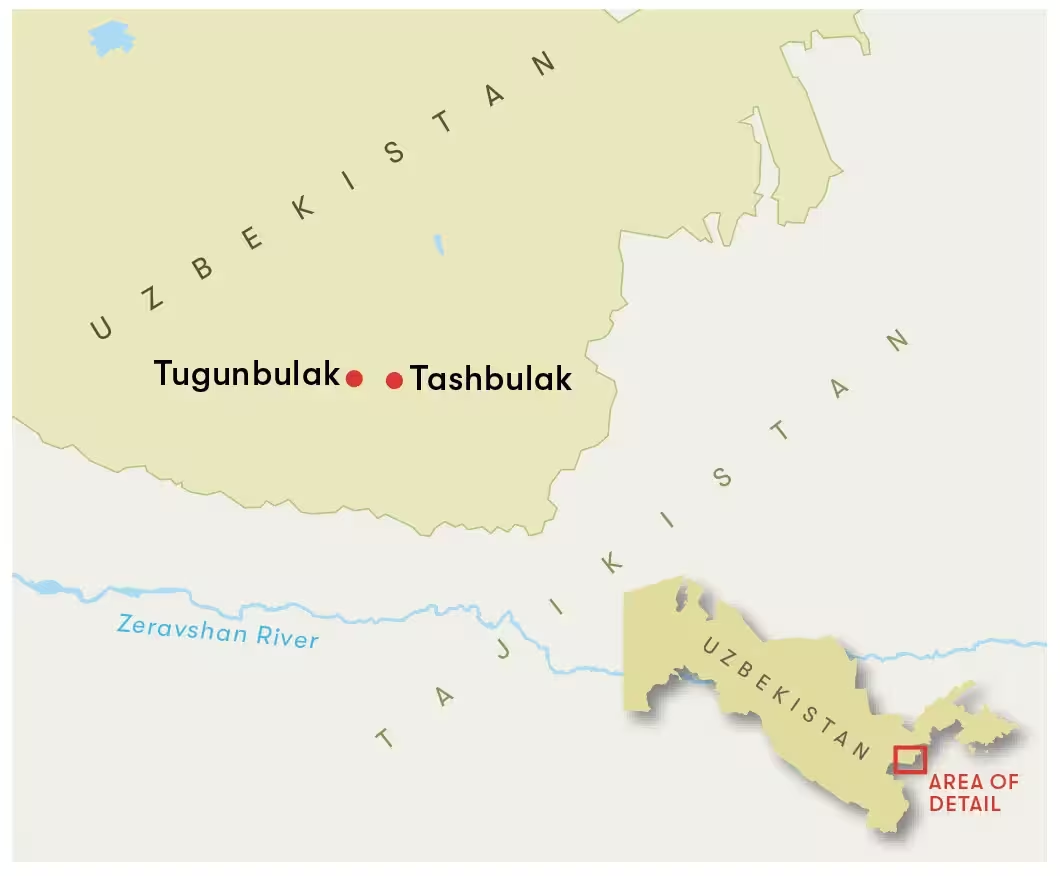
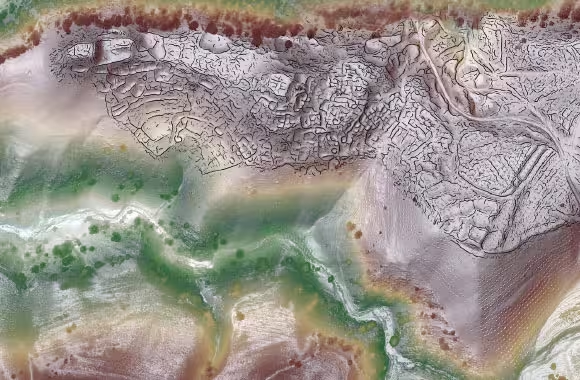
The settlement, identified as Tugunbulak, had been noted in regional surveys, yet its true magnitude remained hidden until a multi‑season investigation led by Michael D. Frachetti of Washington University in St. Louis. By repeatedly flying UAVs over the site and stitching more than twenty lidar passes into a single high‑resolution model, the team uncovered a meticulously planned city spanning roughly 300 acres at an elevation of 2,130 meters.
Lidar Reveals a Strategically Designed High‑Altitude Fortress
The composite maps expose a network of massive stone walls, terraced zones, and a grid‑like street pattern that points to deliberate urban planning—an unexpected find for a settlement situated in such a remote, mountainous region. The precision of the laser data allowed researchers to pinpoint individual wall fragments and building outlines, enabling excavation crews to target their trenches with far greater confidence than conventional surface surveys would allow.
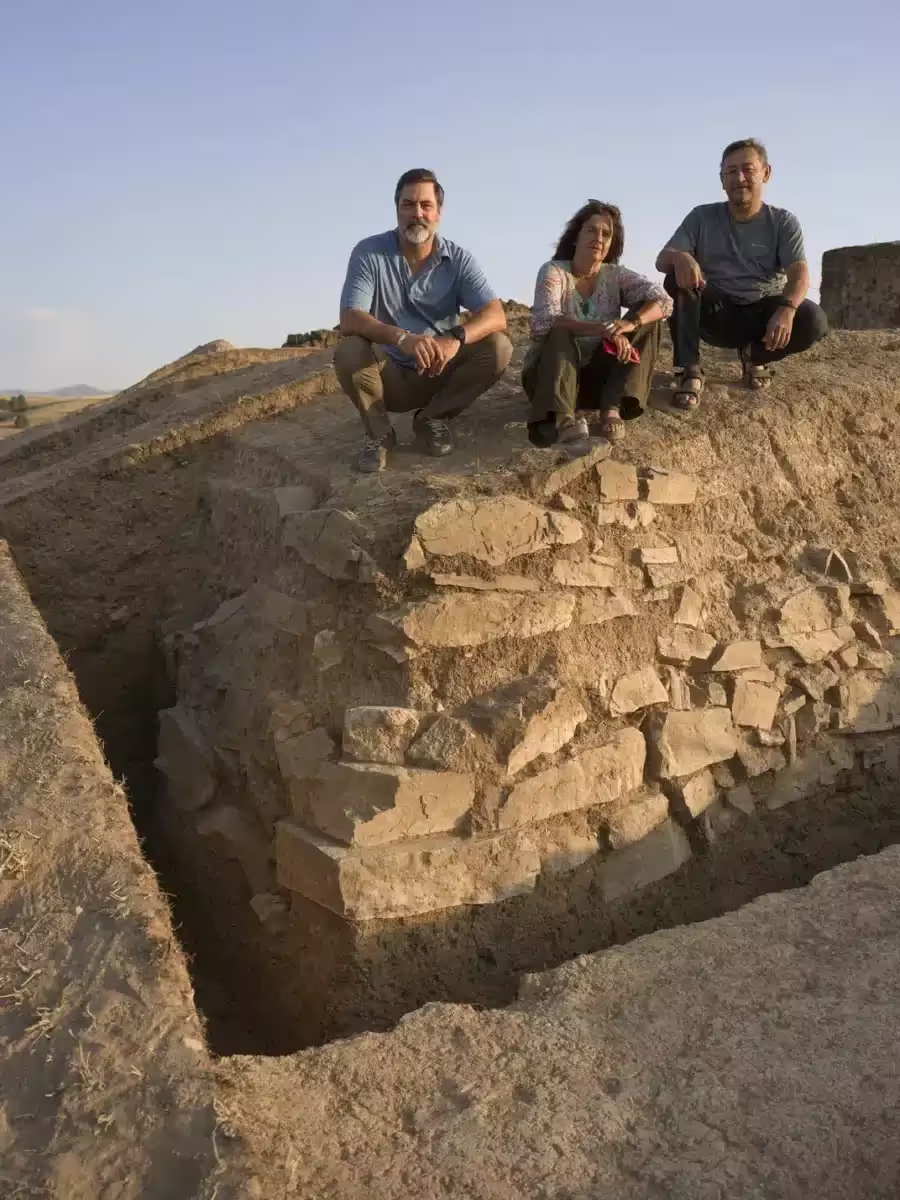
When archaeologists opened test trenches, they encountered thick deposits of black slag—the glassy residue of iron smelting—alongside kilns still surrounded by juniper charcoal and iron nuggets. These findings point to a large‑scale metalworking operation that would have required a steady supply of fuel, skilled metallurgists, and a logistics network capable of moving heavy goods down the mountains.
Medieval Texts Align with the Iron‑City Hypothesis
The material evidence dovetails with accounts from tenth‑century Arab geographers. Ibn Hawqal described a chilly mountain settlement called “Marsmanda,” noted for its meadows and implied metalworking activity. While earlier scholars could not place Marsmanda on a map, the iron‑production signature at Tugunbulak provides a tangible counterpart to the medieval description.
Chronologically, the city appears to have thrived from the sixth to the eleventh centuries, a period that coincides with the height of Silk Road commerce linking East Asia to the Mediterranean. Situated about 70 miles east of Samarkand, Tugunbulak challenges the conventional view that the Silk Road’s economic engine was confined to low‑lying oasis towns, suggesting that highland industrial hubs also fed the trans‑Eurasian trade network.
Burial sites on the surrounding slopes add another layer of complexity. Radiocarbon dates place the earliest interment near 720 AD, and one cemetery contains roughly 650 graves. Variations in body orientation, the presence of animal remains, and the scarcity of grave goods hint at evolving cultural practices and shifting political allegiances over the city’s long occupation.
Factors Behind the City’s Rise and Decline
Sustaining iron production at such altitude demanded more than raw ore; continuous access to juniper forests for charcoal, reliable water sources, and stable trade routes were essential. For about five centuries these conditions appear to have aligned, allowing the workshops to operate at scale.
Around 1050 AD, the furnaces fell silent. The archaeological record shows no sign of a catastrophic event; instead, the abandonment seems gradual, likely driven by a combination of environmental strain—such as deforestation from prolonged charcoal extraction—and shifts in regional political or commercial networks that eroded the city’s economic foundation.
Future field seasons aim to probe the administrative core of the settlement, with hopes of uncovering seals, inscriptions, or other documentary artifacts that could clarify the city’s governance and its ties to broader medieval political structures. Analyses of metal fragments may reveal smelting temperatures and ore provenance, while pottery and coin studies could map the extent and timing of the site’s Silk Road connections.
The full findings were published in the journal Nature.
This article has been fact checked for accuracy, with information verified against reputable sources. Learn more about us and our editorial process.
Last reviewed on .
Article history
- Latest version
Reference(s)
- “Checking your browser - reCAPTCHA.” <https://pubmed.ncbi.nlm.nih.gov/39443807/>.
Cite this page:
- Posted by Hassan Raza