Murchison Meteorite Contaminated With Fossil Fuel Residues, Raising Mars Life Questions
Study of a famous meteorite reveals unexpected findings that could reshape how future Mars missions hunt for ancient life.
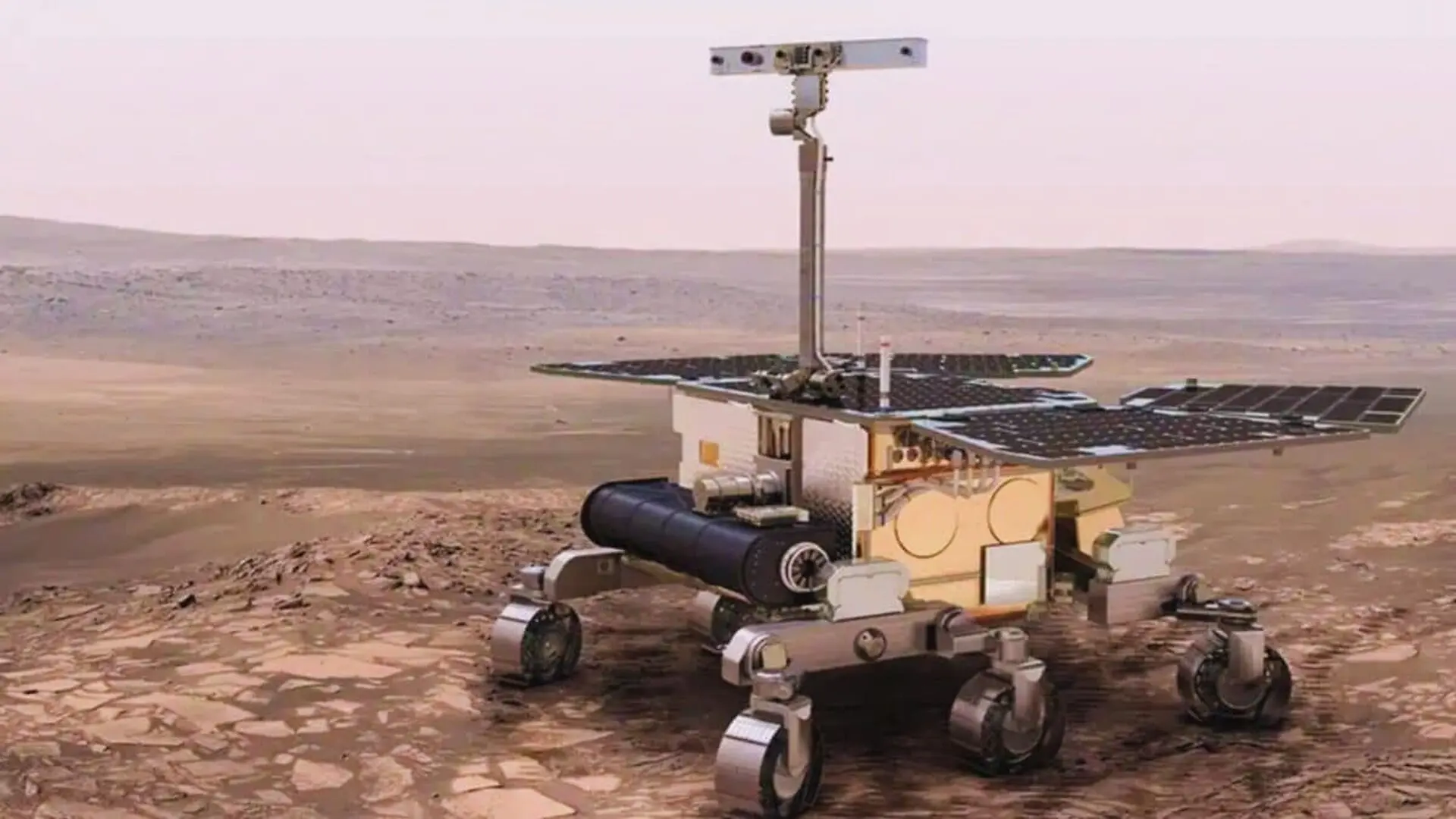
During a standard quality check for a forthcoming Mars explorer, scientists uncovered an unexpected source of contamination. While assembling the European Space Agency’s Rosalind Franklin rover, the team discovered that the well‑known Murchison meteorite appears to have acquired petroleum‑derived compounds after landing on Earth, a result that could reshape protocols for analyzing organics in extraterrestrial rocks.
Mars remains a prime candidate in the search for ancient life because geological evidence suggests the planet once hosted a warmer, wetter climate under a denser atmosphere—conditions that could have supported simple microbes. However, distinguishing genuine biosignatures from abiotic organics is challenging, as many molecules detected by rover instruments can arise through non‑biological pathways.
The ExoMars mission’s Rosalind Franklin rover, slated for a 2030 launch, will target the clay‑rich Oxia Planum region, where water is thought to have flowed billions of years ago. Its payload includes a suite of tools designed to isolate and study preserved organic compounds, with the centerpiece being the Mars Organic Molecule Analyzer (MOMA).
MOMA: Disentangling Life‑Related Chemistry from the Background
Developed by the Max Planck Institute for Solar System Research in collaboration with the University of Göttingen and the University of Côte d’Azur, MOMA integrates miniature furnaces, a gas chromatograph, a mass spectrometer, and an excitation laser. When rock samples are heated, the instrument releases gases that travel through specially coated capillary tubes; the chiral properties of molecules cause them to separate at distinct rates, allowing researchers to identify each enantiomer.
In a recent study published in Earth and Planetary Science Letters, the team focused on two hydrocarbons—pristane and phytane—both of which originate from biological sources on Earth and are common in petroleum. Because they could serve as potential biosignatures, the researchers examined how MOMA handles these compounds.
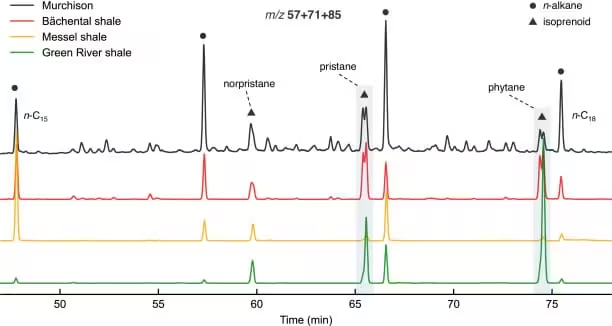
MOMA’s ability to differentiate mirror‑image forms (enantiomers) of these molecules was put to the test using replica capillary tubes. The experiment succeeded despite the stubborn chemical stability of pristane and phytane, demonstrating the instrument’s high sensitivity and precision.
“If life once existed on Mars, then molecules like pristane and phytane represent important molecular biosignatures that could have survived to this day,” lead author Guillaume Leseigneur said.
Why Molecular Handedness Matters
Chirality— the existence of two mirror‑image forms of a molecule—plays a central role in distinguishing biological from abiotic origins. Living organisms on Earth typically produce a single enantiomer, whereas non‑living chemical reactions generate both in roughly equal proportions. This disparity offers a potential diagnostic for extraterrestrial life.

Co‑author Fatma Yesil Sahan emphasized that “chiral separation of pristane and phytane requires high instrument sensitivity and measurement accuracy, both of which we show MOMA can achieve.” Another contributor, Uwe Meierhenrich, described chirality as “a valuable tool in the search for past extraterrestrial life.”
Murchison Meteorite: A Contamination Puzzle
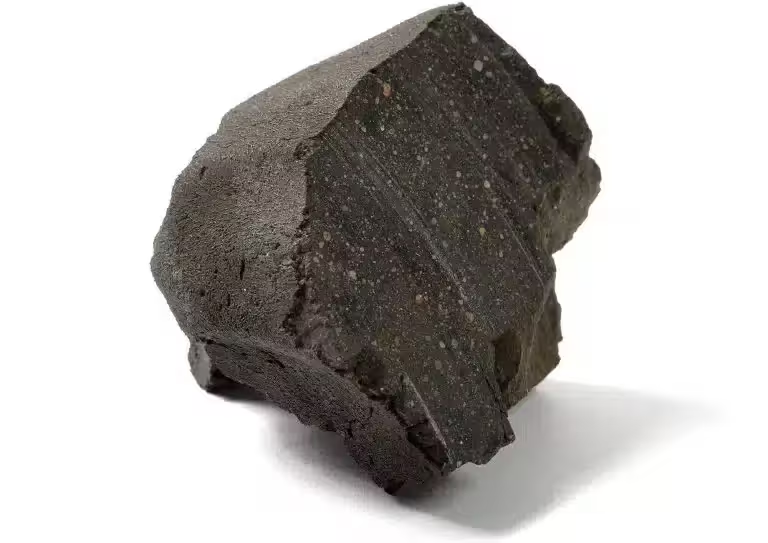
To validate the technique, the researchers examined the Murchison meteorite, a carbonaceous chondrite that fell in Australia in 1969 and is renowned for its rich organic inventory. While many of its compounds are indigenous, the meteorite is also prone to terrestrial contamination after arrival.
The team anticipated that biologically derived pristane and phytane would display a pronounced chiral imbalance, mirroring the pattern seen in living organisms. Instead, analysis revealed equal amounts of both enantiomers, suggesting that the source of these hydrocarbons was not biological.
The researchers propose that the petroleum‑like hydrocarbons were introduced via aerosols generated by fossil‑fuel combustion as the meteorite traversed Earth’s atmosphere or after it landed. Comparative tests on oil‑shale samples supported this hypothesis, offering a cautionary note for future Mars missions that aim to detect similar organics.
This article has been fact checked for accuracy, with information verified against reputable sources. Learn more about us and our editorial process.
Last reviewed on .
Article history
- Latest version
Reference(s)
- Leseigneur, Guillaume., et al. “Racemic isoprenoids in the Murchison meteorite derive from petroleum-based aerosol pollutants.” Earth and Planetary Science Letters, vol. 690, September 1, 2026, pp. 120141 Elsevier BV, doi: 10.1016/j.epsl.2026.120141. <https://doi.org/10.1016/j.epsl.2026.120141>.
- “Guillaume Leseigneur.” <https://scholar.google.com/citations?user=iuDkDe0AAAAJ&hl=en>.
- “Yesil Sahan, Fatma | Max Planck Institut für Sonnensystemforschung.” <https://www.mps.mpg.de/person/111389>.
- Fontaine-Vive, Fabien. “Prof. Dr. Uwe Meierhenrich - ICN.” ICN <https://icn.univ-cotedazur.fr/uwe-meierhenrich>.
Cite this page:
- Posted by Hassan Raza