Ancient Viking Skis Uncovered in Melting Norwegian Ice Reveal High‑Altitude Winter Travel
The best-preserved prehistoric wooden skis reveal how ancient peoples traveled and survived in high‑altitude winter conditions.
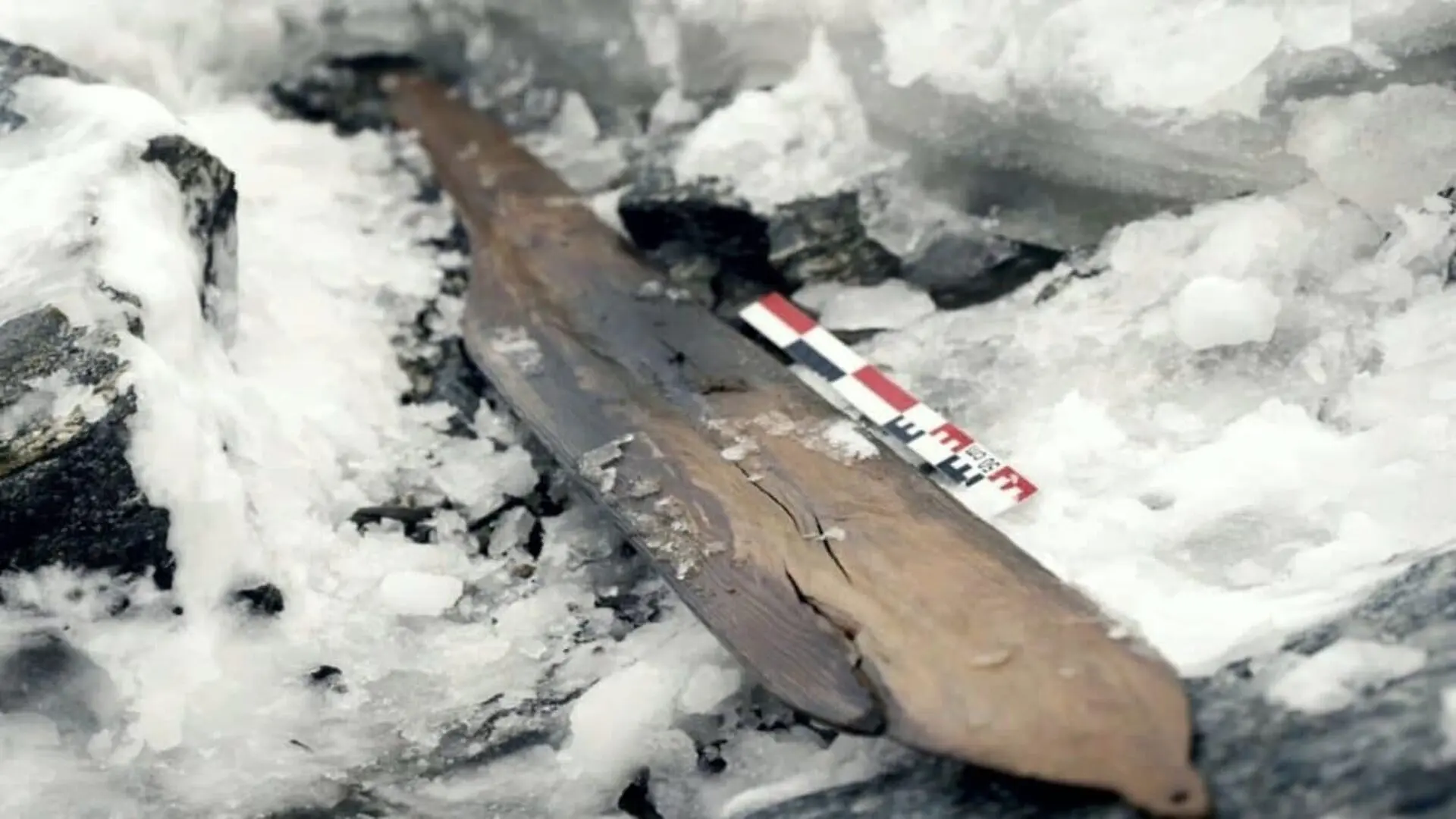
Glacial melt in Norway is turning the mountains into open-air museums, uncovering artifacts that have been locked in ice for more than a millennium. Among the latest finds is a pair of wooden skis recovered just five metres apart, offering a rare glimpse into how people lived and travelled in high‑altitude environments around the year 700.
The excavation was carried out by the Secrets of the Ice initiative, a collaboration between Innlandet County Council and the Museum of Cultural History at the University of Oslo. Beyond the skis themselves, the discovery provides concrete proof of winter occupation at elevations well above the tree line and highlights the ingenuity of early communities coping with harsh climatic conditions.
Twin Prehistoric Skis Reunited After Seven Years Apart
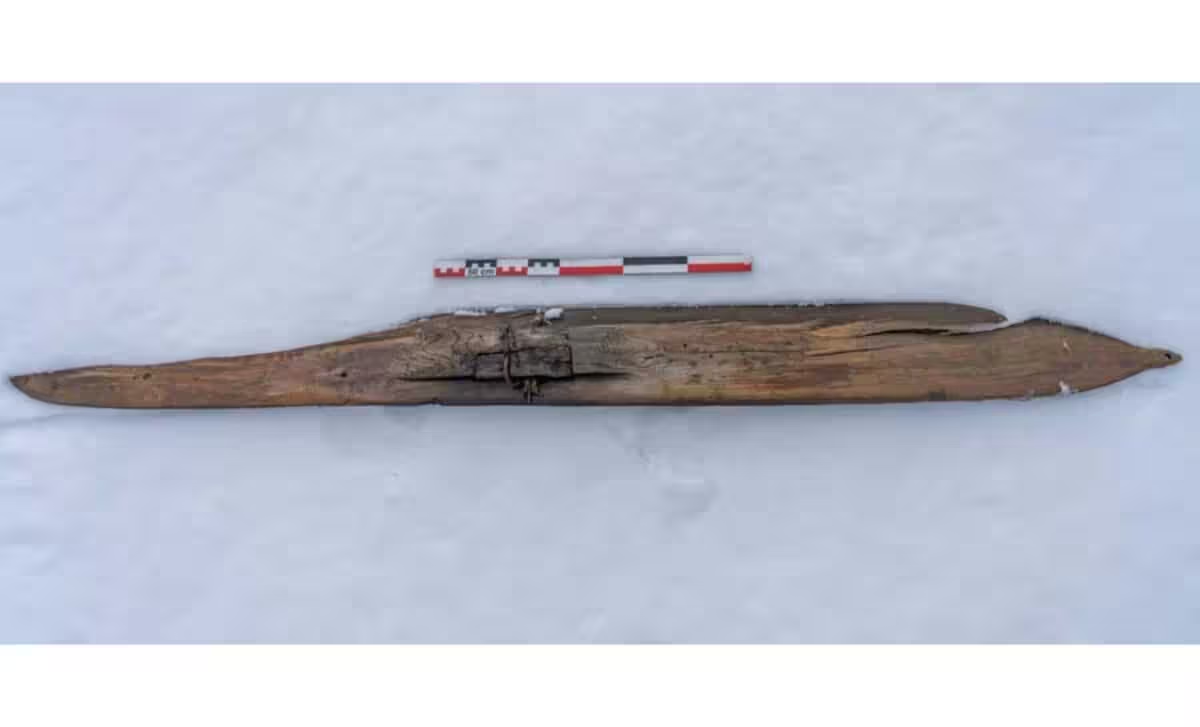
Archaeologists working above 1,600 metres on Digervarden linked two wooden skis that had been found years apart. The first specimen emerged in 2014, while the second was exposed by melting ice in 2021, only a short distance from the original find.
Radiocarbon analysis dates both pieces to roughly 1,300 years ago, placing them in the early‑medieval period. The two skis are crafted from different woods – one from pine, the other from birch – a detail that Lars Holger Pilø, co‑director of the Secrets of the Ice programme, interprets as evidence of resource constraints and adaptive craftsmanship rather than a mistake.
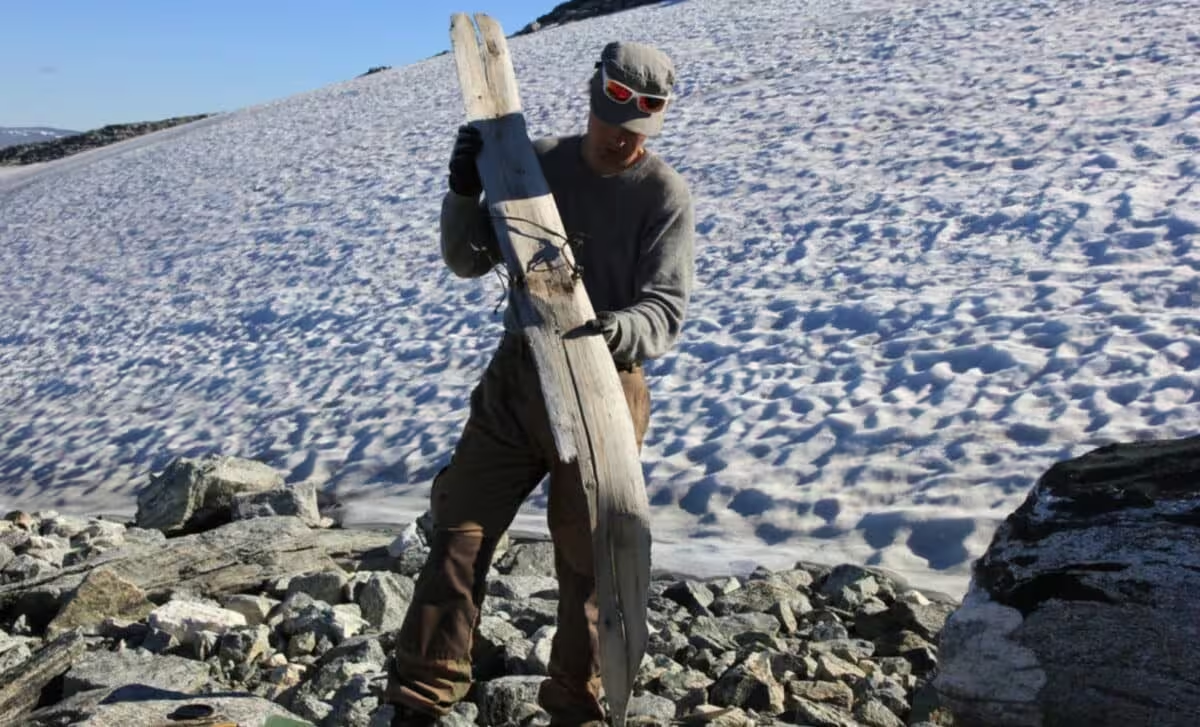
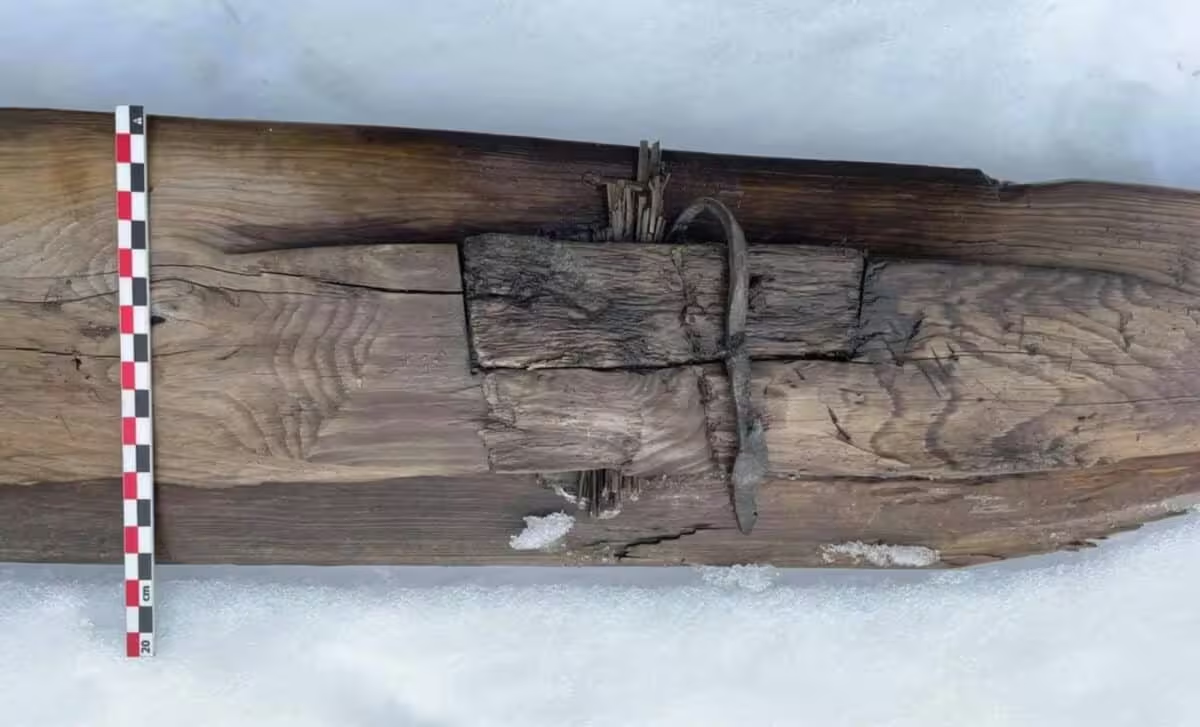
The site’s altitude, well beyond the treeline, indicates that people deliberately entered these high‑mountain zones during the winter months. Leather bindings still attached to the skis point to sophisticated equipment capable of withstanding extreme conditions.
Glacial Archaeology Gains Momentum as Ice Retreats
The Digervarden find underscores the rapid growth of a new field that studies objects liberated by melting ice. According to a report in Science et Vie, an unusually warm summer in 2006 exposed hundreds of artefacts across Norway, prompting the creation of the Secrets of the Ice programme by Innlandet County Council and the University of Oslo’s Museum of Cultural History.
Researchers differentiate between moving glaciers, which tend to crush and scatter material, and stable ice patches that can preserve items in near‑pristine condition for centuries. To locate promising locations, scientists combine satellite data, aerial reconnaissance, and insights from local reindeer herders and hikers.
When the second ski surfaced, archaeologists removed it by hand with a pickaxe to avoid damaging the delicate wood. Pilø notes that climate change presents a paradox: while it threatens cultural heritage, it also reveals sites that would otherwise remain hidden.
Climate Stress and Adaptation in the Early Medieval Era
The artifacts emerging from Norway’s ice sheets also shed light on how ancient societies responded to prolonged cooling events. Researchers point to the Late Antique Little Ice Age (AD 535‑660), a period of sustained low temperatures that disrupted agriculture in high‑altitude zones.
Pilø explains that these conditions likely pushed local groups toward increased reliance on hunting, especially reindeer, in glaciated terrain. Supporting this hypothesis, archaeologists have noted a rise in the number of arrows recovered from similar sites, suggesting intensified hunting activity.
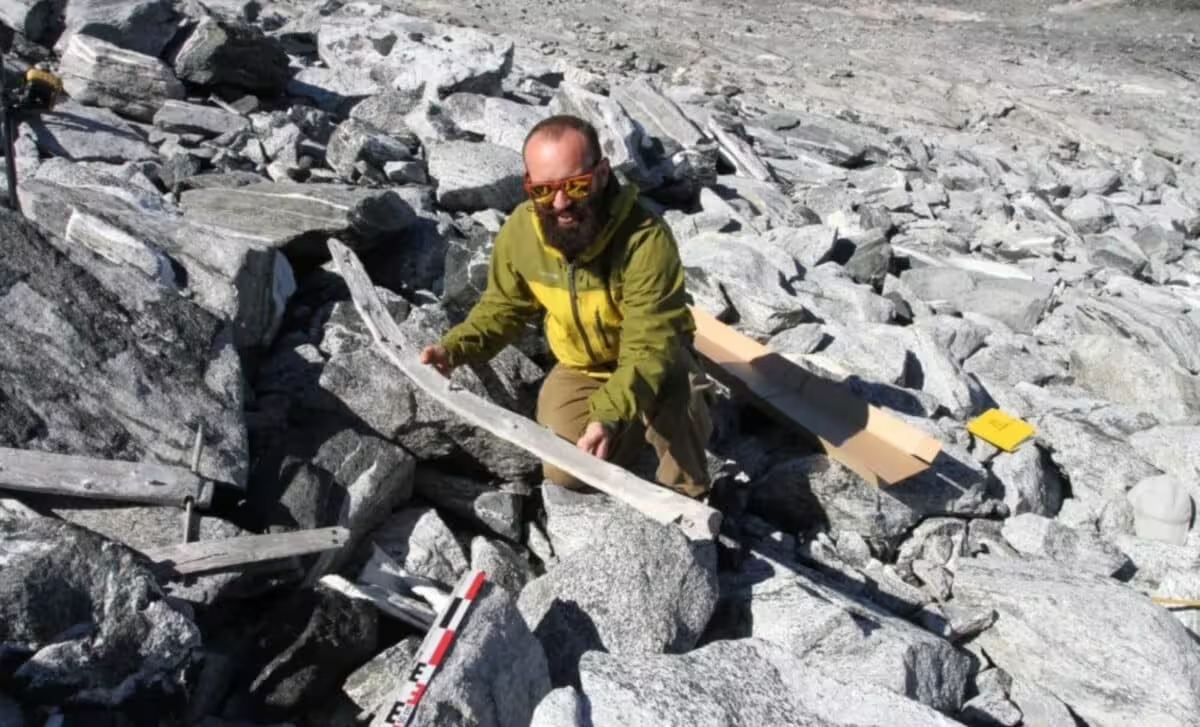
The ski pair, together with other winter gear, indicates that people regularly traversed high mountain routes during the cold months, a level of mobility that had previously been underestimated. These findings complement paleoclimatic research, where tree‑ring analysis helps reconstruct long‑term environmental trends. Nicole Davi of the Lamont‑Doherty Earth Observatory notes that while modern weather records span only a few decades, trees preserve continuous climate signals over millennia.
Linking archaeological artefacts directly to climate data remains a complex task, says Pilø, and is one of the major challenges facing glacial archaeology. As Norwegian glaciers continue to recede, the urgency to document, safeguard, and interpret these newly exposed pieces of history grows ever more critical.
This article has been fact checked for accuracy, with information verified against reputable sources. Learn more about us and our editorial process.
Last reviewed on .
Article history
- Latest version
Cite this page:
- Posted by William Moore