NASA Satellite Captures Turquoise Phytoplankton Ring Around Remote Chatham Islands
A glowing turquoise ring surrounds remote New Zealand islands, unveiling a striking ocean phenomenon that masks a deeper, darker mystery beneath.
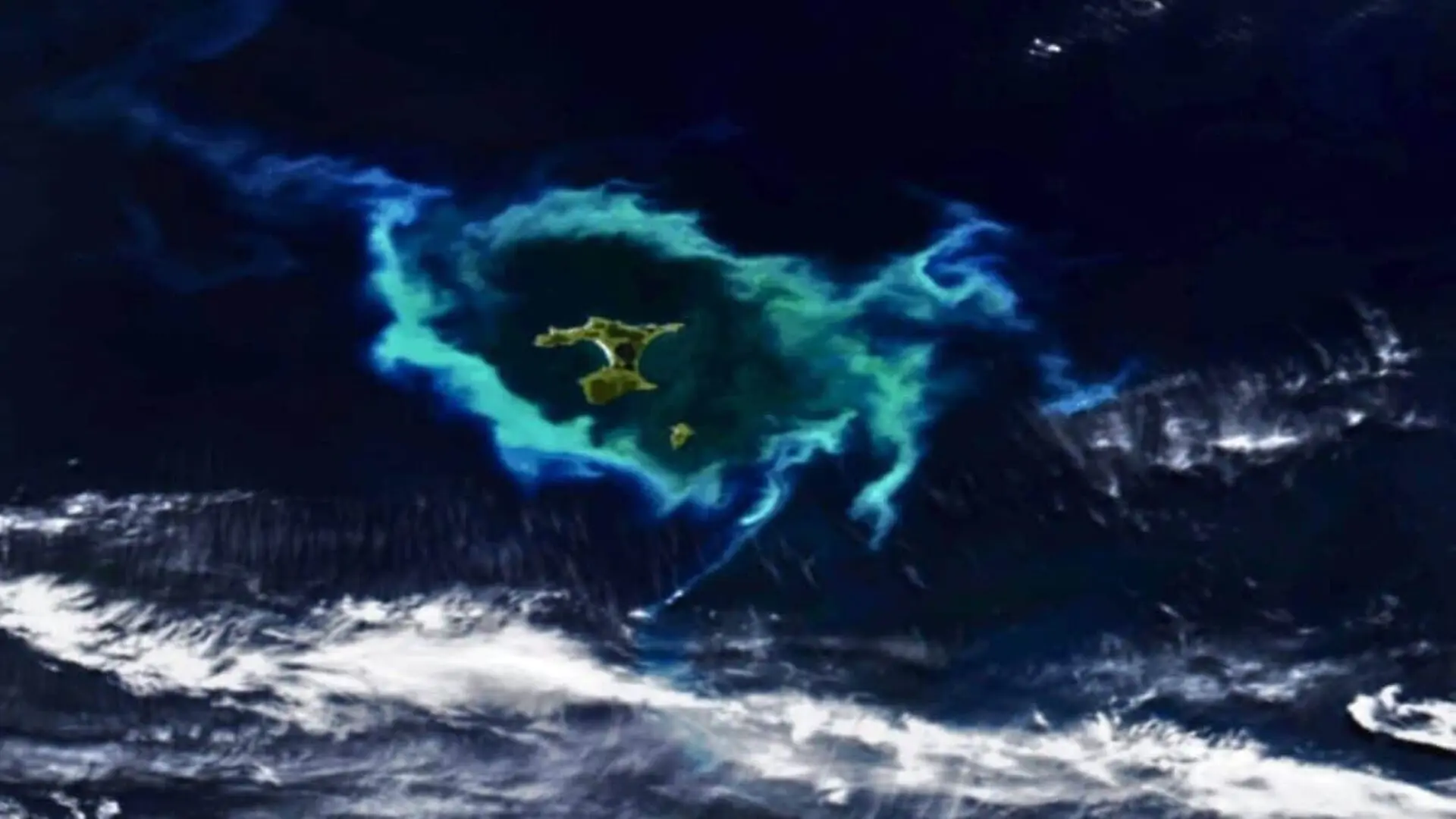
On 10 January 2026 the VIIRS sensor on the NOAA‑20 satellite recorded a vivid turquoise‑green circle surrounding the Chatham Islands, an isolated chain situated about 800 km (500 mi) east of New Zealand’s South Island. NASA’s Earth Observatory posted the image six days later, noting that the phytoplankton bloom was large enough to be seen with the naked eye from orbit.
The ring follows the outline of the Chatham Rise, an underwater plateau that creates a striking geometric pattern in the otherwise open ocean. The islands themselves are tiny – the main Chatham Island spans roughly 58 km (36 mi) and nearby Pitt Island about 15 km (9 mi) – which makes satellite monitoring essential for tracking events of this magnitude in such a remote region.
How a Submerged Ridge Fuels a Summer Explosion
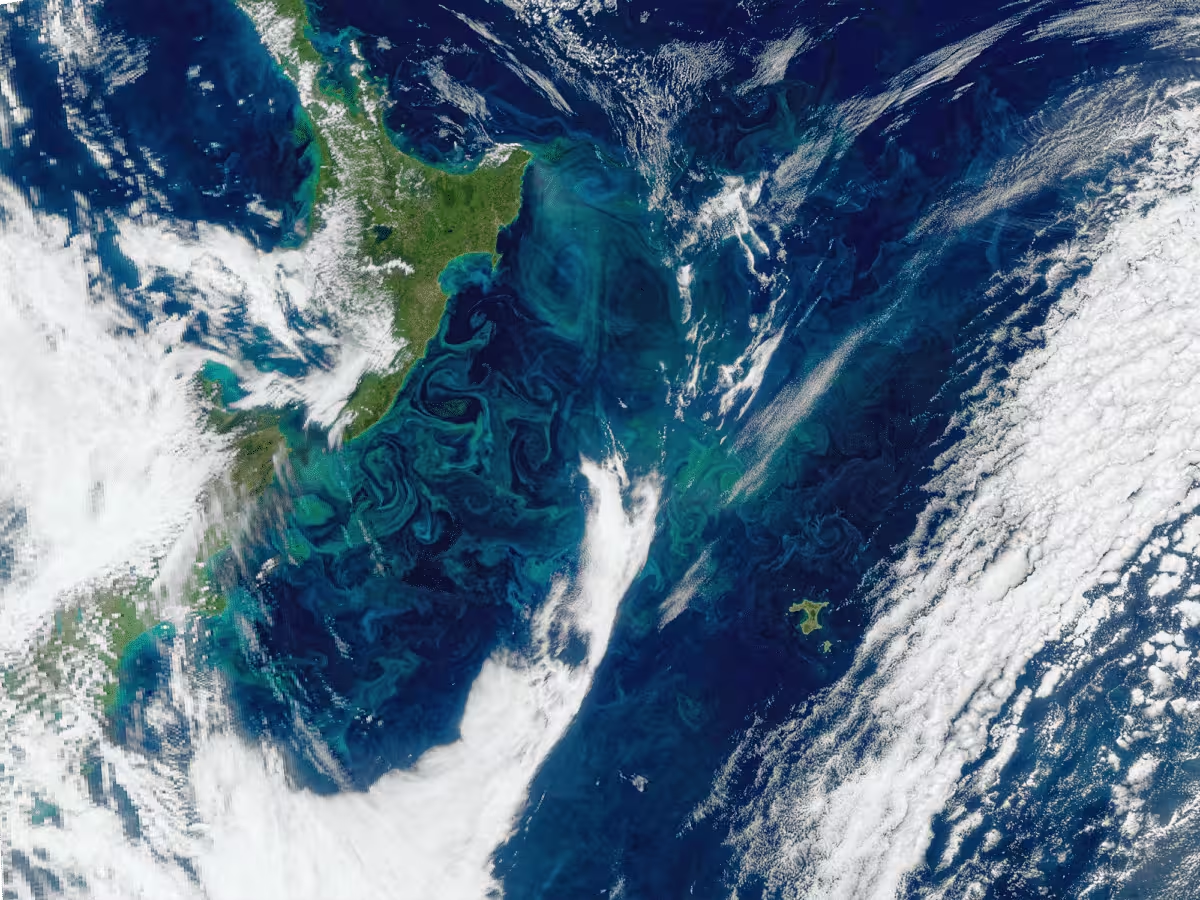
The Chatham Rise rises gently from the deep sea east of New Zealand’s South Island, with deeper basins to its north and south. This topography forces cold, nutrient‑rich Antarctic waters upward as they encounter the plateau, where they mix with warmer, nutrient‑poor subtropical currents. The long daylight of the southern summer then supplies the energy needed for phytoplankton to multiply across a broad swath of water.
Surface currents and eddies subsequently sculpt the floating algae into wispy spirals that appear as the bright ring in satellite imagery. The pattern reflects the fine‑scale motion of the upper ocean, stretching and folding patches of phytoplankton much like cream swirls in coffee.
Tiny Calcium‑Shell Algae Behind the Turquoise Hue
The pale blue‑green shade points to coccolithophores, a class of phytoplankton that encase themselves in microscopic calcium‑carbonate plates. These plates scatter sunlight in a way that produces the chalky turquoise color detected by space‑borne sensors, unlike the darker green tones typical of other algae groups.
The VIIRS image was taken with a near‑infrared filter, which accentuates the contrast between the bloom and the surrounding darker water, sharpening the appearance of the ring.
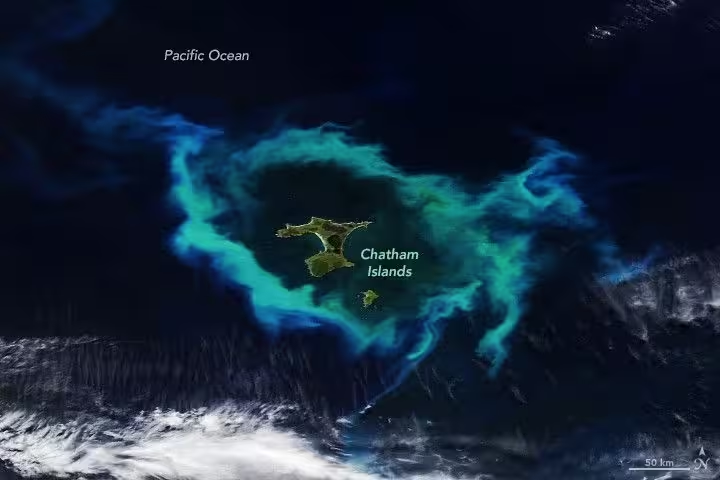
No research vessel sampled the water directly during this event, so the coccolithophore identification relies on the optical signature recorded by the satellite rather than on in‑situ measurements. A 2001 study in the New Zealand Journal of Marine and Freshwater Research used satellite ocean‑color data to map phytoplankton in the region and linked the same turquoise signal to recurring coccolithophore blooms over the Chatham Rise.
A Boon for Fisheries and Marine Life
As the foundation of the ocean food web, a bloom of this scale injects energy into the ecosystem, supporting everything from tiny fish and crustaceans to larger predators. The Chatham Islands already host productive fisheries for pāua, rock lobster and blue cod, which depend on the nutrient‑rich waters supplied by the rise.
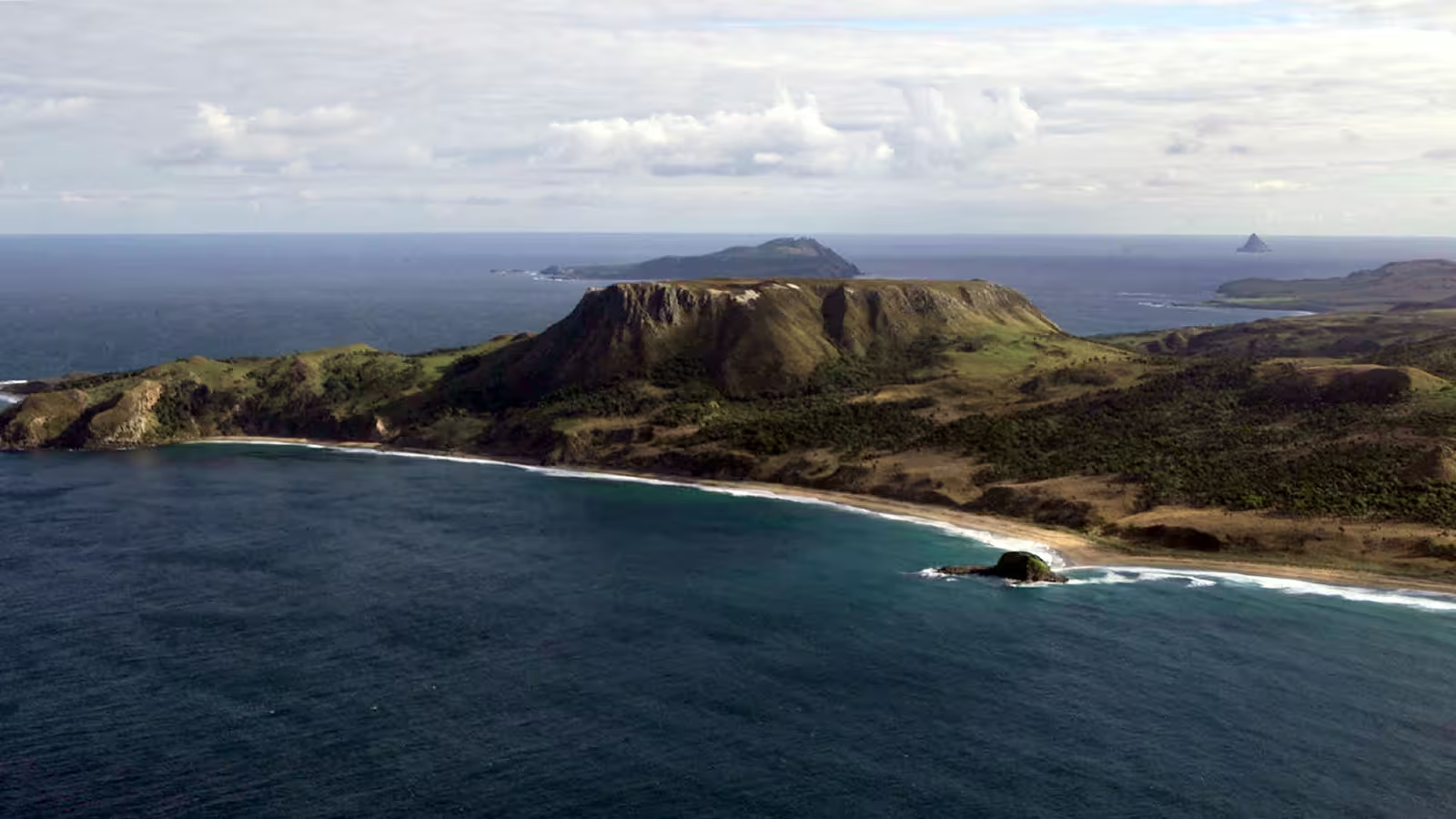
The surrounding waters also host five seal species, about 25 species of whales and dolphins, as well as penguins, albatrosses and sea lions, making the area one of the most biologically active parts of the South Pacific. The same seafloor architecture that drives the bloom continuously brings nutrient‑laden water to the surface, sustaining both commercial fisheries and the broader marine mammal community.
A History of Mass Strandings
The shallow coastal zone around the islands has long been a hotspot for whale and dolphin strandings, a phenomenon recorded for more than a century. Pilot whales are especially prone to these events because they travel in tightly bonded pods; if a single animal becomes disoriented or injured, the entire group may follow it into shallow water, where receding tides can strand the pod on the beach.
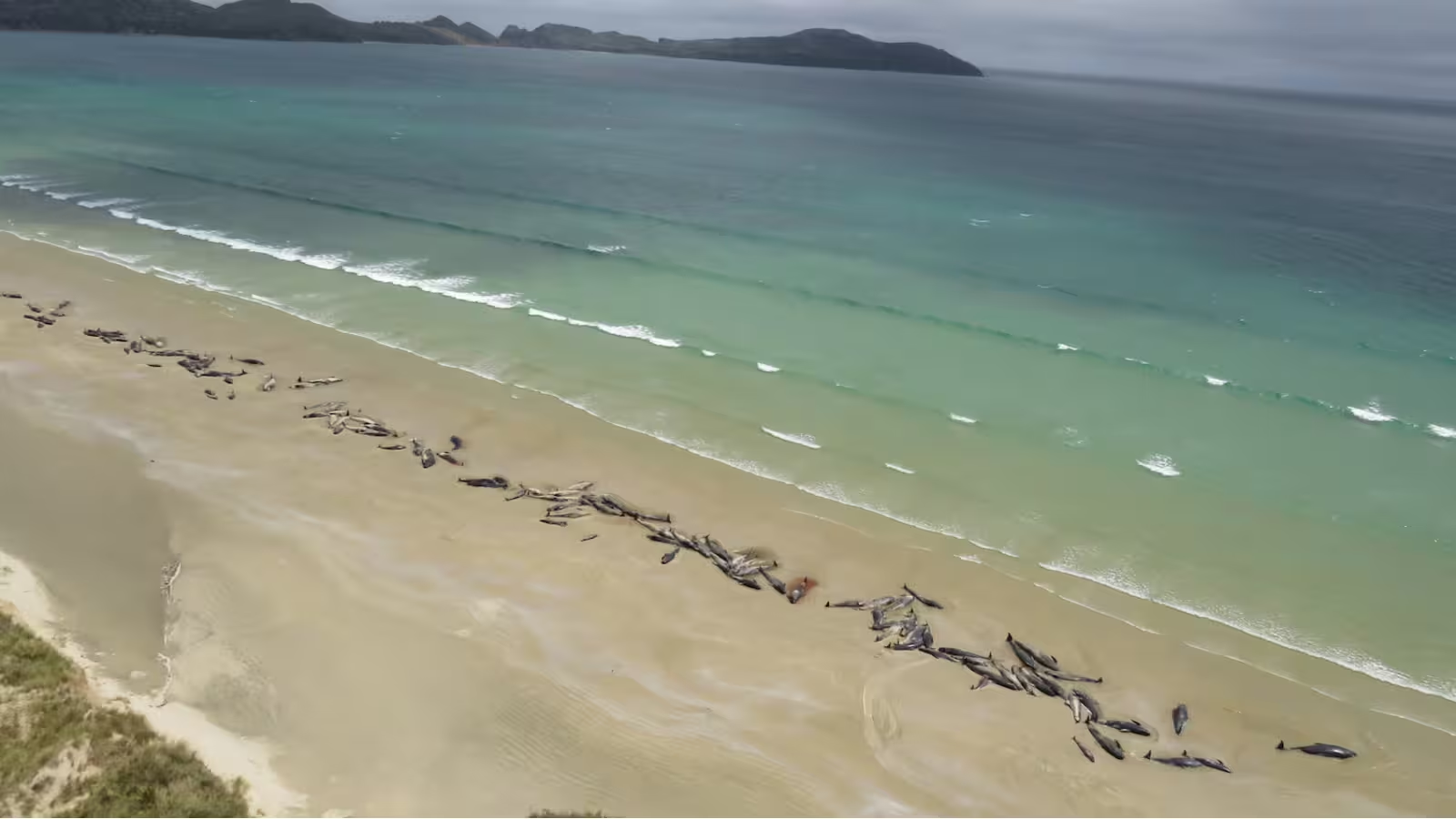
In October 2022 nearly 500 pilot whales washed ashore on Chatham Island over four days and were subsequently euthanised, according to New Zealand’s Department of Conservation, which deemed rescue impossible given the remote location and the number of animals involved. The deadliest recorded event occurred in 1918, when more than 1,000 pilot whales stranded on the same island, marking the largest single whale stranding ever documented.
This article has been fact checked for accuracy, with information verified against reputable sources. Learn more about us and our editorial process.
Last reviewed on .
Article history
- Latest version
Reference(s)
- Dauphin, Lauren. “Blooming Seas Around the Chatham Islands - NASA Science.”, January 16, 2026 NASA <https://science.nasa.gov/earth/earth-observatory/blooming-seas-around-the-chatham-islands/>.
Cite this page:
- Posted by Divya Iyer