Tiny Silver Coin Pinpoints Lost 1584 Spanish Colony At Strait Of Magellan
A newly discovered silver coin provides archaeologists a surprising breakthrough in a centuries‑old mystery.
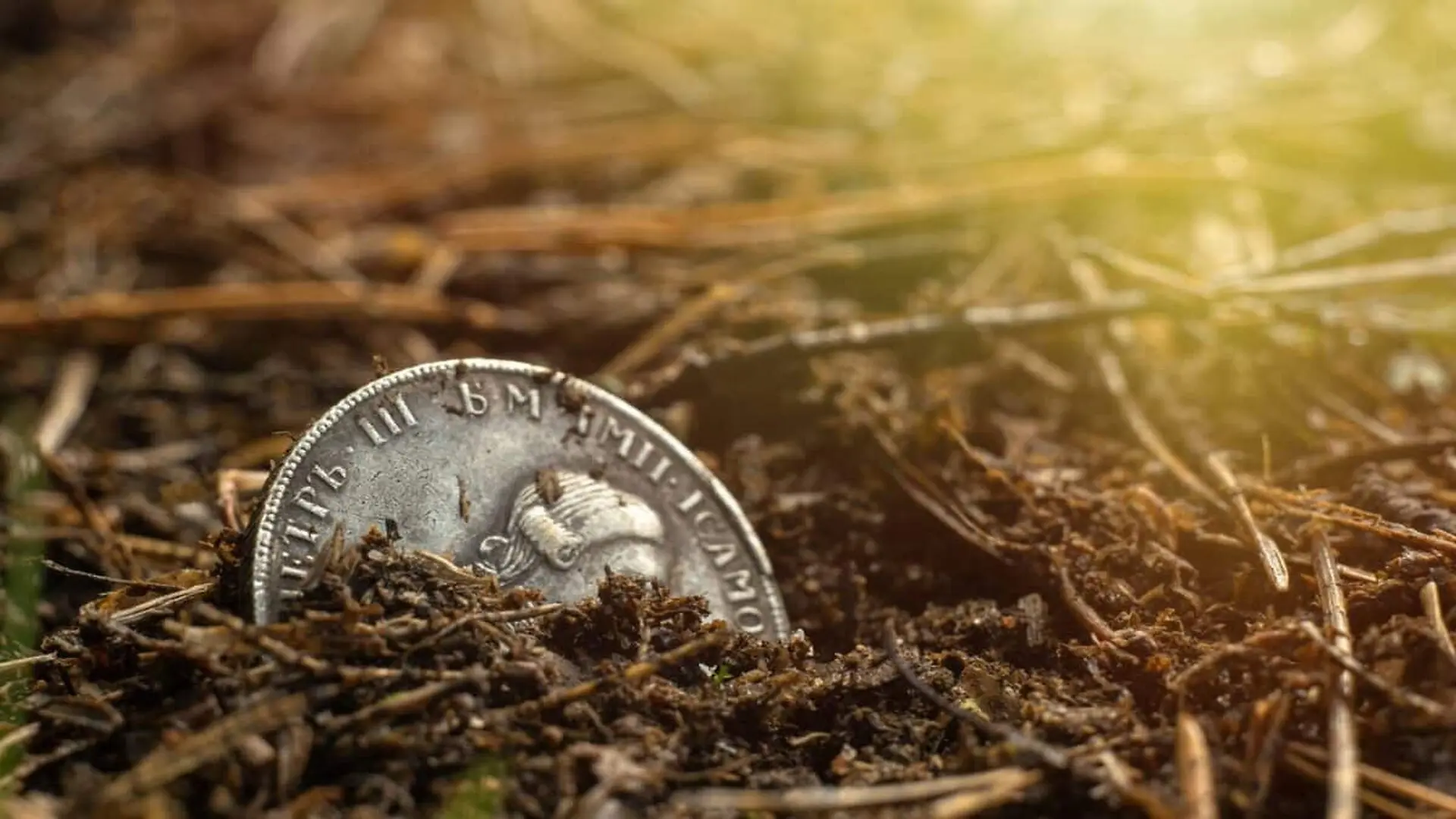
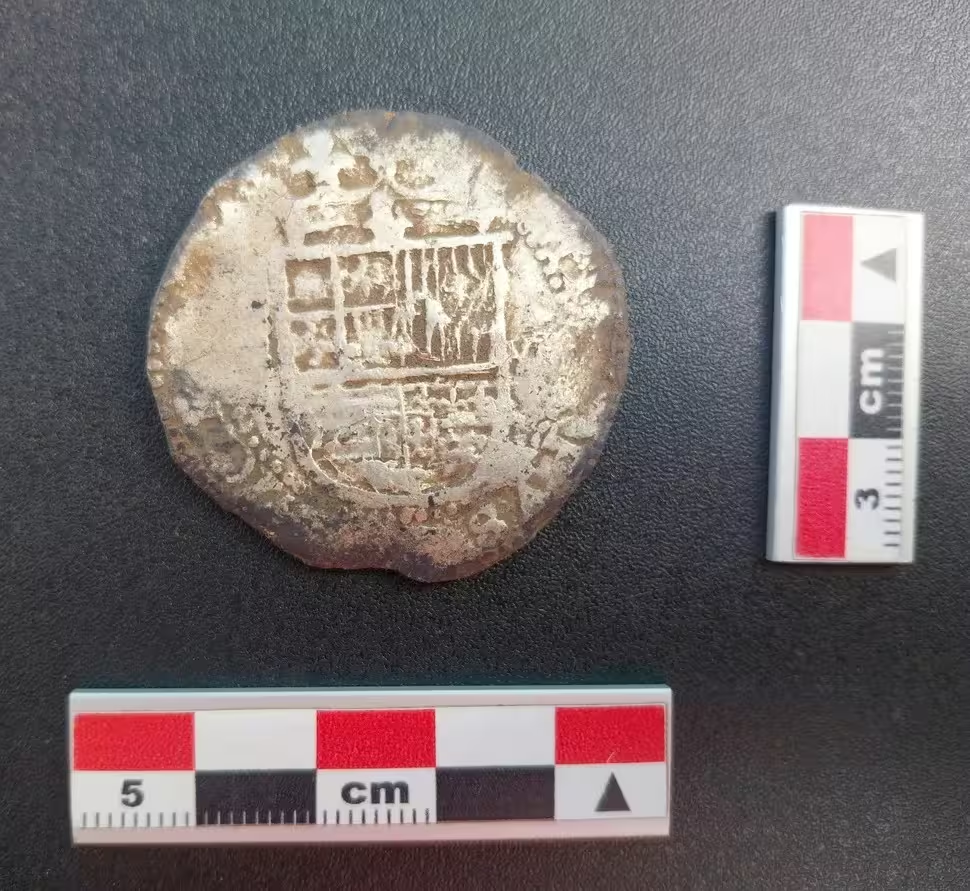
A silver eight‑reales coin uncovered beneath the stone foundation of an early colonial church has enabled researchers to pinpoint the exact location where Ciudad del Rey Don Felipe was established in 1584, near the Strait of Magellan in southern Chile.
The settlement, later remembered as Puerto del Hambre or Port Famine, vanished within a few years as hunger, disease and brutal weather claimed most of its inhabitants. Until now, historians relied mainly on written narratives; the newly recovered coin provides the first tangible artifact that aligns closely with those accounts.
Silver Eight‑Reales Locks Down Lost Outpost
The artifact, a genuine real de a ocho bearing the portrait of Philip II of Spain, was discovered lying on a church foundation stone during a March field season led by historian Soledad González Díaz of Bernardo O’Higgins University, in partnership with Chile’s National Research and Development Agency.
“This discovery provides a rare and powerful point of convergence between written sources and archaeological evidence,” said González Díaz. “It not only helps to confirm the location and layout of key structures within the settlement but also opens new possibilities for reconstructing its spatial organization.”
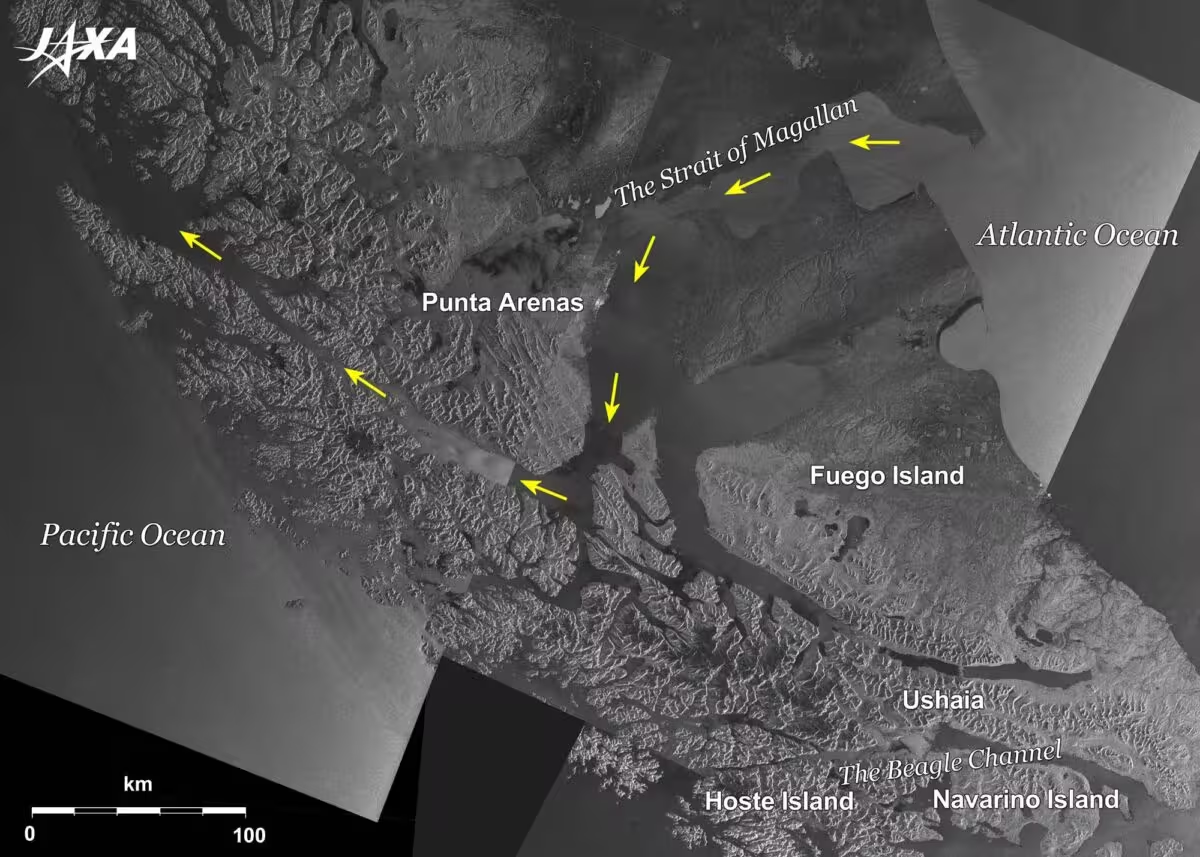
Why the Spanish Dreamed of a Magellan Stronghold
The venture was sparked after English explorer Francis Drake navigated the narrow waterway that links the Atlantic and Pacific oceans. Smithsonian Magazine notes that the Spanish Crown hoped to fortify the passage and deter rival fleets.
Roughly two dozen ships were dispatched toward the strait, yet only a handful completed the perilous journey. Pedro Sarmiento de Gamboa pressed on with the remaining colonists, only to confront an environment far harsher than anticipated.
Scarcity of provisions, outbreaks of disease and relentless weather soon eroded the settlement’s viability. When English navigator Thomas Cavendish arrived a few years later, he found just a few survivors, cementing the site’s grim nickname, Port Famine.
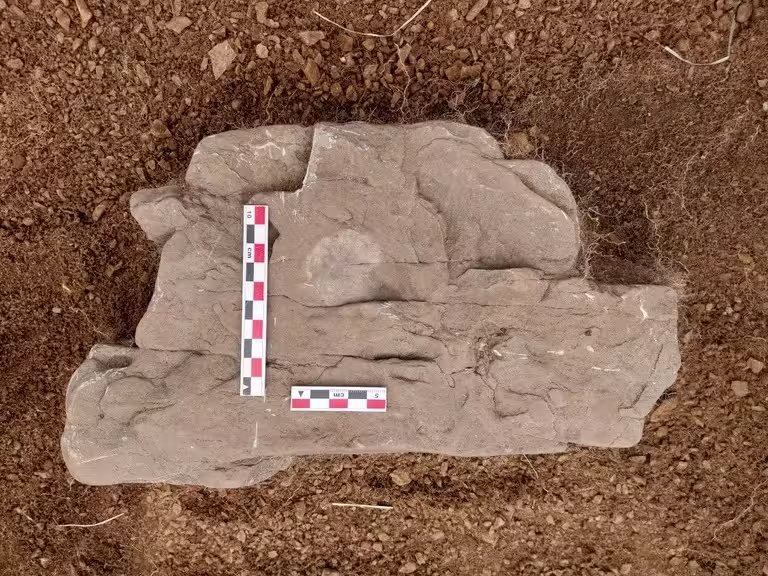
Cutting‑Edge Survey Techniques Reveal Hidden Architecture
Before breaking ground across the entire site, the research team employed a suite of non‑invasive instruments to narrow down promising locations. As reported by Heritage Daily, metal detectors and geolocation devices identified anomalous signals that guided the targeted digs.
Locating the church foundation not only confirms a single structure; it also provides a reference point that makes it easier to infer the positions of other buildings and to reconstruct the original layout of the colony.
This article has been fact checked for accuracy, with information verified against reputable sources. Learn more about us and our editorial process.
Last reviewed on .
Article history
- Latest version
Reference(s)
- ceh, “Dra. Soledad González Díaz.”, June 2, 2025 Universidad Bernardo O'Higgins <https://investigacion.ubo.cl/dra-soledad-gonzalez-diaz/>.
- Debczak, Michele. “Hundreds of Spanish Settlers Died at the 'Port of Famine.' This Newly Discovered Silver Coin Reveals Where the Doomed Colony Was Founded 400 Years Ago.”, April 17, 2026 Smithsonian Magazine <https://www.smithsonianmag.com/smart-news/hundreds-of-spanish-settlers-died-at-the-port-of-famine-this-newly-discovered-silver-coin-reveals-where-the-doomed-colony-was-founded-400-years-ago-180988519/>.
- Milligan, Mark. “Coin discovery confirms location of lost Magellan colony.”, March 27, 2026 HeritageDaily <https://www.heritagedaily.com/2026/03/coin-discovery-confirms-location-of-lost-magellan-colony/157596>.
Cite this page:
- Posted by Divya Iyer