China to Double Tiangong, Creating World’s Largest Government Space Station
China plans to expand Tiangong into a massive orbital lab as the ISS nears retirement, reshaping space research.
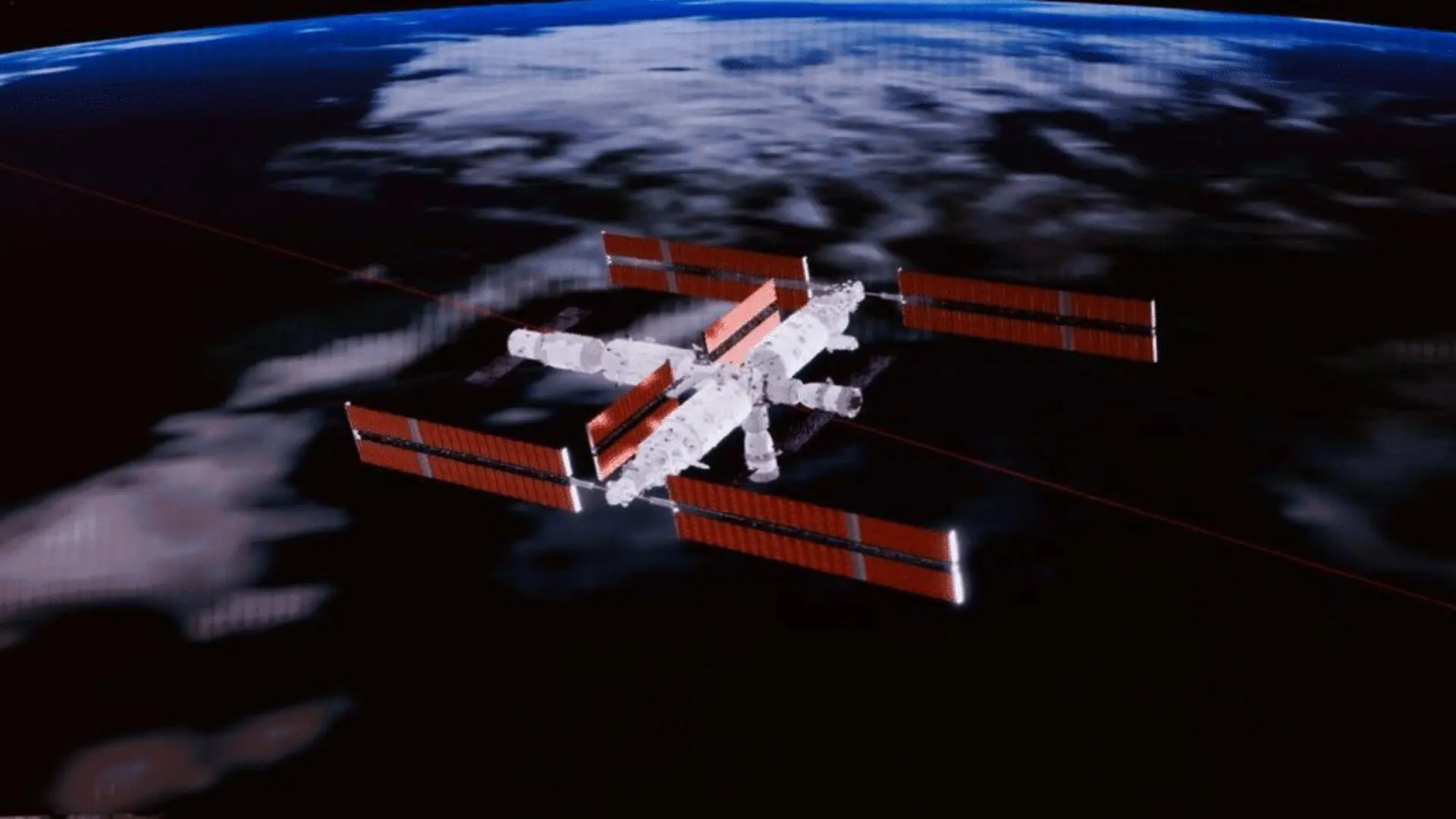
China is moving ahead with an ambitious plan to enlarge its Tiangong space station, a development that could reshape the dynamics of human activity in low‑Earth orbit over the coming decade. The strategy involves adding three new modules to the existing three‑module outpost and launching a high‑performance space telescope that will operate in tandem with the station. The timing is significant, as the International Space Station is slated to end operations around 2030, marking a major shift in crewed spaceflight.
China Targets Major Tiangong Upgrade
Engineers are preparing to double the size of Tiangong by attaching a 20‑ton multifunctional module to the Tianhe core, followed by two dedicated experiment modules. This “double‑T” configuration will expand living quarters, increase laboratory space, and provide additional docking ports for simultaneous crewed and cargo missions. Officials say the added capacity will give the station greater operational flexibility and support longer‑duration flights without logistical bottlenecks.
Rising Launch Cadence Drives Need for More Docking Ports
As launch frequency climbs and more spacecraft head for Tiangong, the risk of a docking‑port queue becomes a pressing concern. Researcher Qian Hang of the China Aerospace Science and Technology Corporation warned that “if the missions get more intensive, we risk ‘queuing’ for docking ports and lack sufficient emergency buffer space.” New docking interfaces are intended to alleviate that pressure while enabling a broader suite of scientific experiments. In parallel, China is developing lower‑cost cargo vehicles and the next‑generation Mengzhou crew ship, which will carry up to seven astronauts—more than double the capacity of the current Shenzhou craft. According to Space.com, these efforts suggest a comprehensive transportation system designed to sustain a higher orbital tempo.
Xuntian Telescope to Operate Alongside the Expanded Station
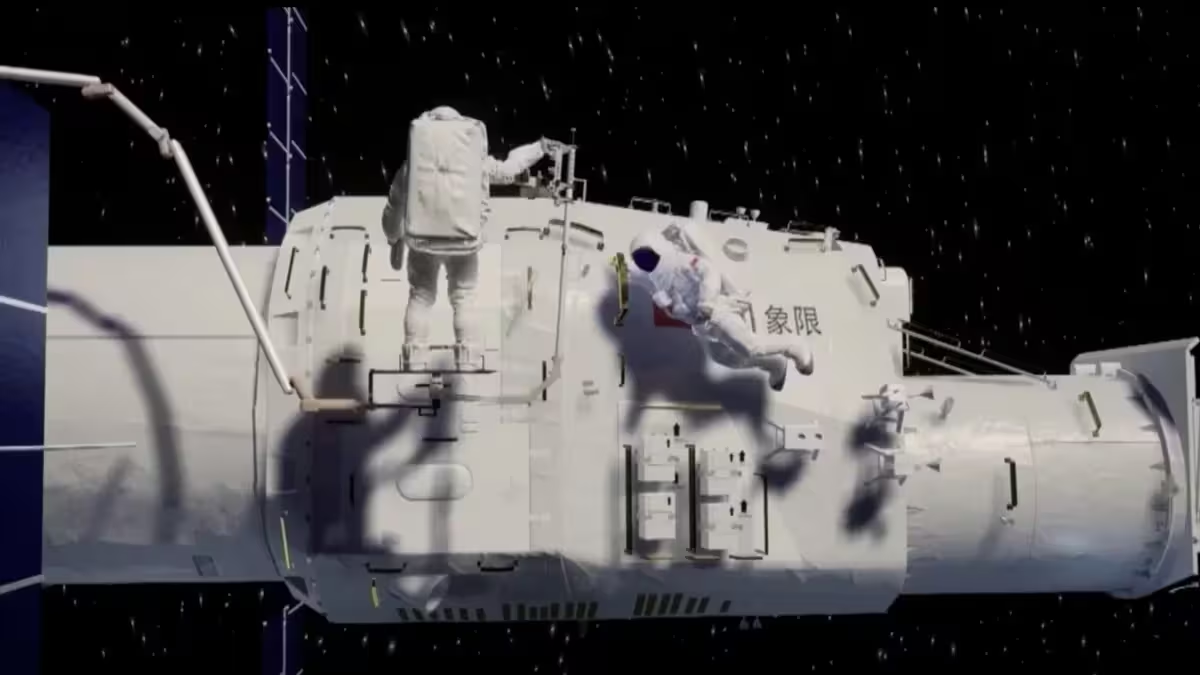
China plans to launch the Xuntian Space Telescope in 2027, ahead of the Tiangong expansion. The observatory features a two‑meter primary mirror, a 2.5‑billion‑pixel camera, and a field of view roughly 300 times wider than that of the Hubble Space Telescope, allowing it to scan about 40 percent of the sky during its ten‑year mission. Unlike a permanently attached payload, Xuntian will follow an orbit nearly identical to Tiangong’s, enabling periodic docking for servicing, refueling, and upgrades—an approach that mirrors the maintenance flexibility once enjoyed by Hubble.
Implications for the Future of Low‑Earth‑Orbit Habitats
With the International Space Station expected to be de‑orbited by 2030 or 2031 using a U.S. deorbit vehicle under development by SpaceX, commercial stations are poised to fill the gap. In that transitional window, Tiangong could become the largest continuously occupied government‑run station, especially if its mass grows from roughly 90 tons to 180 tons as chief designer Yang Hong has indicated. The expansion underscores China’s long‑term goal of bolstering its independent presence in space, enhancing scientific output, and preparing for more frequent human missions beyond Earth’s atmosphere. As one historic orbital laboratory winds down, another readies for its most ambitious phase yet.
This article has been fact checked for accuracy, with information verified against reputable sources. Learn more about us and our editorial process.
Last reviewed on .
Article history
- Latest version
Reference(s)
- Jones, Andrew. “China plans to double the size of its Tiangong space station while the ISS nears its end.”, June 26, 2026 Space <https://www.space.com/space-exploration/launches-spacecraft/china-plans-to-double-the-size-of-its-tiangong-space-station-while-the-iss-nears-its-end>.
Cite this page:
- Posted by Divya Iyer