Dolphins Pull Shells to Trap Fish, Revealing First Visual Evidence of Tool Use
Scientists study a rare Australian dolphin sighting that unveiled a surprising new behavior, sparking fresh research into marine intelligence.
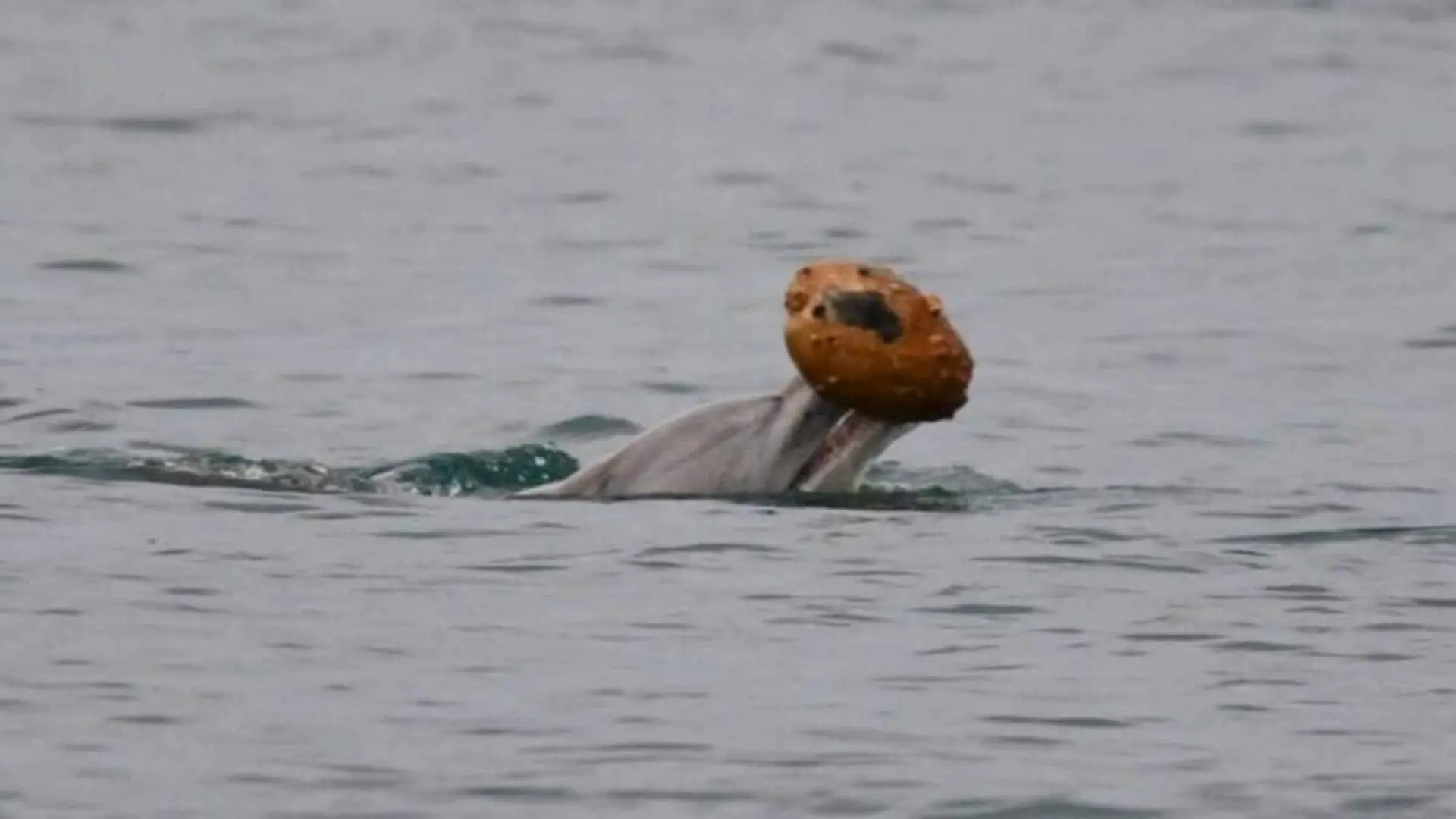
Marine researchers have captured the first clear visual record of Indo‑Pacific bottlenose dolphins employing empty seashells as hunting tools along Australia’s east coast. The finding, based on fieldwork by scientists from the University of the Sunshine Coast and published in Marine Mammal Science, suggests a sophisticated foraging strategy previously confirmed only in Western Australia.
Tool‑Using Dolphins Observed in Hervey Bay
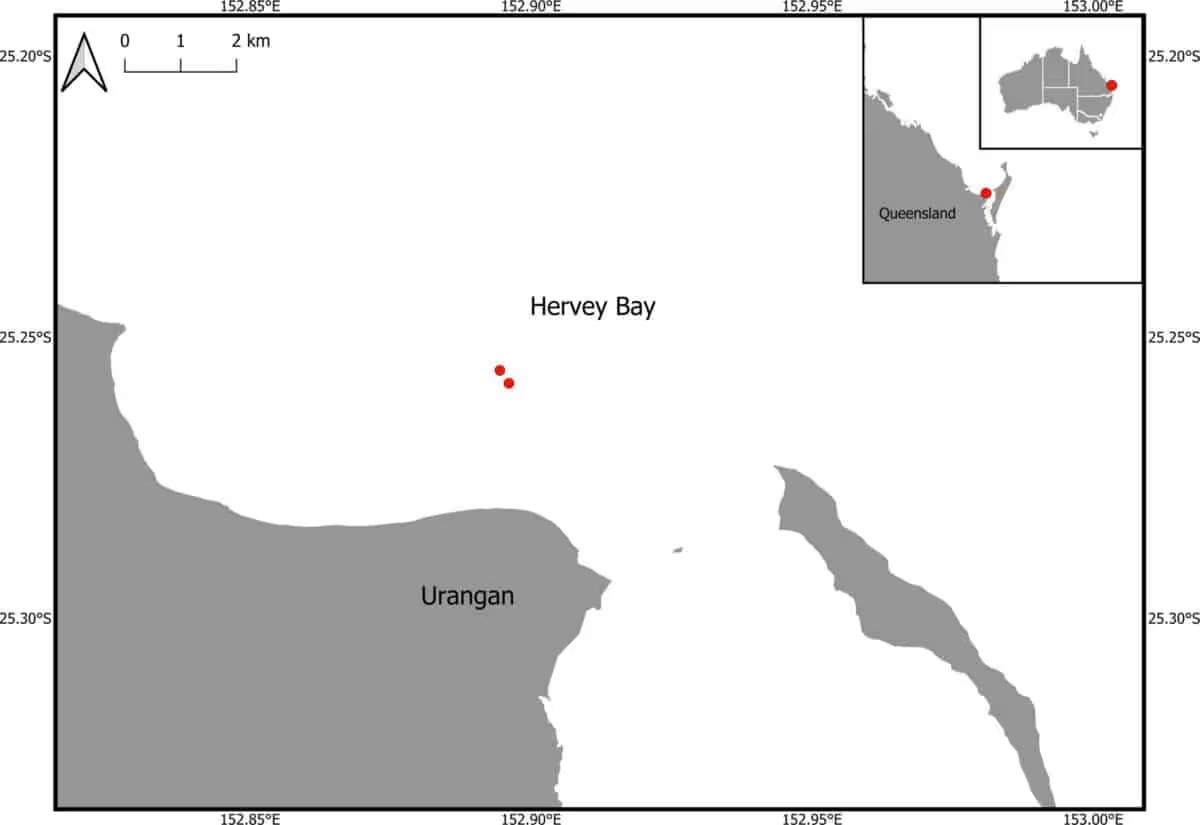
During routine surveys of dolphin movement, health and behavior in Hervey Bay, Queensland, a female dolphin was seen lifting an empty shell from the water, prompting researchers to recognize a rare hunting technique known as “shelling.”
Behavioral ecologist Alexis Levengood recalled the moment as an unexpected breakthrough. “The second I saw that shell in the air, I immediately knew what was happening,” she said, noting the excitement of witnessing the behavior on the east coast after it had only been documented in Shark Bay.
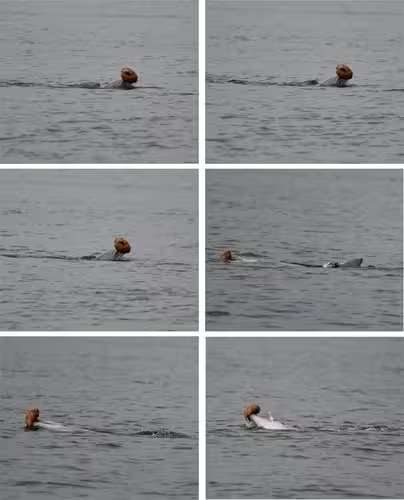
The research team also examined archival photographs taken by passengers on the Blue Dolphin Marine Tour. Images from 2013 and 2019, previously stored without scientific context, were later identified as showing possible shelling events after the new observation.
In the shelling process, a dolphin forces a small fish into an empty shell, then inserts its snout, lifts the shell above the surface and drains the prey, making capture more efficient.
Possible Cultural Transmission Between Mother and Calf
Observations in Hervey Bay add to earlier work from Shark Bay, where scientists reported that shelling could spread among members of the same social group, hinting at a form of cultural tradition. In the recent footage, an adult female performed the technique, and her calf attempted to replicate the action moments later.
Levengood described the scene: “We saw a mom shell first, pick up the shell and drain the fish. Within minutes of dropping her shell, her calf picked up the shell and was doing the same thing.” While researchers could not confirm the calf’s success in capturing a fish, the sequence suggests learning through observation.
The team proposes that multiple learning pathways may be involved, including maternal teaching and peer imitation. The discovery also raises questions about how the behavior originated—whether it arose independently in different regions or spread unnoticed among dolphin populations.
Broader Implications for Dolphin Cognition
Future studies will target both Hervey Bay and Shark Bay to determine how dolphins acquire shelling skills and whether the technique varies across populations. Researchers aim to identify additional coastal sites where the behavior occurs and to assess the extent of deliberate teaching among dolphins.
“We know they don’t all do it,” Levengood noted. “It requires skill, knowledge of where to find empty shells, the ability to maneuver them, and the technique to extract the fish.” This emerging evidence highlights a deeper layer of dolphin intelligence, extending beyond vocal communication to include tool use and potential cultural transmission.
This article has been fact checked for accuracy, with information verified against reputable sources. Learn more about us and our editorial process.
Last reviewed on .
Article history
- Latest version
Reference(s)
- “Research Portal.” <https://research.usc.edu.au/esploro/profile/alexis_levengood_1>.
Cite this page:
- Posted by Hassan Raza