Fishers off a Spanish Island Accidentally Caught a “Fossil” Shark Not Seen Alive Since 1898
Fishermen near a Spanish island recently pulled up an exceptionally rare sea creature, with fewer than 250 sightings recorded in history.
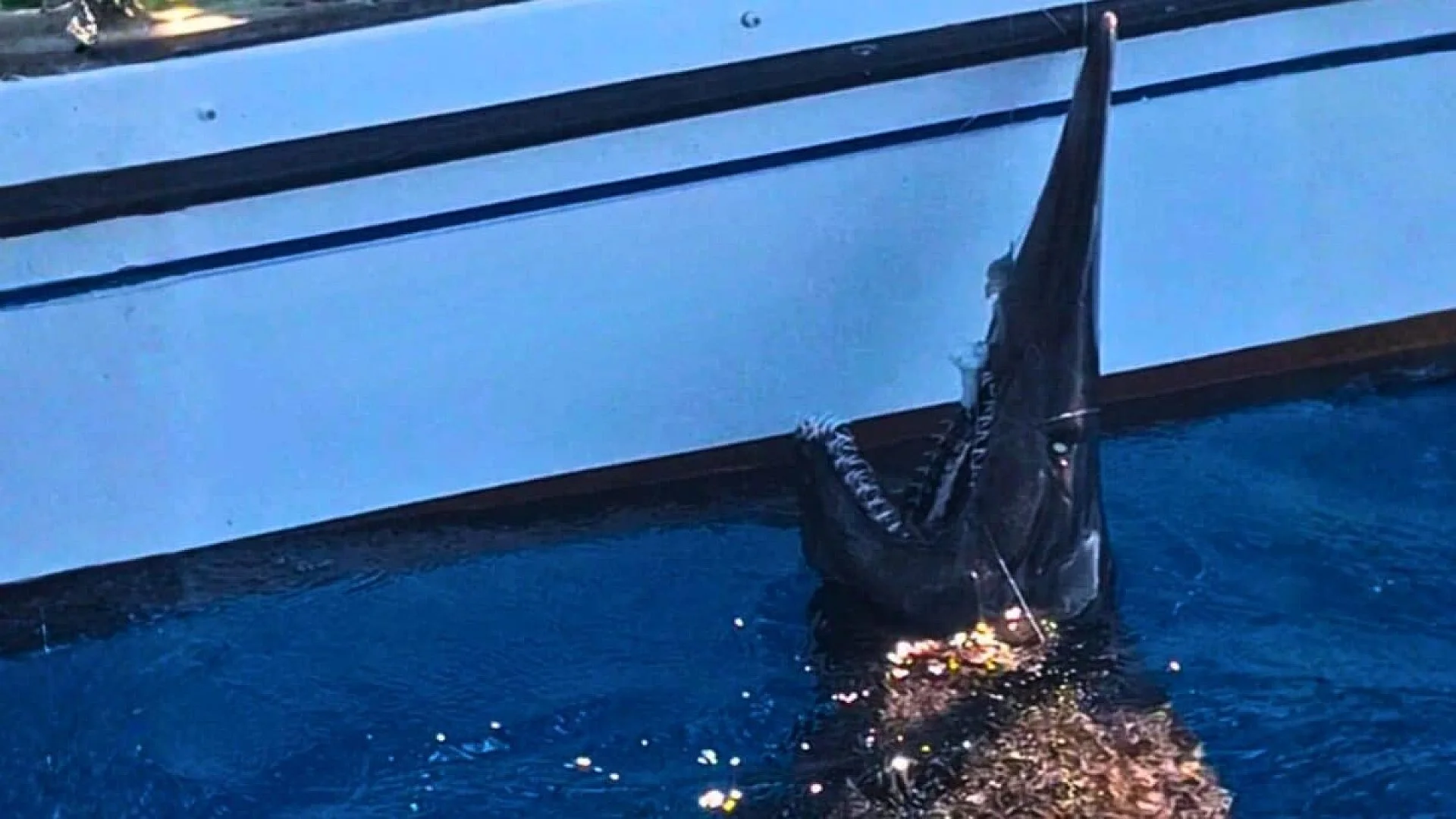
A remarkable 2.5-meter goblin shark was hauled from a staggering 900 meters of water off the coast of Gran Canaria in January 2026, marking the first confirmed live sighting of the species in the Canary Islands and only the second recorded across the wider Macaronesian region. This groundbreaking discovery was published in the esteemed Thalassas: The International Journal of Marine Sciences by researchers from the University of La Laguna, significantly expanding the known range of this elusive shark into the Central-Eastern Atlantic.
The astonishing catch was not the result of a meticulously planned scientific expedition, but rather an accidental hooking by a group of recreational fishers 9.5 kilometers off the coast of San Cristóbal. The captured images and videos from that fateful day formed the basis for a peer-reviewed record, shedding new light on the elusive nature of this species.
With fewer than 250 goblin sharks documented worldwide, this singular incident highlights the rarity of encounters between humans and this enigmatic creature, underscoring the significance of a single accidental catch off a Spanish island warranting publication in an international marine science journal.
A Shark Like No Other
The goblin shark (Mitsukurina owstoni) is a creature unlike any other in the ocean, distinguished by its elongated, flat, and paddle-shaped snout, tiny eyes lacking protective membranes, and jaws lined with thin, needle-like teeth designed for gripping rather than cutting. Its body is remarkably soft and flaccid to the touch, with pale pinkish-white skin that owes its color to visible blood vessels beneath the surface at great depths.
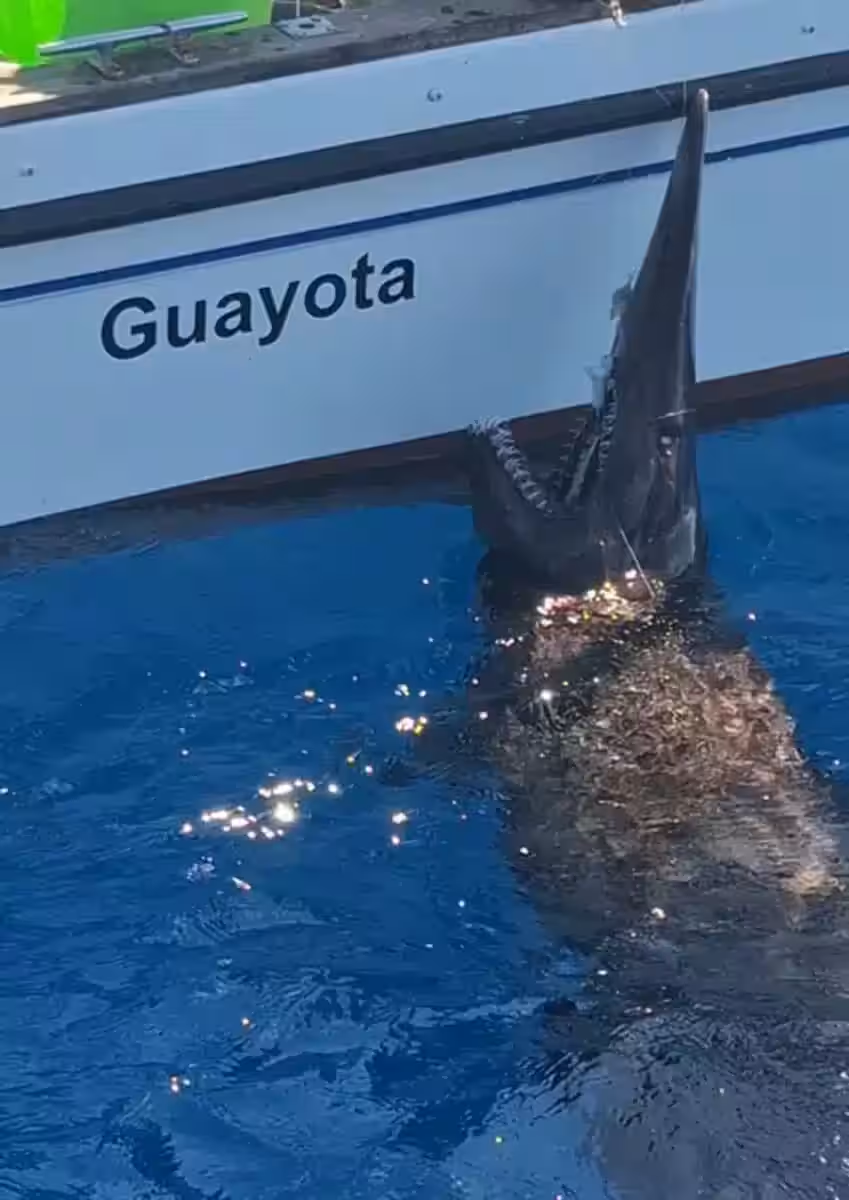
The Gran Canaria specimen lacked the claspers used to identify male sharks, leading the University of La Laguna team to provisionally classify it as female. At 2.5 meters, it falls within the size range associated with subadults of the species, further underscoring the significance of this discovery.
Goblin sharks are known to inhabit depths between 250 and 1,500 meters across tropical and temperate oceans, but confirmed sightings remain scattered and rare. The Gran Canaria encounter pushes the documented range considerably further south, filling a gap that had previously been blank on the distribution map.
Why the Canary Islands Are a Haven for Rare Deep-Sea Species
The University of La Laguna researchers did not treat this sighting as an isolated incident, but rather as part of a broader argument about what makes the Canary Islands an unusually productive habitat for deep-water sharks. The absence of bottom trawling and targeted fishing for sharks, rays, and related species at these depths has given vulnerable populations room to persist in an ocean where industrial fishing has otherwise reached almost everywhere.
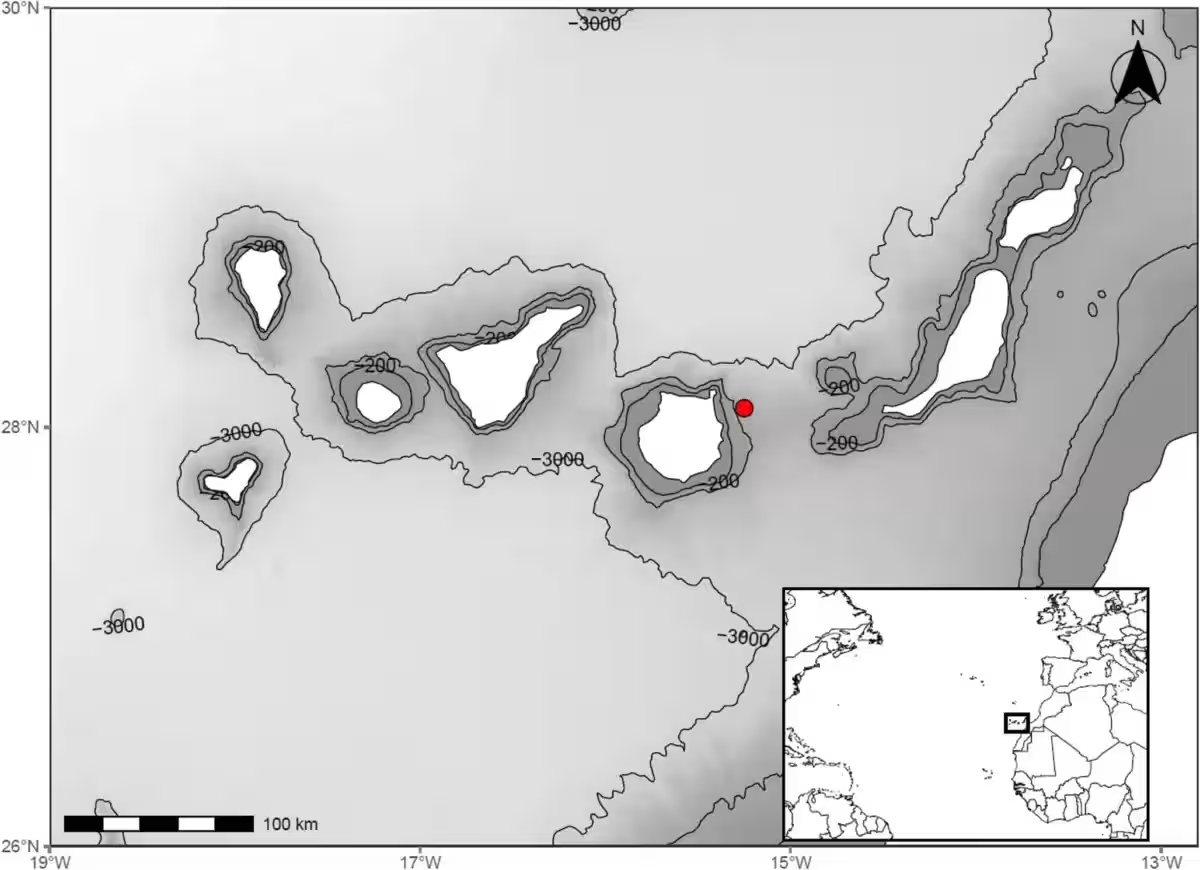
The surrounding waters already support this argument, with at least 20 shark species known to inhabit depths below 200 meters recorded around the Canary Islands, a concentration the researchers describe as ecologically significant. The archipelago’s underwater terrain, which drops sharply from the island coasts into deep ocean trenches, creates the kind of layered depth habitat that slow-moving, deep-dwelling species tend to use.
Incidental capture in passive fishing gear remains a documented threat, but the overall pressure on these populations appears lower here than in much of the wider Atlantic.
What the Sighting Reveals About Goblin Shark Distribution
The encounter also adds a data point to a pattern researchers have been building across the Atlantic for years. Almost every goblin shark recorded in the eastern Atlantic has been a juvenile or subadult, while adults predominantly inhabit western Atlantic waters. The Gran Canaria specimen, at 2.5 meters, fits squarely into the subadult profile that defines the eastern Atlantic record.
What drives this geographic segregation is not yet understood, with researchers proposing differences in water temperature, prey availability, or reproductive behavior as possible explanations. However, these theories remain untested and the honest answer is that the species remains largely mysterious due to the infrequency and unpredictability of sightings.
Each confirmed record tends to complicate rather than resolve the picture, with adults concentrated in one ocean basin and juveniles in another, leaving the mechanism connecting those two populations unknown. Whether the eastern Atlantic functions as a nursery area, a seasonal feeding ground, or simply an opportunistic range that subadults explore before moving on is an open question.
A Find That Raises More Questions Than It Answers
The University of La Laguna team described this record as a meaningful expansion of the goblin shark’s known marine distribution in the Central-Eastern Atlantic. Alongside that, they made a wider point: most of the deep-sea environments around the Canary Islands have never been systematically surveyed, and the species inventory currently held for these depths is almost certainly incomplete, built from chance encounters rather than deliberate exploration.
That framing matters, as the goblin shark did not suddenly appear in Canarian waters in January 2026. It was there before, and almost certainly others of its kind were too. What changed was that someone happened to drop a line to 900 meters at the right moment, and that the people who brought it up thought to take photographs.
The researchers note that continued monitoring of the archipelago’s deep-sea ecosystems is needed, not because one shark was found, but because the conditions that allowed it to be found suggest there is considerably more to discover.
This article has been fact checked for accuracy, with information verified against reputable sources. Learn more about us and our editorial process.
Last reviewed on .
Article history
- Latest version
Reference(s)
- Furundarena, Asier., et al. “First Record of the Goblin Shark (Mitsukurina owstoni) in the Canary Islands.” Thalassas: An International Journal of Marine Sciences, vol. 41, no. 4, December 9, 2025 Springer Science and Business Media LLC, doi: 10.1007/s41208-025-01016-w. <https://link.springer.com/article/10.1007/s41208-025-01016-w?utm_source=researchgate.net&utm_medium=article>.
- projects, Contributors. “deep-sea shark.”, September 14, 2003 Wikimedia Foundation, Inc. <https://en.wikipedia.org/wiki/Goblin_shark>.
Cite this page:
- Posted by Hassan Raza