A Hiker Found Key-Sized Fossil Teeth in South Dakota, Revealing a Creature That Hasn’t Been Seen in 16.3 Million Years
As the hiker strolled through the rugged terrain of the Badlands, they stumbled upon an intriguing fossil, remnants of an enigmatic creature that once traversed North America in eras long preceding human existence.
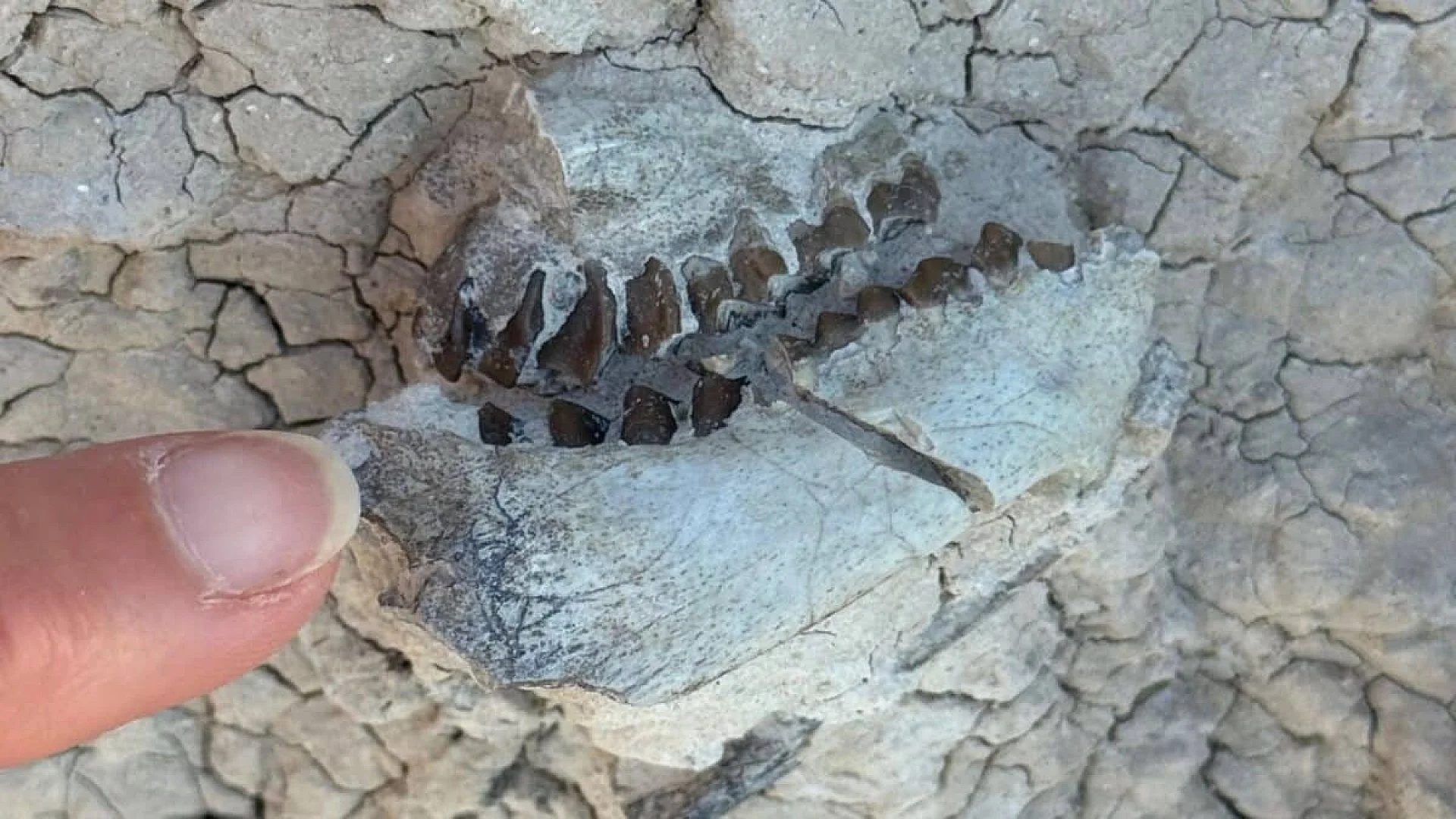
A 16.3-million-year-old secret has been unearthed in the Badlands, a region renowned for its paleontological wonders. A South Dakota hiker’s chance discovery of a fossilized row of teeth jutting from parched soil has shed new light on the prehistoric past of North America. The tiny fossil, no larger than a house key, belongs to a Leptauchenia, a peculiar animal that roamed the continent long before humans set foot on it.
The Badlands National Park officials announced the discovery on August 1, 2025, marking yet another window into the region’s ancient past. The Badlands, with their sprawling dunes and exposed layers of sedimentary rock, serve as an open-air museum of paleontological marvels. Millions of years of erosion have carved away the landscape, revealing creatures that vanished eons ago.
Unveiling the Mystery of Leptauchenia
The Leptauchenia’s name offers a straightforward translation: “tiny llama.” However, according to Badlands National Park officials, calling it simply a llama hardly captures what Leptauchenia actually looked like. Paleontologists describe them as ‘monkey-faced little sheep and llama-like creatures.’ The species was part of a bigger group of animals called oreodonts, and their closest living relatives today, according to the park, are camels.
“Oreodonts lived from the Middle Eocene through the end of the Miocene (from about 40 million to 5 million years ago). They were a type of animal called an artiodactyl, which is an even-toed hoofed mammal,” the authors wrote in a release featured on the U.S. National Park Service (NPS) website.
These herbivorous creatures were native to North America, and while paleontologists once believed they inhabited semi-aquatic environments, fossil evidence has shifted that understanding.
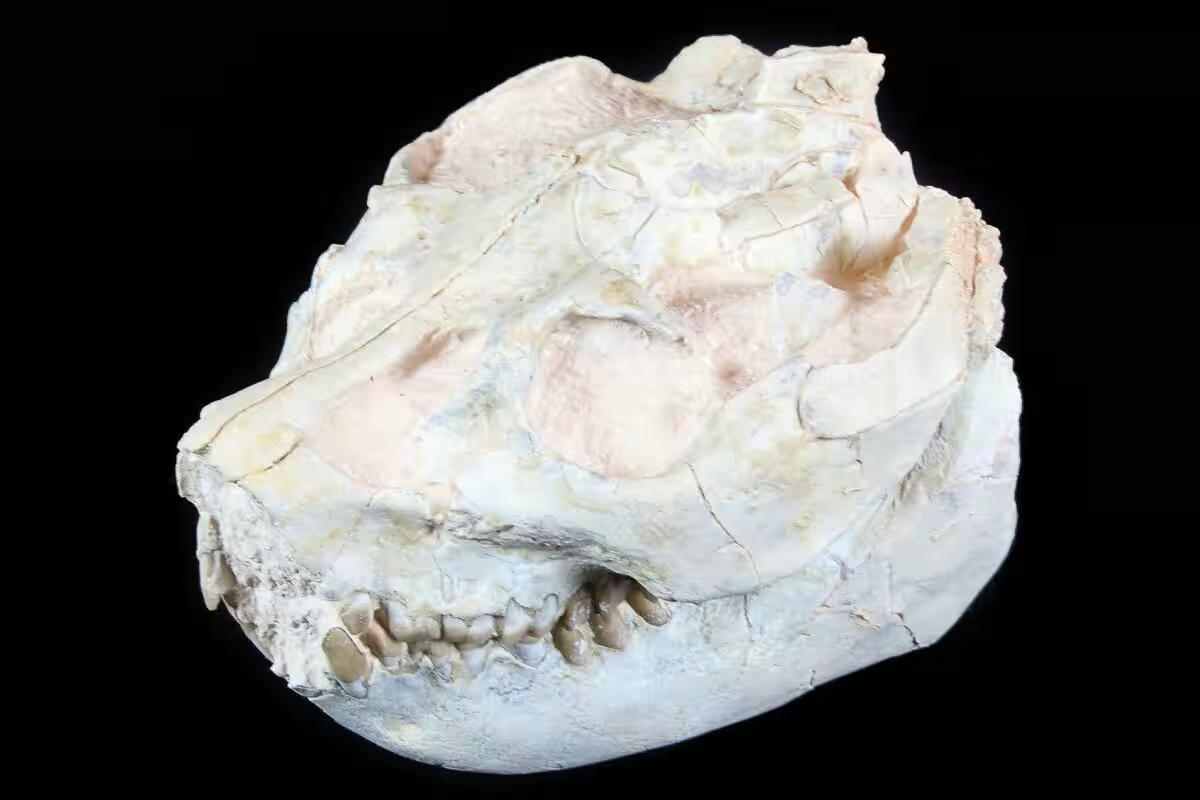
“We know this partially because of the shape of their teeth – being flat and low, oreodont teeth were meant for chewing and grinding plants,” they added.
As explained by FossilEra.com, Leptauchenia fossils have primarily been located within fossil sand dunes, suggesting they were “desert-dwelling animals” adapted to arid conditions rather than waterside habitats.
A Treasure Trove for Paleontology
Badlands National Park is a hotspot for ancient specimen discovery, and that’s no accident. Officials note that oreodonts are the most common fossil animals found throughout the region, making discoveries like this one far from anomalous. The Badlands’ landscape, shaped by erosion over time, constantly reveals new ones as the layers of rock are worn away by the elements.
The park’s southwestern South Dakota location places it in what was once a vastly different environment. The dry, cracked tan soil that now characterizes the terrain was shaped by geological forces and climatic shifts across millions of years.
A Hiker’s Unexpected Discovery
As reported by The Kansas City Star, the grayish row of teeth found sticking out of a butte is the kind of lucky discovery that sparks excitement among both scientists and the public. Park officials confirmed what the remains was and shared the news in an August 1 Facebook post. Even though it’s small enough to fit in a hand, this find is big in terms of its scientific value.
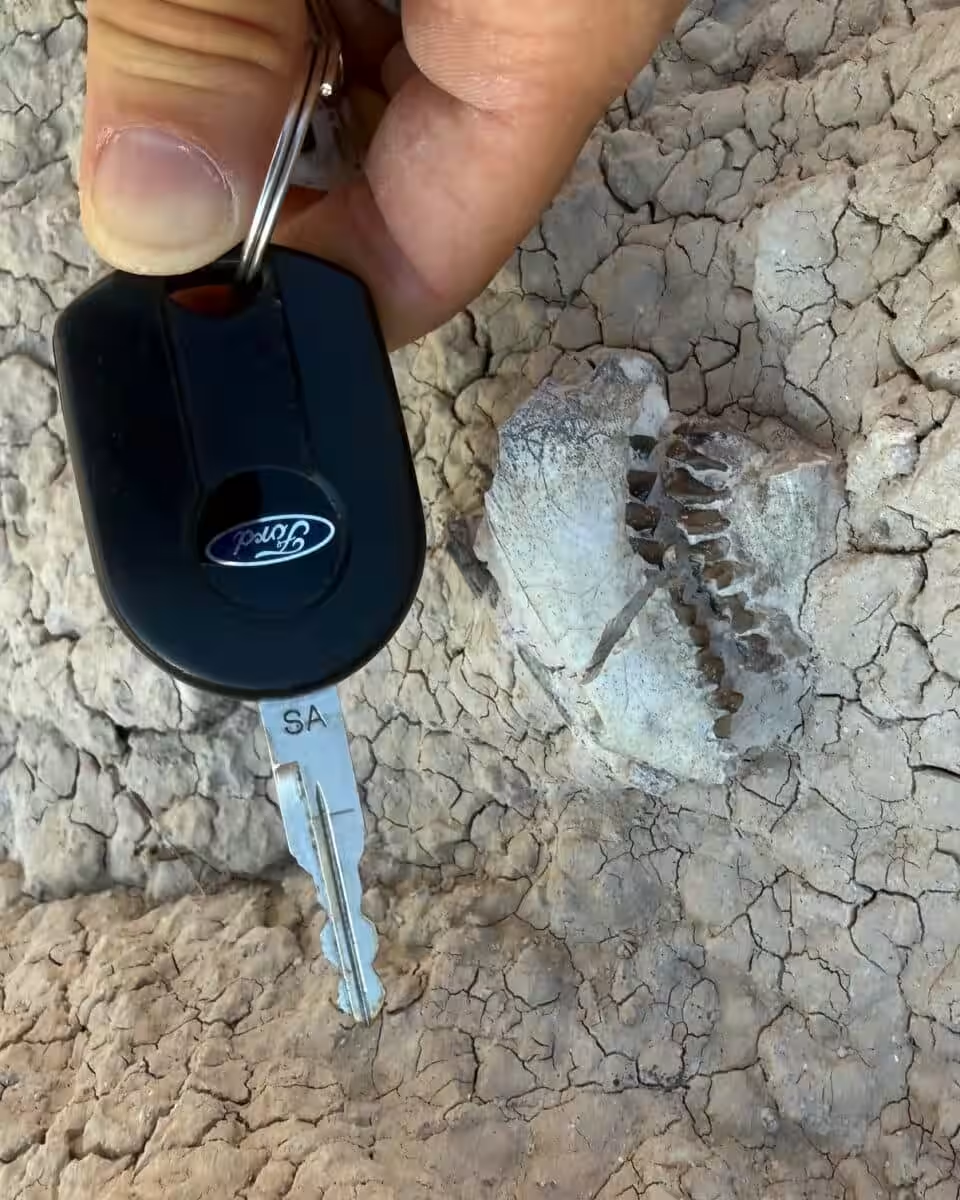
This kind of discovery underscores why the public must be aware of fossils and protected parks. When hikers encounter ancient remnants, such as teeth, bones, or fragments, reporting them to park officials ensures they are studied and preserved correctly.
This article has been fact checked for accuracy, with information verified against reputable sources. Learn more about us and our editorial process.
Last reviewed on .
Article history
- Latest version
Reference(s)
- “Badlands National Park (U.S. National Park Service).” <https://www.nps.gov/badl/index.htm>.
- “Oreodont: Ancient Grazer of the Badlands (U.S. National Park Service).” <https://www.nps.gov/articles/000/oreodont.htm>.
- “Beautiful 3.4" Oreodont (Leptauchenia) Skull.” FossilEra <https://www.fossilera.com/fossils/beautiful-3-4-oreodont-leptauchenia-skull?srsltid=AfmBOooxrr1xpxGvD5IUv7rRVOub5iDx_ubbz49mEWUMx4T4z76OqVsm>.
- “Article311590267.” <https://www.kansascity.com/news/nation-world/national/article311590267.html>.
Cite this page:
- Posted by Hassan Raza