Construction Workers Digging for a New Building Unearthed a 24.5-Meter Medieval Ship Buried Beneath the Street Since the 1360s
Construction crews broke ground for a new development and unearthed a 660-year-old mystery that’s challenging long-held assumptions about medieval maritime activities.
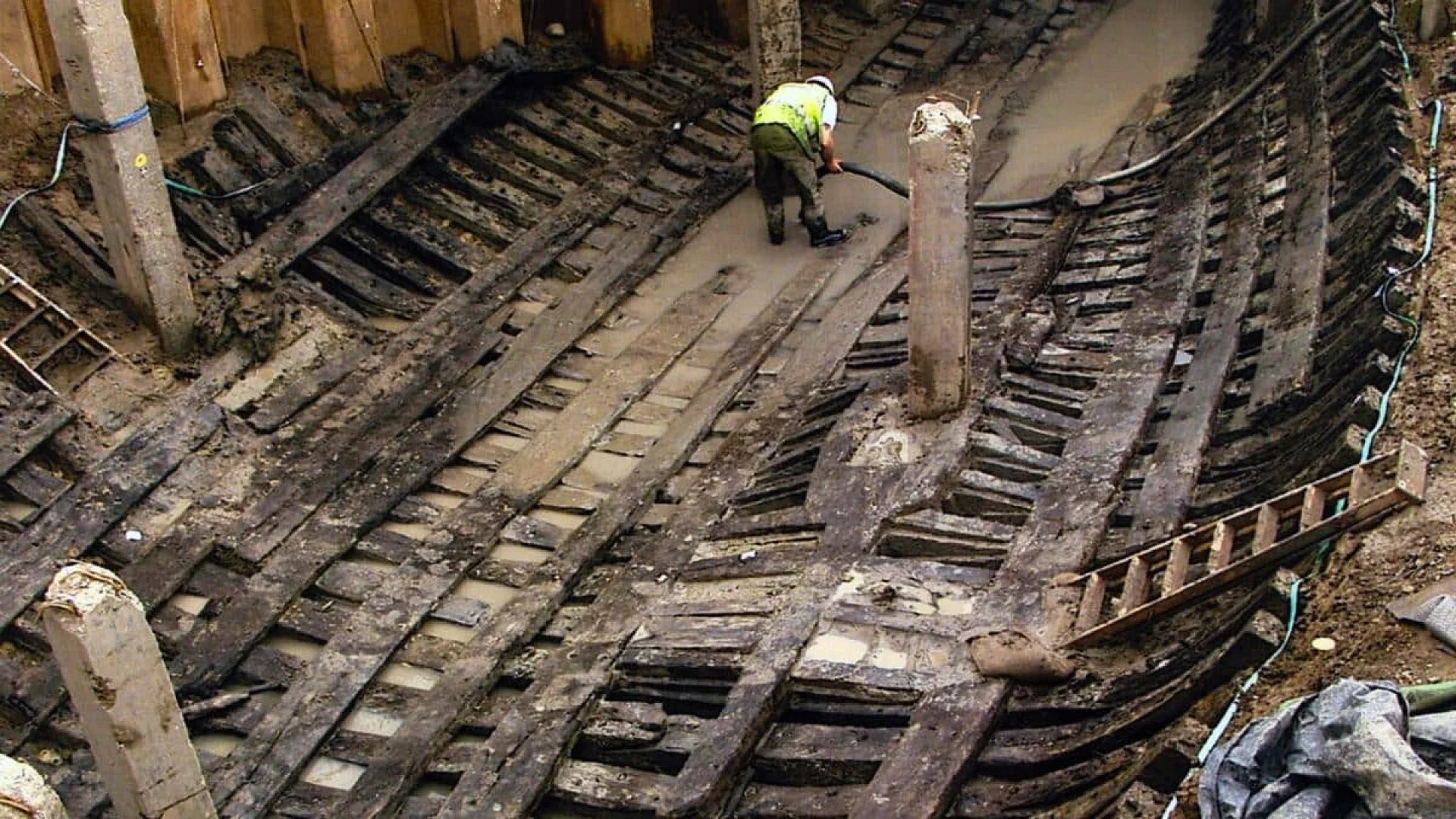
A remarkable archaeological find in Tallinn, Estonia, has shed new light on the history of medieval trade and shipbuilding in the Baltic region. In March 2022, a construction crew excavating the foundation of an office building on Lootsi Street stumbled upon a 14th-century merchant vessel buried beneath the city streets. The ship, measuring 24.5 meters in length, 9 meters in width, and 4 meters in height, was sealed under the city since the 1360s.
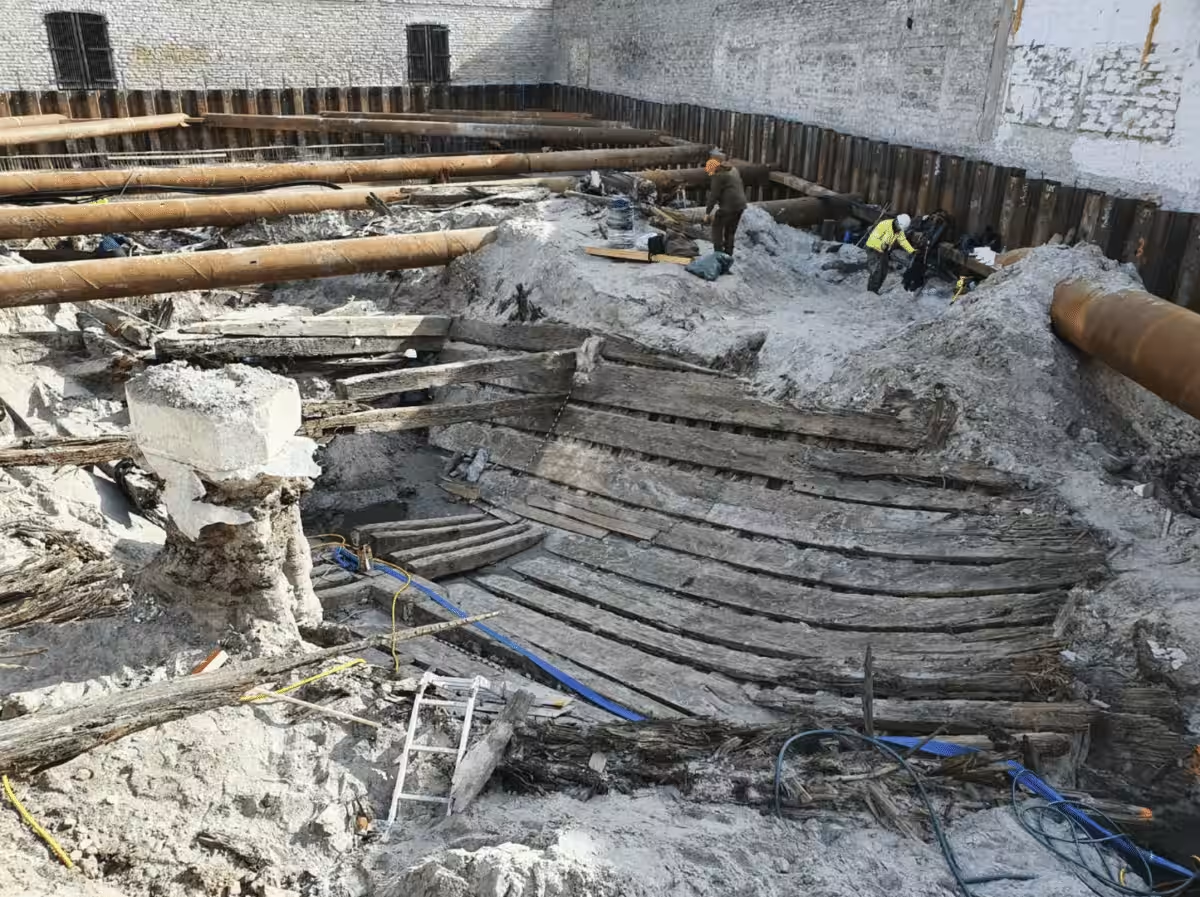
The Lootsi cog, as it has come to be known, is one of the largest medieval shipwrecks recovered in Europe in the past century. Engineers spent three months preparing and 13 hours transporting the ship, which was cut into four sections to facilitate its removal from the ground. Tree-ring dating revealed that the ship’s construction timber dates back to around 1360, a time when Hanseatic merchant fleets dominated trade across the Baltic and North Seas.
Unraveling the Mystery of the Lootsi Cog
A recent peer-reviewed study published in the Journal of Cultural Heritage has raised new questions about the ship’s origin and fate. Researchers have been studying the ship’s hull, which was found to be assembled from timber sourced across multiple regions, a common practice in large Baltic shipbuilding during that era. However, the study also suggests that the ship may have been built in western Lithuania and completed for its first voyage in Tallinn before it sank near the harbor.
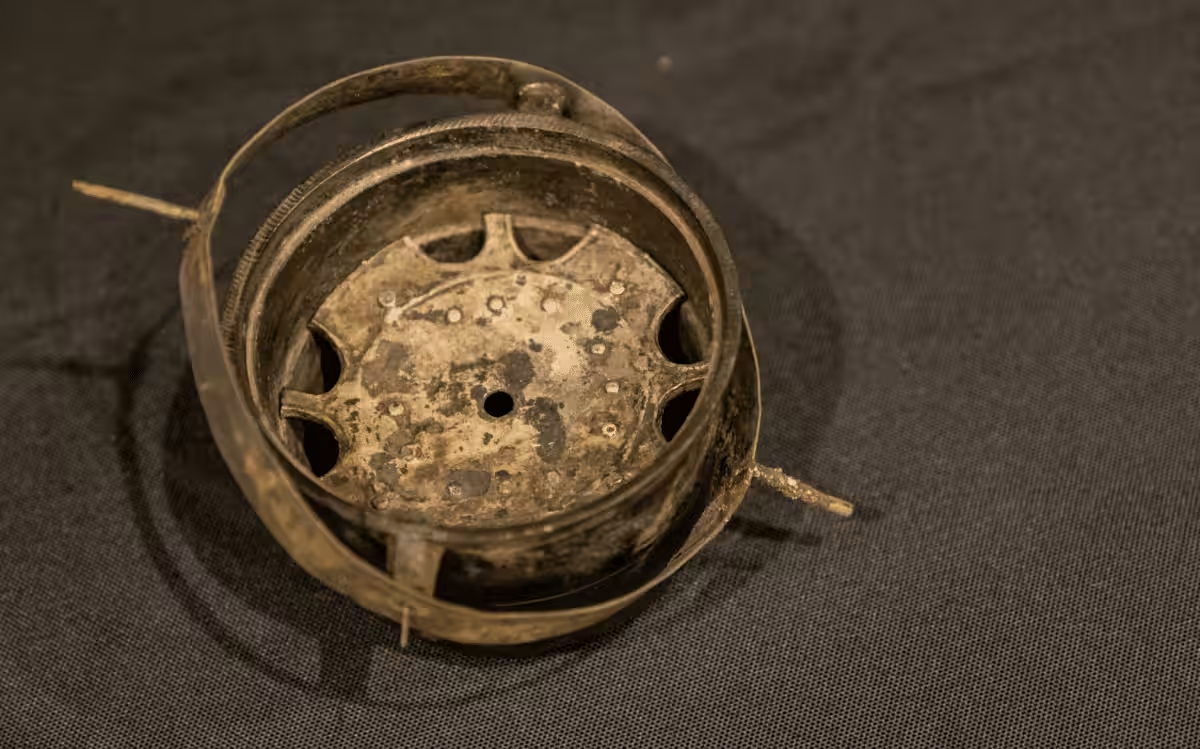
The most striking find from the wreck is a dry compass, reported to be the oldest surviving example of its kind in Europe. The compass still functions after more than six centuries underwater, offering a unique insight into the navigation techniques used by medieval sailors. Researchers have also recovered two well-preserved ship rats, which provide direct physical evidence of life aboard a medieval Baltic trading vessel.
A Ship That Defies Classification
The Lootsi cog has resisted easy classification since its excavation began. While it shares some characteristics with standard cogs, it also exhibits features that are not typical of the period. The ship’s hull was sealed with pitch-covered animal fur, rather than the usual moss, and certain plank configurations were not seen in shipbuilding until a century later. Researchers are still working to determine the exact classification of the Lootsi cog.
A Second, Older Ship Remains in the Ground
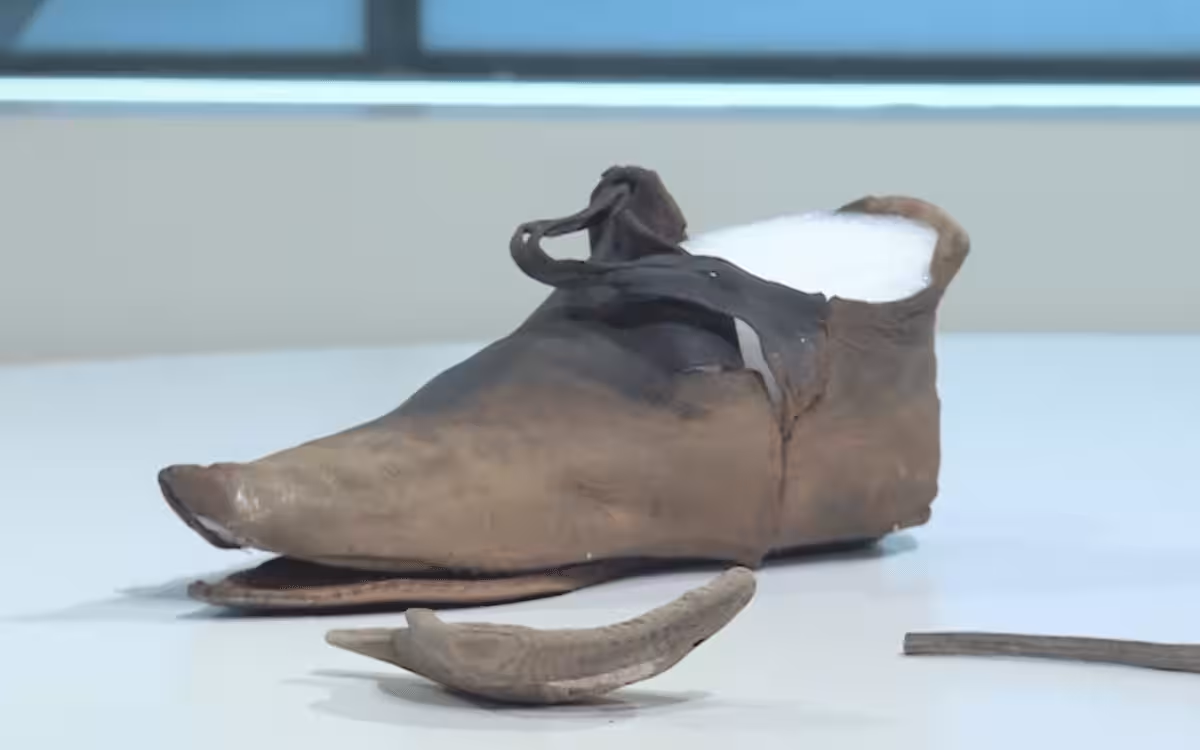
The Estonian Maritime Museum is currently conserving the Lootsi cog, tracking moisture levels to prevent the wood from drying or developing mold. Finnish conservators are working alongside museum archaeologists to collect samples for laboratory analysis in Estonia and abroad. An even older wreck, believed to date back to the 13th century, remains buried nearby and has not been touched. The museum plans to excavate the site in the future, using improved methods to recover the ship’s remains.
The Lootsi cog is scheduled for permanent public display at the Estonian Maritime Museum once conservation work is complete.
This article has been fact checked for accuracy, with information verified against reputable sources. Learn more about us and our editorial process.
Last reviewed on .
Article history
- Latest version
- Last updated by Dayyal Dungrela, MLT, BSc, BS
Cite this page:
- Posted by Hassan Raza