Lost 4th‑Century Byzantine Oasis Town Unearthed in Egypt’s Western Desert With Gold Coins
A pristine 4th‑century Egyptian desert settlement uncovered, showing streets, homes, a church and 1,600‑year‑old secrets.
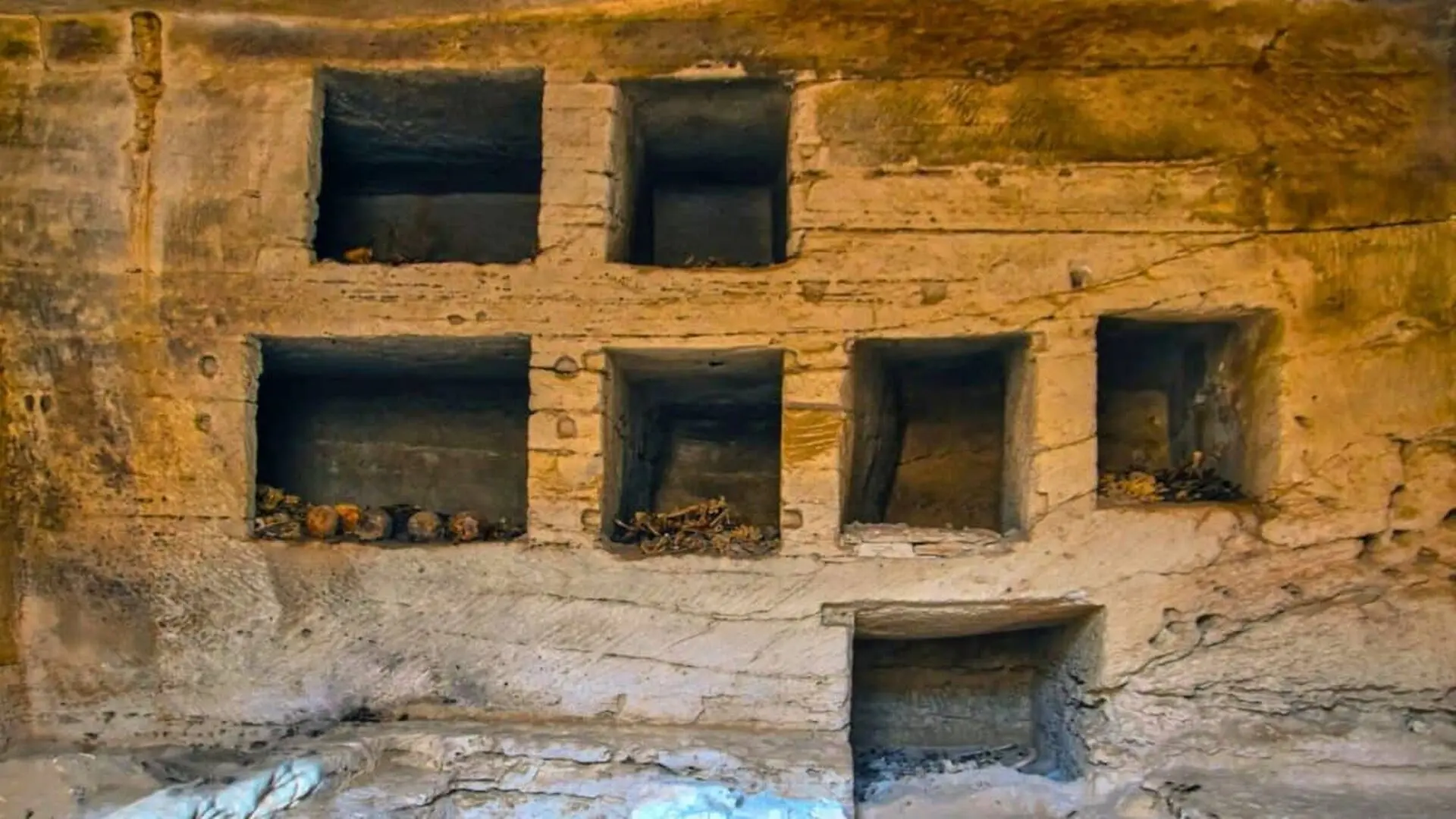
Archaeologists working for Egypt’s antiquities authority have revealed a fully intact Byzantine settlement at Ain El‑Sabil in the Dakhla Oasis, deep within the Western Desert. Radiocarbon and pottery analysis date the town to the fourth century AD, and its streets follow a regular grid of north‑south arteries intersecting east‑west avenues, creating open plazas and communal zones. A basilica dominates the central axis, aligning with one of the main thoroughfares.
The mud‑brick architecture has survived in remarkable condition, offering a rare, comprehensive view of daily life in an oasis community during the Byzantine era. Mahmoud Massoud, director of Dakhla Antiquities and leader of the excavation team, noted that the site contains every element expected of a self‑sufficient town, from private dwellings to defensive works and places of worship.
Hisham El Leithy, secretary‑general of the Supreme Council of Antiquities, hailed the find as a pivotal addition to the study of Egypt’s desert frontiers. He emphasized that the discovery supplies fresh data on the social, religious, and economic dynamics of oasis settlements in late antiquity, a period still under‑documented compared with the Nile Valley.
A Deliberately Planned Oasis City
The layout of Ain El‑Sabil reflects intentional urban design rather than organic growth. Streets intersect at right angles, forming public squares, while the central basilica overlooks one of the principal roads, indicating that civic and liturgical functions were embedded in the town’s blueprint from the outset.
Flanking the church, archaeologists identified two watchtowers on the outskirts and a heavily fortified enclosure with massive walls, suggesting a coordinated approach to security, administration, or symbolic display.
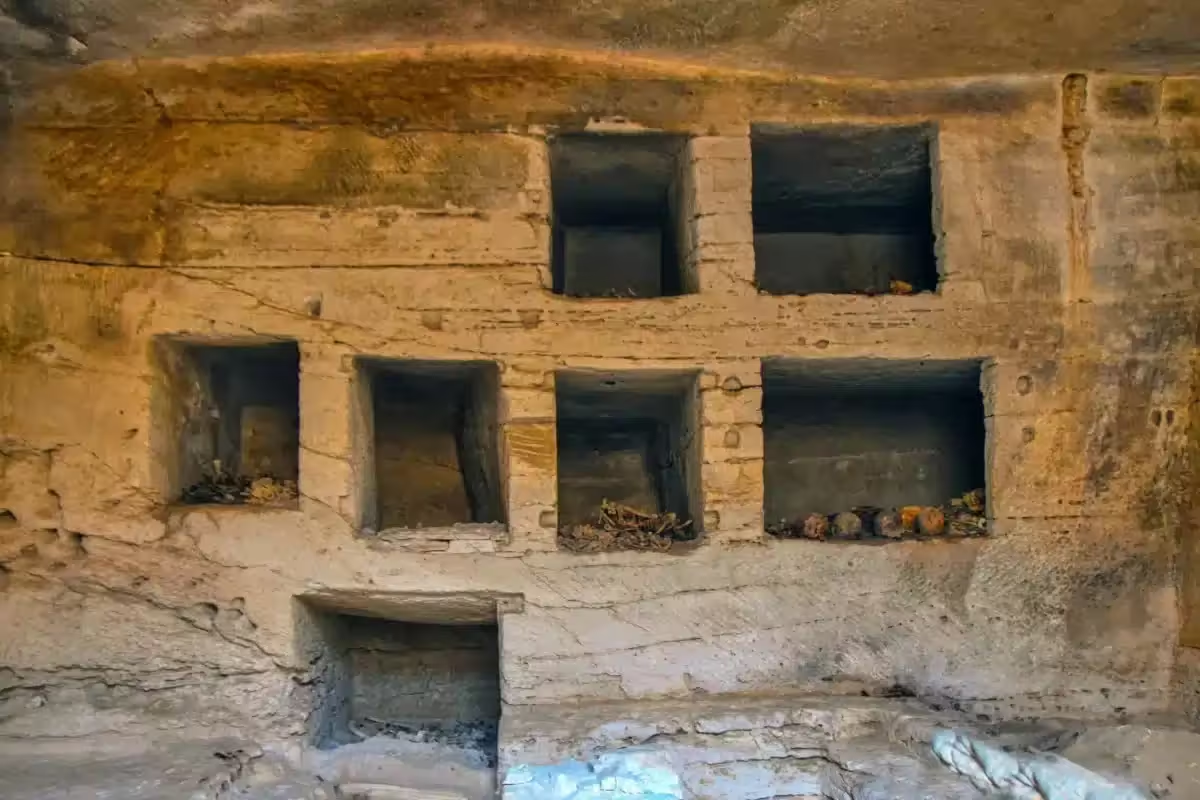
Residential blocks feature spacious reception halls and vaulted ceilings, suggesting a level of comfort and architectural investment uncommon for desert towns. Kitchen installations, bread ovens, and stone grinding tools were recovered in situ, underscoring the integration of domestic industry within the urban fabric.
Two houses stand out for their historical relevance. The dwelling of Tisous, identified as a church deacon, dates to the later half of the fourth century AD. An earlier residence belonging to Tabibos, built in the early fourth century, appears to have functioned as a private church before the construction of the larger basilica, indicating that worship was already organized within homes.
Everyday Artifacts Paint a Vivid Picture
A broad assortment of material culture illuminates daily routines at Ain El‑Sabil. Ceramic vessels, oil lamps, perfume bottles, and stone implements for grain processing were scattered throughout the settlement, revealing the domestic activities of its inhabitants across the fourth century.Domestic pottery also contributes to the overall portrait of daily life.
A particularly significant find consists of nearly two hundred inscribed ostraca—pottery shards used as writing tablets. The texts, rendered in both Coptic and Greek, document commercial deals, personal messages, and other routine matters. Diaa Zahran, head of the Islamic, Coptic and Jewish Antiquities Sector, described the collection as an on‑site archive that preserves names, transactions, and economic activity rarely captured in surviving written records from this era.
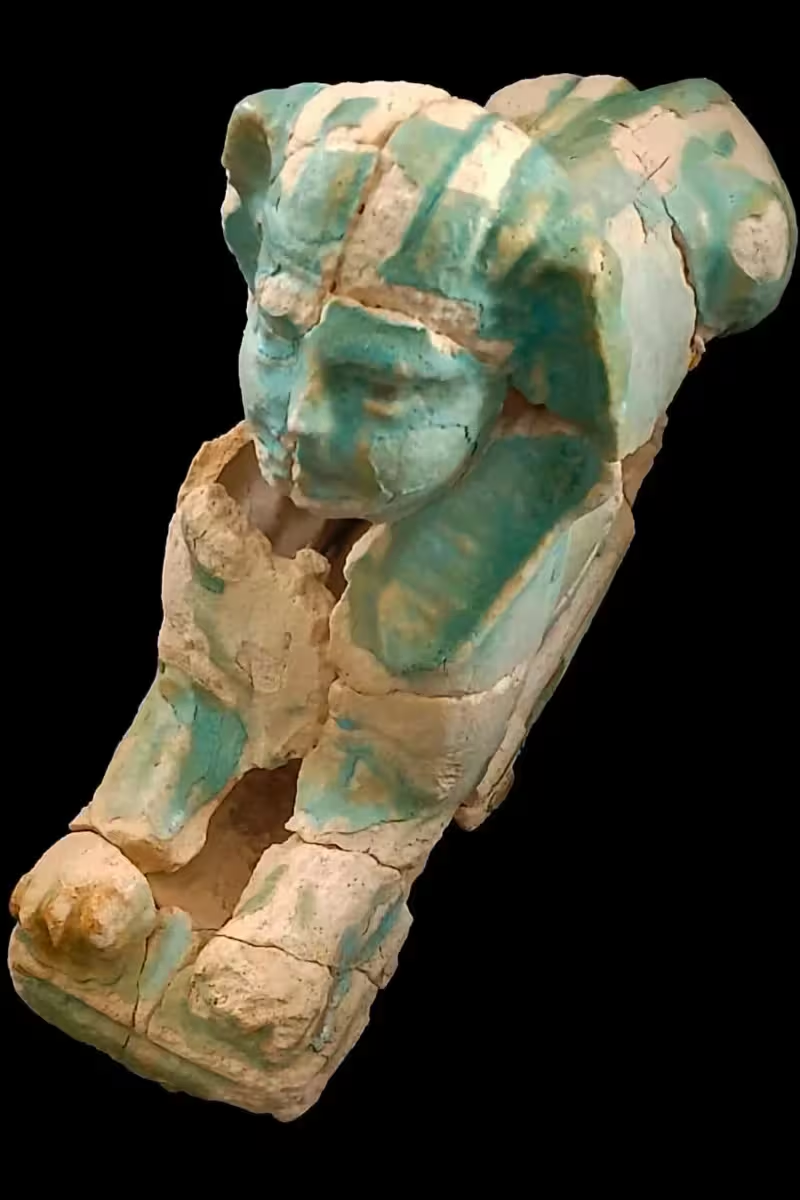
The bilingual nature of the ostraca mirrors the linguistic landscape of Byzantine Egypt, where Greek functioned as the language of administration and trade while Coptic served as the everyday tongue of the local populace. Their joint appearance at a desert oasis adds nuance to our understanding of cultural interaction far from Egypt’s major urban centers.
Coinage Signals Economic Integration
Metallic currency recovered from the site reinforces the picture of a thriving community. Numerous bronze coins bearing portraits of Byzantine emperors, Latin legends, and Christian symbols align with official minting practices of the fourth century, indicating that Ain El‑Sabil participated in the empire’s monetary circulation.
Even more striking are the gold coins attributed to Constantius II, who ruled from 337 to 361 AD. Gold pieces were seldom found in domestic contexts, so their presence points to a degree of wealth and connections to broader imperial trade networks.
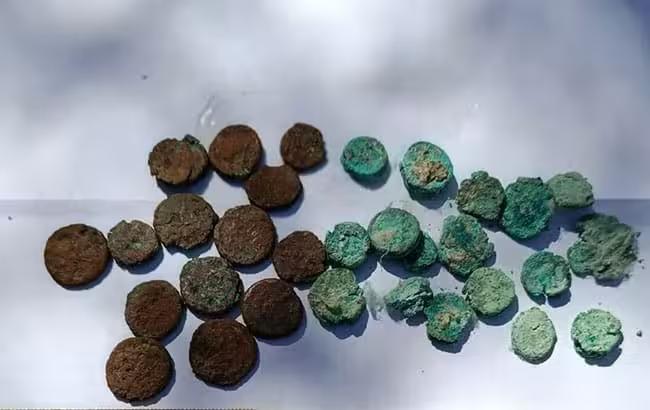
Combined, the coinage, bilingual ostraca, storage vessels, and grain‑processing tools depict a settlement engaged in both local production and long‑distance trade. The Dakhla Oasis lay along ancient caravan routes linking the Nile Valley with sub‑Saharan Africa, and the archaeological record at Ain El‑Sabil confirms that its inhabitants capitalized on this strategic position throughout the fourth century.
The convergence of a grid‑based street plan, civic and religious edifices, fortified walls, domestic artifacts, and documentary evidence makes Ain El‑Sabil one of the most complete Byzantine oasis towns ever uncovered in Egypt’s Western Desert.
This article has been fact checked for accuracy, with information verified against reputable sources. Learn more about us and our editorial process.
Last reviewed on .
Article history
- Latest version
Cite this page:
- Posted by Vikram Desai