InSight Finds Massive Hidden Magma Reservoirs Under Mars, Changing How We View Its Interior
Mars data reveal a hidden interior, suggesting a dynamic world concealed for billions of years.
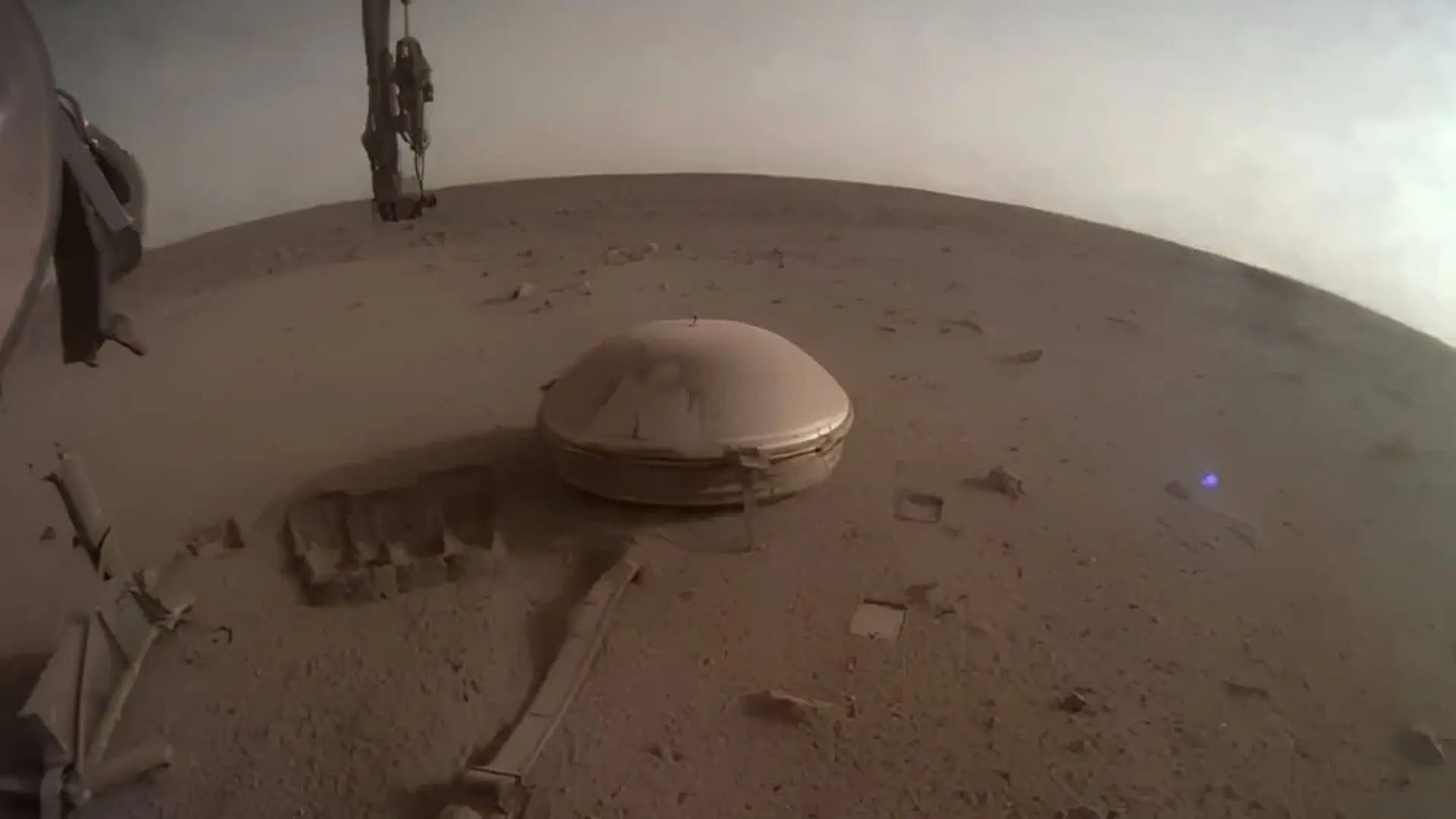
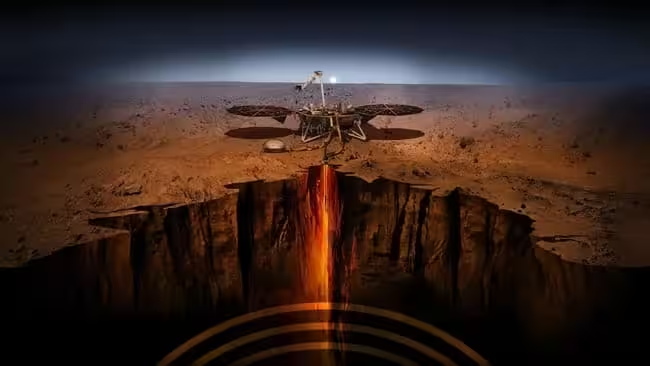
Seismic recordings from NASA’s InSight lander suggest that Mars once harbored massive subsurface magma chambers, pointing to a far more intricate interior than previously thought. The findings could reshape our understanding of the planet’s volcanic past.
For years, researchers have described Mars as a world with a simple, static crust, lacking the plate‑tectonic activity that drives Earth’s seismic and volcanic processes. This view painted the Red Planet as a single, solid shell with relatively uniform composition.
A new analysis challenges that picture. Published in Nature Astronomy, the study interprets InSight’s seismic data to reveal a distinct layer roughly 15 miles (24 km) beneath the surface. The authors argue that ancient, extensive magma reservoirs caused molten rock to separate into layers before solidifying, leaving the crust we detect today.
Seismic Signals Unveil a Deep Martian Boundary
NASA’s InSight lander spent four Martian years recording tremors generated by meteor impacts and internal activity. By tracking the speed of seismic waves as they passed through different rock types, scientists gained a window into the planet’s interior.
The data exposed an internal discontinuity that had eluded explanation. Researchers from the University of Oxford matched the seismic signatures to geothermal models, concluding that the upper crust consists mainly of mafic rocks rich in iron, magnesium and silica. Beneath this lies a denser ultramafic layer, also high in iron and magnesium but low in silica, extending another 8.7 miles (14 km) before reaching the mantle.
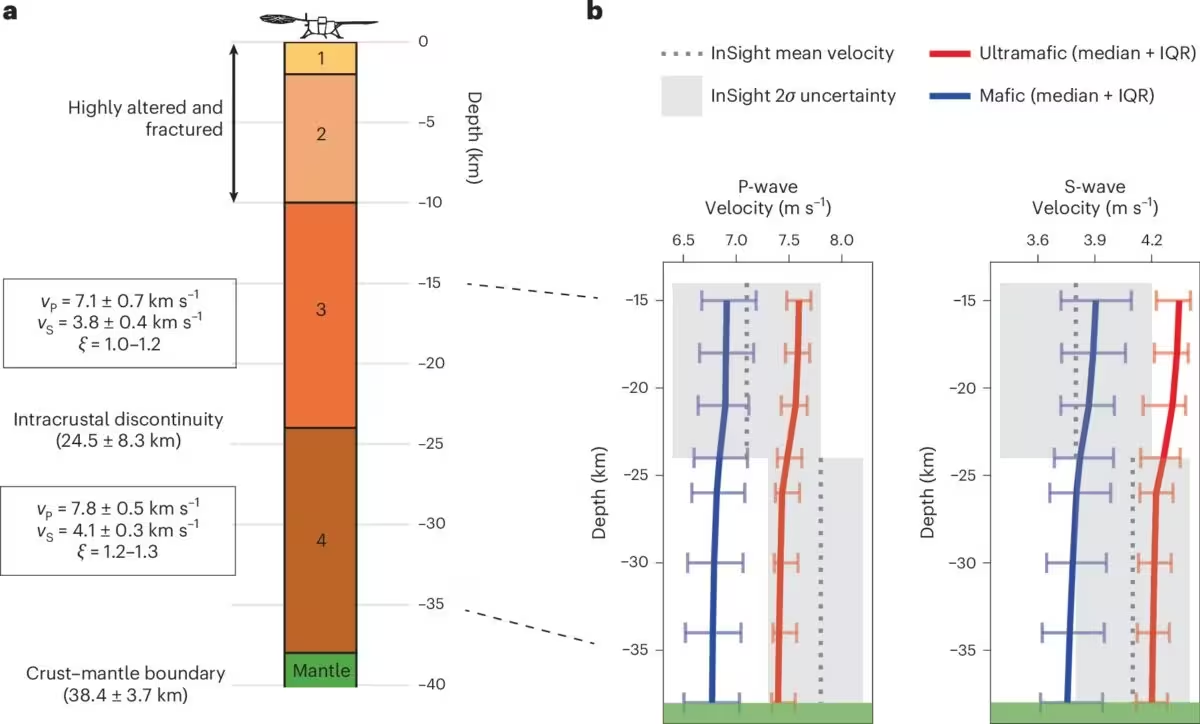
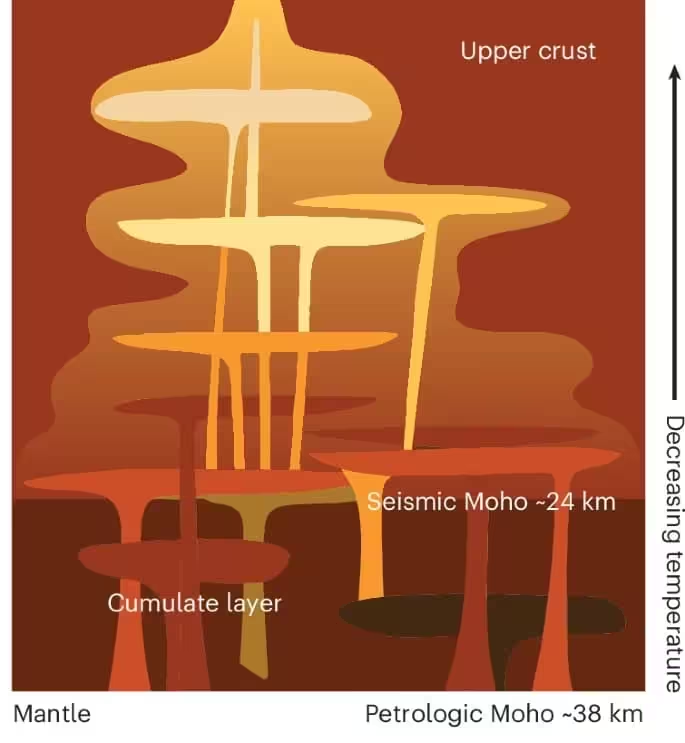
According to the June 26 article in Nature Astronomy, the observed structure results from magmatic differentiation, a process where heavier components sink beneath lighter melt before the whole body solidifies.
Vast Interconnected Magma Reservoirs May Have Spanned the Red Planet
The authors contend that these were not isolated melt pockets feeding individual volcanoes. Instead, the magma likely formed extensive networks that could have stretched for hundreds or thousands of kilometres beneath the crust. This scenario implies that iconic volcanic provinces such as Olympus Mons and the Tharsis region were linked by shared subterranean reservoirs rather than operating as independent hotspots.
“We’ve traditionally assumed that volcanism on Mars was relatively simple compared to that on Earth, but this discovery suggests that the planet could sustain massive, long‑lived magmatic systems capable of evolving and reprocessing molten rock throughout the crust,” he said.
The study notes that such “transcrustal magmatism” had previously been documented only on Earth.
Implications for Early Martian Climate and Habitability
The researchers propose that rising hot material from Mars’ deep interior would have partially melted the crust, creating the extensive magma bodies. Similar processes operated on Earth during the Archaean eon, roughly 4 to 2.5 billion years ago.
Large volcanic systems could have released substantial greenhouse gases, temporarily thickening the ancient Martian atmosphere. Subsequent loss of atmosphere and water—driven by low gravity and the lack of a global magnetic shield—led to the cold, dry world observed today. Oxford geophysicist Jon Wade suggests the findings broaden the criteria for planetary habitability.
“If Mars could develop this kind of complex crust without plate tectonics, then maybe the conditions needed for habitability can emerge on more planets than we realized, including those previously dismissed based on size or their apparent lack of tectonic activity,” he said.
Repeated melting and solidification cycles may also have concentrated mineral deposits nearer the surface than previously anticipated. Mackay‑Champion adds:
“Mars may hold significantly more near‑surface mineral wealth than previously recognized, boosting its potential for future mining, crewed missions and, eventually, permanent settlements.”
This article has been fact checked for accuracy, with information verified against reputable sources. Learn more about us and our editorial process.
Last reviewed on .
Article history
- Latest version
Reference(s)
- Cermak, Alicia. “InSight Lander - NASA Science.”, December 5, 2017 NASA <https://science.nasa.gov/mission/insight/>.
- Mackay-Champion, T.. “Seismic evidence for a melt-depleted lower crust and transcrustal magmatism on Mars - Nature Astronomy.”, June 26, 2026, pp. 1-8. Nature, doi: 10.1038/s41550-026-02907-5. <https://www.nature.com/articles/s41550-026-02907-5>.
- “Jon Wade.” <https://www.earth.ox.ac.uk/people/jon-wade>.
Cite this page:
- Posted by Vikram Desai