Bronze Chariot Unearthed In Spain Reveals Tartessian Links To Ancient Mediterranean Trade
A 2,000‑year‑old bronze chariot unearthed in Spain reveals unique mythic carvings and unprecedented insights into ancient Iberian cultures.
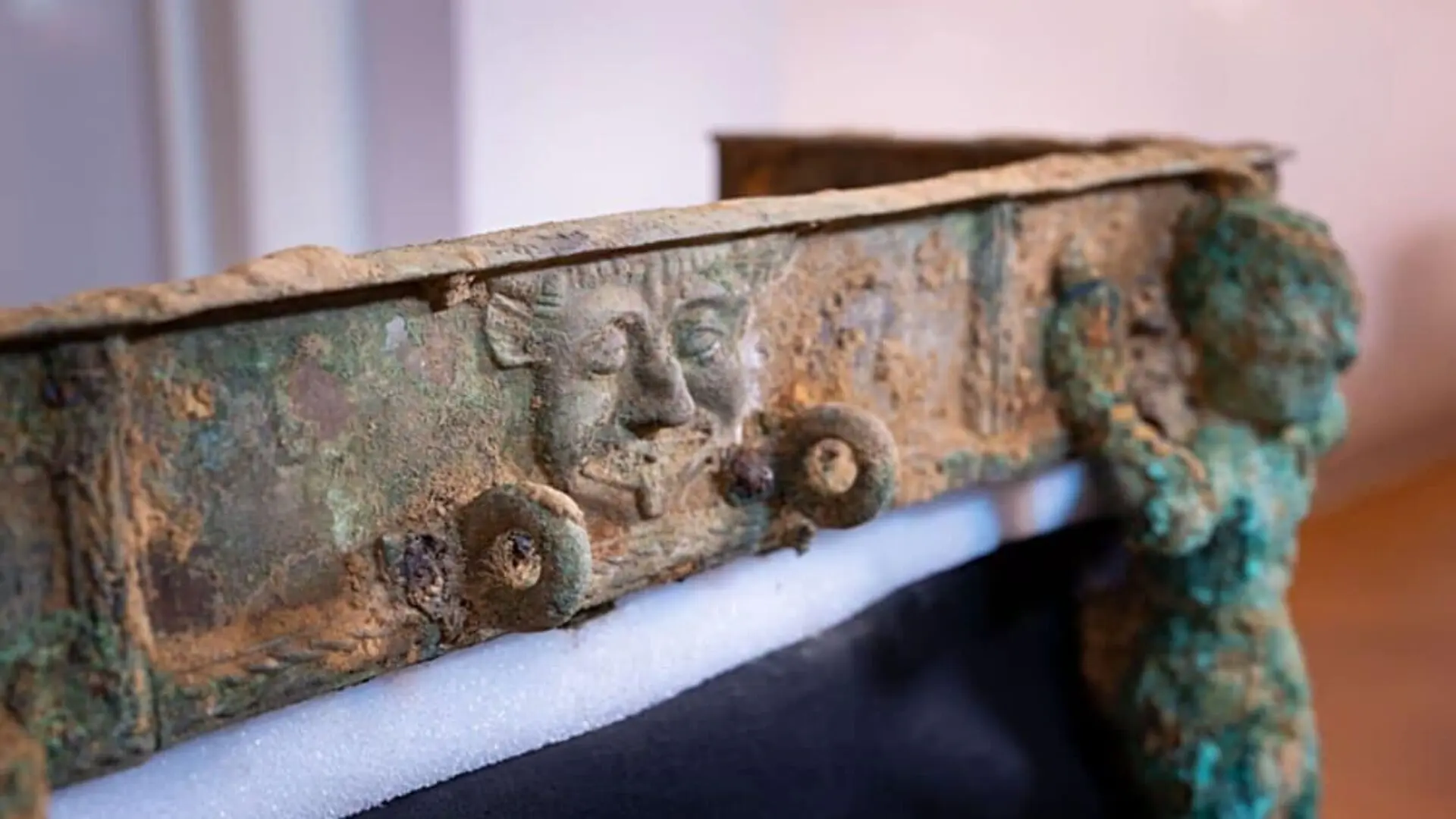
Archaeologists excavating the Tartessian settlement of Casas del Turuñuelo in Guareña, Badajoz, have recovered a bronze ceremonial chariot dating to about 2,500 years ago. The vehicle, found during the eighth season of the Building Tartessos project, is unparalleled on the Iberian Peninsula.
The artifact sheds new light on the Tartessian culture that thrived in the first millennium BCE, interacting with nearby peoples and Phoenician colonists. Its sophisticated manufacture and decorative motifs indicate extensive contacts between the inland Iberian community and the broader ancient Mediterranean world.
Ritual Function and Iconic Imagery
The chariot emerged from corridor S3 of the main building, an area already known for its unusual ceremonial spaces such as a bull‑shaped altar. Co‑director Esther Rodríguez described the find as one of the most important discoveries at the site.
Only one‑half of the vehicle survived, preserving two wheels, part of the central box, bronze elements and an iron axle. Researchers consider the construction remarkably advanced for its era.
Mythological scenes adorn the chariot. The front features a figure identified as Achelous, a river deity associated with the underworld and often depicted with bull‑like horns. Griffins—creatures with the head of an eagle and the body of a lion— flank either side, while two human figures reminiscent of Atlas stand with raised arms, appearing to support the structure.
Because the chariot was located near the bull altar and close to what is thought to be a banquet hall, the team believes it played a part in ritual feasting. Co‑director Sebastián Celestino has suggested the vehicle may have been used in a final ceremonial gathering before the building was deliberately sealed at the end of the fifth century BCE.
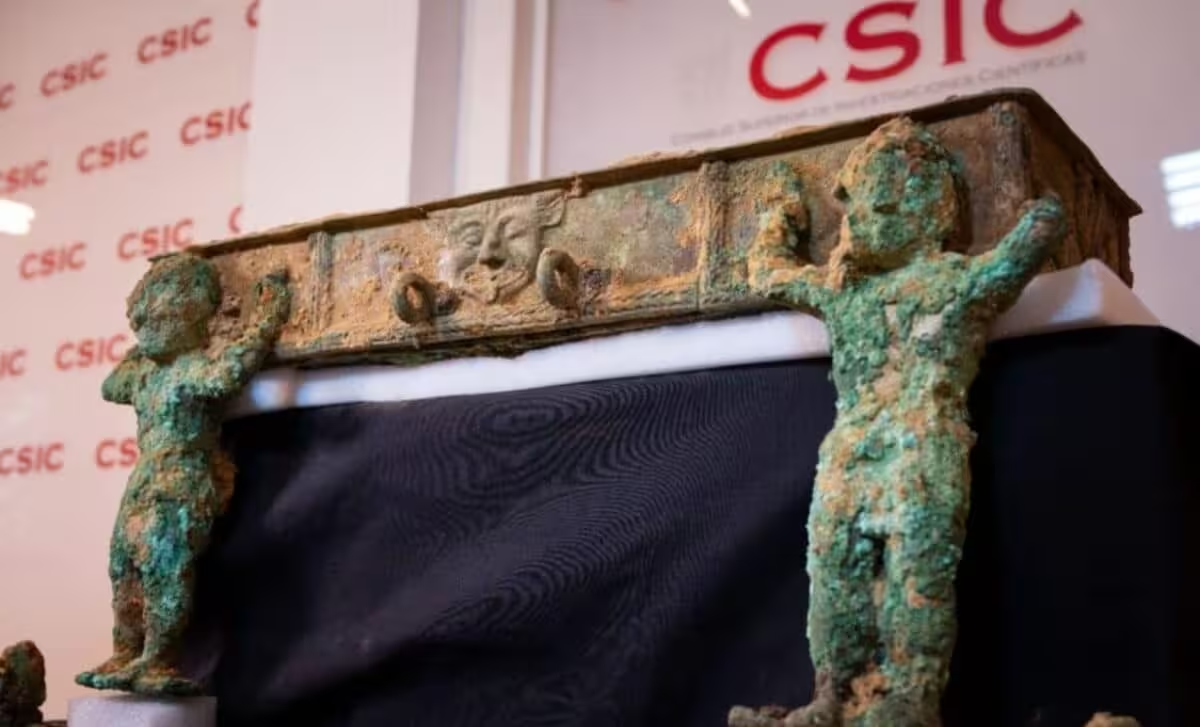
Mediterranean Trade Connections
The discovery has drawn attention for its implications regarding Tartessos’ role in ancient commerce. The research team notes that the chariot’s design most closely resembles Etruscan examples from central Italy, a culture that flourished between the eighth and fifth centuries BCE. This similarity supports the idea that the vehicle arrived in southwestern Iberia via Mediterranean exchange routes.
The chariot was accompanied by imported luxury goods: Attic Greek pottery, an Egyptian alabaster vessel, and ivory pieces decorated with warrior figures and flora and fauna motifs that likely originated in eastern Mediterranean workshops. Rodríguez explained that these items provide valuable evidence of trade links between the East and the Iberian Peninsula, helping scholars map ancient exchange networks.
The current season also expanded knowledge of the site’s layout. Excavations in the northern and southern sectors of the 90‑meter‑wide, six‑meter‑high mound uncovered additional rooms and passageways adjacent to room H‑100, the largest chamber uncovered to date. A bronze cauldron and two braziers were retrieved in the northern area, although overall pottery yields were lower than in previous campaigns.
Casas del Turuñuelo has yielded a series of notable finds over the past decade, including the largest known animal‑sacrifice complex in the western Mediterranean (2017), the first human representations of Tartessian culture (2023), and the oldest Greek marble altar discovered in the region (2025). With fieldwork for this season concluded, the chariot and associated artifacts will be sent to the Autonomous University of Madrid for conservation and detailed analysis, a step deemed crucial for interpreting the building’s function and the lives of its ancient occupants.
This article has been fact checked for accuracy, with information verified against reputable sources. Learn more about us and our editorial process.
Last reviewed on .
Article history
- Latest version
Reference(s)
- “The Neubauer Collegium - The Neubauer Collegium.” The Neubauer Collegium <https://neubauercollegium.uchicago.edu/people/esther-rodr%C3%ADguez-gonz%C3%A1lez>.
- <https://www.researchgate.net/profile/Sebastian-Perez-17>.
- DELGAND, “El hallazgo de un carro de bronce único en la Península evidencia un comercio de lujo entre Tarteso y el Mediterráneo.”, June 24, 2026 Delegación Institucional del CSIC en Andalucía <https://delegacion.andalucia.csic.es/el-hallazgo-de-un-carro-de-bronce-unico-en-la-peninsula-evidencia-un-comercio-de-lujo-entre-tarteso-y-el-mediterraneo/>.
Cite this page:
- Posted by Vikram Desai