Huge Celtic Trade Hub Uncovered in Czech Republic: Gold, Amber and 13,000 Artifact Bags
A 62‑acre site near Hradec Králové produced 13,000 bags of artifacts but no graves, walls or clear reason for its disappearance.
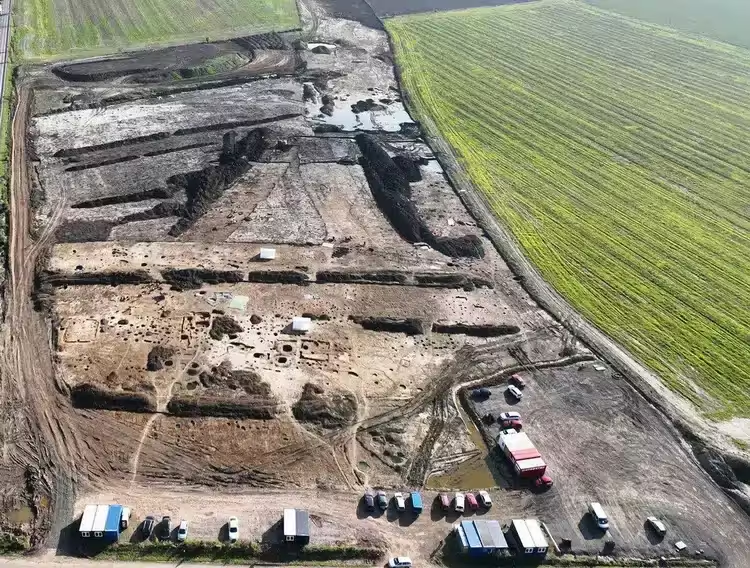
While surveying a new highway route in the Bohemia region of the Czech Republic, construction workers near Hradec Králové uncovered a sprawling Celtic settlement that dates to roughly 2,200 years ago. The find includes hundreds of gold and silver coins, intricate jewelry, Baltic amber beads and clear signs of large‑scale craft production.
Massive Celtic Hoard Unveiled After Two Years of Excavation
Covering about 62 acres, the site is more than ten times larger than the typical Iron Age settlement in the area, which usually occupies only one to two acres. The excavation, the most extensive of its kind ever undertaken in the Czech Republic, was coordinated by a consortium of institutions under the direction of archaeologist Matouš Holas.
“When we started the first work we came across artifacts that indicated that we had found something big,” Holas told Czech Television, as reported by the Czech Center Museum Houston. “If the highway had not been built, this settlement would not have been discovered.”
Artifact Trove: Coins, Jewels and Luxury Ceramics
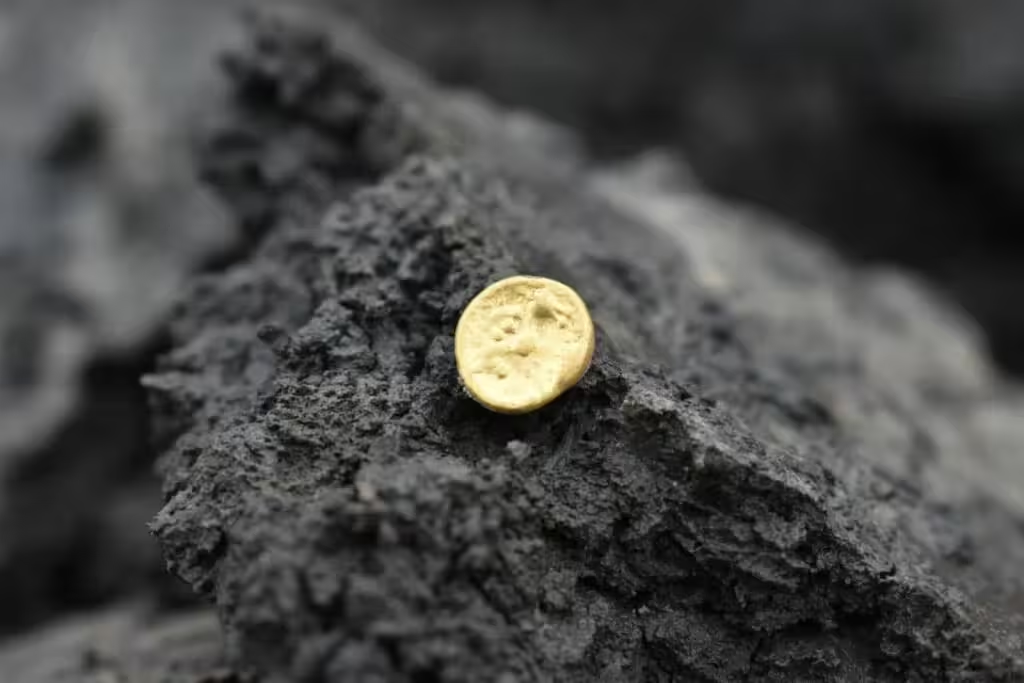
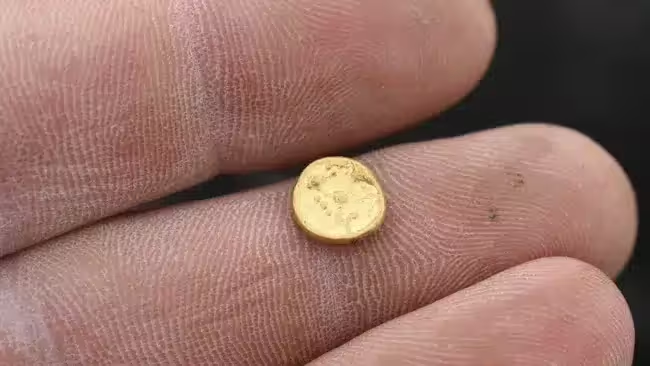
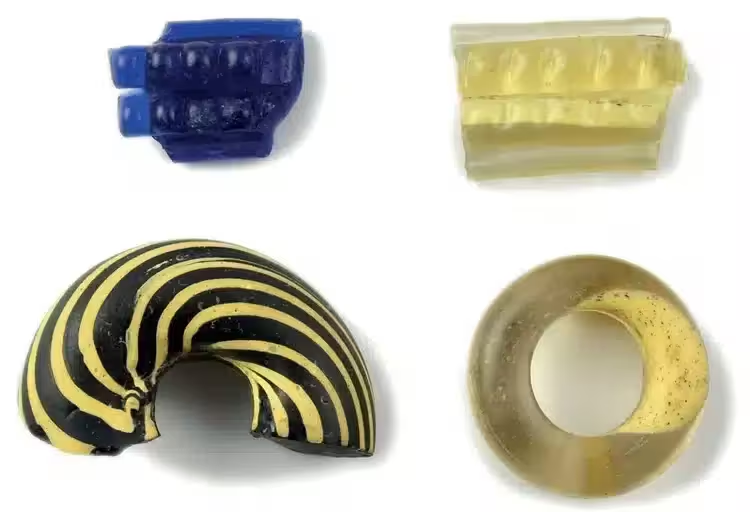
Two years of digging yielded more than 13,000 bags of material. Among the recovered items are small gold and silver coins that resemble contemporary Roman coinage, over a thousand pieces of jewelry—including brooches and glass beads—mirror fragments, metal vessels, finely crafted pottery and Baltic amber beads.
The quality of the metalwork and the presence of manufacturing tools suggest that skilled artisans lived and worked on site, rather than the settlement serving only as a waypoint for passing trade. Luxury ceramics produced on the premises further support the view of a self‑sufficient production hub with extensive commercial connections.
Trade Hub Along the Ancient Amber Route
The settlement lacks defensive walls, an absence interpreted as evidence that its economy, not its military strength, defined the community. Its location aligns with the historic amber route—a trade corridor that funneled Baltic amber southward toward the Mediterranean.
Maciej Karwowski, an archaeologist with the University of Vienna’s Department of Prehistoric and Historical Archaeology, noted that the assemblage of luxury goods mirrors other known stops along this amber trade network.
Tomáš Mangel, an assistant professor of archaeology at the University of Hradec Králové, described the site as “a supra‑regional trade and production centre connected to long‑distance trade routes, as evidenced by the finds of amber, gold and silver coins, and evidence of the production of luxury ceramics.”
La Tène‑Era Settlement With Unclear Tribal Identity
The site belongs to the La Tène period, spanning roughly 450 to 40 B.C., a time noted for intricate Celtic metalwork and expansive trade networks across Europe. Although Bohemia derives its name from the Celtic Boii tribe, no inscriptions, burial grounds or tribal markers have been found at Hradec Králové to confirm which group inhabited the settlement.
Mangel emphasized the uncertainty: “Bohemia is traditionally really connected with the Boii. But the research done recently shows that we can only say that the Boii were settled somewhere in Central Europe.” Classical sources record large‑scale Celtic migrations into central Europe around 400 B.C., yet biological evidence for those movements remains limited.
Unexplained Abandonment in the First Century B.C.
The settlement appears to have been deserted around the first century B.C. Archaeologists have found no burned layers, weapon caches or mass graves that would indicate violent conflict. In the absence of such evidence, researchers favor scenarios such as economic decline or environmental change, though the record does not provide a definitive answer.
Notably, despite the extensive area of dwellings, workshops and what seem to be ritual structures, no human burials have been uncovered. Whether this reflects distinct burial customs, gaps in the excavation coverage, or a particular social organization remains an open question.
All recovered material is currently housed at the University of Hradec Králové and partner institutions, where specialists continue cataloguing and analyzing the finds.
This article has been fact checked for accuracy, with information verified against reputable sources. Learn more about us and our editorial process.
Last reviewed on .
Article history
- Latest version
Reference(s)
- “Maciej Karwowski.” University of Vienna <https://ucrisportal.univie.ac.at/en/persons/maciej-karwowski/>.
- <https://www.researchgate.net/profile/Tomas-Mangel>.
- “Unikátní nález laténského sídliště - Muzeum východních Čech v Hradci Králové.” <https://www.muzeumhk.cz/novinky-archeologie/1840-unikatni-nalez-latenskeho-sidliste.html>.
Cite this page:
- Posted by Vikram Desai