Ancient Rock Gases Reveal Local Origin for 2‑Billion‑Year Carbon Anomaly
Scientists uncover fresh clues in 2‑billion‑year‑old rocks, reshaping a long‑standing mystery about early Earth.
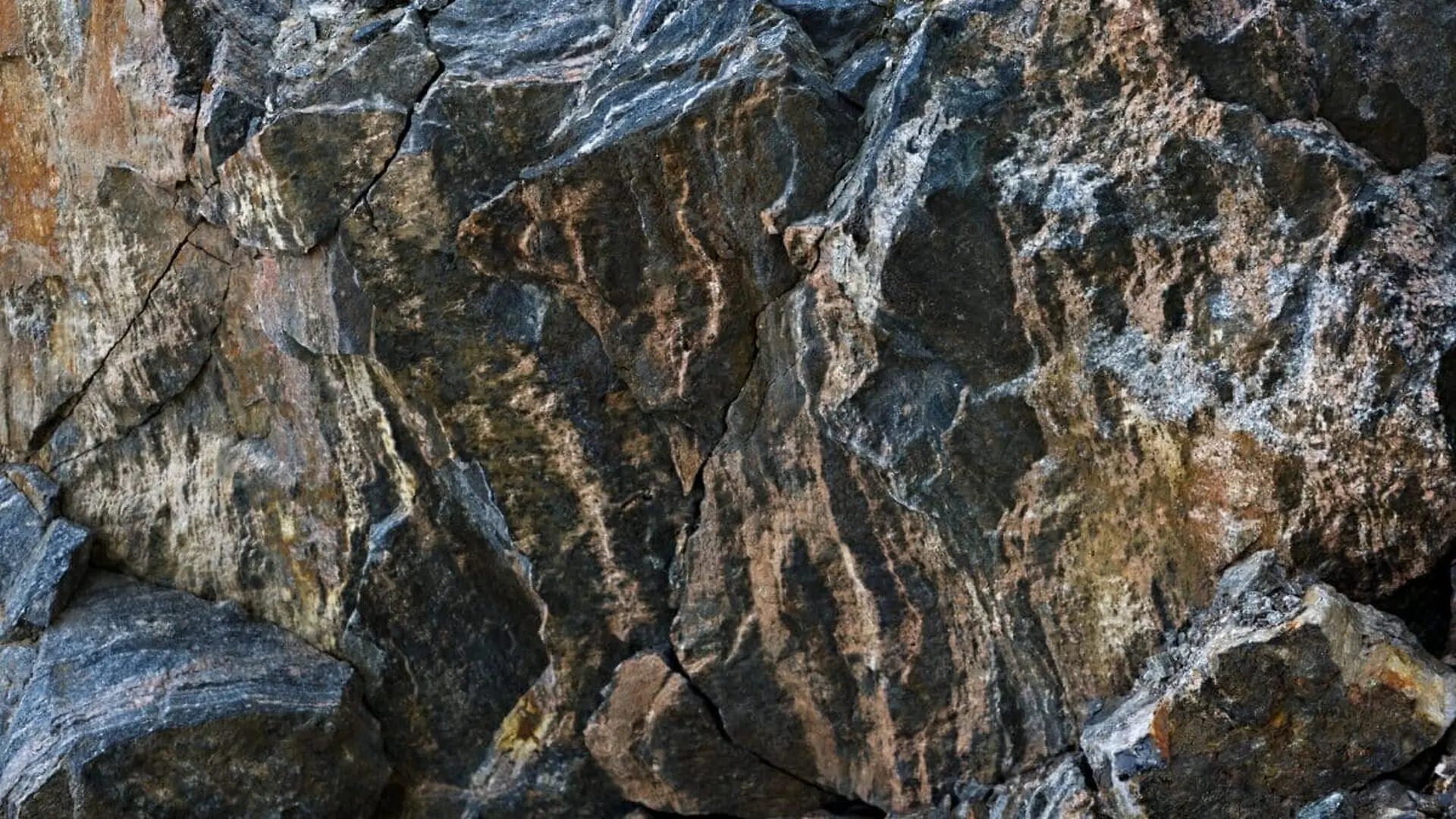
Researchers at the California Institute of Technology have presented evidence that a two‑billion‑year‑old carbon irregularity locked in Precambrian strata may stem from a confined geological setting instead of a planet‑wide crisis. Published in the journal Geology, the study examines gases sealed within the rocks to propose an alternative reading of the chemical signatures tied to early atmospheric oxygenation.
For decades the anomalous carbon marker has been interpreted as a hallmark of a sweeping planetary shift that altered the carbon cycle during a pivotal era of Earth’s development. Recent analysis of minute gas inclusions, however, points to a concealed subterranean mechanism that could reshape prevailing models of this key evolutionary transition.
Revisiting a Classic Indicator of Early Oxygen Rise
Roughly 2.5 to 2 billion years ago the planet underwent the Great Oxidation Event, during which oxygen generated by ancient microorganisms started to build up in the air, reshaping oceans, mineral deposits, and setting the stage for the emergence of complex life.
Marine sediments accumulated vast quantities of microbial remains during this interval, and their long‑term preservation has left behind distinct chemical fingerprints that researchers rely on to infer ancient conditions. Among the most contested of these is the Shunga–Francevillian event, first recognized in strata of the Zaonega Formation in Karelia, Russia, as well as in the Francevillian Basin of Gabon.
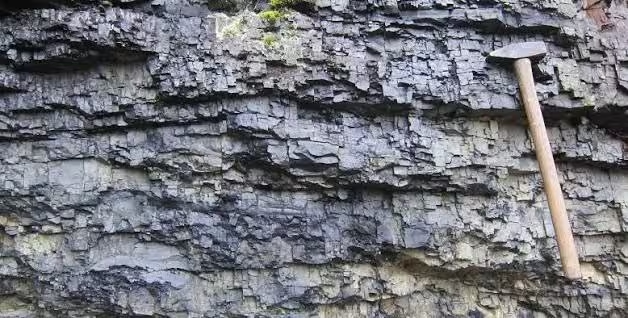
The atypical carbon‑isotope pattern has long been read as a sign of a large‑scale disturbance to the global carbon cycle, potentially marking a period of extensive environmental transformation concurrent with the early rise of atmospheric oxygen.
In contrast, the current investigation focuses on gases sealed within microscopic mineral inclusions of the ancient rocks. These trapped volatiles furnish complementary clues about the environment at the time the carbon anomaly was imprinted. The authors conclude that the isotopic signature observed in the Zaonega Formation may have originated within a localized sedimentary basin rather than indicating a global phenomenon.
Ancient Gases Reveal Hidden Subsurface Processes
The investigators analyzed portions abundant in pyrobitumen—a solid organic carbon residue formed when buried oil or organic matter undergoes high‑temperature alteration. These specimens were extracted from drill cores of the Zaonega Formation curated by the Geological Survey of Norway (NGU). By measuring molecular and isotopic traits of the gases enclosed within the rocks, the team reconstructed a scenario that began with a magma pulse penetrating organic‑laden marine sediments beneath a primordial sea.
Thermal alteration by the magma converted the buried organics into hydrocarbons such as methane and propane. These gases migrated upward, encountering zones inhabited by methanotrophic microbes. The resulting biological processing yielded biomass enriched in lighter carbon isotopes, thereby generating the distinctive chemical imprint detected in the rocks. “A combined sequence of magmatic heating and microbial oxidation can explain the anomalous carbon‑isotope pattern recorded in the Zaonega Formation,” explained Nivedita Thiagarajan, lead author and senior researcher at Caltech.
Temperature estimates derived from the data indicate a gradient spanning roughly 350 °C near the magmatic conduit down to about 72 °C adjacent to an ancient asphalt layer situated several hundred meters above in the stratigraphic column. “Observing parallels with signatures typical of contemporary petroleum systems in rocks that are two billion years old was quite striking,” noted Thiagarajan.
Gabonese Basin Could Test Global vs Local Hypothesis
This revised perspective redirects focus toward the Francevillian Basin in Gabon, the other key site associated with the Shunga–Francevillian event. Detecting comparable localized geological mechanisms there would prompt a reassessment of the classification of this ancient carbon anomaly.
Future work will involve analyzing specimens obtained via the GOE‑DEEP initiative, funded by the International Continental Scientific Drilling Program. Comparative study of cores from Russia and Gabon will reveal whether identical processes were active at both sites. “Given that Zaonega serves as the benchmark for the Shunga–Francevillian event, our results compel us to question its status as a truly global occurrence,” said Thiagarajan.
Aivo Lepland, a researcher at the Geological Survey of Norway and co‑author of the study, emphasized that side‑by‑side analysis will sharpen our understanding of early Earth oxygen dynamics. “Conducting an analogous investigation on the Gabonese samples will allow us to directly juxtapose the two records,” he added.
Ongoing investigations of these Precambrian specimens may ultimately determine whether the carbon irregularity signifies a planet‑wide chemical transition or a collection of region‑specific episodes archived in distinct geological settings.
This article has been fact checked for accuracy, with information verified against reputable sources. Learn more about us and our editorial process.
Last reviewed on .
Article history
- Latest version
Reference(s)
- Bekker, Andrey. “Great Oxidation Event.” Encyclopedia of Astrobiology, May 1, 2022, pp. 1-9. Springer Berlin Heidelberg, doi: 10.1007/978-3-642-27833-4_1752-5. <https://link.springer.com/rwe/10.1007/978-3-642-27833-4_1752-5>.
- Ricketts, “The Shunga Event; did a Precambrian mass extinction give rise to an ancient supergiant oil field?.”, November 30, 2016 Ricketts <https://www.geological-digressions.com/the-shunga-event-did-a-precambrian-mass-extinction-give-rise-to-an-ancient-supergiant-oil-field/>.
- “Nithya Thiagarajan - Division of Geological and Planetary Sciences.” <https://www.gps.caltech.edu/people/nithya-thiagarajan>.
- “Aivo Lepland - CAGE, Centre for Arctic Gas Hydrate, Environment and Climate.”, October 3, 2013 CAGE, Centre for Arctic Gas Hydrate, Environment and Climate <https://site.uit.no/cage/employee/aivo-lepland/>.
Cite this page:
- Posted by Vikram Desai