Simple Math Problem Drastically Shrinks Athlete Jump Height
Mental multitasking during explosive drop jumps reduces power output and alters ground force mechanics, revealing the hidden cost of cognitive distraction in sports.
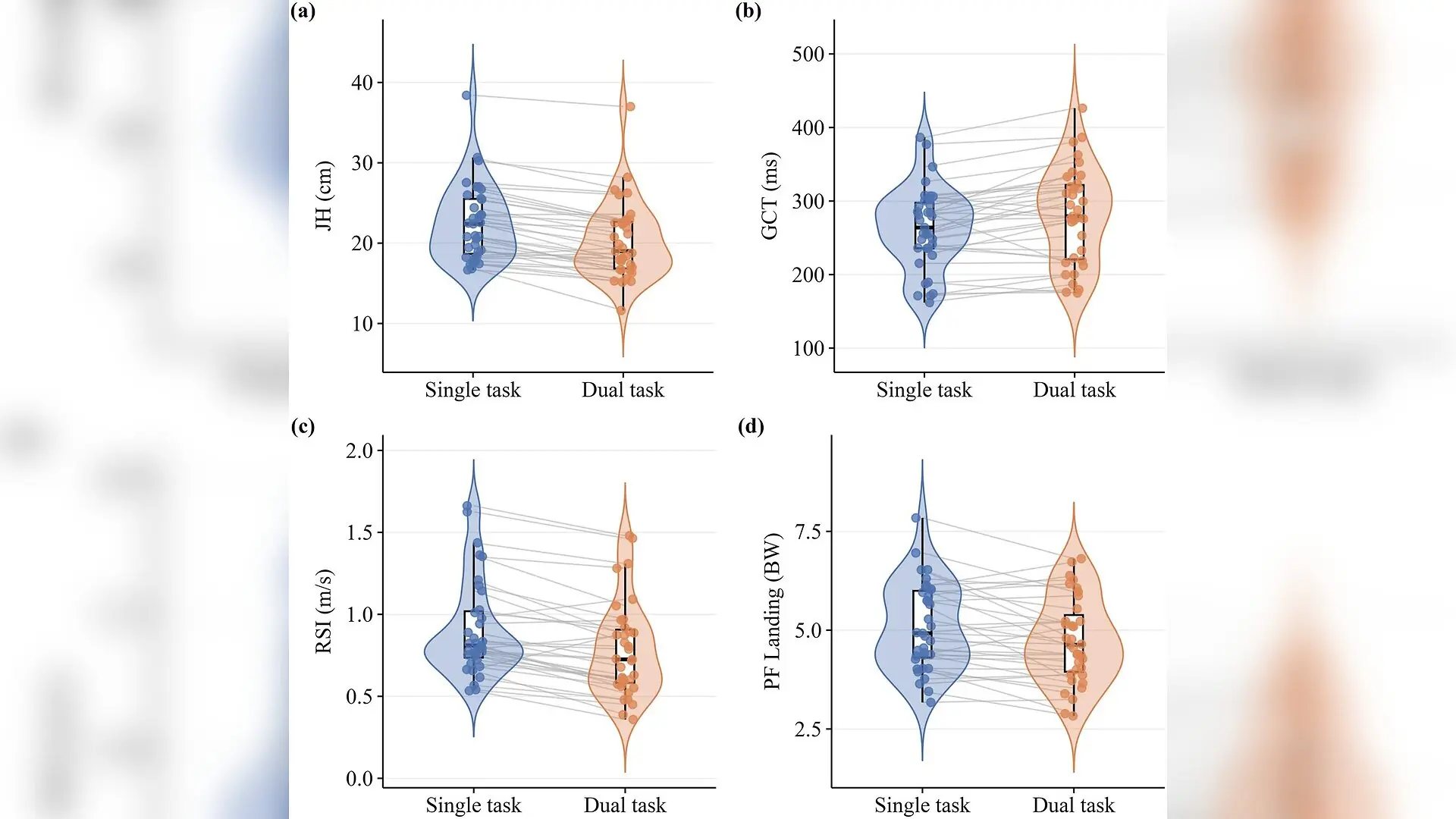
When young athletes are forced to do math in their heads while executing explosive plyometric movements, their jumping height drops noticeably and their physical mechanics undergo hidden shifts, according to research published in PLoS One. The study investigated thirty-five healthy young recreational athletes to understand how a concurrent cognitive challenge alters physical output during a standardized drop jump.
Drop jumps are a staple of athletic monitoring and strength training, requiring the body to absorb rapid eccentric loading upon landing and immediately reuse that stored energy to spring back upward. While physical tests are typically performed in quiet isolation to maximize performance, real-world sports competitions demand constant multitasking, such as tracking opponents or making split-second tactical decisions while jumping and landing.
How Mental Arithmetic Dampens Explosive Power
During the experiments, participants performed drop jumps from a 30-centimeter box under two different conditions: jumping alone or jumping while simultaneously counting backward aloud in steps of three from a randomly assigned two-digit number. The researchers tracked nineteen separate force-time metrics, covering everything from the braking phase when the body absorbs impact to the propulsion phase when the athlete launches upward.
When mental arithmetic was added to the mix, jump height decreased significantly from an average of 22.53 centimeters down to 20.23 centimeters. At the same time, the reactive strength index, which measures an athlete’s ability to produce force rapidly, fell from 0.909 to 0.781 meters per second. Ground contact time increased by an average of 17.4 milliseconds, meaning participants spent more time on the force plate while generating less explosive drive.
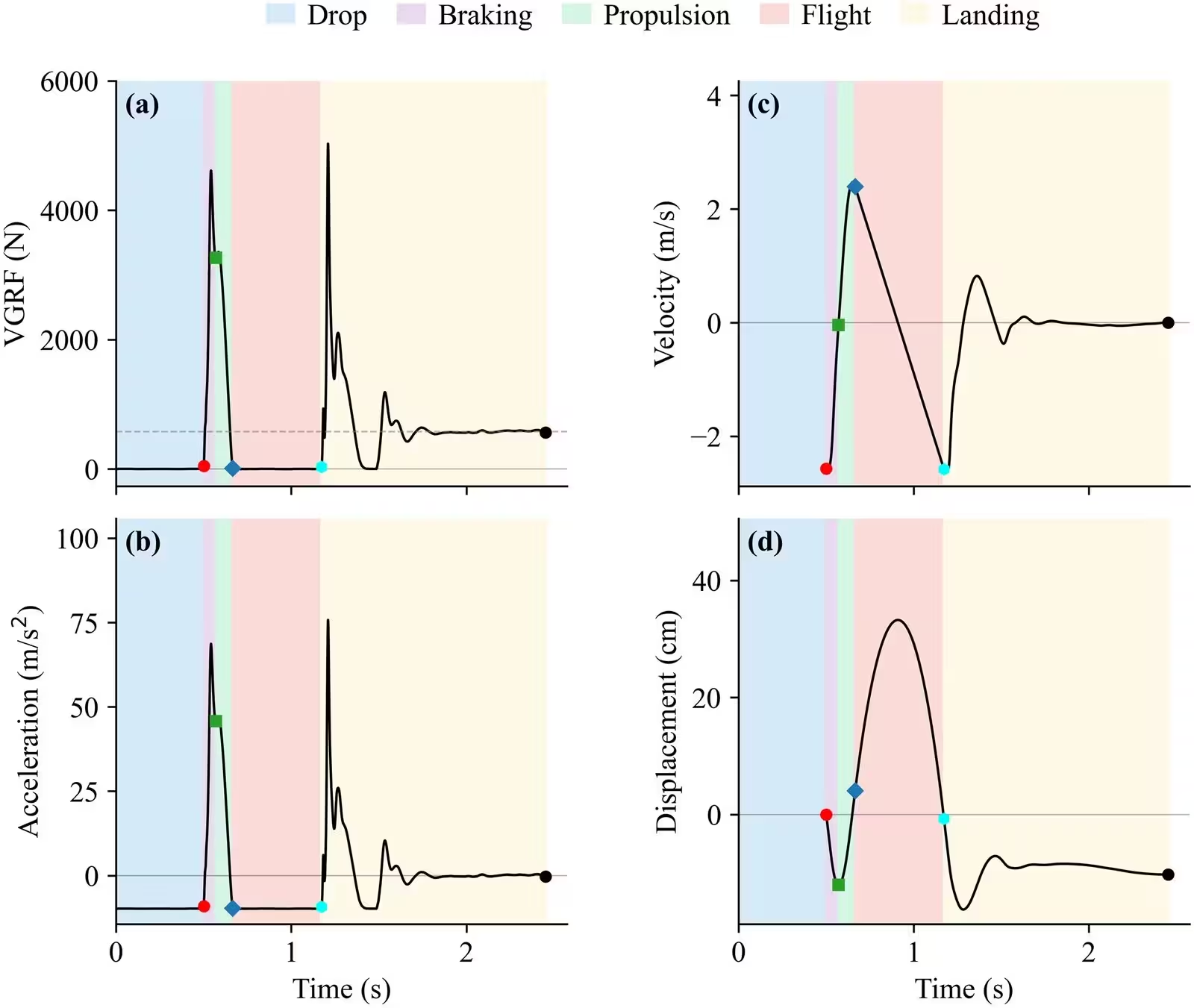
The study found that average propulsion power dropped sharply from 32.40 to 29.47 watts per kilogram. These impairments appeared consistently, with thirty-one out of the thirty-five participants showing reductions in jump height, reactive strength, and propulsion power under dual-task conditions.
What Happens to Force Profiles During Landing
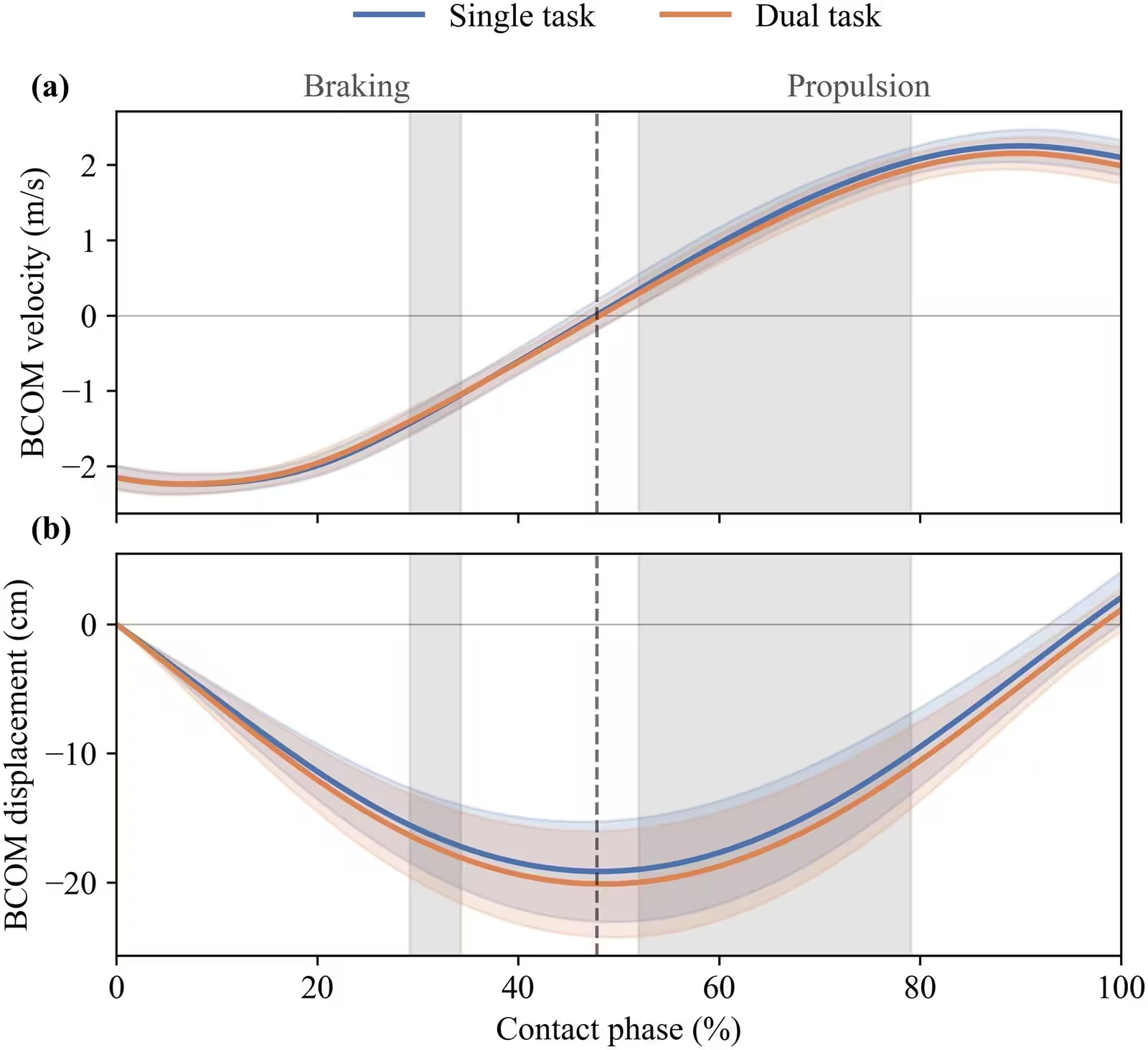
Beyond traditional performance metrics, the research team used advanced analytical techniques known as statistical parametric mapping to examine continuous vertical ground reaction force waveforms across the entire movement. This continuous tracking revealed that force production was not just lower overall, but altered at specific moments of contact.
During the braking and propulsion phases, vertical ground reaction force was significantly lower during dual-task trials. Specifically, force reductions appeared during 29.2 to 34.3 percent of the contact phase within braking, and across 52.0 to 79.1 percent during propulsion. A similar disruption emerged during the subsequent landing phase, where initial impact forces were significantly reduced while secondary impact attenuation showed higher forces than single-task jumps.
The authors suggest that these changes stem from limited attentional capacity. According to cognitive motor interference theories, the brain has a finite pool of processing resources. Dividing attention between mental calculations and complex motor planning leaves fewer neural resources available for rapid muscle activation and optimal force timing.
Testing Reliability and Practical Implications
To determine whether these metrics could be reliably measured in a single testing session, the team calculated intraclass correlation coefficients. Seventeen of the nineteen force-time metrics demonstrated good to excellent relative reliability, with values ranging from 0.812 to 0.930 across both single-task and dual-task conditions. This indicates that the measurements captured consistent group patterns despite the added cognitive burden.
However, certain metrics such as spring-like correlation and landing-to-takeoff timing differences showed much lower reliability, underscoring the challenge of tracking minute biomechanical variables. The authors acknowledge several limitations, including the young, recreationally active demographic and the fact that basic serial subtraction does not fully replicate the complex visual and spatial demands found in team sports.
Ultimately, the findings highlight the hidden cost of mental distractions during explosive physical tasks. Because athletes rarely perform in cognitive vacuums, researchers and coaches may need to standardize cognitive loads during physical testing to get an accurate picture of true athletic capability.
The research was published in PloS one on January 1, 2026.
This article has been fact checked for accuracy, with information verified against reputable sources. Learn more about us and our editorial process.
Last reviewed on .
Article history
- Latest version
Reference(s)
- Celik, Huseyin., et al. “Dual-task interference in the drop jump: Frequentist, Bayesian, and waveform analysis of vertical ground reaction force.” PLOS One, vol. 21, no. 11, November 11, 2026, pp. e0362399 Public Library of Science (PLoS), doi: 10.1371/journal.pone.0362399. <https://doi.org/10.1371/journal.pone.0362399>.
Cite this page:
- Posted by Hassan Raza