22 Giant 80‑Ton Stones Raised From the Sea to Rebuild the Lost Lighthouse of Alexandria
22 massive stone blocks rise from the Mediterranean, poised to reshape our view of an ancient wonder.
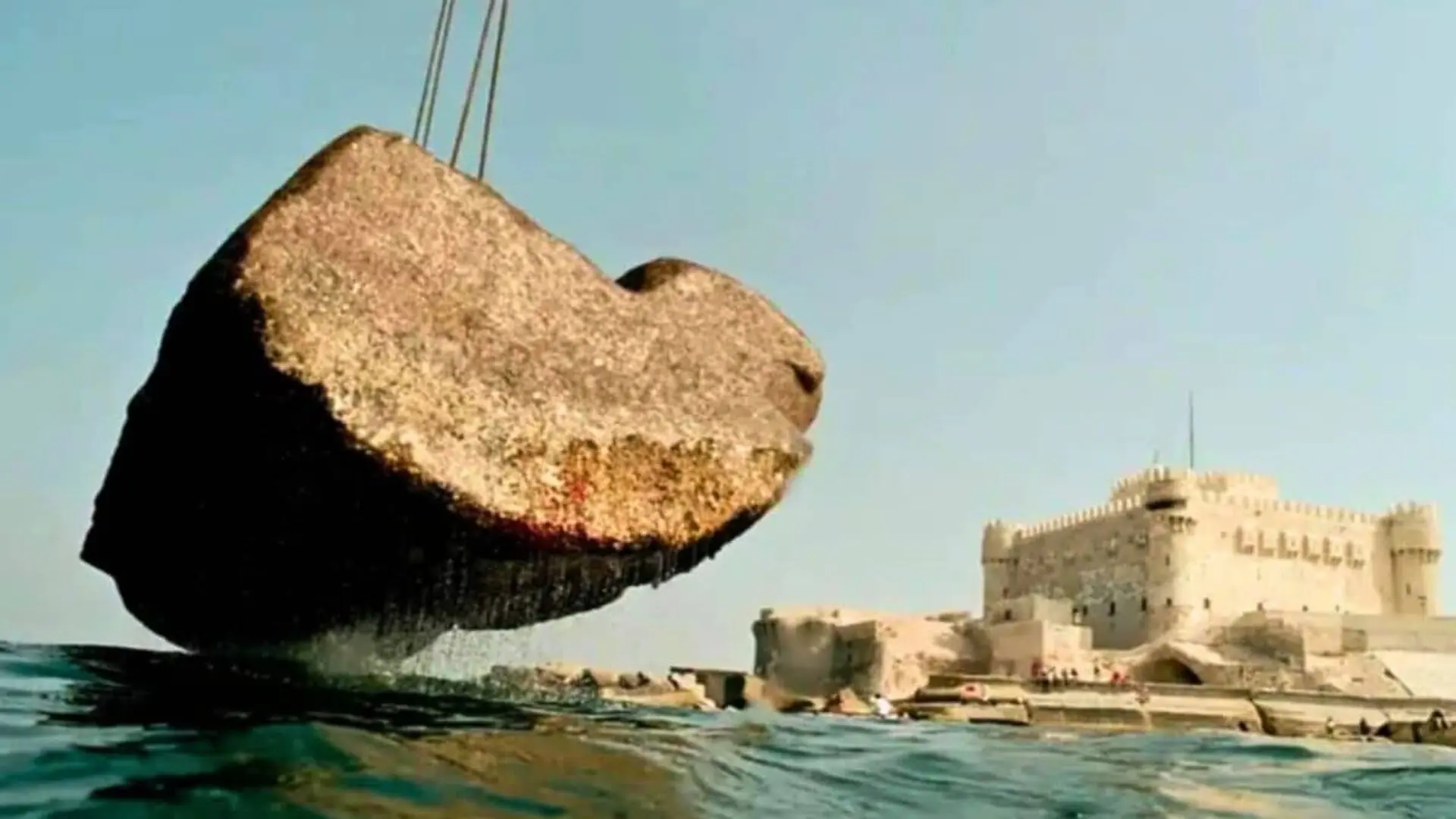
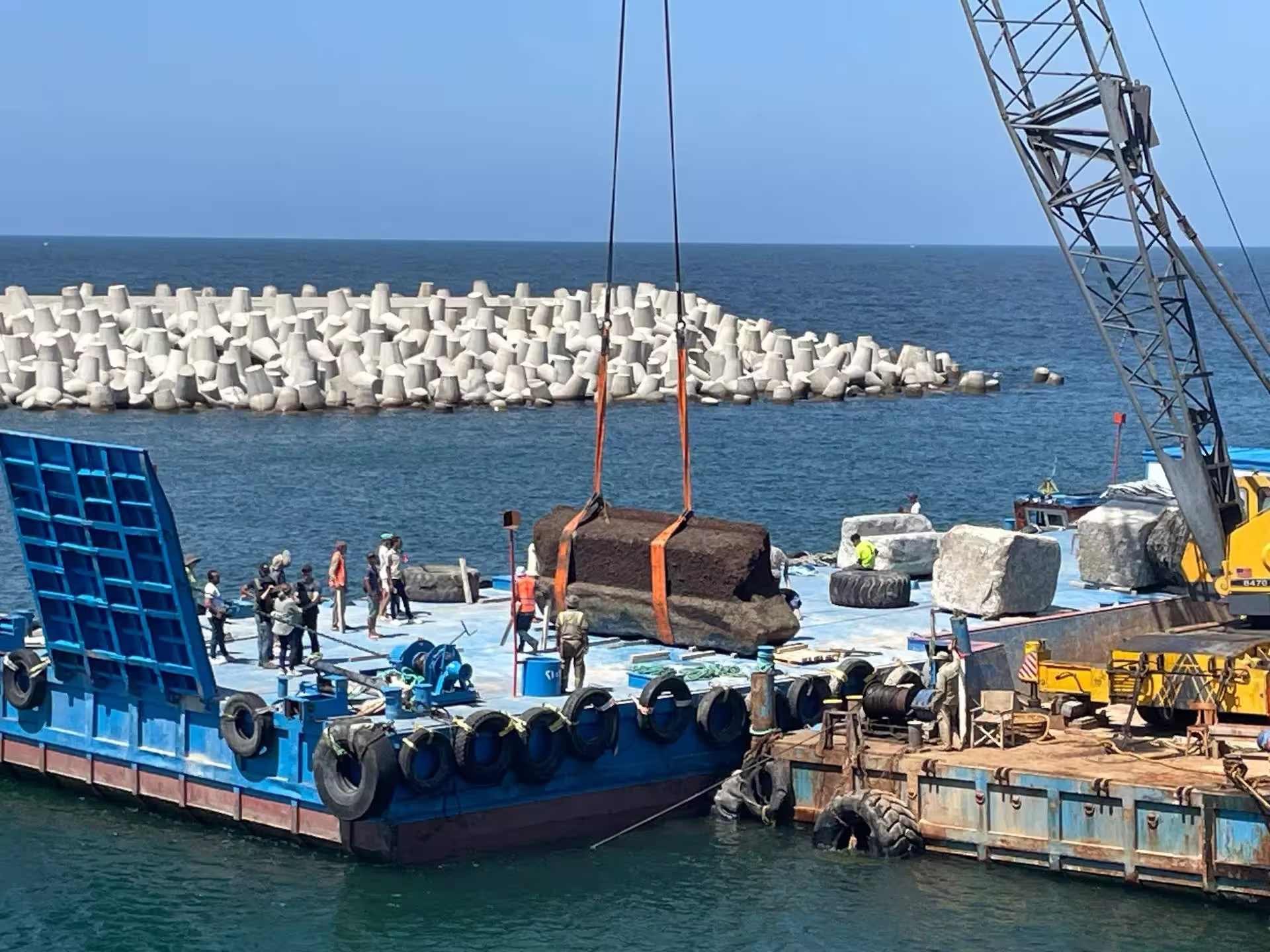
In a deep‑water operation off Alexandria, divers and engineers hoisted 22 massive stone blocks—each weighing between 70 and 80 tons—from the Mediterranean floor. The haul marks a pivotal advance toward a fully digital reconstruction of the ancient Lighthouse of Alexandria, one of the world’s original seven wonders.
Monumental Entrance Stones Retrieved from the Sea
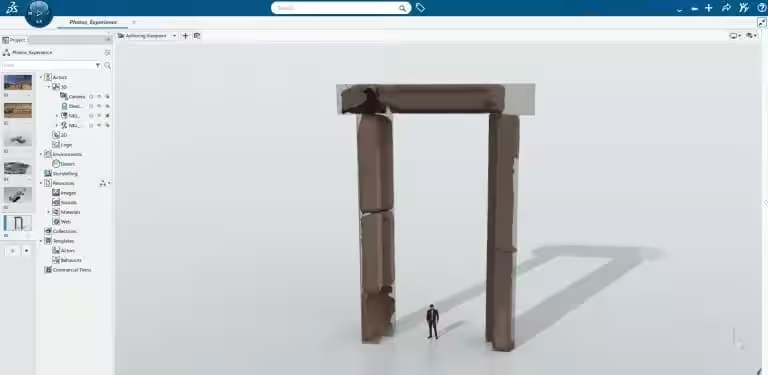
Among the recovered artifacts are enormous door lintels, doorjambs, a threshold slab, and sizable base stones. Researchers also identified a previously unknown Hellenistic‑era pylon featuring an Egyptian‑style doorway, which they believe formed the lighthouse’s grand entrance where Greek and Egyptian architectural vocabularies merged.
The extraction required a specialized barge and crane, a logistical effort financed by the French production house GEDEON Programmes.
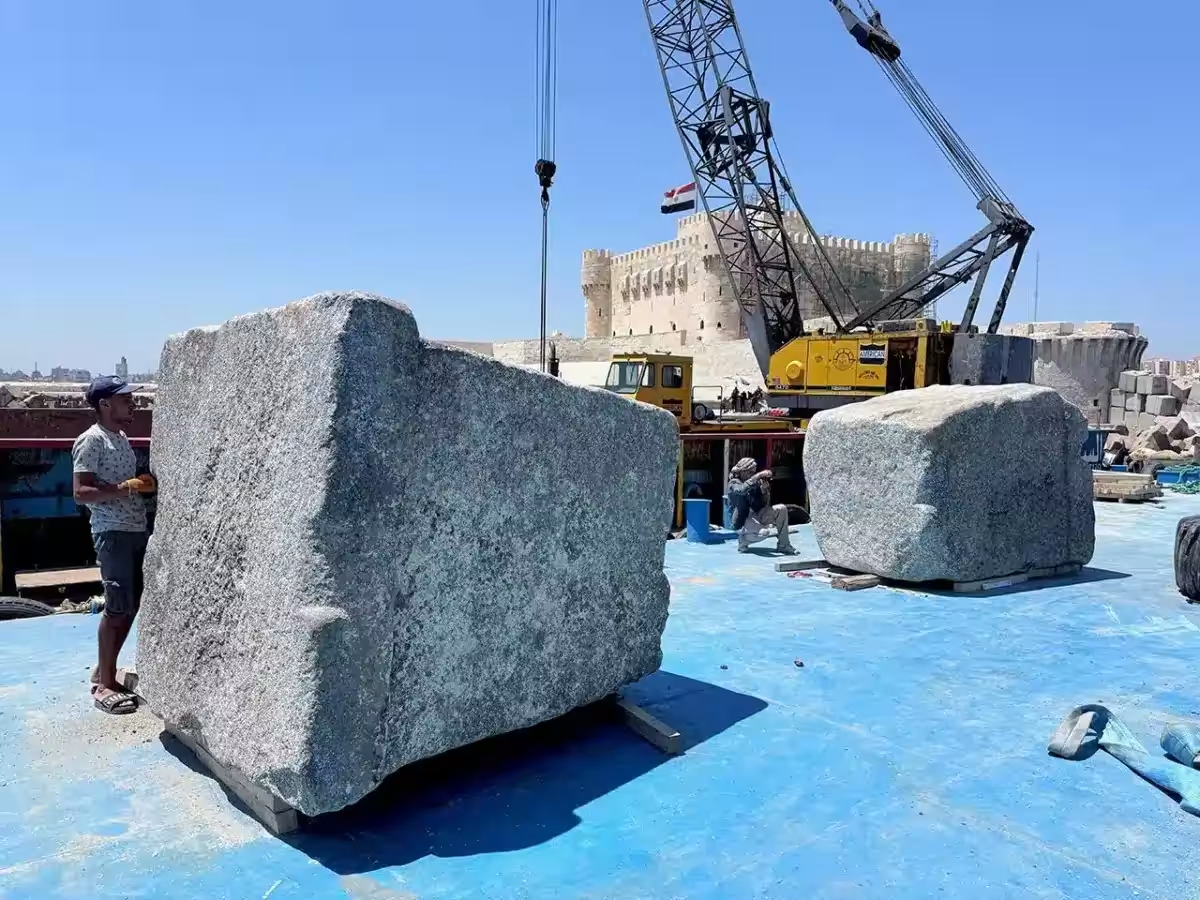
The Dassault Systèmes Foundation, which has funded the project for three years, says the lifted stones will undergo high‑precision photogrammetry. This technique will add them to a growing archive of more than 100 blocks already digitized from the submerged ruins over the past decade.
Three Decades of Submerged Archaeology
The lighthouse’s underwater remains were first sighted in 1968, but systematic study only began later. A 1994 survey catalogued over 3,300 artifacts—including sphinxes, obelisks, columns, and granite blocks—linked to the beacon and its surrounding complex.
In 1995, archaeologist Jean‑Yves Empereur of the Centre d’Études Alexandrines (CEAlex) led a mission that formally identified and recorded the submerged structures. The present lifting operation, the most ambitious extraction to date, follows three decades of continuous investigation.
The effort operates under the PHAROS program—directed by Isabelle Hairy and supported by the Dassault Systèmes Foundation. PHAROS unites historians, numismatists, archaeologists, and architects to gather ancient visual and textual references to the lighthouse spanning from the late fourth century BCE to its final destruction in the early fifteenth century CE.
Virtual Assembly of the Ancient Beacon
Once photogrammetrically processed, the stone data are handed to volunteer engineers who treat the reconstruction like a massive jigsaw puzzle. Each digitized block is analyzed, positioned, and tested within virtual simulations to explore how the lighthouse was originally constructed and how it ultimately collapsed.
The ultimate aim is a detailed digital twin that allows users to navigate the reconstructed space as if they were walking on the historic island of Pharos.
Because no other ancient lighthouse survives in substantial form, the Alexandria beacon remains the sole architectural reference for scholars seeking to understand the design and engineering of early towering lighthouses.
From Ptolemaic Construction to Medieval Demolition
Commissioned by Ptolemy I Soter at the start of the third century BCE and designed by Sostratus of Cnidus, the lighthouse stood on Pharos island and rose over 100 meters—making it the tallest human‑made structure of its era and, by modern standards, the world’s first skyscraper.
Successive earthquakes weakened the monument, and a catastrophic quake in 1303 rendered it irreparable. Over the following century and a half, its stones were repurposed for other building projects. By 1477, much of the remaining fabric had been incorporated into the Qaitbay Citadel, erected on the same site.
The blocks that now rest on the seabed escaped medieval quarrying, preserving fine architectural details that were never altered by later builders.
Documentary Crew Captures the Recovery
GEDEON Programmes, a partner since the 1995 Empereur mission, produced the documentary “The Seventh Wonder of the World,” which aired on France 2 and internationally on the BBC, PBS, ZDF, RAI, and NHK. The company returned to finance the barge and crane for the current lift, and director Laurence Thiriat oversaw filming of the entire operation. A 90‑minute documentary is slated for a prime‑time debut on France Télévisions.
This article has been fact checked for accuracy, with information verified against reputable sources. Learn more about us and our editorial process.
Last reviewed on .
Article history
- Latest version
Cite this page:
- Posted by Vikram Desai