Elephant Carpal Bone Discovered in Spain Offers New Evidence of Carthaginian War Elephants
A lone elephant bone discovered in Córdoba could be the first physical proof of Carthaginian war elephants, shedding new light on ancient military history.
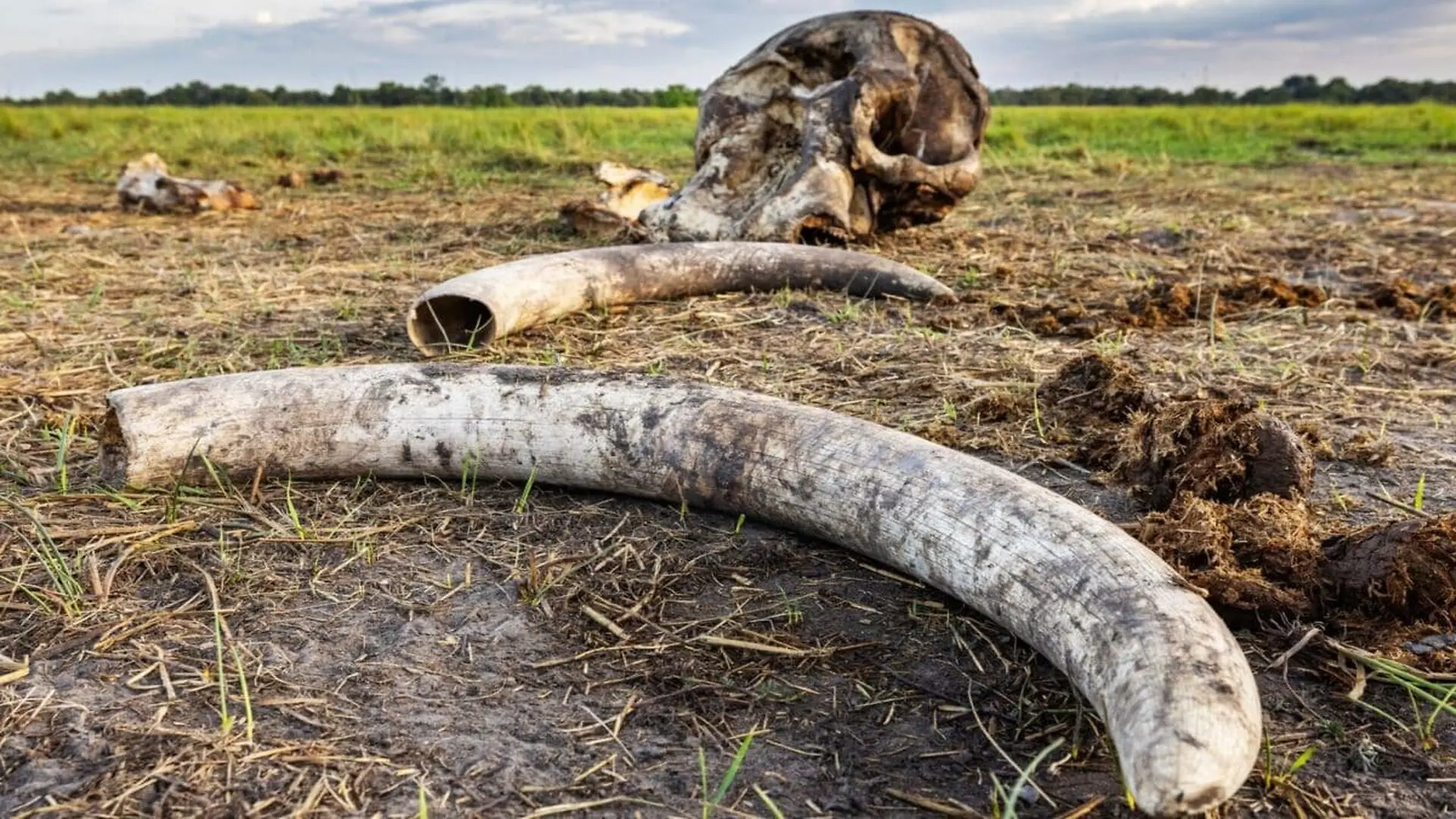
During a 2020 emergency dig at the Colina de los Quemados site on the outskirts of Córdoba, Spain, archaeologists recovered a single elephant bone embedded in a layer rich with stone artillery, scorpio‑type arrowheads, and Carthaginian coinage. The find offers one of the few tangible links between the Iberian Peninsula and the war elephants employed by Carthage during the Second Punic War.
Proboscidean Carpal Reveals Iron‑Age Elephant Presence
The fragment measures roughly 10 centimetres and was identified as the third carpal (os magnum) of a right forelimb. Comparative analysis with bones from modern Asian elephants and a steppe mammoth confirmed its origin as a proboscidean, though the exact species remains undetermined. Radiocarbon dating of the mineral fraction places the bone in the pre‑Roman Iron Age, corresponding to the late fourth–third centuries BCE, a period when Carthaginian forces regularly deployed war elephants across the western Mediterranean.
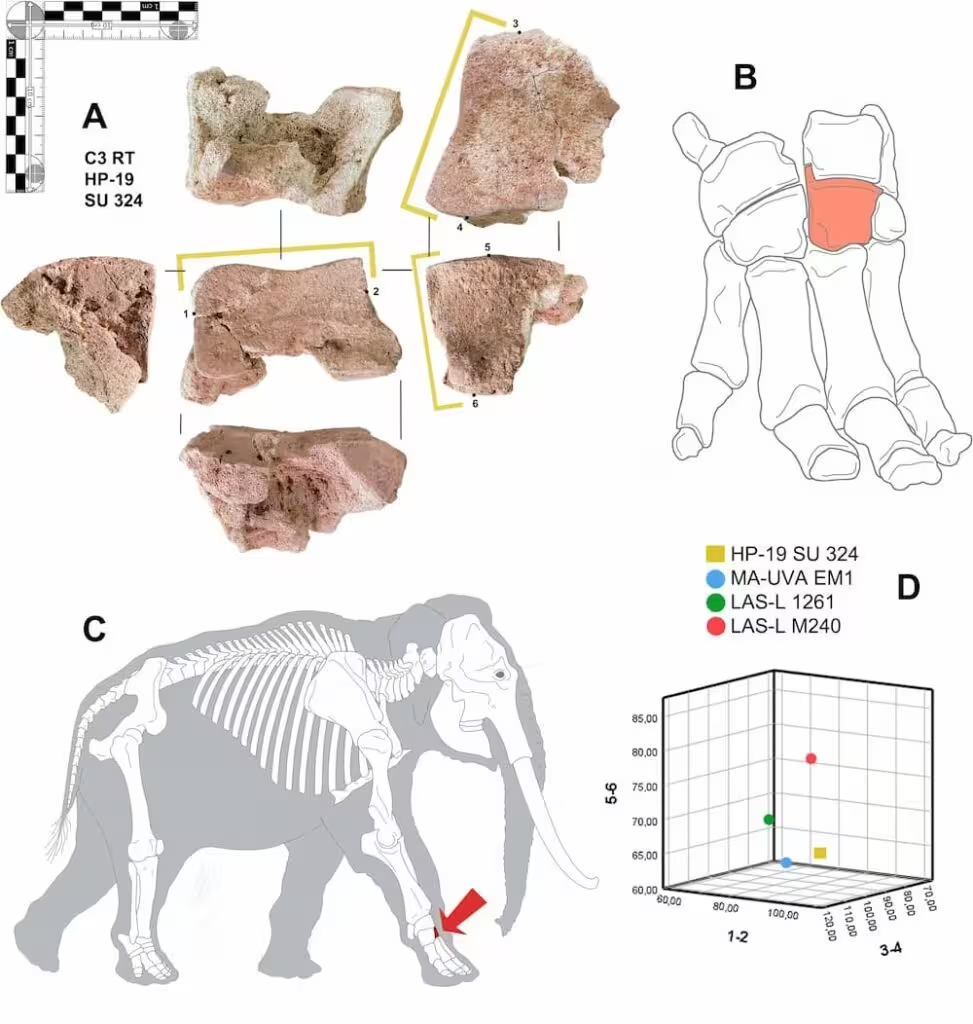
The bone survived beneath a collapsed adobe wall, sharing its stratum with stone artillery projectiles and heavy arrowheads linked to scorpio‑type siege weapons. In addition, a hoard of Carthaginian coins minted in Cartagena between 237 and 206 BCE was uncovered, reinforcing the interpretation that this layer records a brief but intense military episode likely tied to the Second Punic War.
Why Only One Bone Remains
Researchers suggest that the elephant may have perished during the conflict, with most of its carcass subsequently destroyed, repurposed, or scattered. Post‑conflict activities could also have displaced the carpal, allowing it to survive while other skeletal elements were lost.
Livy’s Accounts Illuminate Carthaginian Elephants
Ancient narratives, particularly Book 21 of Livy’s From the Founding of the City, describe how Hannibal’s elephants struck terror into Roman cavalry, unsettling horses both by sight and by unfamiliar scent. Livy recounts elephants breaching Roman lines, skirmishers hurling darts at them, and even river currents sweeping men into the beasts’ path. He also notes that severe cold after the Battle of Trebia contributed to the death of most of the animals.
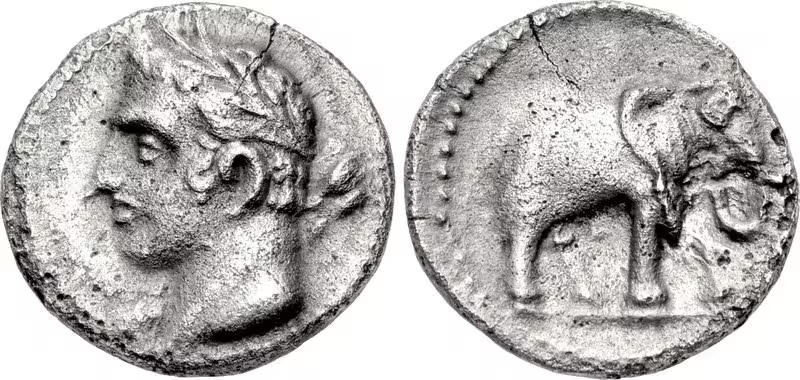
A modern biography of Hannibal records that he set out from the Pyrenees in 218 BCE with more than 100,000 troops and nearly 40 war elephants, emerging from the Alps with 20,000 infantry, 6,000 cavalry, and 37 elephants. Throughout his Italian campaign—most famously at Trebia, Trasimene, and Cannae—Hannibal’s elephants played a pivotal yet costly role, with many lost to battle and harsh weather.
Scipio’s Triumph at Zama and the Fate of the Elephants
The final showdown at the Battle of Zama in 202 BCE, detailed in a biography of Scipio Africanus, saw Roman troops sound horns that startled Carthaginian elephants, causing some to turn back and trample their own ranks. This psychological tactic contributed to the Roman victory and forced Carthage to seek peace.
While the Córdoba carpal cannot be directly linked to Hannibal’s Alpine crossing or the battle of Zama, its presence within a context of Carthaginian military material provides rare physical corroboration of the historical record. The find enriches our understanding of how war elephants were deployed far from their North African origins, extending their influence into the Iberian Peninsula during a turbulent epoch.
This article has been fact checked for accuracy, with information verified against reputable sources. Learn more about us and our editorial process.
Last reviewed on .
Article history
- Latest version
Cite this page:
- Posted by Vikram Desai