Living Microbes Reveal Ancient Gut and Cold Loving Yeasts on 5300-Year-Old Iceman
Scientists uncover a hidden find on the 5,000‑year‑old Ötzi mummy, offering fresh clues about his life and ancient preservation.
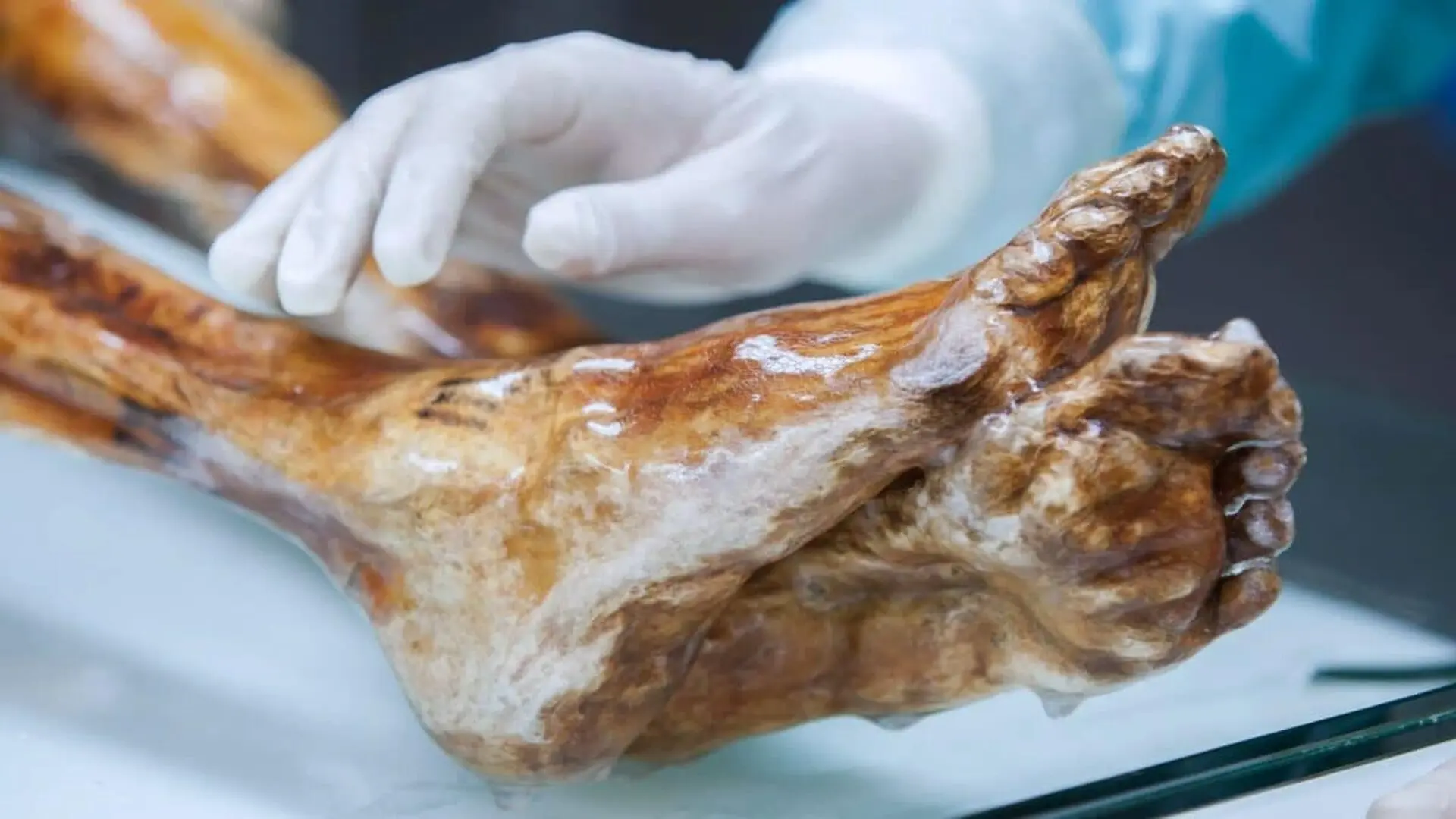
More than five millennia after the Alpine glacier sealed his remains, the Iceman’s body continues to host a hidden community of microorganisms. Researchers have identified remnants of his ancient intestinal bacteria together with psychrophilic yeasts that appear to have colonised him during his prolonged stay in the ice.
Beyond DNA: Mapping the Mummy’s Microbial Landscape
Distinguishing the original microbes from later intruders required a multi‑sample strategy. Scientists examined surface ice, meltwater drawn from within the mummy, and swab collections, while also revisiting previously published data from his stomach and intestinal tissue. A frozen soil specimen retrieved from the original discovery site in 1991 served as an additional reference point.
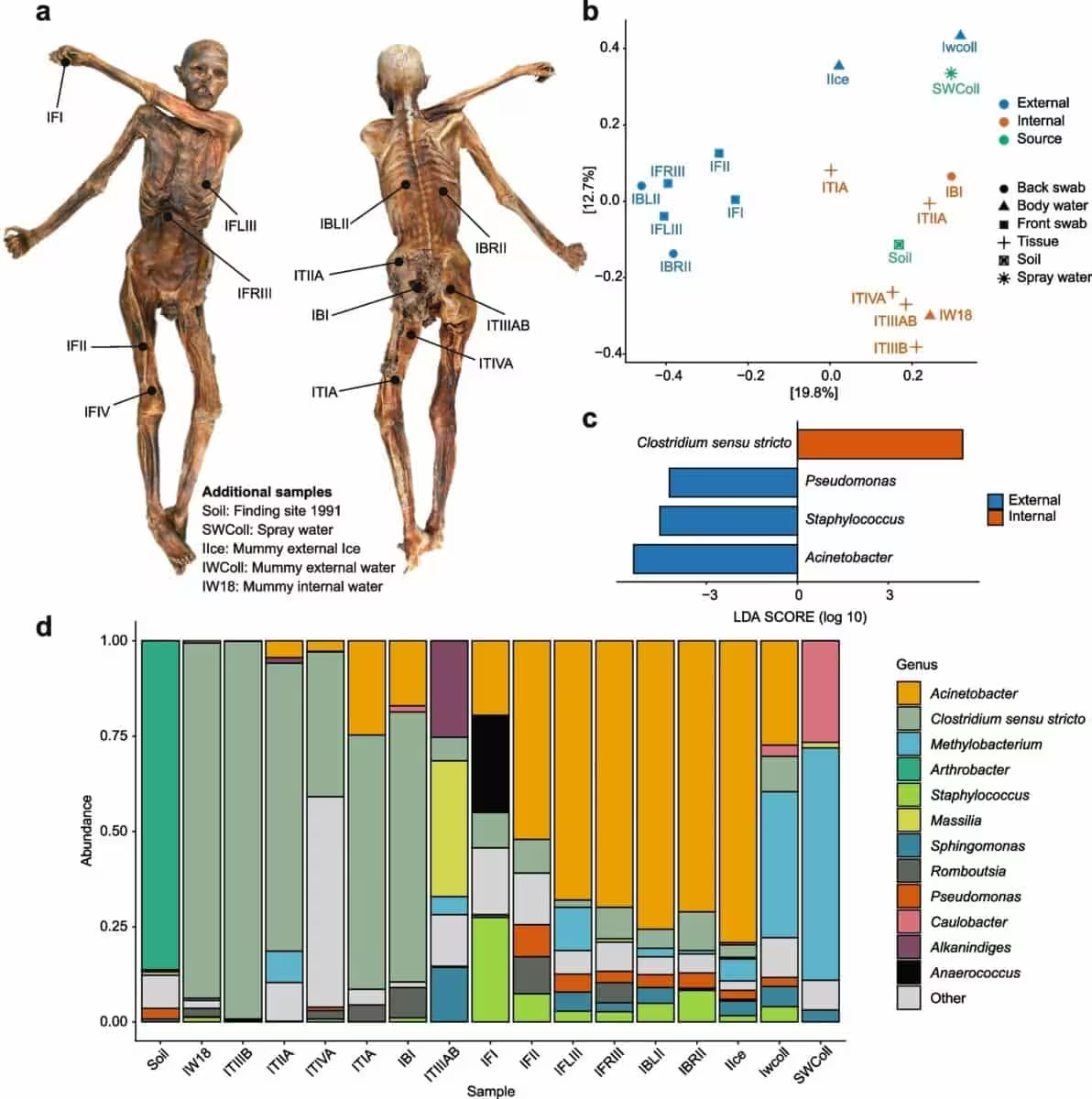
Genetic analysis of the gut contents revealed bacterial signatures that match the Iceman’s original microbiome, some of which are similar to strains observed in early Holocene populations but are now rare in industrialised societies. “A mummy’s microbiome is unique because we are dealing with microbes that are over 5,000 years old and, at the same time, with modern microbes that have been introduced since the discovery,” explained lead author Mohamed S. Sarhan.
Psychrophilic Yeasts: Cold‑Adapted Passengers
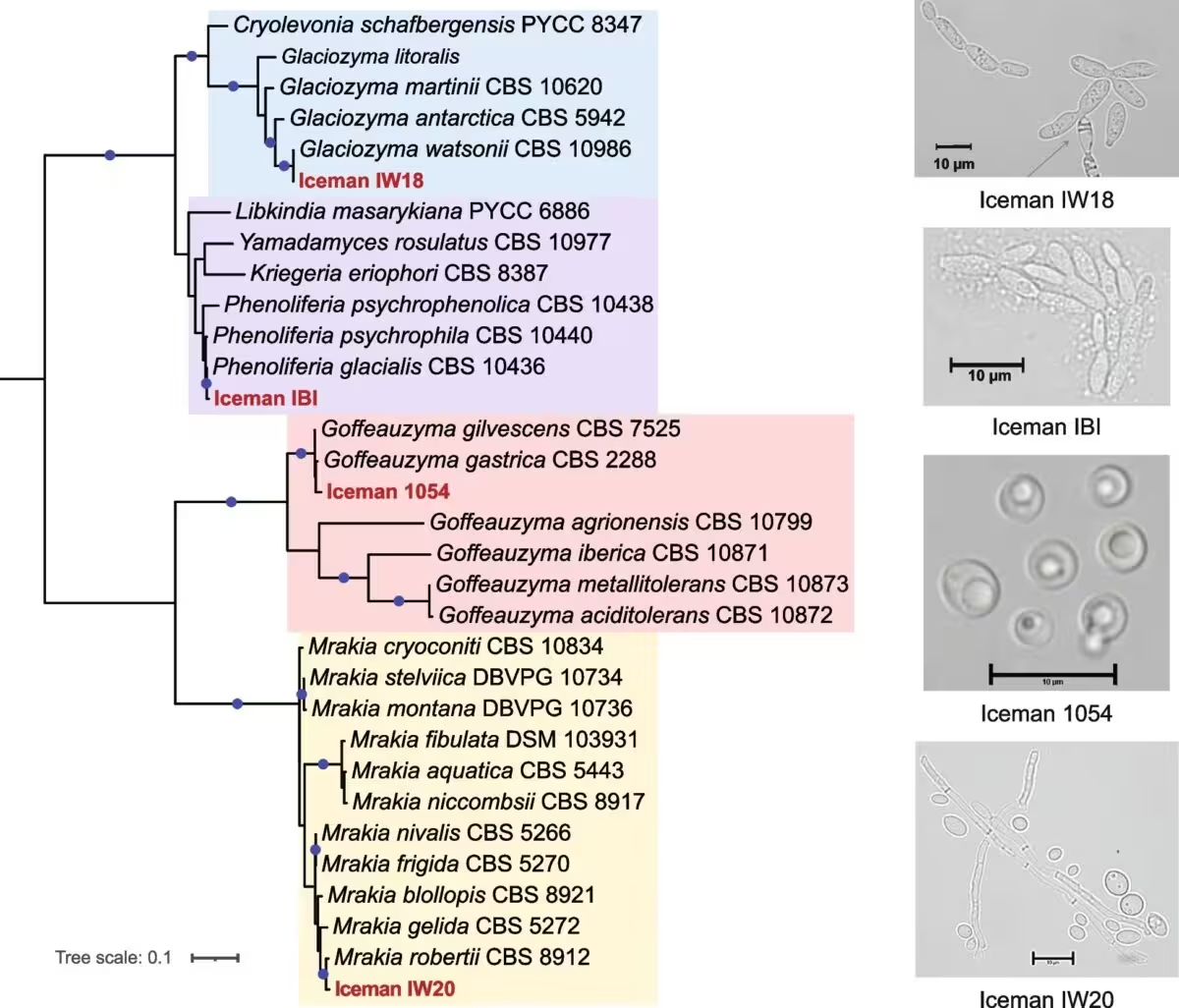
Among the most unexpected findings were yeasts detected on the mummy’s skin, in the meltwater, and within his stomach. DNA sequencing linked these strains to organisms thriving in extreme cold environments, including habitats in Antarctica, suggesting that the glacier itself may have been the source. While some DNA fragments were highly degraded, others remained remarkably intact, raising the possibility that certain microbes persist in a dormant state.
The Iceman is currently housed at the South Tyrol Museum of Archaeology, where the environment is maintained at roughly –6 °C with 99 % humidity. “We see continuity here,” noted Frank Maixner, director of the Institute for Mummy Studies at Eurac Research. “These yeasts have accompanied Ötzi on his long journey through the millennia,” adding that the specimen should be regarded as a “dynamic biological system” rather than a static relic.
Conservation Treatments and Microbial Survival
After the discovery, conservators applied phenol to suppress fungal growth on the mummy. Recent genomic work shows that three of the four identified yeast species possess genes enabling phenol degradation, meaning they could have metabolised the very compound intended to eliminate them. This underscores the complexity of preserving ancient remains while maintaining their original biological signatures.
“The conditions under which glacial mummies are preserved are not yet fully understood,” said conservation specialist Marco Samadelli. “This study expands our knowledge in this area.” Museum director Elisabeth Vallazza confirmed that the current storage parameters are “very stable,” with ongoing microbiological monitoring to prevent further damage.
Potential Biotechnological Roles for Ancient Cold‑Adapted Microbes
The identified psychrophilic microorganisms could inform future applications beyond archaeological insight. Their ability to function at low temperatures makes them attractive candidates for processes such as low‑temperature fermentation, which may lower energy consumption in industrial settings. While these prospects remain exploratory, the Iceman’s microbiome offers a unique window into the metabolic strategies of ancient and extremophilic life.
This article has been fact checked for accuracy, with information verified against reputable sources. Learn more about us and our editorial process.
Last reviewed on .
Article history
- Latest version
Reference(s)
- Samadelli, Marco. “The Iceman’s microbiome: unveiling millennia of microbial diversity and continuity.”, June 1, 2026 EURAC Research, doi: https://doi.org/10.1186/s40168-026-02417-6. <https://www.eurac.edu/en/people/mohamed-sabry-mohamed-sarhan>.
- “Ötzi the Iceman| South Tyrol Museum of Archaeology.” South Tyrol Museum of Archaeology <https://www.iceman.it/en/oetzi/the-iceman>.
- Samadelli, Marco. “The Iceman’s microbiome: unveiling millennia of microbial diversity and continuity.”, June 1, 2026 EURAC Research, doi: https://doi.org/10.1186/s40168-026-02417-6. <https://www.eurac.edu/en/people/frank-maixner>.
- Samadelli, Marco. “The Iceman’s microbiome: unveiling millennia of microbial diversity and continuity.”, June 1, 2026 EURAC Research, doi: https://doi.org/10.1186/s40168-026-02417-6. <https://www.eurac.edu/en/people/marco-samadelli>.
Cite this page:
- Posted by Vikram Desai