How Oxygen‑Starved Decay Preserves Ancient Brains by Forming Super‑Strong Proteins
Why some ancient skeletons retain brains: scientists uncover the hidden factor that preserves brain tissue for millennia.
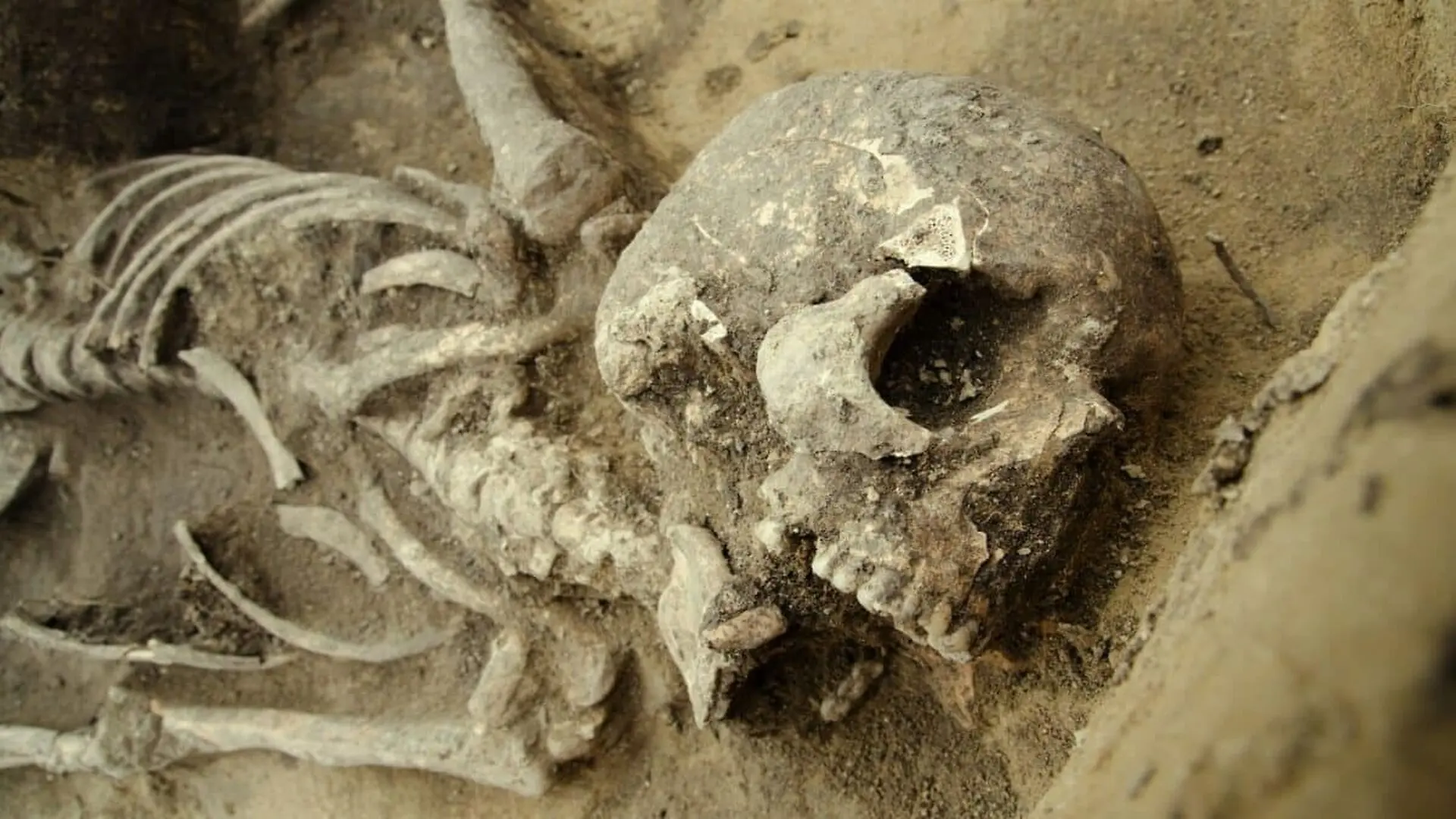
Archaeologists have long been baffled by a curious pattern in ancient remains: while most soft tissues decompose, the brain sometimes persists as the sole surviving organ. Recent research now points to a chemical mechanism that explains why the brain can outlast surrounding flesh, turning a puzzling anomaly into a predictable outcome of decay.
The so‑called “brain preservation paradox” has been documented in more than 4,400 brains spanning roughly 12,000 years of human history, according to a survey led by Alexandra Seviour, a doctoral candidate in paleobiology at the University of Oxford. The fact that neural tissue can remain intact while skin, muscle and other organs vanish has seemed to conflict with conventional models of decomposition.
Interestingly, about one‑third of these preserved brains originate from water‑logged, low‑oxygen settings such as riverbeds, lake margins, submerged caves and shipwreck sites—environments that normally accelerate decay rather than protect organic material.
Six‑Month Burial Trial Reveals Oxygen’s Role
To probe the underlying chemistry, a team of scientists conducted a six‑month burial experiment that placed mouse carcasses in four distinct combinations of moisture and oxygen. The findings, published on June 19 in the Journal of Proteome Research, were monitored at intervals ranging from 24 hours to six months.
At each checkpoint—including 24 hours, 72 hours, one week, six weeks, three months and six months—the researchers extracted the brains and applied high‑resolution mass spectrometry to map which proteins survived and which fragmented.
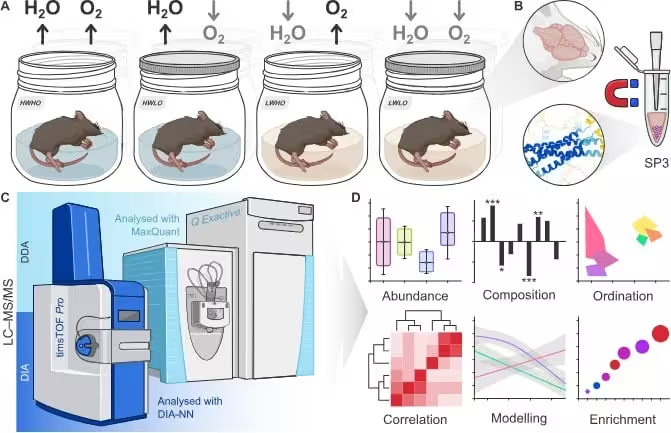
The analysis generated more than 1.26 million protein decay patterns. Early stages of decomposition were similar across all burial conditions, but after several weeks oxygen concentration began to drive divergent outcomes. High‑oxygen environments accelerated brain tissue breakdown, whereas wet, oxygen‑poor settings fostered the formation of resilient protein structures that resisted further decay. These findings offer a plausible explanation for the survival of ancient brains over millennia.
Free Radicals Shape Protein Survival
Seviour’s team attributes the protective effect to free radicals—highly reactive particles that, in the presence of ample oxygen, rapidly degrade proteins. In low‑oxygen, water‑rich contexts, the radical chemistry slows, allowing certain reactive compounds to bind to neighboring proteins and create sturdier molecular networks.
Rather than annihilating proteins outright, the slowed reaction permits the attachment of these compounds, yielding structures that are markedly harder to dismantle.
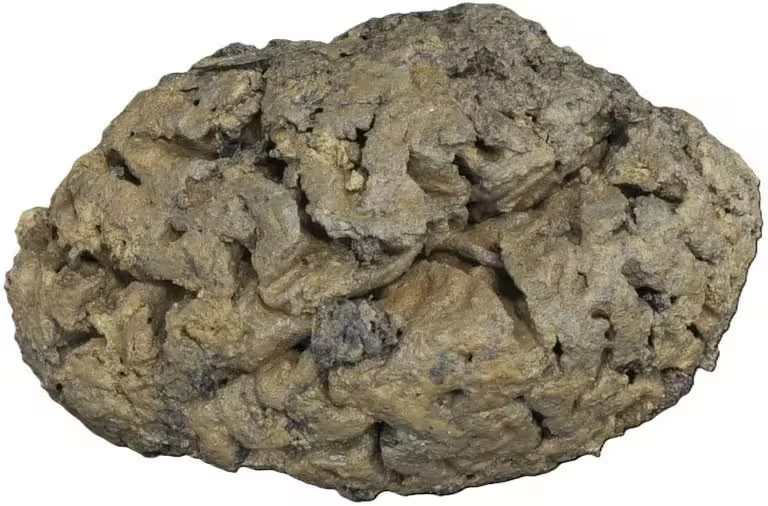
The brain’s composition appears uniquely suited to this preservation pathway. It contains metals that can catalyze radical reactions, fatty membranes that serve as radical reservoirs, and specific amino acids that trap radicals to forge stronger bonds. Additionally, the skull may limit fluid and oxygen exchange, further protecting the enclosed tissue.
Potential Overlap With Neurodegenerative Processes
Richard Evershed, an organic geochemist at the University of Bristol not involved in the study, praised the work as a thorough molecular assessment. He suggested expanding the approach to other tissues to determine whether the brain’s preservation mechanisms are unique or shared across organs.
“Comparing more tissues — other organs and muscles — would be really useful to get an idea whether what was happening in the brain was special compared to what was happening elsewhere, and also to resolve questions regarding proteins preserved in other environments in archaeology such as pots or dental calculus.”
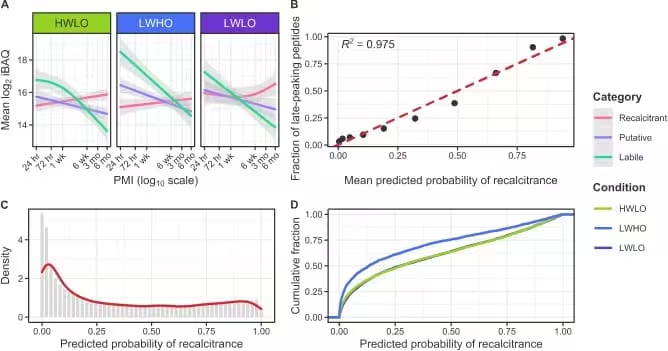
Seviour also noted that the molecular signatures identified in decay‑resistant proteins resemble patterns observed in neurodegenerative disorders such as Alzheimer’s disease. While the connection remains speculative, the overlap hints at shared biochemical pathways that merit further investigation.
This article has been fact checked for accuracy, with information verified against reputable sources. Learn more about us and our editorial process.
Last reviewed on .
Article history
- Latest version
Reference(s)
- , doi: 10.1021/acs.jproteome.6c00200/5164102/Molecular-Solution-to-the-Paradox-of-Ancient-Brain. <https://pubs.acs.org/jprobs/article/doi/10.1021/acs.jproteome.6c00200/5164102/Molecular-Solution-to-the-Paradox-of-Ancient-Brain>.
- “Richard P Evershed.” University of Bristol <https://research-information.bris.ac.uk/en/persons/richard-p-evershed/>.
Cite this page:
- Posted by Vikram Desai