Mercury Is Shrinking More Than We Thought and Hidden Craters Are Finally Revealing Why
Hidden faults reveal Mercury has shrunk by 23 kilometers, forcing scientists to rethink the planet’s core composition and long-term thermal history.
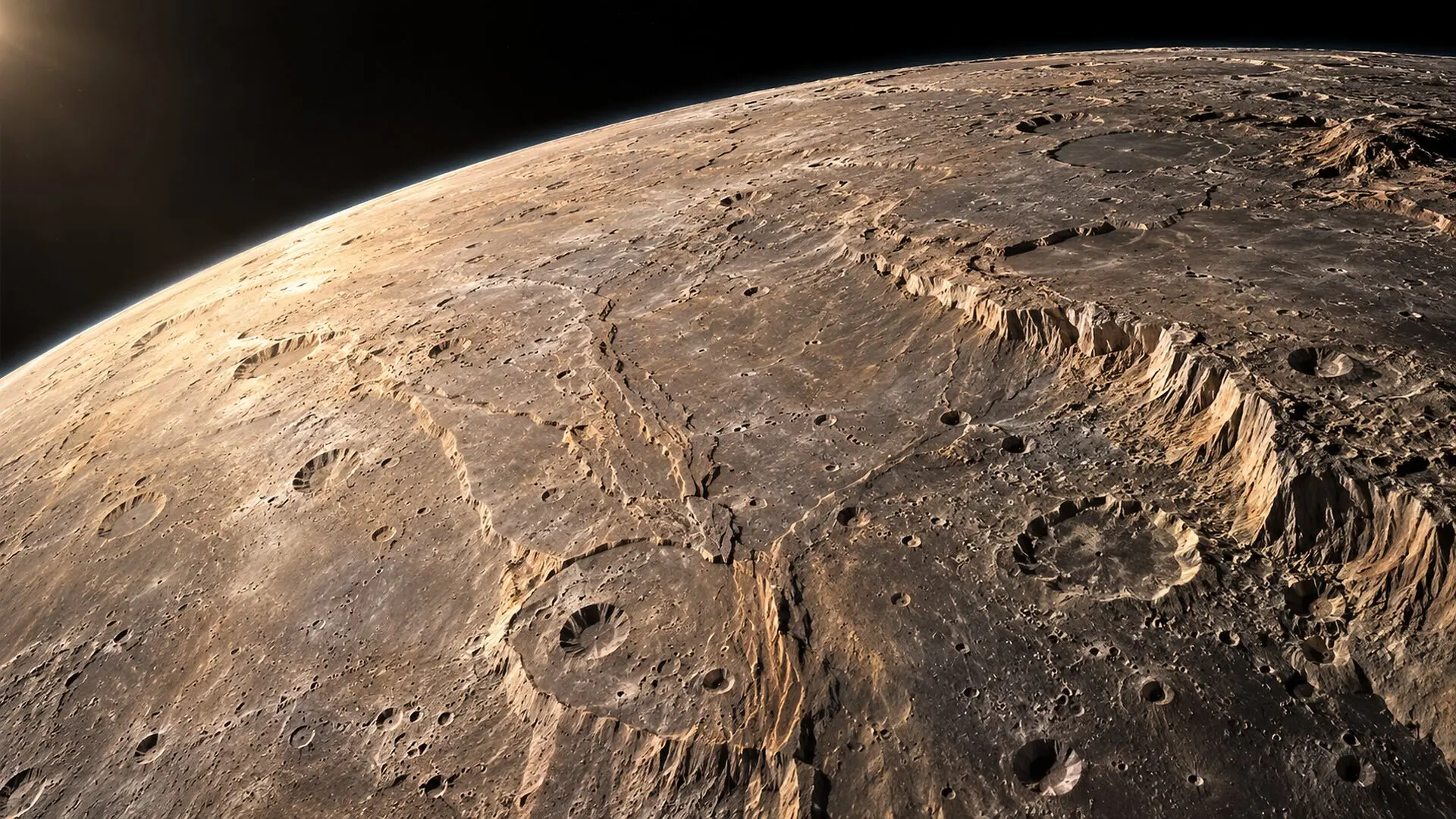
For billions of years, Mercury has been cooling and shrinking, leaving behind a global network of wrinkle ridges and cliffs as its crust adjusted to a smaller interior. However, new research suggests that our understanding of this planetary contraction has been fundamentally incomplete, with significant evidence masked by the chaotic, crater-battered landscape of the planet’s surface.
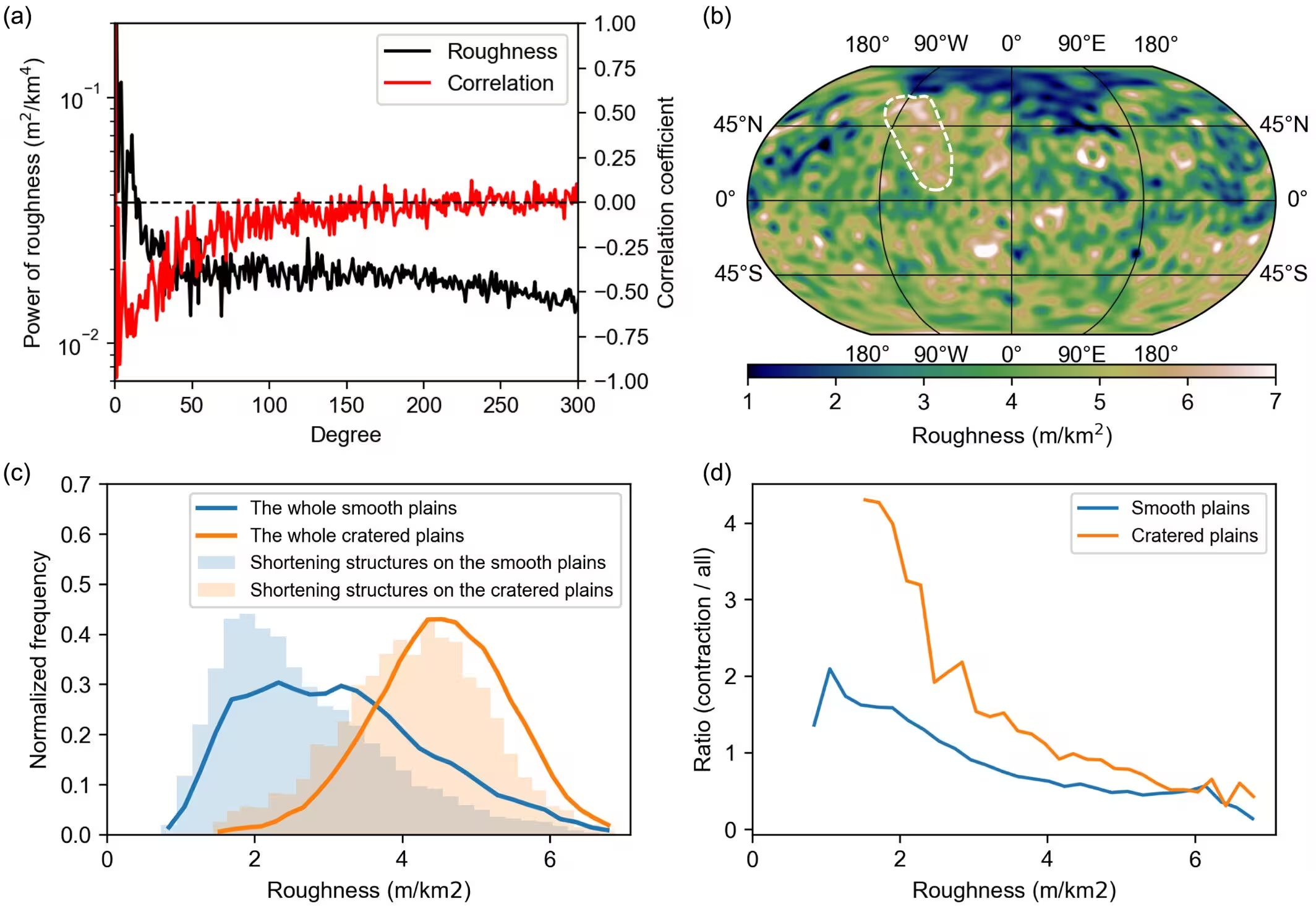
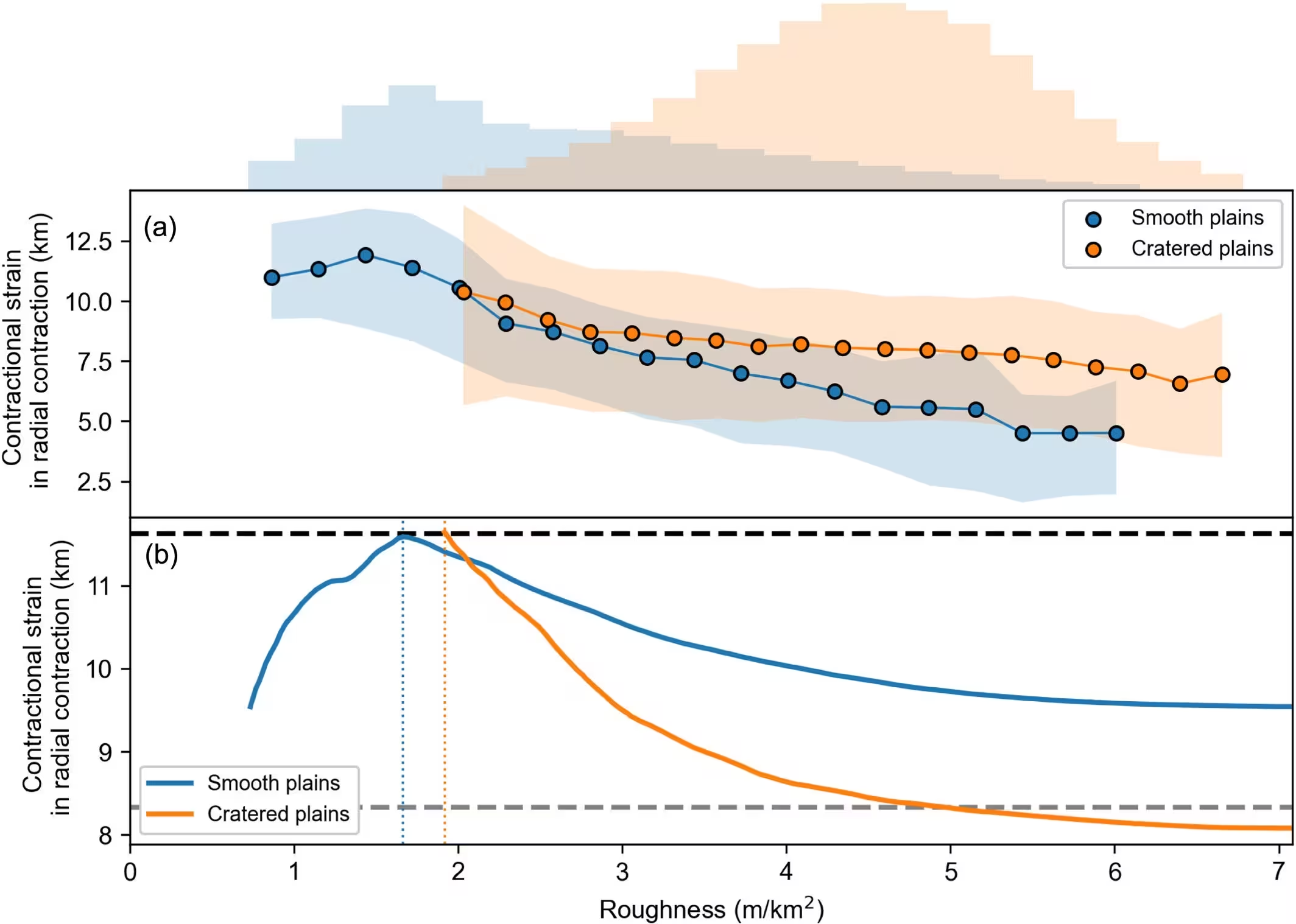
A study published in Geophysical Research Letters indicates that Mercury’s radial contraction may have been underestimated by as much as 10% to 30%. By adjusting for geological features hidden beneath impact debris, researchers believe the planet’s radius could have shrunk by up to 11.6 kilometers—a total reduction in diameter of approximately 23 kilometers (14.5 miles).
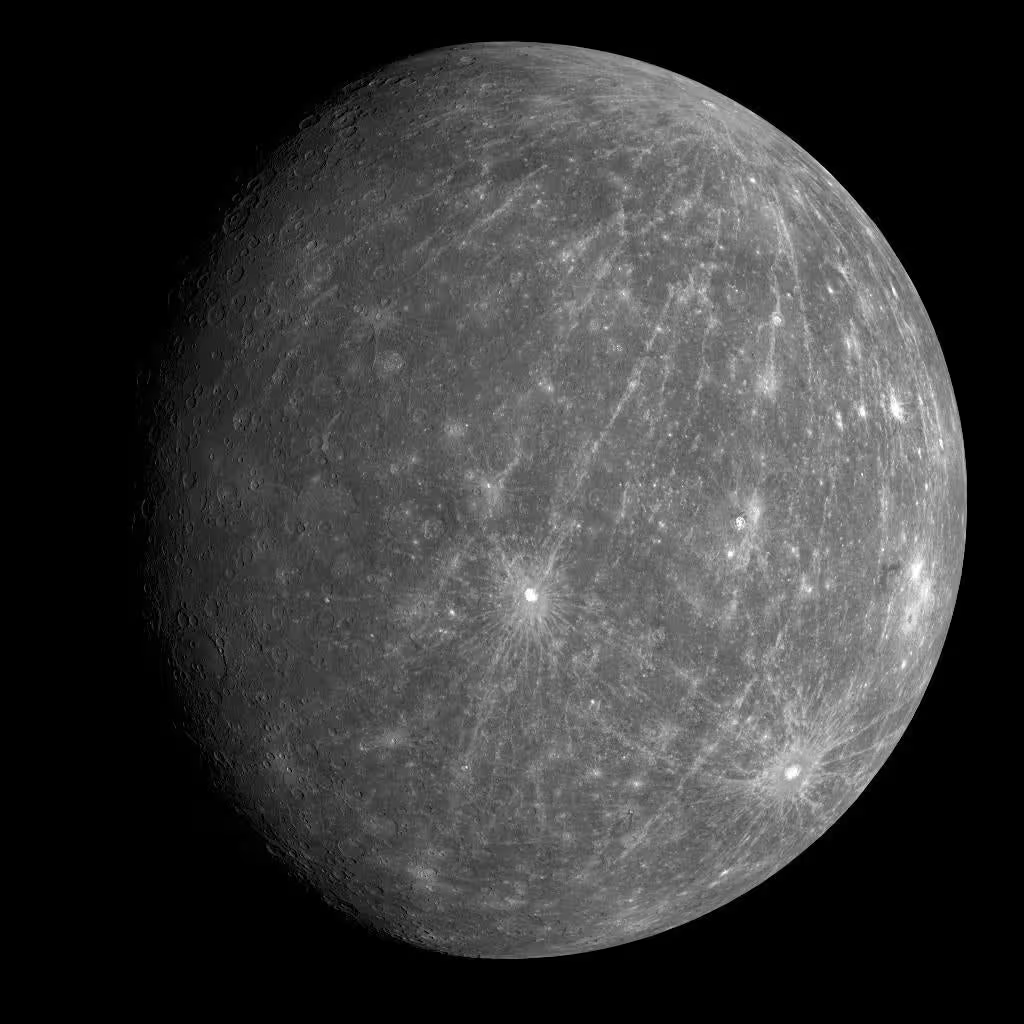
Lead author Gaku Nishiyama, a researcher at the Institute of Space Research at the German Aerospace Center (DLR) and Hokkaido University, notes that while a 30% revision might seem significant, the corrected data aligns more closely with the expected thermal evolution of the planet.
Evidence Lost in the Rough
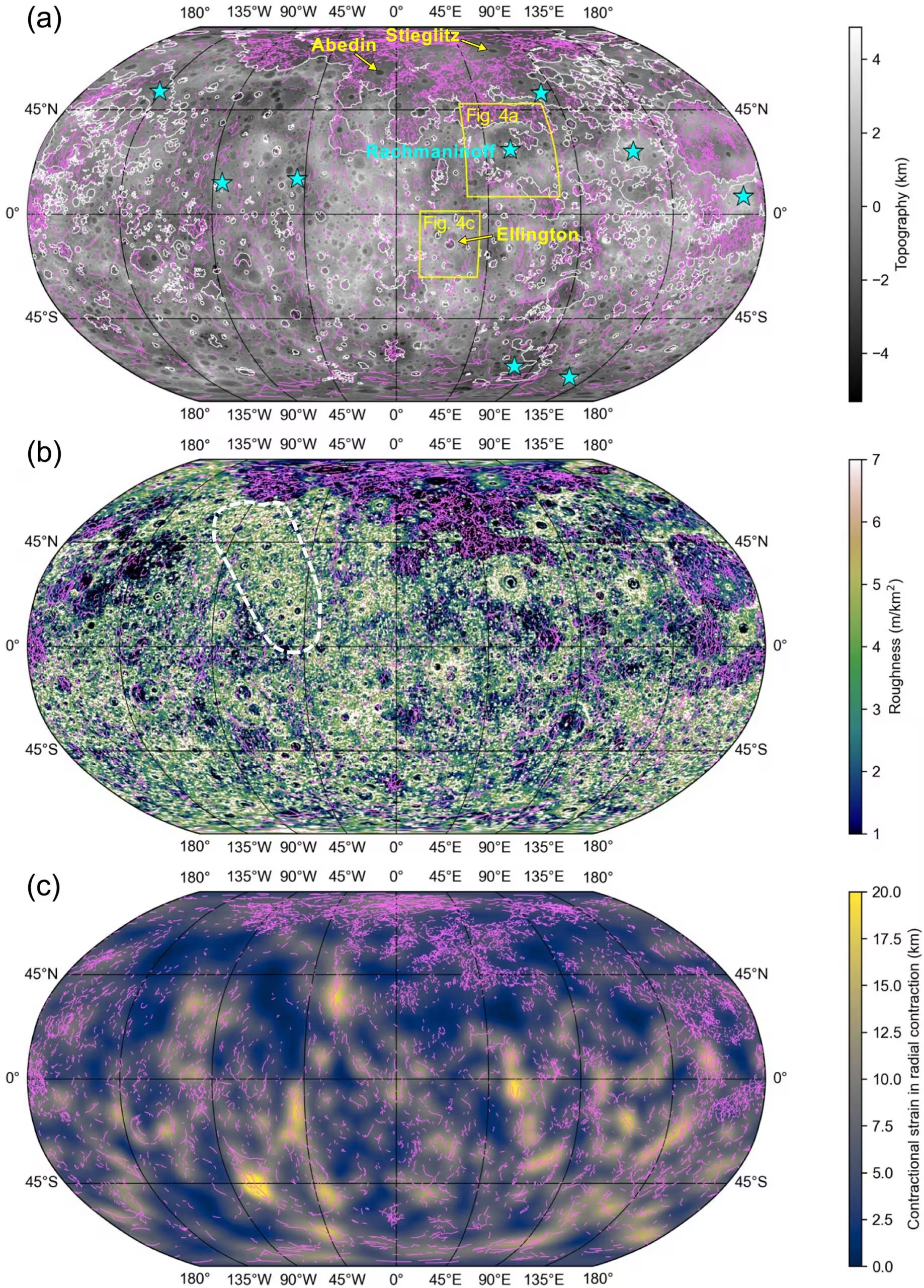
Mercury’s crustal shortening is primarily recorded in lobate scarps—enormous, cliff-like features created when the planet’s interior cooled and its surface was compressed. Historically, planetary scientists have mapped these structures to calculate the total loss of volume. However, the distribution of these scarps appears suspiciously uneven, with some regions showing a surprising lack of tectonic activity.
By cross-referencing maps of these structures with high-resolution data on surface roughness, the team identified a distinct trend: the most rugged terrains, characterized by dense cratering and debris, also contained the fewest visible contractional features. This suggests that the geological record has been obscured by thick blankets of ejecta produced by asteroid impacts, or potentially by porous regolith that absorbs crustal stress without forming recognizable faults.
Rethinking the Interior
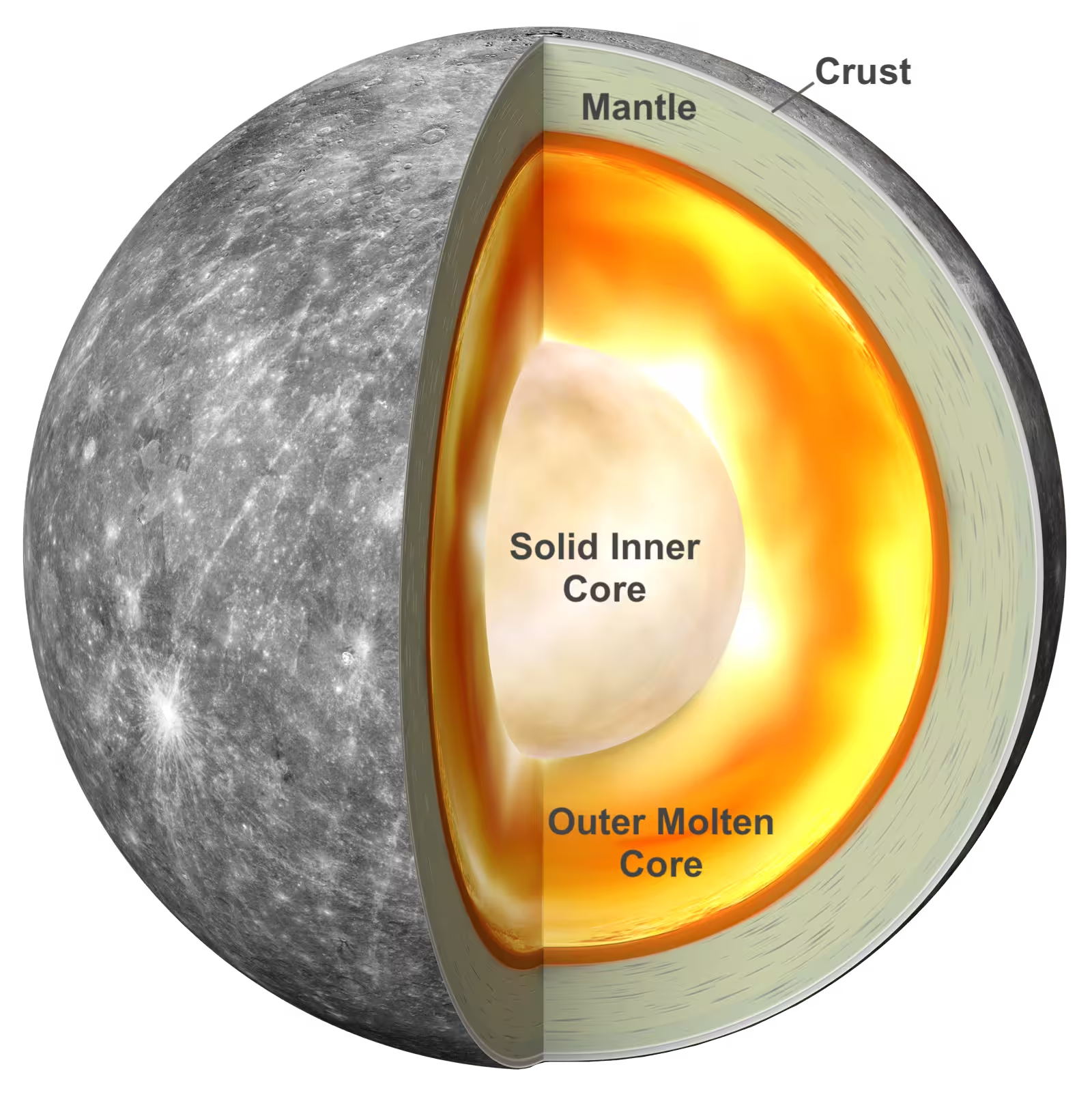
The revised figures for Mercury’s contraction carry significant implications for our understanding of its internal composition. A greater degree of shrinkage suggests that the planet may possess a larger metallic core, or perhaps contained fewer light elements like silicon than previously assumed. It also implies the possibility of higher initial temperatures during the planet’s formation roughly 4.5 billion years ago.
Researchers view these new calculations as a baseline, acknowledging that volcanic activity and other geological processes could have masked even more evidence. Future observations from the BepiColombo mission are expected to play a critical role in refining these models. Equipped with the BepiColombo Laser Altimeter (BELA), the spacecraft will map the surface at unprecedented scales, potentially identifying smaller scarps that remained invisible to NASA’s earlier MESSENGER mission.
As scientists look toward Mercury to better understand its thermal and tectonic history, the study highlights a broader challenge in planetary geology: determining where the history of a world has been preserved, and where it has been buried by the violence of the early solar system.
Further Reading
- Mercury’s global contraction much greater than earlier estimates (Nature Geoscience, 2014)
- First Global Map of Mercury’s Surface Roughness Down to Kilometric Baselines (The Planetary Science Journal, 2026)
- Mercury’s Tectonic and Geodynamic History: Contractional Tectonic Landform Analysis (Journal of Geophysical Research: Planets, 2026)
- Mercury has multiple, superposed global tectonic patterns (Earth and Planetary Science Letters, 2025)
- The BepiColombo Laser Altimeter (Space Science Reviews, 2021)
This article has been fact checked for accuracy, with information verified against reputable sources. Learn more about us and our editorial process.
Last reviewed on .
Article history
- Latest version
Reference(s)
- Nishiyama, G.., et al. “Underestimation of Planetary Contraction Due To Obscuration by Surface Roughness: The Case of Mercury.” Geophysical Research Letters, vol. 53, no. 17, September 10, 2026 American Geophysical Union (AGU), doi: 10.1029/2026GL124067. <https://agupubs.onlinelibrary.wiley.com/doi/10.1029/2026GL124067>.
- “The German Aerospace Center (DLR).” <https://www.dlr.de/en>.
- “Hokkaido University.” Hokkaido University <https://www.global.hokudai.ac.jp/>.
- Byrne, Paul. “Mercury’s global contraction much greater than earlier estimates - Nature Geoscience.”, vol. 7, no. 4, pp. 301-307. Nature, doi: 10.1038/ngeo2097. <https://www.nature.com/articles/ngeo2097>.
- Nishiyama, Gaku., et al. “First Global Map of Mercury’s Surface Roughness Down to Kilometric Baselines: Implications for the Planet’s Geologic Evolution.” The Planetary Science Journal, vol. 7, no. 3, March 9, 2026, pp. 59 American Astronomical Society, doi: 10.3847/PSJ/ae447c. <https://doi.org/10.3847/PSJ/ae447c>.
- Broquet, A.., et al. “Mercury's Tectonic and Geodynamic History: 1. Contractional Tectonic Landform Analysis and Tectonic Strain Using Machine Learning.” Journal of Geophysical Research: Planets, vol. 131, no. 4, April 1, 2026 American Geophysical Union (AGU), doi: 10.1029/2025JE009584. <https://doi.org/10.1029/2025JE009584>.
- Klimczak, Christian., et al. “Mercury has multiple, superposed global tectonic patterns.” Earth and Planetary Science Letters, vol. 658, May 1, 2025, pp. 119331 Elsevier BV, doi: 10.1016/j.epsl.2025.119331. <https://doi.org/10.1016/j.epsl.2025.119331>.
- Thomas, N.., et al. “The BepiColombo Laser Altimeter.” Space Science Reviews, vol. 217, no. 1, February 15, 2021 Springer Science and Business Media LLC, doi: 10.1007/s11214-021-00794-y. <https://link.springer.com/article/10.1007/s11214-021-00794-y>.
Cite this page:
- Posted by Aisha Ahmed