Astronomers Use Millisecond Radio Bursts to Map Hidden Matter Across the Universe
Fast radio bursts flash for mere milliseconds, but these cosmic signals help astronomers map elusive, invisible matter across the vast reaches of space.
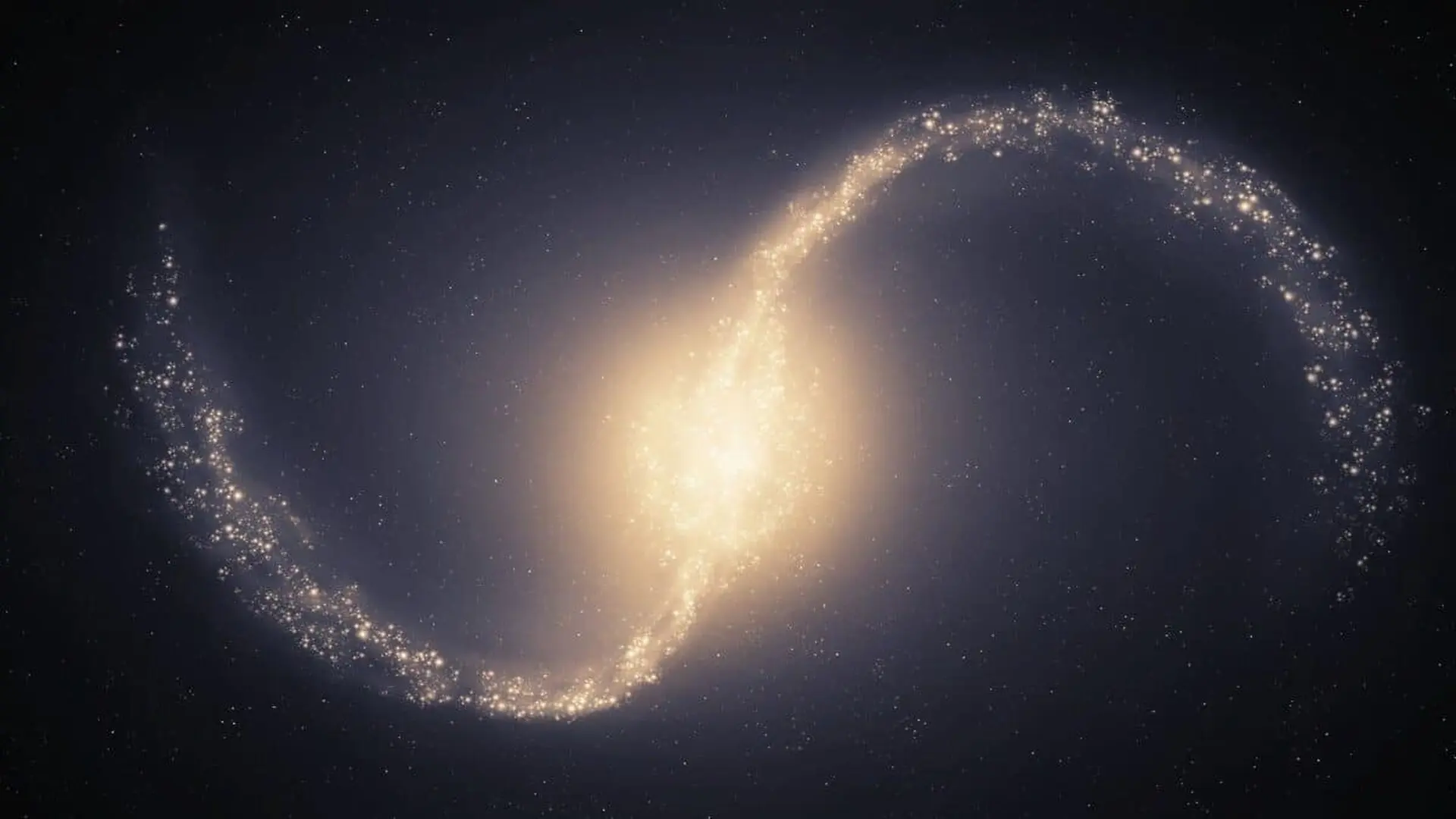
Astronomers have leveraged a catalog of 114 localized fast radio bursts (FRBs) to map the distribution of ordinary matter throughout the local universe. These fleeting, millisecond-long radio signals act as cosmic probes, revealing how gas is displaced from galaxies by energetic phenomena like stellar feedback and supermassive black holes. The findings provide new constraints on the complex interplay between galactic feedback and the clustering of baryonic matter.
Fast radio bursts remain a subject of intense scientific scrutiny. While some of these signals are known to originate from magnetars, their true utility in cosmology lies in their journey across the cosmos. As these pulses travel through space, they interact with free electrons in ionized gas. This interaction causes lower-frequency radio waves to experience a slight delay compared to higher-frequency waves—a phenomenon termed dispersion. By measuring this dispersion, or DM, researchers can calculate the integrated electron density along the signal’s path, offering a unique window into matter that is otherwise difficult to detect.
Mapping the Cosmic Distribution of Baryons
While the early universe provides a clear benchmark for how much baryonic matter should exist, accounting for all of it in the nearby universe has proven difficult for astrophysicists. A significant portion of this matter resides as diffuse gas within and between galaxies. However, intense processes such as supernova explosions and the active accretion of matter by supermassive black holes can push this gas outward, sometimes over millions of light-years. This collective redistribution, known as feedback, is a critical variable in cosmic modeling.
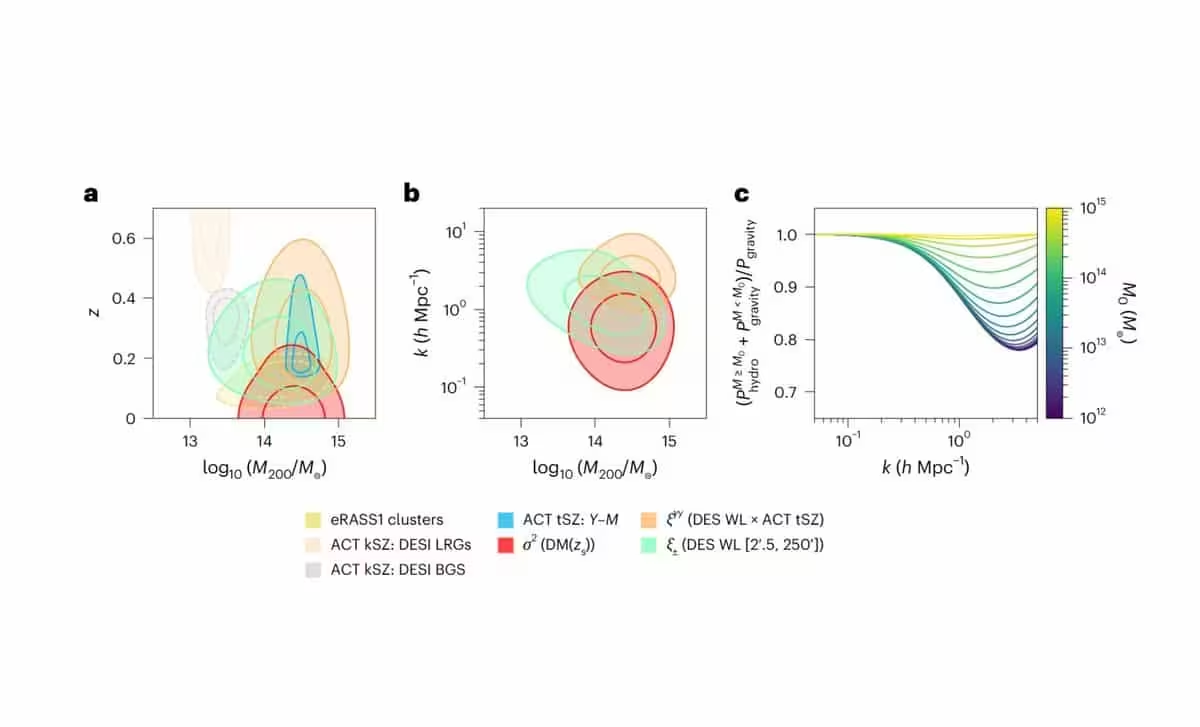
Understanding how feedback influences the arrangement of ordinary gas is essential for interpreting observations of dark matter, dark energy, and neutrino masses. Current weak-lensing surveys often struggle with these uncertainties, sometimes discarding up to 55% of their data to avoid biases introduced by feedback-driven gas movement. A study published in Nature Astronomy, led by Kritti Sharma, Elisabeth Krause, and Vikram Ravi, demonstrates that FRBs offer an independent method to navigate these complexities.
The research team analyzed a set of 114 bursts with confirmed host galaxies and known redshifts. By focusing on how dispersion measures vary across different sightlines at specific distances, the team was able to infer the strength of baryon clustering. This approach allowed for a robust investigation of gas distributions within galaxy groups and clusters.
FRBs as a Competitive Cosmological Tool
The analysis, utilizing a halo-model framework, found evidence of significant feedback mechanisms, though it ruled out extreme large-scale scenarios with 99% confidence. Furthermore, a model assuming zero feedback was excluded at the 90% confidence level. Interestingly, the data suggested higher total gas fractions than those recently reported by eROSITA X-ray measurements for halos of roughly 10¹⁴ solar masses. The researchers note that this discrepancy likely arises because FRBs detect total ionized gas, whereas X-ray observations are biased toward the hotter, denser components.
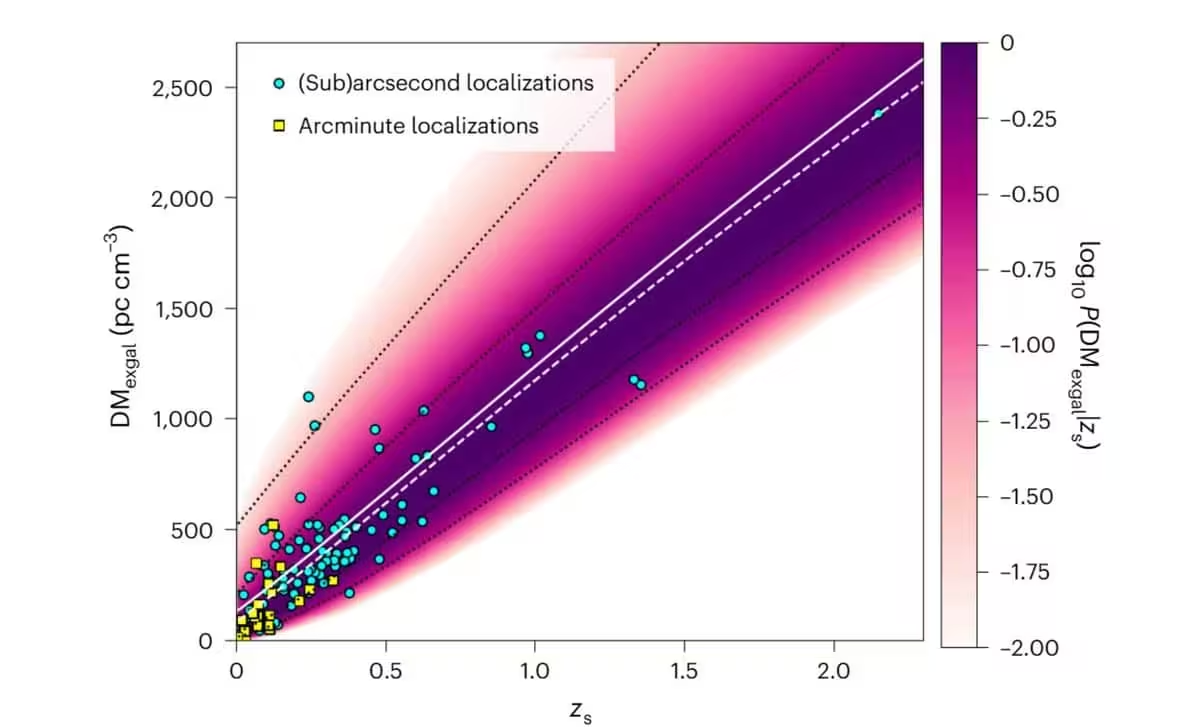
Despite the relatively small sample size, the precision of these results already rivals long-standing efforts like the Atacama Cosmology Telescope and eROSITA. While current FRB data are limited in their ability to isolate every parameter within the team’s feedback model, the trajectory is clear. As future observatories—including the Square Kilometre Array and the Deep Synoptic Array—come online, the volume of high-quality FRB data is expected to surge, further cementing these signals as a primary tool for mapping the hidden architecture of the cosmic web.
This article has been fact checked for accuracy, with information verified against reputable sources. Learn more about us and our editorial process.
Last reviewed on .
Article history
- Latest version
Reference(s)
- Sharma, Kritti. “Signatures of suppressed matter clustering revealed by fast radio bursts - Nature Astronomy.”, September 8, 2026, pp. 1-16. Nature, doi: 10.1038/s41550-026-02957-9. <https://www.nature.com/articles/s41550-026-02957-9>.
Cite this page:
- Posted by Aisha Ahmed