Venus May Have Destroyed Its Own Ancient Moon According to New Orbital Models
New research suggests Venus may have once possessed a moon before tidal forces dragged it back to the planet, potentially explaining its unique rotation.
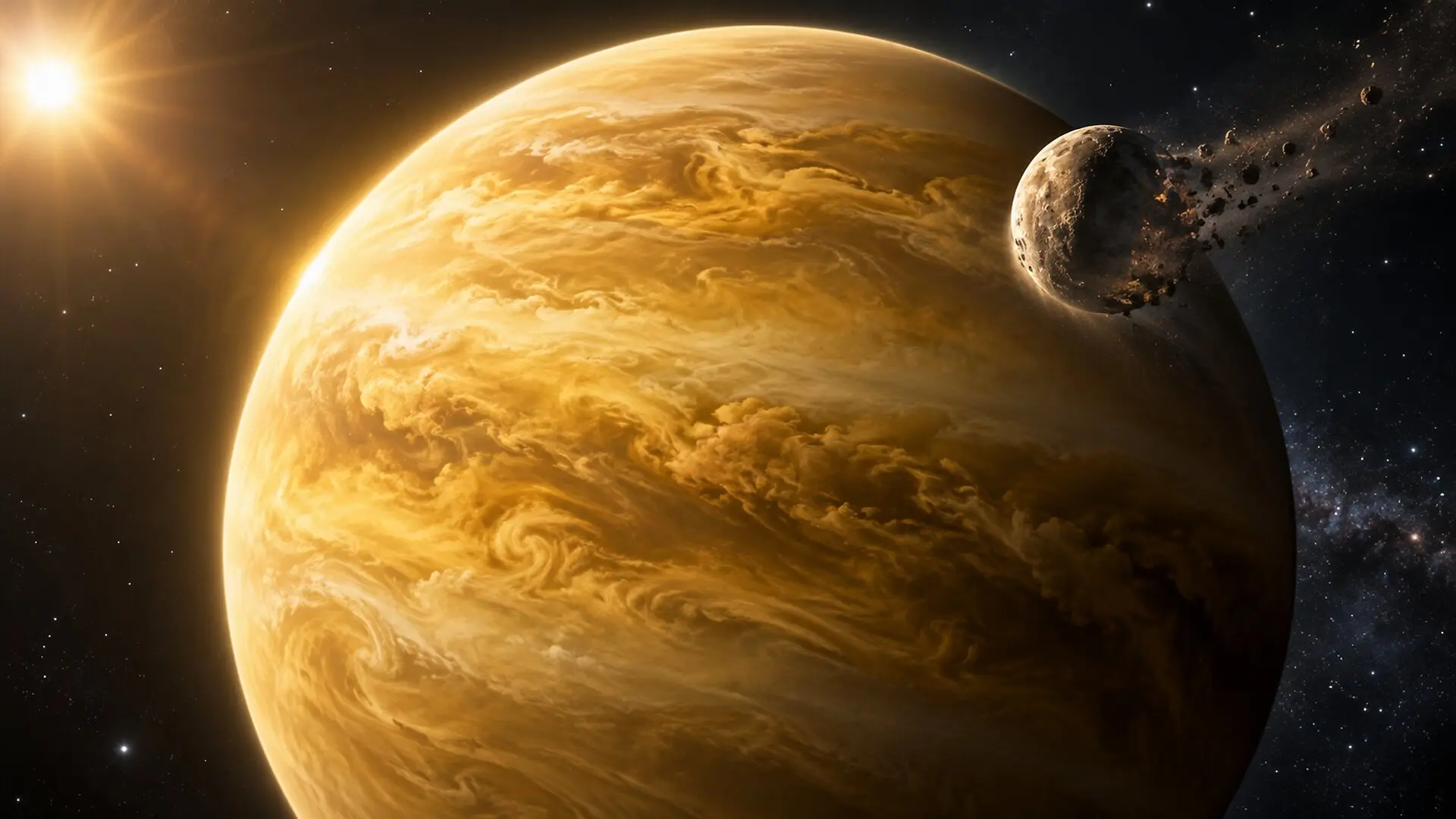
Earth and Venus share a comparable size and mass, yet they diverge sharply in one fundamental way: while our planet is accompanied by a massive moon, our neighbor remains conspicuously solitary. New research suggests that Venus may not have required a catastrophic collision to lose a potential satellite, but rather that simple, long-term gravitational interactions could have been enough to pull a moon back into the planet.
A study led by Stephen Kane of the University of California, Riverside, and published in The Astrophysical Journal, uses complex tidal modeling to simulate how a hypothetical moon might have evolved alongside a young, rapidly spinning Venus. The results indicate that a planet’s capacity to form a moon does not necessarily guarantee its retention, as a variety of orbital and rotational variables can force a satellite to spiral inward until it meets a destructive end.
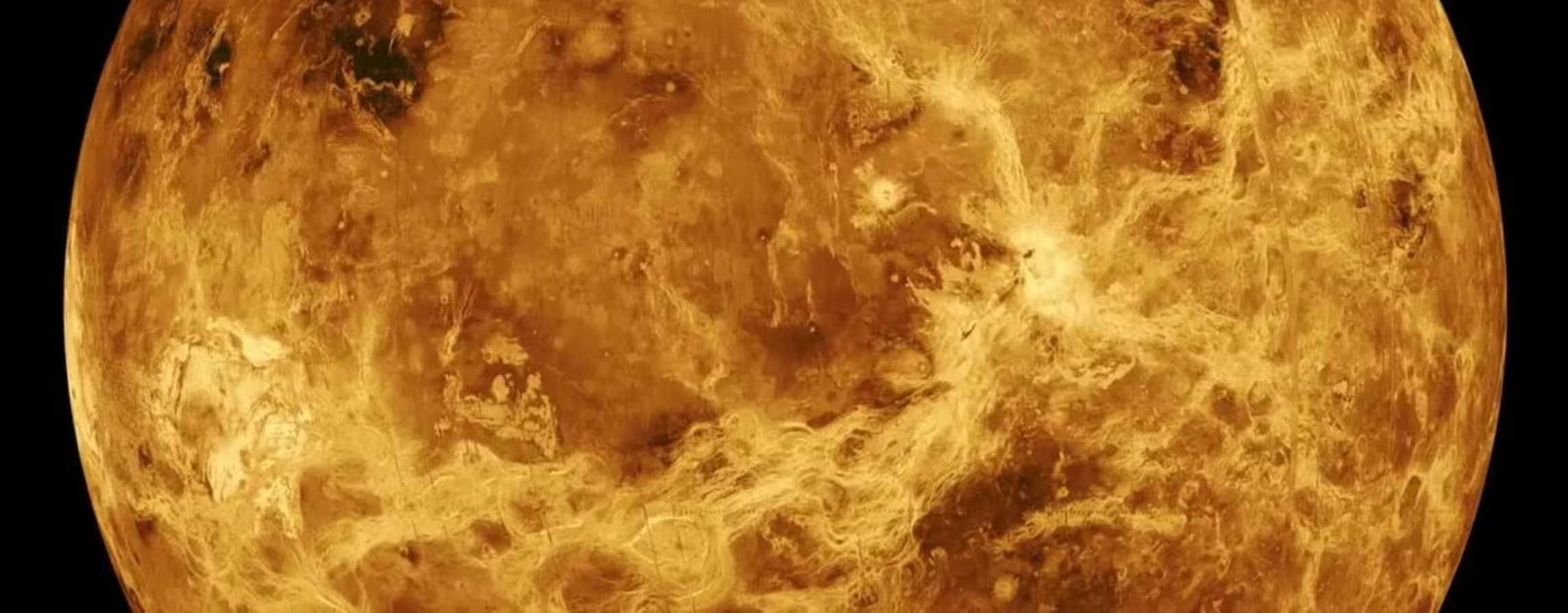
“My study shows Venus didn’t require a catastrophe to arrive at what we can see today,” Kane explained. “It turns out the gravity of the planet itself combined with the rate at which it spins naturally caused the moon to collapse on top of it.”
The Delicate Physics of Tidal Evolution
On Earth, the Moon gradually drifts away at a rate of approximately four centimeters per year. This migration is the result of tidal interactions transferring rotational energy from our planet into the lunar orbit. A key factor in this process is the synchronous radius, the specific distance where a satellite’s orbital period perfectly aligns with the planet’s rotation. Moons orbiting beyond this threshold generally move outward, while those falling inside it lose energy and migrate toward the planet.
Because Venus today takes a staggering 243 Earth days to complete a single rotation—and spins in a retrograde direction—its synchronous radius is extremely far from the surface. Any moon present today would be caught in an inward death spiral. However, since the young Venus likely possessed a significantly faster rotation, the researchers tested various historical scenarios to see if a moon could have survived long-term.
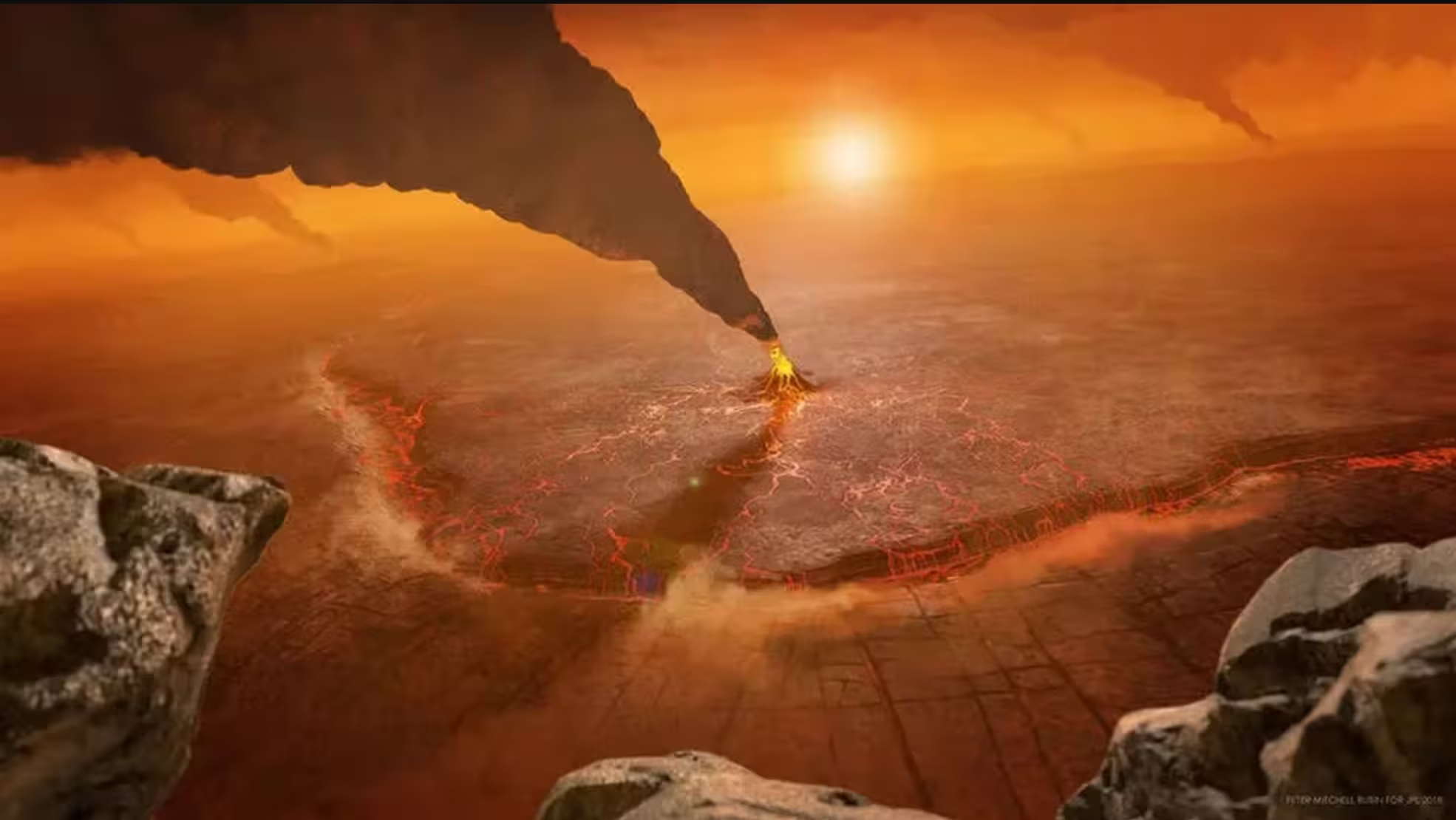
A Narrow Window for Stability
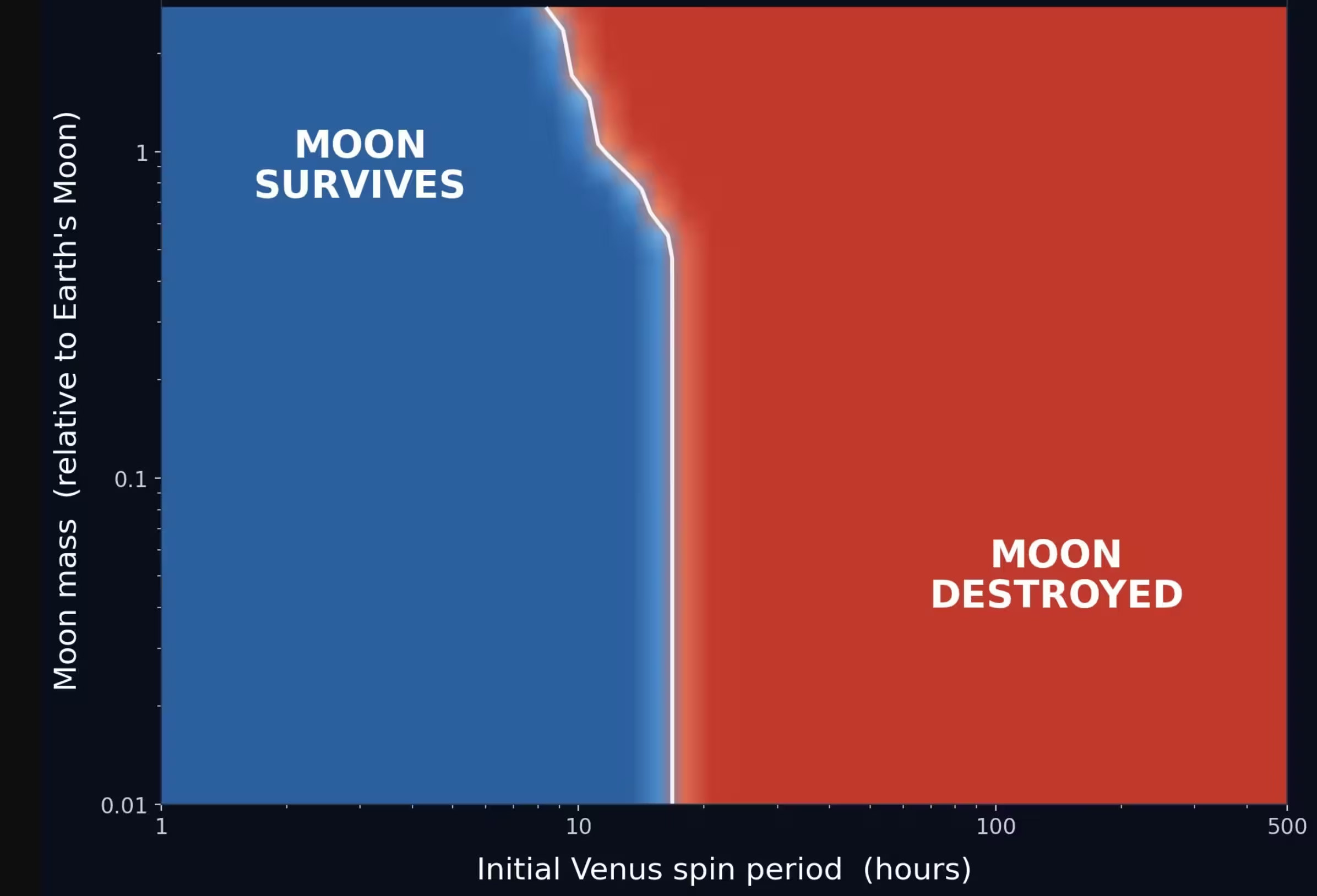
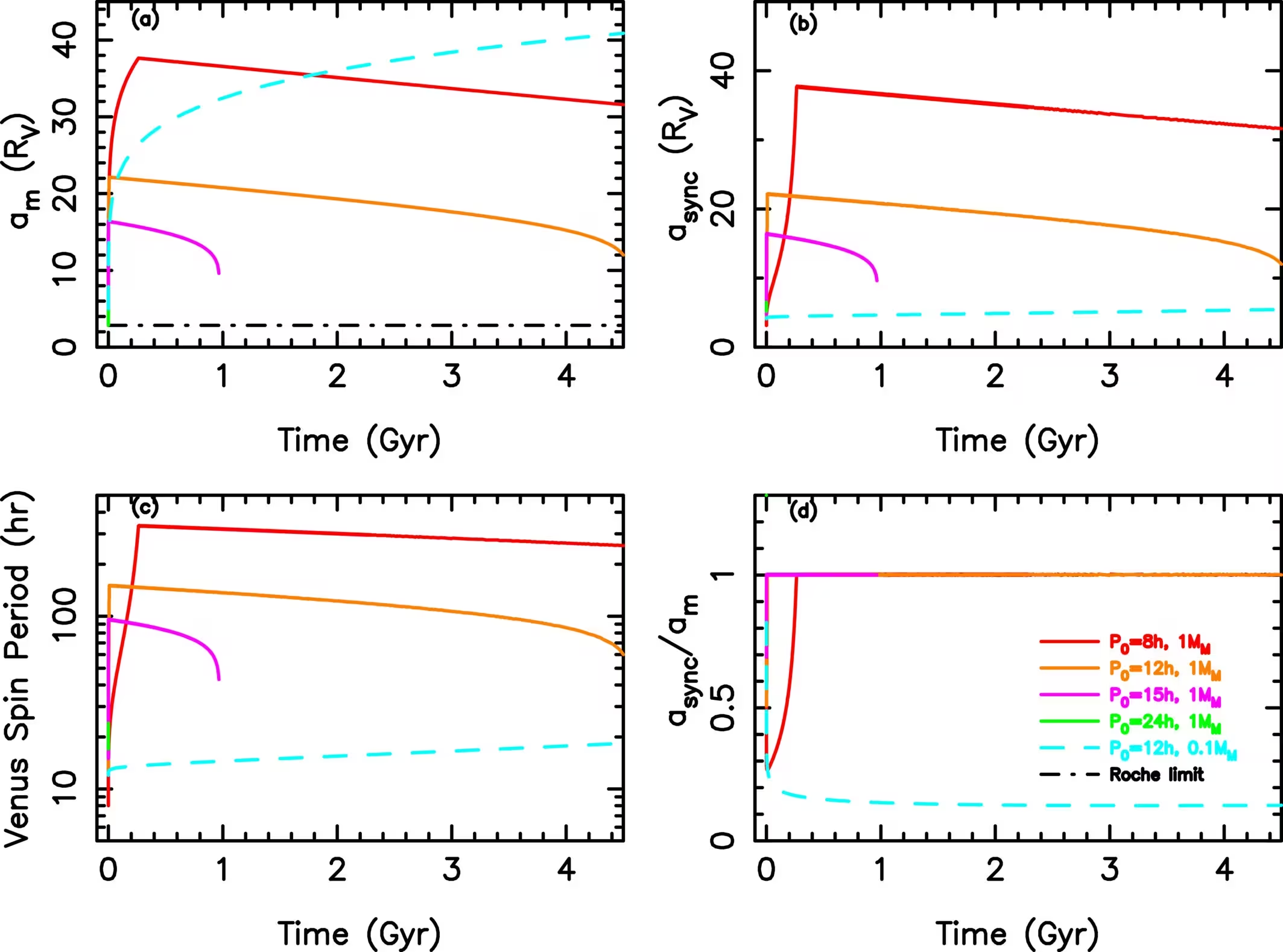
The team modeled various initial conditions, adjusting Venus’s rotation speed from five to 100 hours and testing satellites ranging from 0.01 to 10 times the mass of Earth’s Moon. Their simulations revealed that while a moon could theoretically remain stable for billions of years under specific conditions, most configurations were precarious. For example, if a moon began within five Venus radii of a planet rotating slower than 16 hours, it would likely reach its Roche limit and be shredded by tidal forces in less than a million years.
Surprisingly, the mass of the moon plays a counterintuitive role. A more massive satellite exerts stronger tidal forces, which can speed up the outward migration but also sap the planet’s rotational energy much faster. This rapid despinning of Venus causes the synchronous radius to shift outward, effectively “catching up” to the moon and forcing it into an inward, destructive trajectory.
Broader Implications for Exoplanetary Science
The findings offer a cautionary tale for the search for moons around terrestrial exoplanets. Worlds located close to their host stars are often subject to intense tidal forces that slow their rotation, similar to the early evolution of Venus. This suggests that many rocky exoplanets that appear capable of hosting a moon may struggle to keep one over geological timescales.
While the study stops short of claiming Venus definitely once held a moon, it highlights a compelling, non-catastrophic pathway for the planet’s current state. Any long-term satellite would have fundamentally altered Venus’s early climate, influencing oceanic currents and heat transport before its eventual, messy end. Future data from missions like NASA’s DAVINCI may eventually offer clues, though the extreme resurfacing of the Venusian landscape makes finding physical evidence of a long-lost moon a daunting challenge.
Further Reading
- The possibility of a giant impact on Venus: An analysis of impact scenarios and circumplanetary debris. (Astronomy & Astrophysics, 2025)
- Venus as an anchor point for planetary habitability: A study on the divergence between Earth and Venus. (Nature Astronomy, 2024)
- Revealing the Mysteries of Venus: The DAVINCI Mission: Overview of the mission aimed at reconstructing Venus’s history. (The Planetary Science Journal, 2022)
This article has been fact checked for accuracy, with information verified against reputable sources. Learn more about us and our editorial process.
Last reviewed on .
Article history
- Latest version
Reference(s)
- “University of California, Riverside.”, September 02, 2026 University of California, Riverside <https://www.ucr.edu/>.
- Kane, Stephen R.., et al. “Tidal Demise: The Evolution and Fate of a Hypothetical Venus Moon.” The Astrophysical Journal, vol. 1009, no. 1, September 14, 2026, pp. 31 American Astronomical Society, doi: 10.3847/1538-4357/ae9d6c. <https://iopscience.iop.org/article/10.3847/1538-4357/ae9d6c>.
- Bussmann, M.., et al. “The possibility of a giant impact on Venus.” Astronomy & Astrophysics, vol. 702, October 13, 2025, pp. A106 EDP Sciences, doi: 10.1051/0004-6361/202555802. <https://doi.org/10.1051/0004-6361/202555802>.
- Kane, Stephen. “Venus as an anchor point for planetary habitability - Nature Astronomy.”, vol. 8, no. 4, pp. 417-424. Nature, doi: 10.1038/s41550-024-02228-5. <https://www.nature.com/articles/s41550-024-02228-5>.
- Garvin, James B.., et al. “Revealing the Mysteries of Venus: The DAVINCI Mission.” The Planetary Science Journal, vol. 3, no. 5, May 24, 2022, pp. 117 American Astronomical Society, doi: 10.3847/PSJ/ac63c2. <https://doi.org/10.3847/PSJ/ac63c2>.
Cite this page:
- Posted by Aisha Ahmed