Why Your Dream Of A Massive Lunar Metropolis Might Be Impossible According To Science
Lunar ice could sustain small moon bases for centuries, but new research suggests a million-person metropolis faces a critical water shortage.
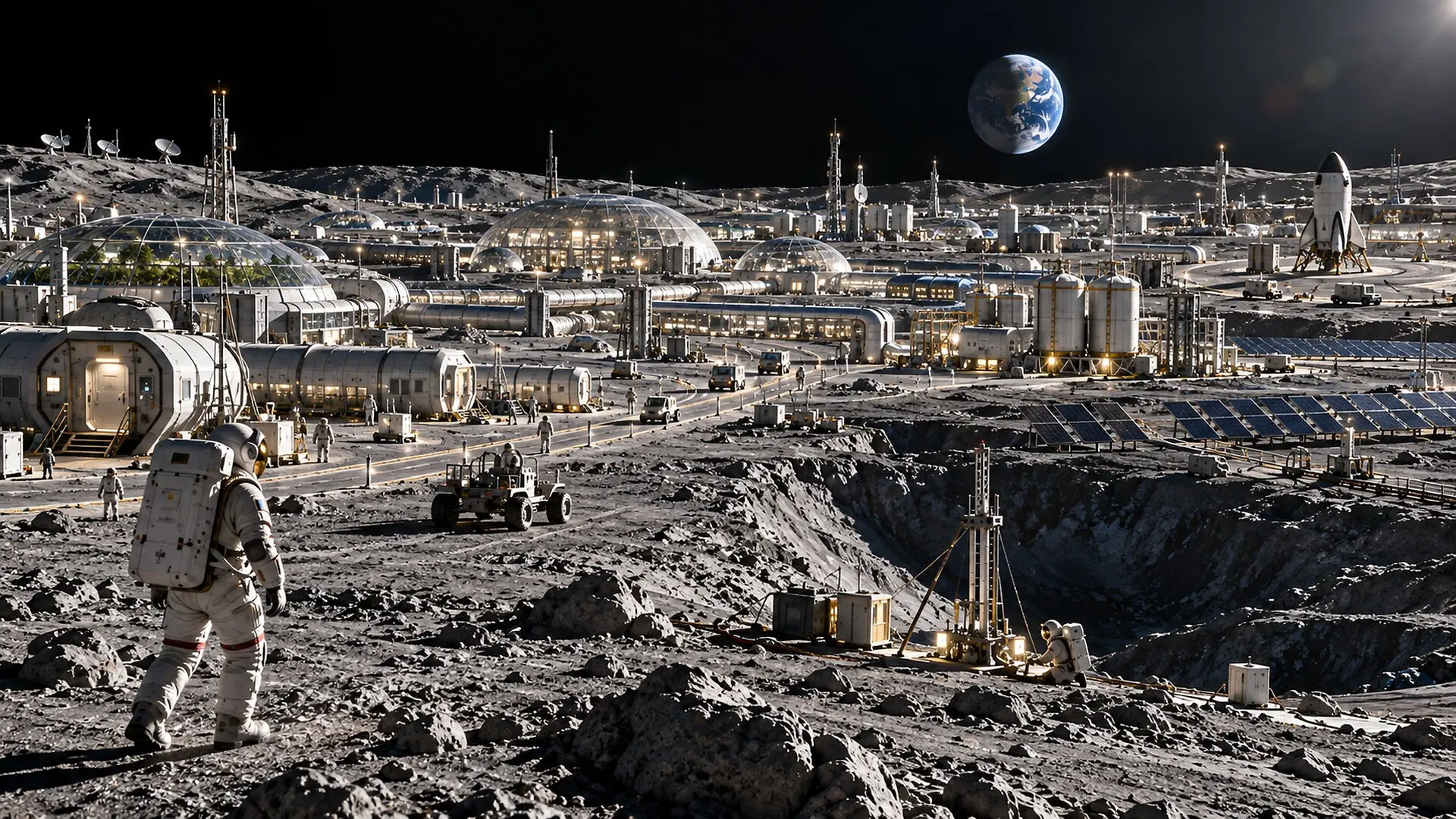
The vision of a bustling metropolis on the Moon may be running into a harsh reality: water scarcity. While lunar ice is often touted as the key to long-term human habitation, a new study suggests that the quantities required to sustain a population of millions far outstrip the likely available supply.
Astrophysicists Martin Elvis and Jonathan McDowell of Harvard University recently published an analysis in Frontiers in Space Technologies that evaluates the sustainability of lunar outposts. Their findings indicate that while energy is not an immediate barrier to settlement, water management will dictate the upper limit of how many people can realistically survive on the lunar surface.
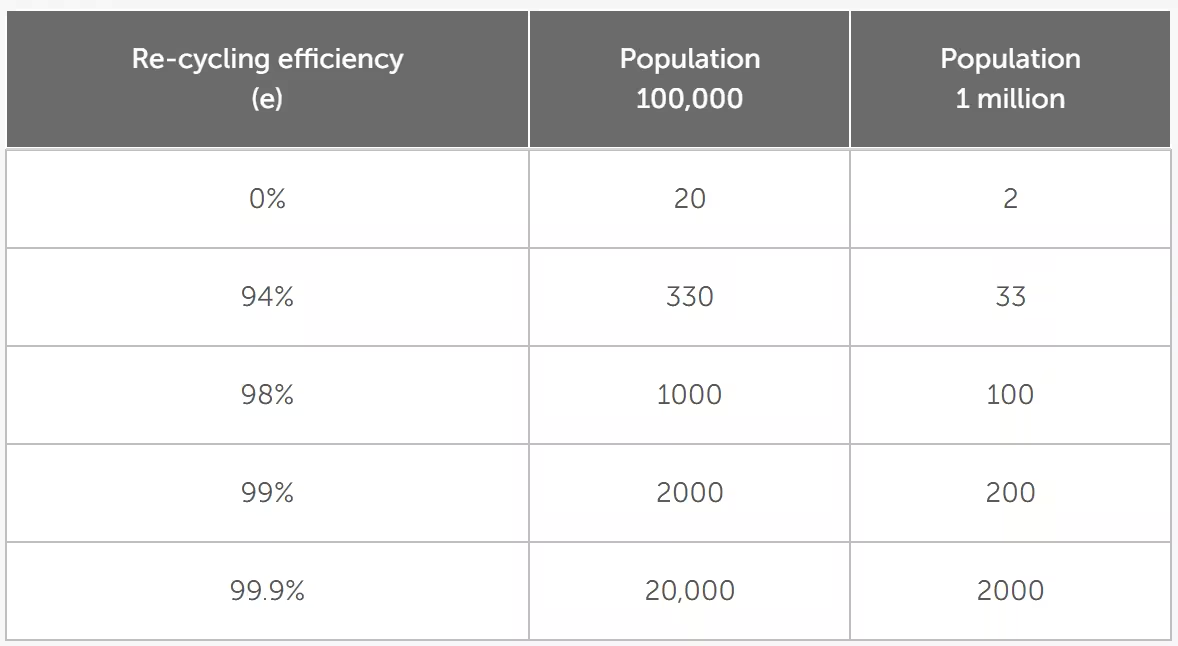
The researchers established a generous baseline of one billion metric tons of accessible lunar water for their models. Even with such a substantial reserve, the math remains unforgiving for large populations. Without any water recycling, a city of one million people would exhaust this supply in approximately 2.4 years. If the settlement achieved a 94% recycling rate—the current standard maintained by the International Space Station—the water would last roughly 40 years. Increasing efficiency to 98% would extend that timeline to about a century.
The study highlights that scaling these systems to accommodate a metropolitan population—providing water for everything from sanitation and agriculture to industrial manufacturing—presents an engineering hurdle of an entirely different magnitude compared to life on a space station.
Resource Constraints and Scaling
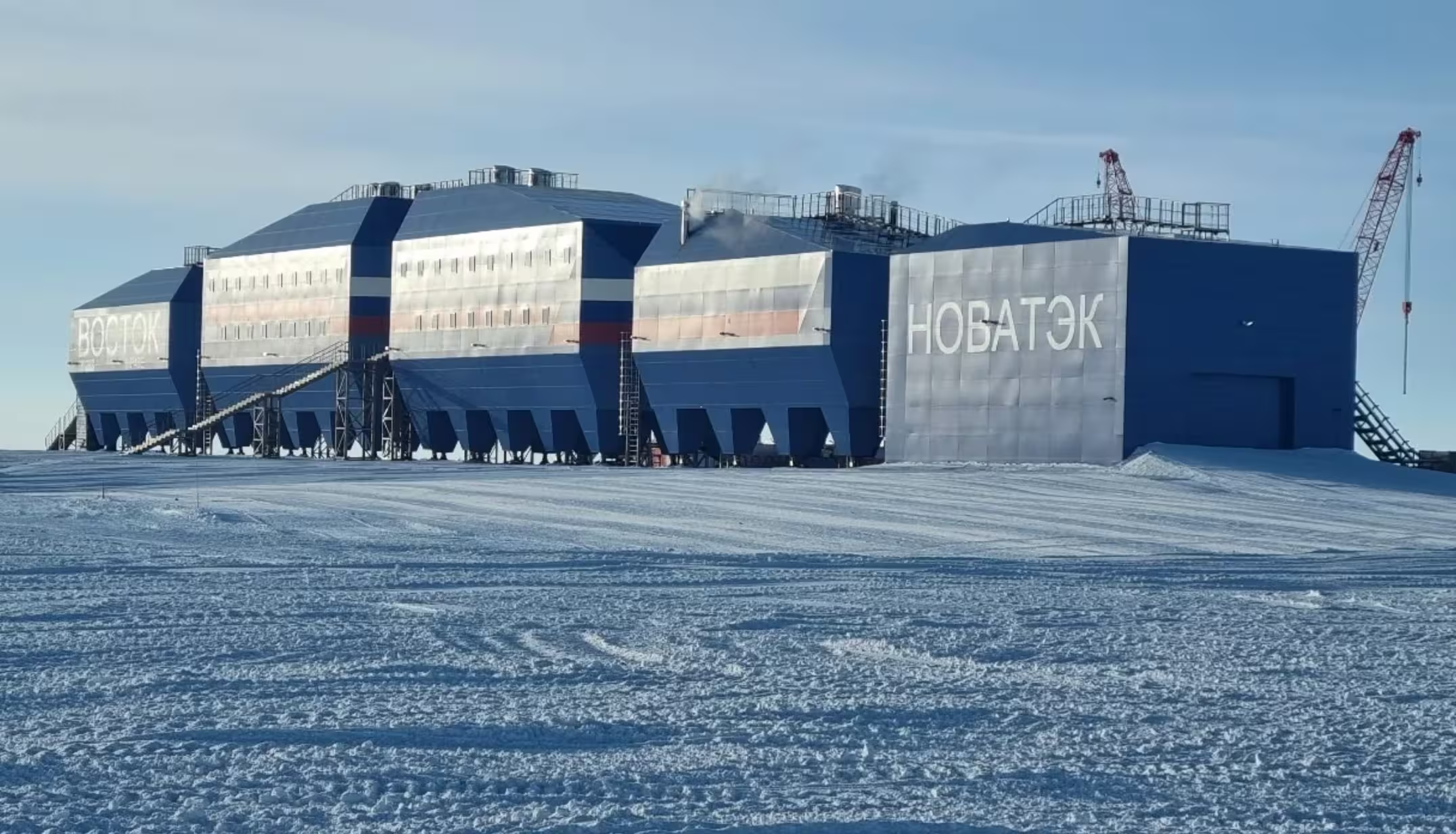
For smaller, more modest settlements, the outlook is significantly more optimistic. A population of 100,000, for instance, could theoretically thrive for a millennium with high-efficiency recycling. A smaller research village of about 1,000 people could remain viable for even longer periods, functioning more like contemporary Antarctic research stations.
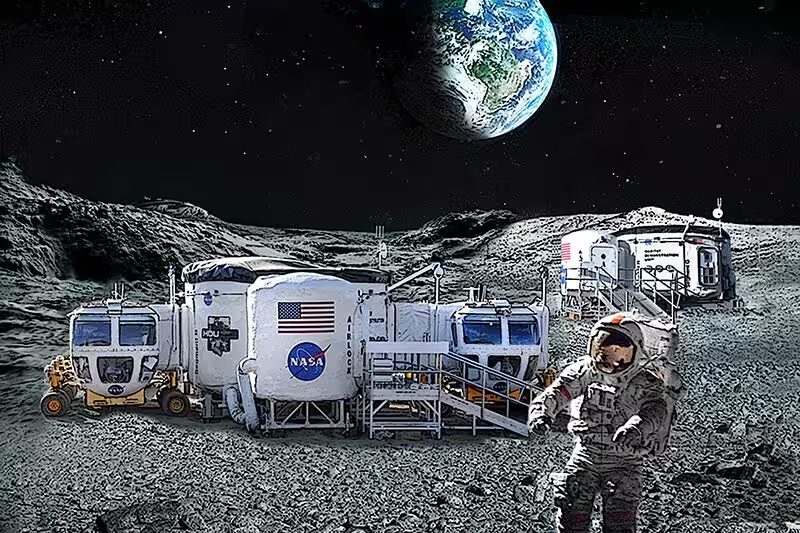
The researchers note that while water is a critical bottleneck, energy production appears less problematic. The Moon’s polar regions, where ice is most abundant, are also home to high-altitude areas that receive nearly constant sunlight. By utilizing solar arrays and potentially local silicon manufacturing, a lunar base could generate sufficient power, with nuclear fission serving as a secondary, reliable source for larger populations.
The Prospecting Gap
A major uncertainty remains: the actual volume of extractable water. The one billion tons used in the model is a speculative, optimistic estimate. Current orbital data is limited, and the actual amount of usable ice may be 20 to 30 times lower, depending on the depth and accessibility of the deposits.
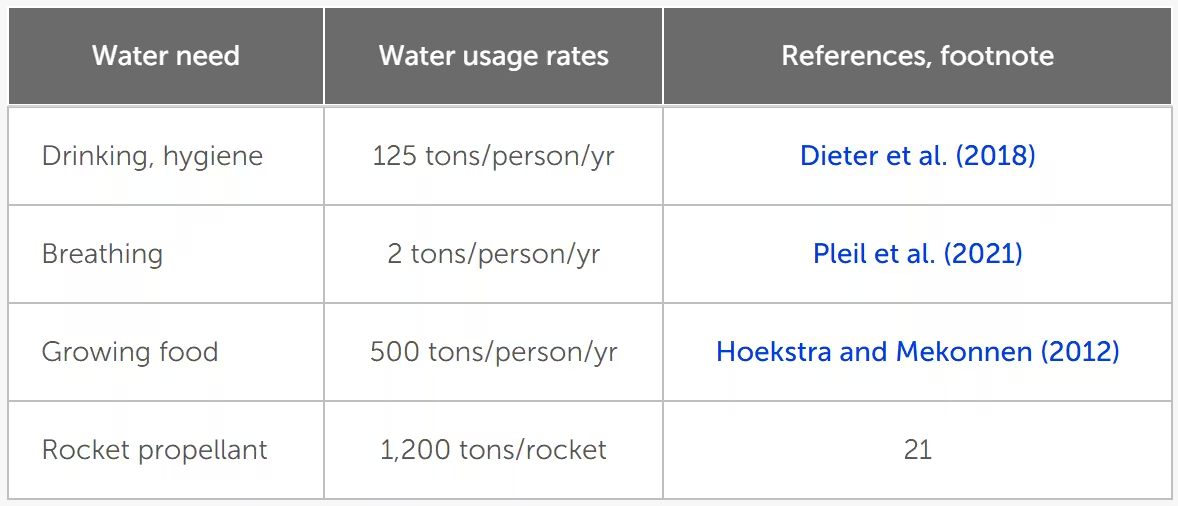
To avoid resource depletion, any serious attempt at large-scale settlement would require extensive robotic prospecting and advanced mining technology. Beyond finding more water, the path forward likely involves massive improvements in water-efficient agriculture—such as vertical farming—and perhaps even the future import of resources from asteroids.
Ultimately, the study suggests that the Moon may indeed hold enough water to support permanent human research outposts, but building the sprawling industrial cities once imagined in science fiction may require a level of resource access and recycling efficiency that remains far beyond our current capabilities.
Further Reading on Lunar Resources
For those interested in the underlying science of lunar ice, the following references provide detailed context on the current state of knowledge regarding lunar volatile deposits and recycling technologies:
- Direct evidence of surface exposed water ice in the lunar polar regions, Proceedings of the National Academy of Sciences (2018)
- Micro cold traps on the Moon, Nature Astronomy (2021)
- Evidence for surface water ice in the lunar polar regions using reflectance measurements, Icarus (2017)
- Detection of water in the LCROSS ejecta plume, Science (2010)
- NASA Achieves Water Recovery Milestone on International Space Station, NASA (2023)
This article has been fact checked for accuracy, with information verified against reputable sources. Learn more about us and our editorial process.
Last reviewed on .
Article history
- Latest version
Reference(s)
- Li, Shuai., et al. “Direct evidence of surface exposed water ice in the lunar polar regions.” Proceedings of the National Academy of Sciences, vol. 115, no. 36, August 20, 2018, pp. 8907-8912. National Academy of Sciences, doi: 10.1073/pnas.1802345115. <https://doi.org/10.1073/pnas.1802345115>.
- Hayne, P.. “Micro cold traps on the Moon - Nature Astronomy.”, vol. 5, no. 2, pp. 169-175. Nature, doi: 10.1038/s41550-020-1198-9. <https://www.nature.com/articles/s41550-020-1198-9>.
- Fisher, Elizabeth A.., et al. “Evidence for surface water ice in the lunar polar regions using reflectance measurements from the Lunar Orbiter Laser Altimeter and temperature measurements from the Diviner Lunar Radiometer Experiment.” Icarus, vol. 292, August 1, 2017, pp. 74-85. Elsevier BV, doi: 10.1016/j.icarus.2017.03.023. <https://doi.org/10.1016/j.icarus.2017.03.023>.
- <https://pubmed.ncbi.nlm.nih.gov/20966242/>.
- “NASA Achieves Water Recovery Milestone on International Space Station - NASA.”, June 20, 2023 NASA <https://www.nasa.gov/missions/station/iss-research/nasa-achieves-water-recovery-milestone-on-international-space-station/>.
Cite this page:
- Posted by Aisha Ahmed