Earth’s Magnetic Shield May Not Protect Us From Extreme Solar Storms Like We Once Thought
New research reveals that extreme solar storms could strike Earth with greater intensity than previously thought, threatening global satellite and power grids.
For decades, the scientific consensus held that Earth’s magnetosphere possessed a natural buffer, a saturation point that prevented the most intense solar storms from inflicting maximum damage on our planet. This widely accepted theory suggested that once solar winds reached a certain threshold of ferocity, the protective magnetic field around Earth would simply stop responding linearly, effectively capping the potential destruction from space weather.
New research published in Nature indicates that this long-standing assumption may be a significant misinterpretation of data. By applying more rigorous statistical scrutiny to solar-wind measurements, researchers from Lancaster University and NASA’s Goddard Space Flight Center have uncovered evidence that this supposed “ceiling” is not a physical law of nature, but rather a byproduct of statistical bias.
Unmasking a Statistical Illusion
The core of the problem lies in how we monitor the sun. To predict space weather, scientists typically rely on sensors positioned at the L1 Lagrange point, a gravitationally stable location roughly one million miles sunward of Earth. While these instruments provide vital data on the speed and magnetic intensity of incoming solar particles, they are not perfect indicators of what eventually strikes our atmosphere.
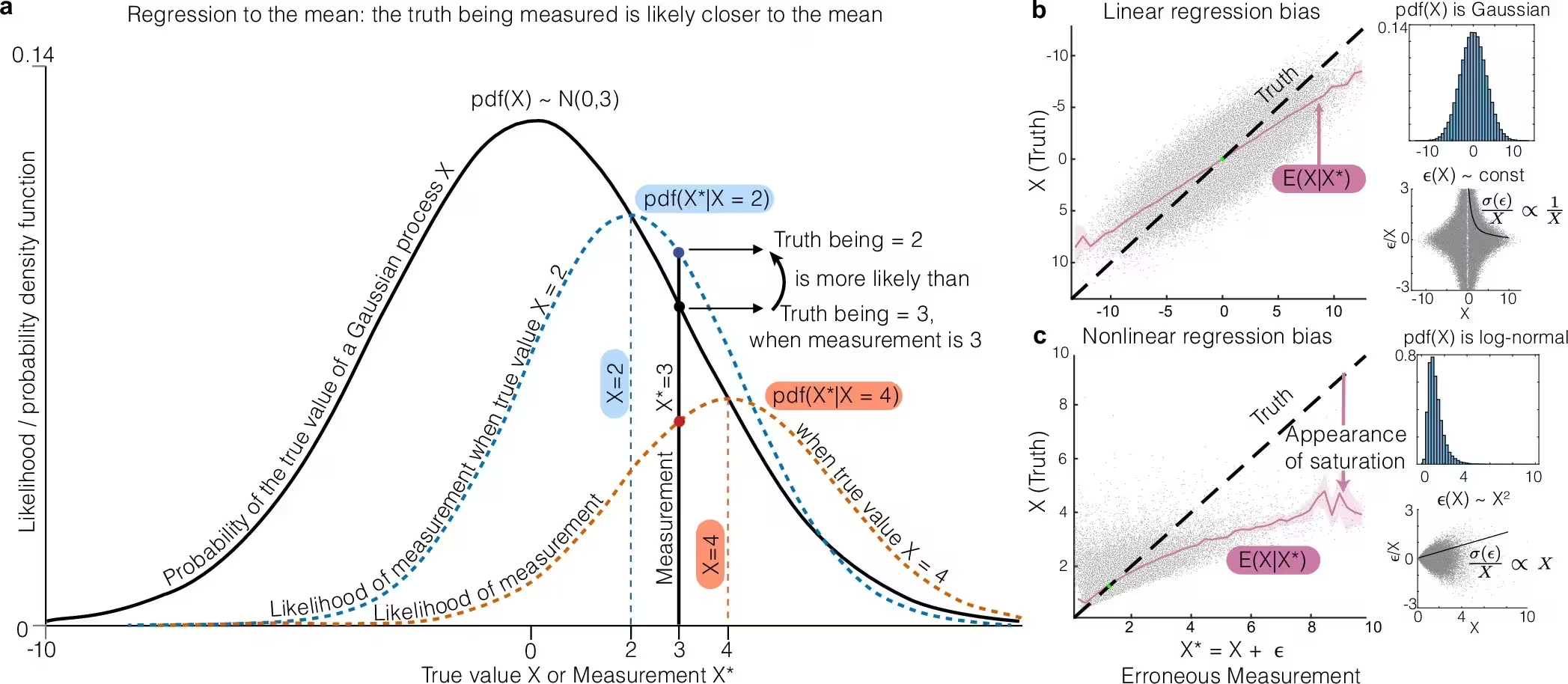
As solar winds traverse the vast distance from the L1 point to Earth, they undergo shifts in structure and energy density. This creates a disconnect between the “upstream” measurements and the actual conditions impacting the magnetosphere. The research team identified that this inherent uncertainty creates a phenomenon known as “regression to the mean.”
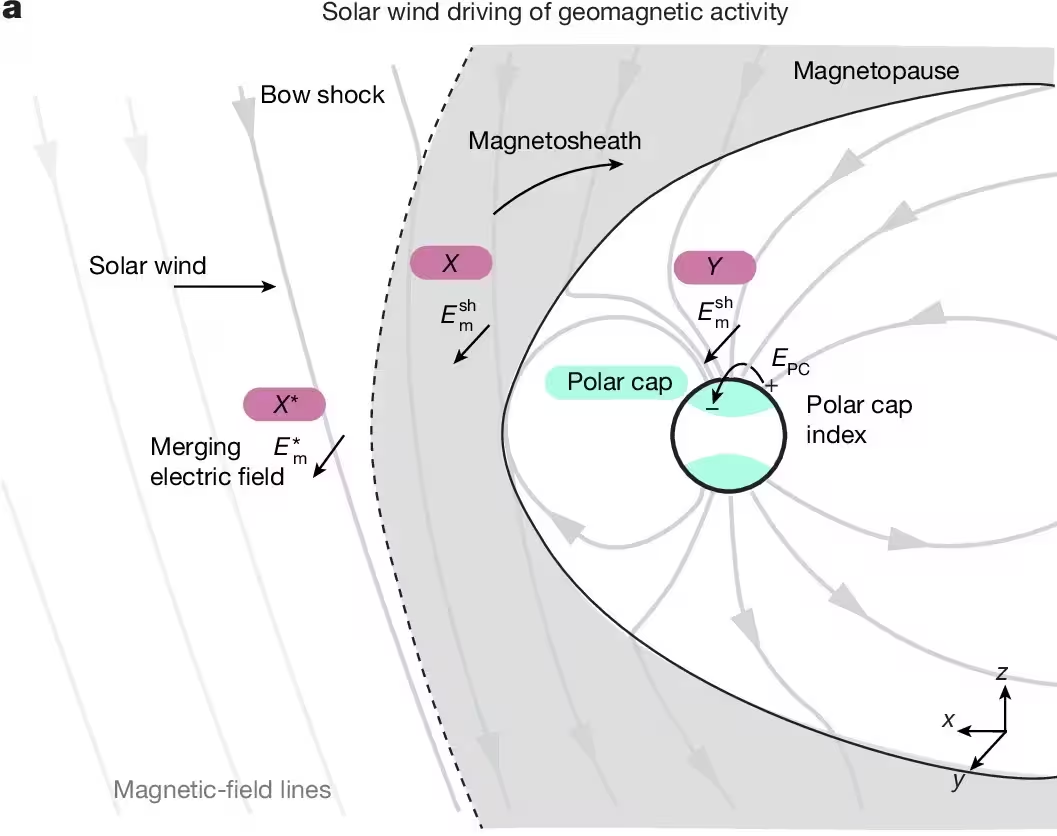
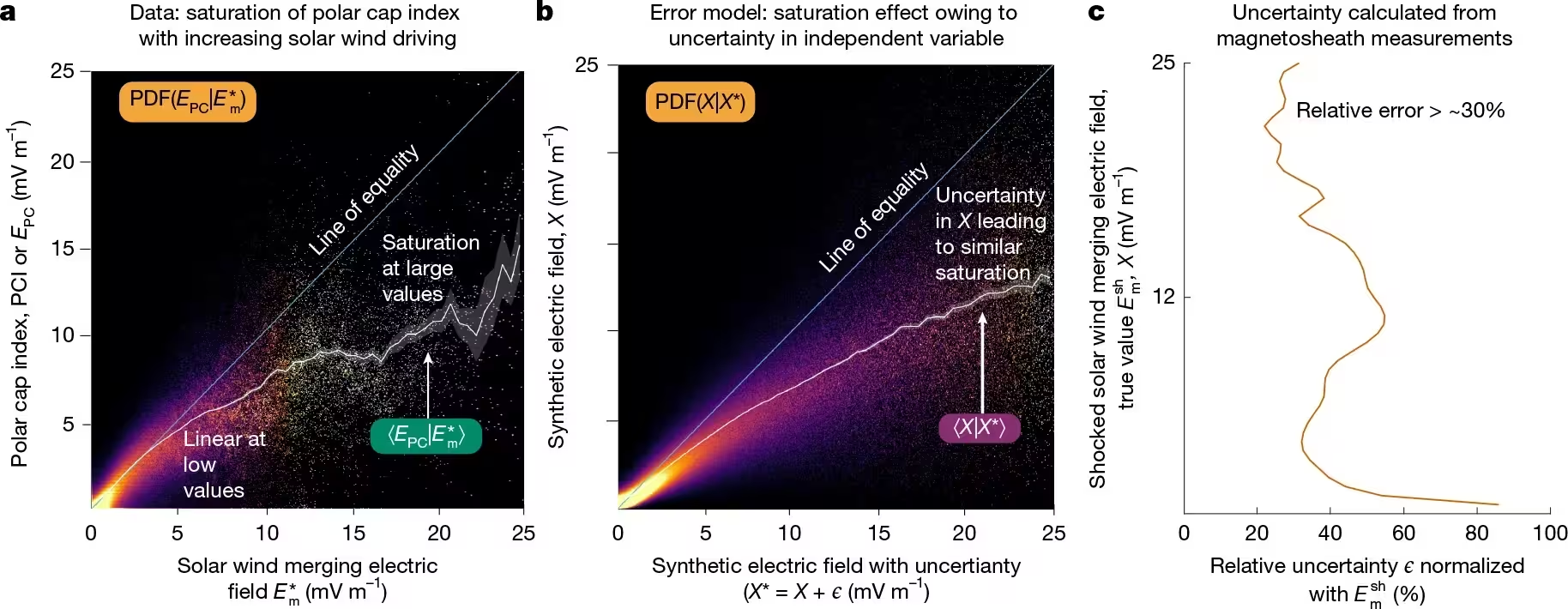
Essentially, when scientists observe an extremely high reading at the L1 monitor, the actual force hitting Earth is statistically likely to be lower. When these mismatched values are aggregated, they create a plateauing effect in the data, leading previous researchers to conclude that the magnetosphere had reached a limit. Dr. Nithin Sivadas, the study’s lead author, points out that while investigators often assume the truth lies squarely within the range of their measurements, probability theory suggests that these errors lean in a specific direction—one that consistently leads to an underestimation of space weather risks.
Revisiting the Threat to Global Infrastructure
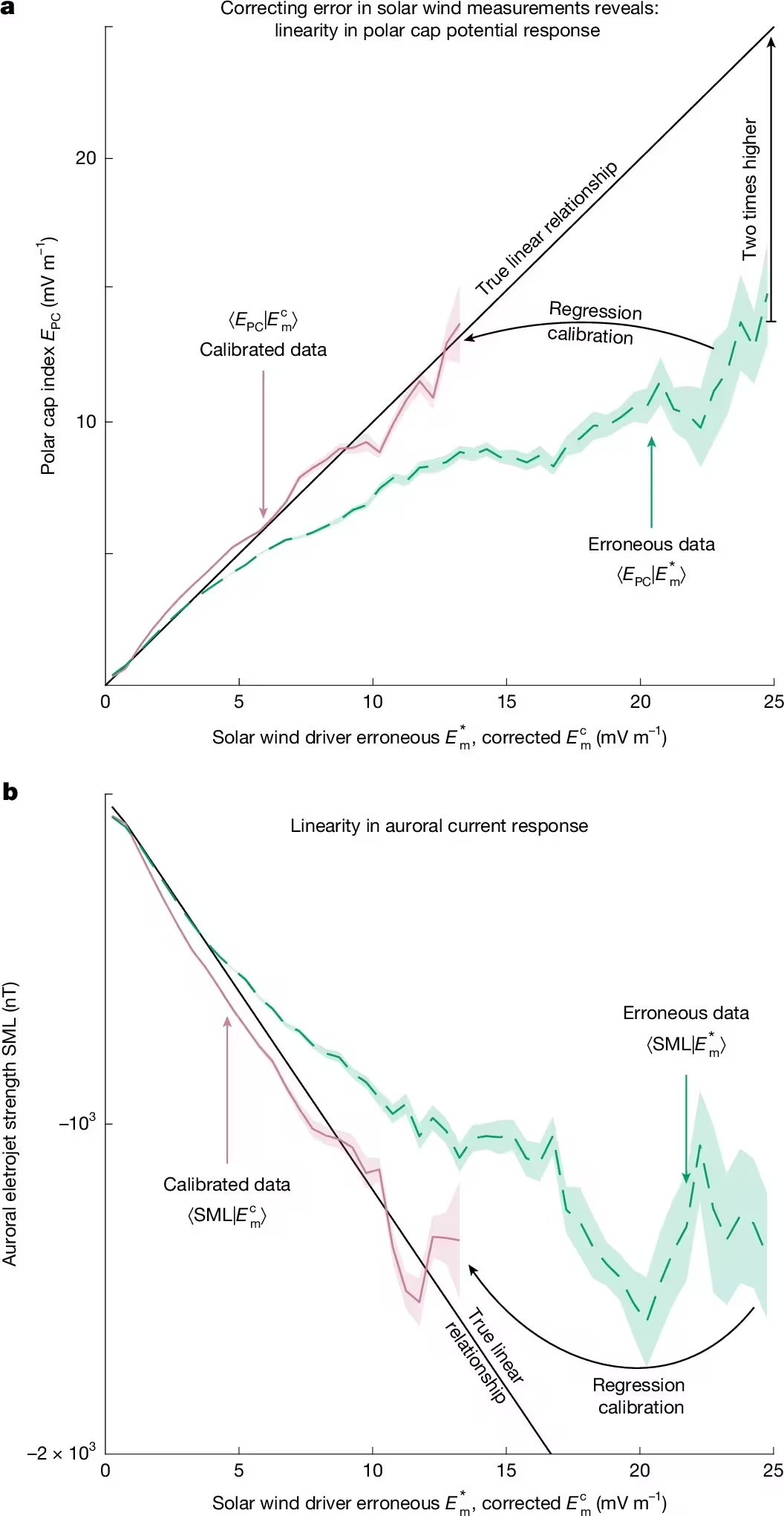
To bypass the errors associated with upstream measurements, the team analyzed over one million data points recorded by satellites orbiting in closer proximity to Earth. When these more accurate, localized readings were processed, the “saturation” disappeared. Instead of a plateau, the data revealed a consistent, linear increase in geomagnetic activity corresponding to stronger solar-wind forcing.
This correction has profound implications for modern technology. Our reliance on global satellite networks, GPS navigation, and sensitive power grids has never been greater, and these systems are inherently vulnerable to geomagnetic disturbances. Dr. Maria Walach of Lancaster University cautions that because the most extreme solar events are rare, our historical models for them have been inherently limited. If the upper bound of Earth’s response to the solar wind is effectively removed, the potential impact of a one-in-a-thousand-year storm becomes much more severe than current models account for.
Beyond Space Weather
The findings serve as a cautionary tale for any field of science that relies on indirect measurements of extreme phenomena. By demonstrating how a persistent statistical bias can be mistaken for a physical reality, the study provides a new, rigorous framework for interpreting data under high-stress conditions.
Moving forward, the challenge will be to update our forecasting models and improve the precision of our near-Earth monitoring systems. While the likelihood of an extreme, catastrophic solar storm remains low, the realization that we may be less protected by a “natural ceiling” than we previously thought underscores the urgent need for more resilient critical infrastructure.
For Further Reading
- Saturation of polar cap potential by intense solar wind electric fields(Geophysical Research Letters)
- Saturation of polar cap potential: Nonlinearity in quasi-steady solar wind-magnetosphere-ionosphere coupling(Journal of Geophysical Research: Space Physics)
- A User’s Guide to the Magnetically Connected Space Weather System(Frontiers in Astronomy and Space Sciences)
- Achievements and Challenges in the Science of Space Weather(Space Science Reviews)
- Severe Space Weather Events: Understanding Societal and Economic Impacts(National Academies Press)
This article has been fact checked for accuracy, with information verified against reputable sources. Learn more about us and our editorial process.
Last reviewed on .
Article history
- Latest version
Reference(s)
- Sivadas, Nithin. “Regression to the mean can explain saturation of geomagnetic storms - Nature.”, vol. 655, no. 8125, pp. 1143-1147. Nature, doi: 10.1038/s41586-026-10757-4. <https://www.nature.com/articles/s41586-026-10757-4>.
- Nagatsuma, Tsutomu. “Saturation of polar cap potential by intense solar wind electric fields.” Geophysical Research Letters, vol. 29, no. 10, May 24, 2002 American Geophysical Union (AGU), doi: 10.1029/2001GL014202. <https://doi.org/10.1029/2001GL014202>.
- Kan, J. R.., et al. “Saturation of polar cap potential: Nonlinearity in quasi‐steady solar wind‐magnetosphere‐ionosphere coupling.” Journal of Geophysical Research: Space Physics, vol. 115, no. A8, August 27, 2010 American Geophysical Union (AGU), doi: 10.1029/2009JA014389. <https://doi.org/10.1029/2009JA014389>.
- Beedle, Jason M. H.., et al. “A User’s Guide to the Magnetically Connected Space Weather System: A Brief Review.” Frontiers in Astronomy and Space Sciences, vol. 8, January 20, 2022 Frontiers Media SA, doi: 10.3389/fspas.2021.786308. <https://doi.org/10.3389/fspas.2021.786308>.
- Koskinen, Hannu E. J.., et al. “Achievements and Challenges in the Science of Space Weather.” Space Science Reviews, vol. 212, no. 3-4, August 1, 2017, pp. 1137-1157. Springer Science and Business Media LLC, doi: 10.1007/s11214-017-0390-4. <https://doi.org/10.1007/s11214-017-0390-4>.
- “Severe Space Weather Events--Understanding Societal and Economic Impacts.”, December 17, 2008 National Academies Press, doi: 10.17226/12507. <https://doi.org/10.17226/12507>.
Cite this page:
- Posted by Aisha Ahmed