New Analysis of 2,884 Exploding Stars Suggests Dark Energy Might Not Be Constant
A massive new analysis of 2,884 exploding stars spanning three decades is challenging current scientific models regarding the nature of dark energy.
Nearly thirty years after the discovery that the universe’s expansion is accelerating, astronomers are revisiting the fundamental nature of the force behind this phenomenon. New research, led by scientists at the University of Queensland, has compiled the most extensive and uniform catalog of Type Ia supernovae to date, suggesting that dark energy might not be the static, unchanging force long assumed by the standard cosmological model.
The new dataset, dubbed Unite, synthesizes observations of 2,884 white dwarf explosions captured over three decades. By standardizing these events into a single, cohesive framework, the team aimed to eliminate the statistical noise and calibration biases that often arise when combining data from different telescopes and historical surveys.
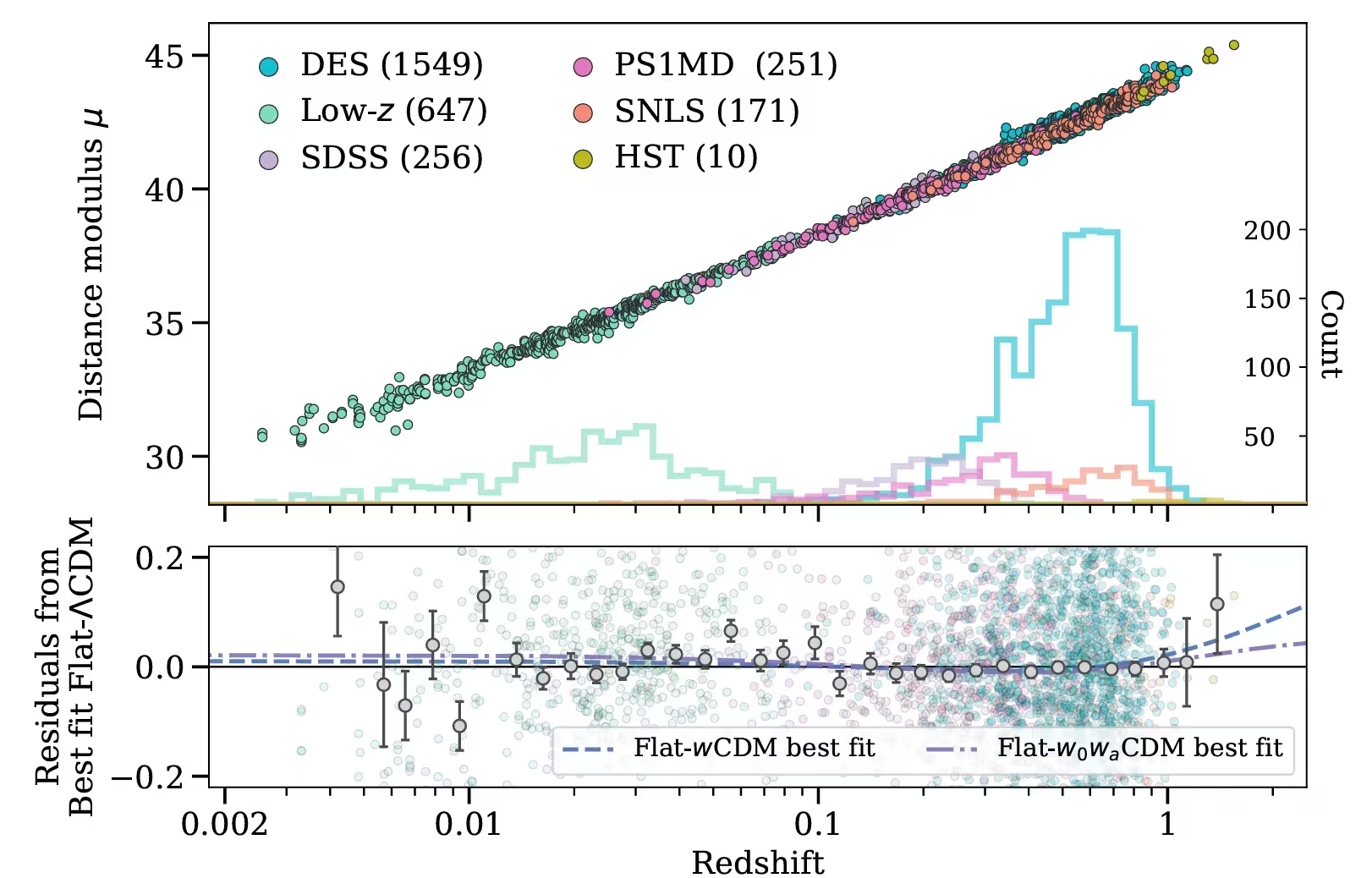
Type Ia supernovae have long served as “standard candles” in astronomy due to their predictable peak luminosity, which allows researchers to map distances across the cosmos. In the standard Lambda cold dark matter (ΛCDM) model, dark energy is defined by the cosmological constant—a value that remains fixed as the universe expands. However, when the Unite team integrated their supernova measurements with data from baryon acoustic oscillations (BAO) and the cosmic microwave background (CMB), the standard model became less convincing.
“We’ve rebuilt three decades of astronomical observations into a single, consistent framework,” explained Ryan Camilleri, a Ph.D. candidate at the University of Queensland and lead author of the study.
Refining the cosmic measuring stick
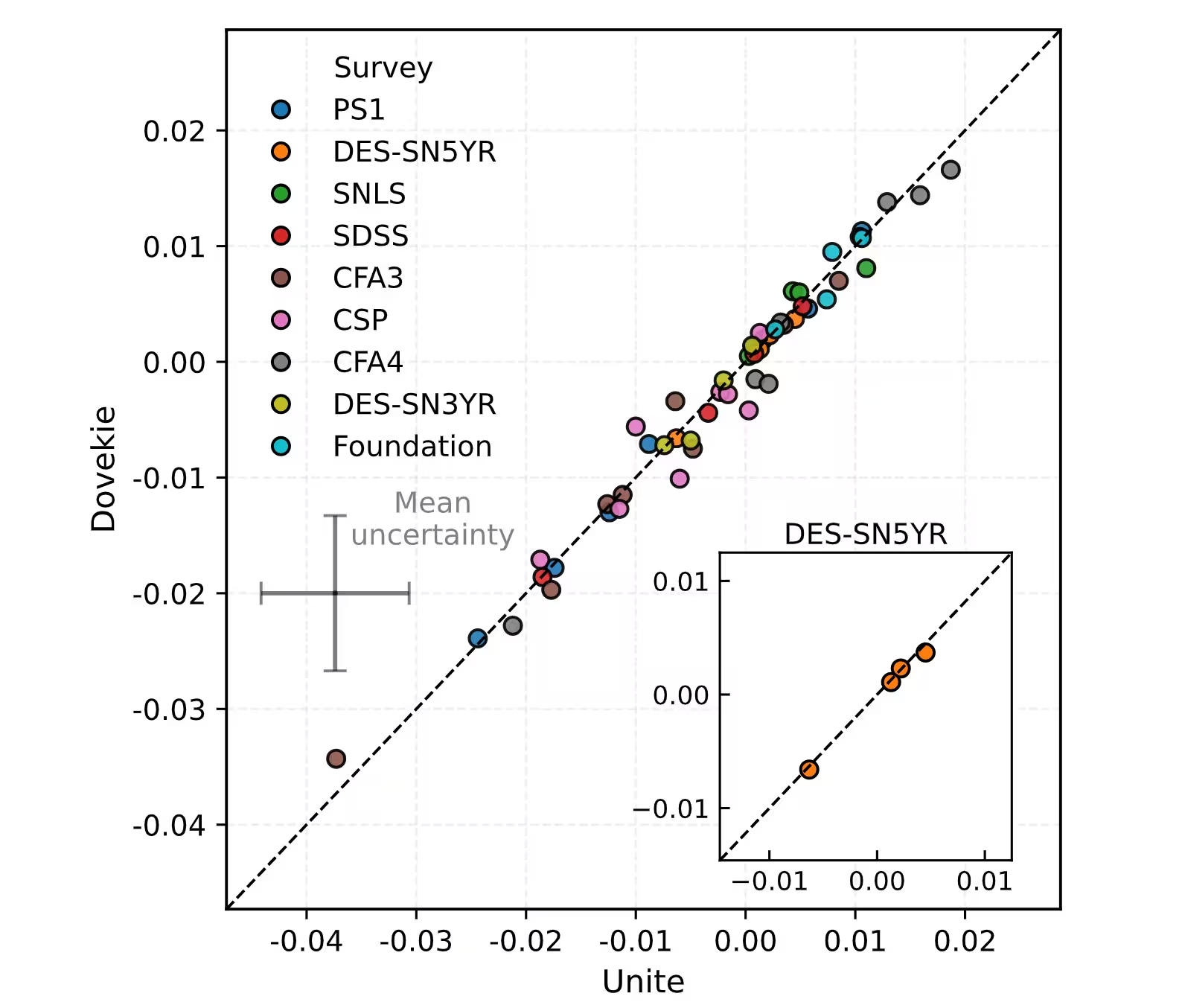
The creation of the Unite catalog required more than simply aggregating existing records. The researchers re-evaluated light curves and updated host galaxy stellar masses for over 98% of the sample. They also applied corrections for gravitational lensing—a process where intervening matter distorts light from distant explosions—which reduced scatter in the Hubble diagram by approximately 5% for supernovae at higher redshifts.
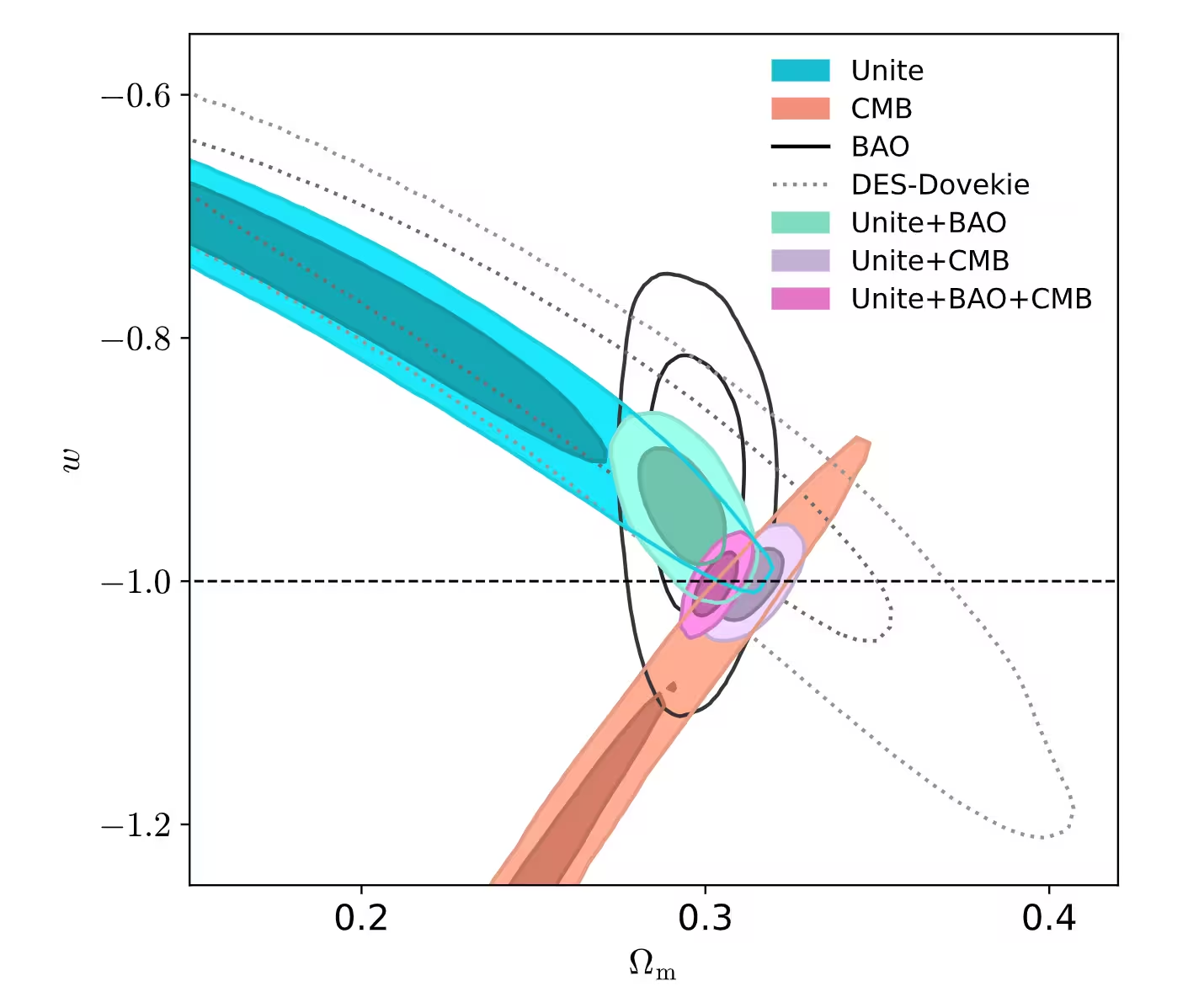
When the team tested this refined dataset against various cosmological models, they found that the data shifted away from the standard prediction. In a model where dark energy’s behavior is allowed to evolve, the combined measurements from Unite, BAO, and the CMB produced tighter constraints on the dark energy equation-of-state parameters than previous studies. The resulting values hinted at a dynamic, time-evolving form of dark energy rather than a constant one.
A measured approach to new findings
Despite these compelling results, the team emphasizes that the evidence does not yet constitute a definitive discovery. In physics, a 5-sigma significance level is the traditional gold standard for confirming a new finding, and the current analysis shows a preference for evolving dark energy at approximately 3.1 to 3.3 sigma.
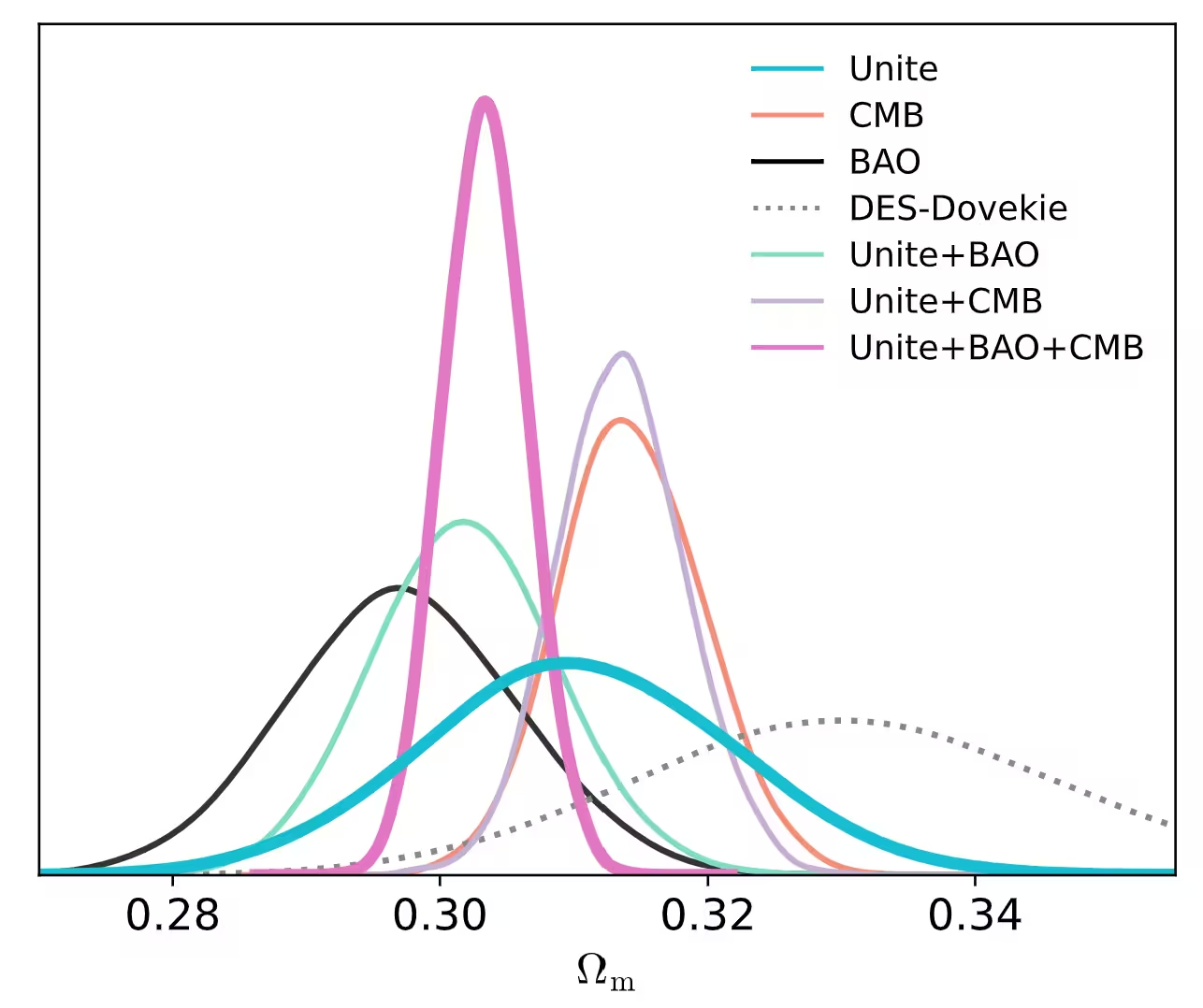
Bayesian model comparison provided only weak support for an evolving model, and the researchers caution that systematic uncertainties—such as varying calibration methods across different surveys—remain a significant factor. While the results are consistent with other major datasets, they represent an ongoing challenge to the standard ΛCDM model rather than its replacement.
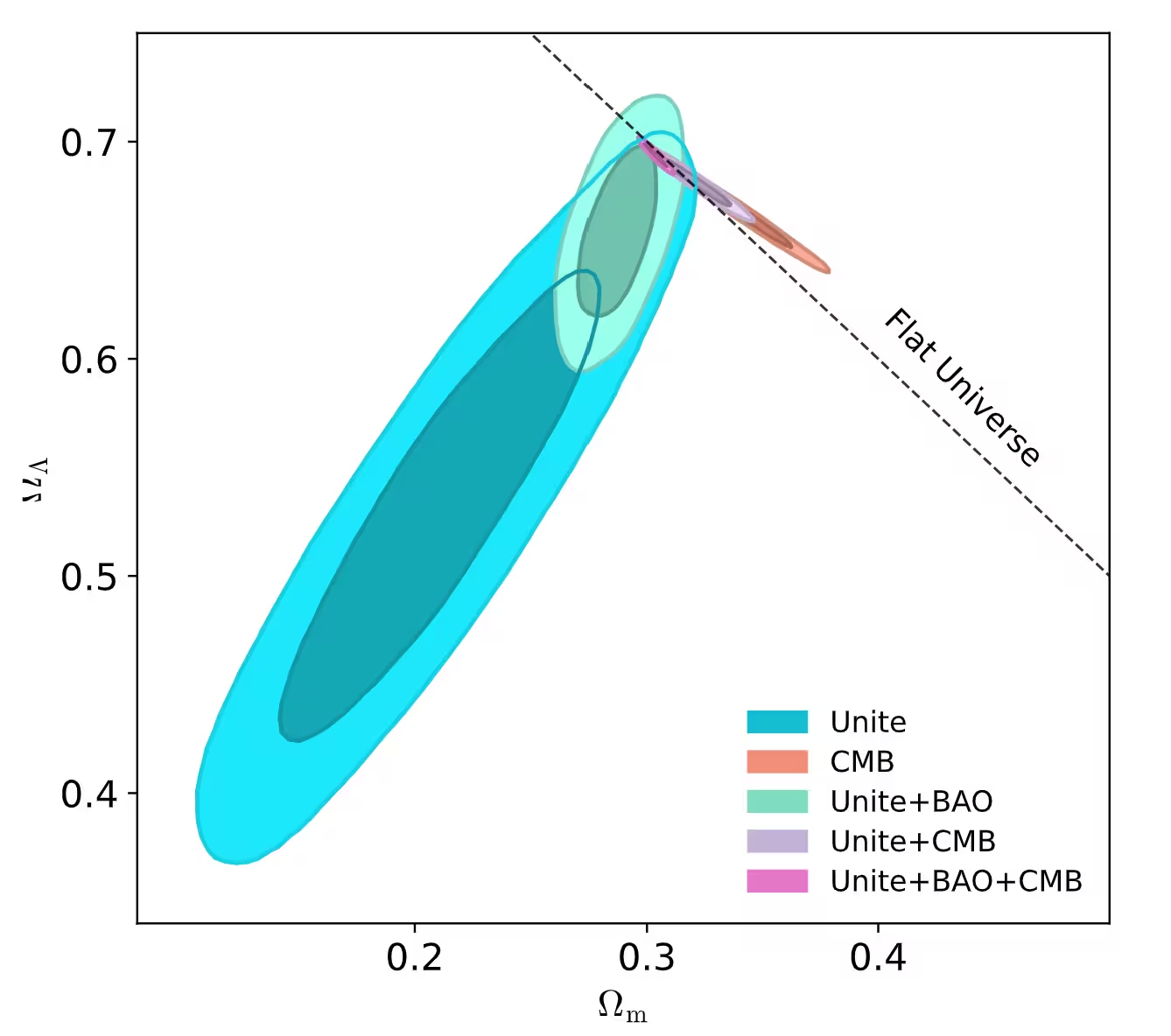
Looking ahead, upcoming programs like the Dark Energy Bedrock All-Sky Supernova program are expected to bolster the low-redshift data, providing a more robust foundation for future analyses. For now, the Unite compilation stands as a significant step in mapping the behavior of dark energy, ensuring that if it truly is changing, astronomers will be ready to measure the shift.
Key Research Resources
- The Pantheon+ Analysis: Cosmological Constraints: A foundational study utilizing 1,550 Type Ia supernovae.
- The Dark Energy Survey: Cosmology Results: Five years of high-redshift data enhancing our understanding of expansion.
- DESI 2024 VI: Cosmological Constraints from BAO: Recent findings on baryon acoustic oscillations that suggest potential deviations from standard models.
- DESI DR2 Results II: Analysis using over 14 million celestial objects to refine cosmological parameters.
- Union through UNITY: An independent framework for testing cosmological models.
This article has been fact checked for accuracy, with information verified against reputable sources. Learn more about us and our editorial process.
Last reviewed on .
Article history
- Latest version
Reference(s)
- <https://www.uq.edu.au/>.
- Brout, Dillon. “The Pantheon+ Analysis: Cosmological Constraints.” arXiv.org, doi: 10.3847/1538-4357/ac8e04. <https://arxiv.org/abs/2202.04077>.
- Collaboration, DES. “The Dark Energy Survey: Cosmology Results With ~1500 New High-redshift Type Ia Supernovae Using The Full 5-year Dataset.” arXiv.org <https://arxiv.org/abs/2401.02929>.
- Collaboration, DESI. “DESI 2024 VI: Cosmological Constraints from the Measurements of Baryon Acoustic Oscillations.” arXiv.org, doi: 10.1088/1475-7516/2025/02/021. <https://arxiv.org/abs/2404.03002>.
- Collaboration, DESI. “DESI DR2 Results II: Measurements of Baryon Acoustic Oscillations and Cosmological Constraints.” arXiv.org, doi: 10.1103/tr6y-kpc6. <https://arxiv.org/abs/2503.14738>.
- Rubin, David., et al. “Union through UNITY: Cosmology with 2000 SNe Using a Unified Bayesian Framework.” The Astrophysical Journal, vol. 986, no. 2, June 20, 2025, pp. 231 American Astronomical Society, doi: 10.3847/1538-4357/adc0a5. <https://doi.org/10.3847/1538-4357/adc0a5>.
Cite this page:
- Posted by Aisha Ahmed