Scientists Propose Searching Moon Dust for Traces of Ancient Alien Technology
Scientists suggest analyzing lunar soil for microscopic engineered particles that could hold the key to uncovering long-lost extraterrestrial civilizations.
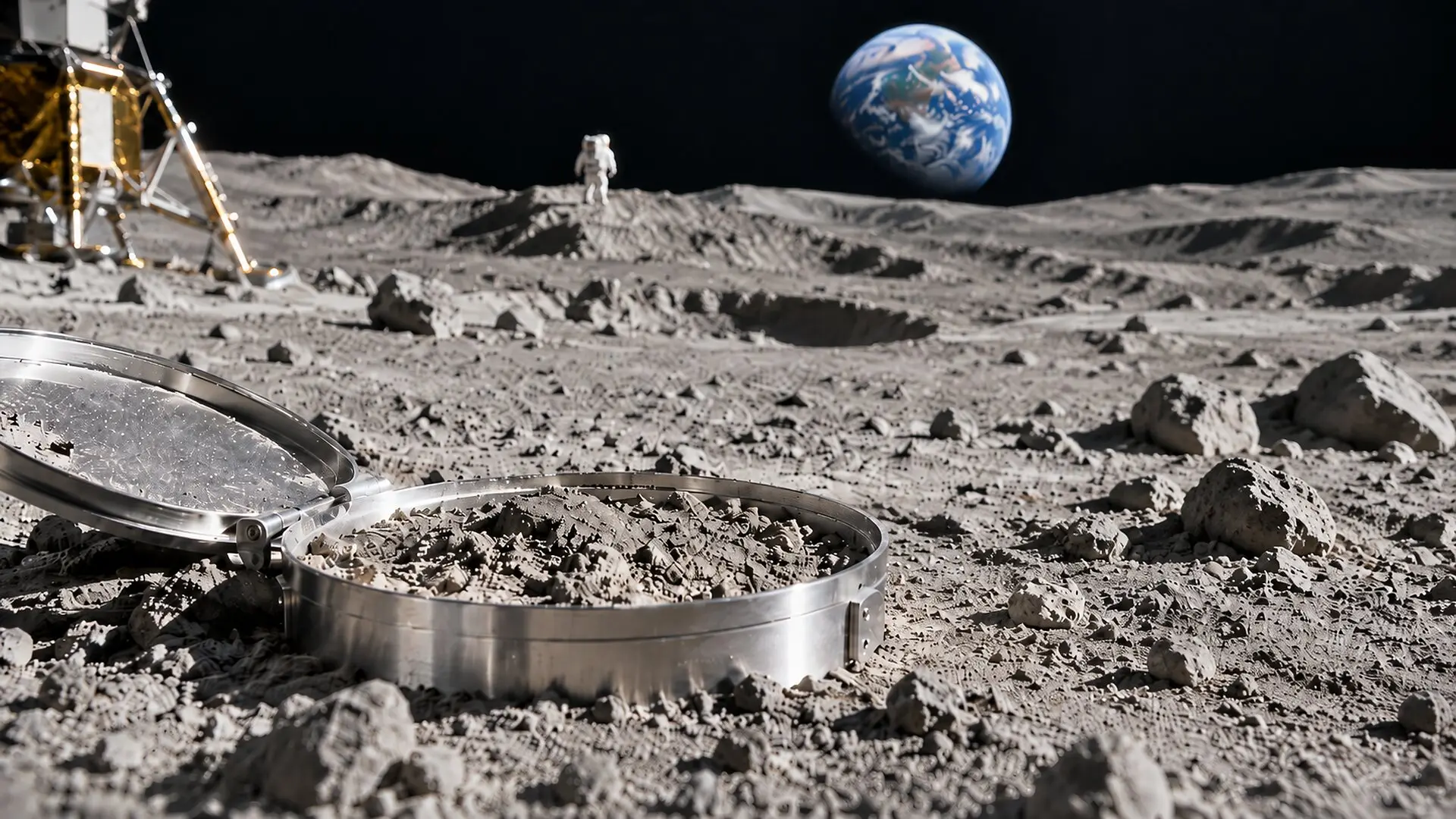
The quest to find evidence of extraterrestrial life has long focused on the skies, hunting for radio whispers or laser pulses. Now, researchers suggest the most promising location for finding signs of an advanced civilization might be right under our feet—or more accurately, in the ancient, undisturbed dust of the Moon.
A new theoretical framework, detailed by a team led by SETI Institute affiliate scientist Lewis Pinault, proposes that the lunar surface could serve as a cosmic archive, holding microscopic remnants of alien technology that have drifted across interstellar space for eons.
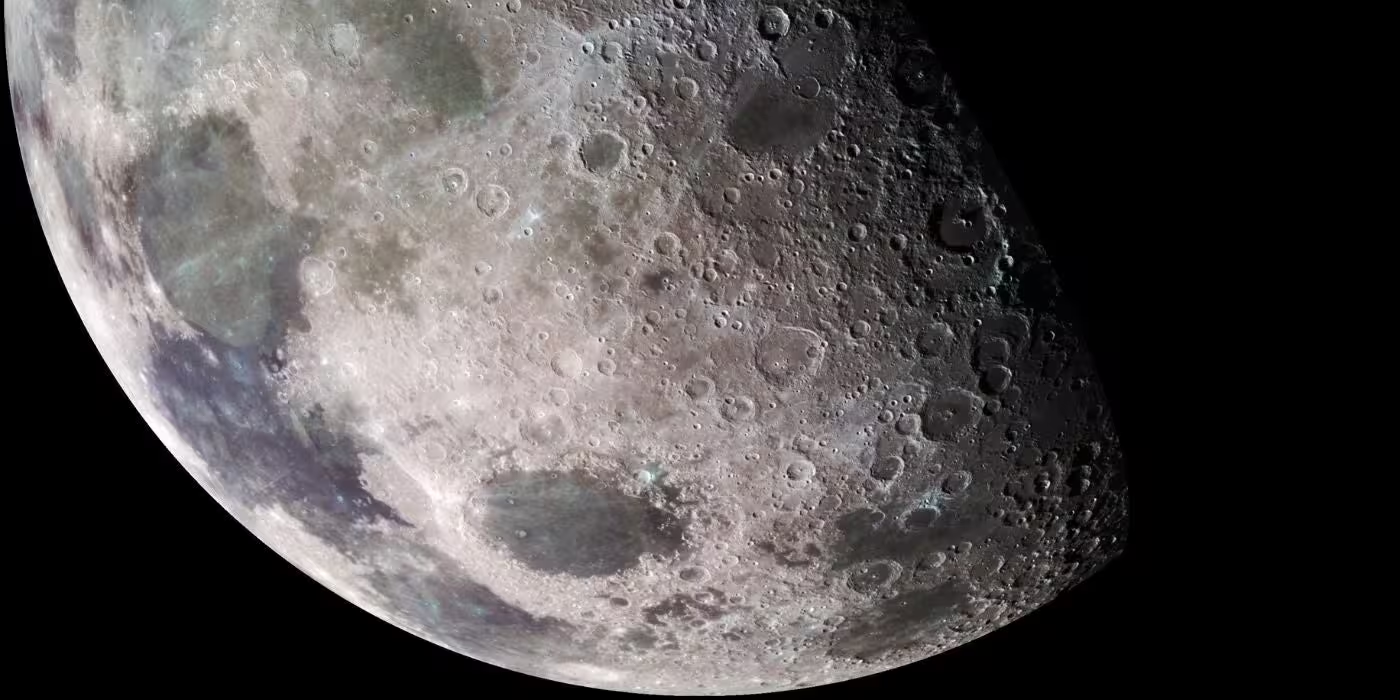
The research, currently available as a preprint and under review for the International Journal of Astrobiology, suggests that the Moon’s unique environment makes it an ideal repository. Unlike Earth, which is subject to constant geological recycling, erosion, and atmospheric degradation, the lunar surface has remained largely stable for billions of years, slowly accumulating debris from the solar system and beyond.
A Deep History of Technological Debris
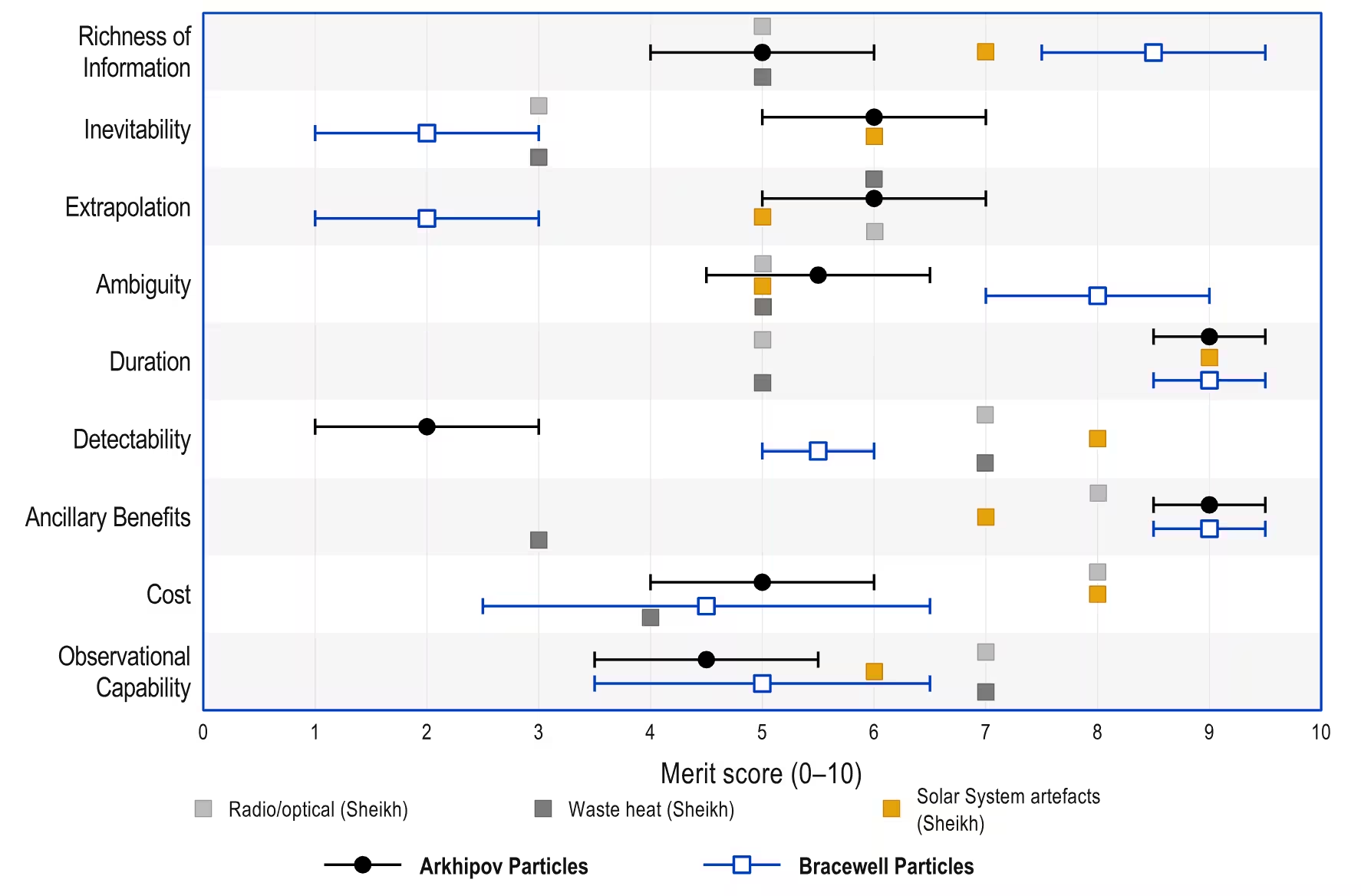
The researchers categorize potential extraterrestrial traces into two distinct groups. The first, termed “Arkhipov Particles,” refers to accidental microscopic debris—fragments shed from spacecraft, industrial structures, or massive engineered systems that have broken down over time. The second, more speculative category, involves “Bracewell Particles,” which would be intentionally designed objects, such as miniature probes or sensors, deliberately dispersed by an alien civilization to act as information carriers or monitors.
Pinault and his colleagues argue that microscopic particles between 0.1 and 1 micrometer in size could be effectively transported by interstellar gas flows and magnetic fields. Over millions or even billions of years, these particles could traverse vast distances across the Milky Way. As the Solar System moved through the galaxy, the Moon would have acted as a passive collector, capturing a record of any technological civilizations that might have shed material into the interstellar medium.
Detecting the Impossible
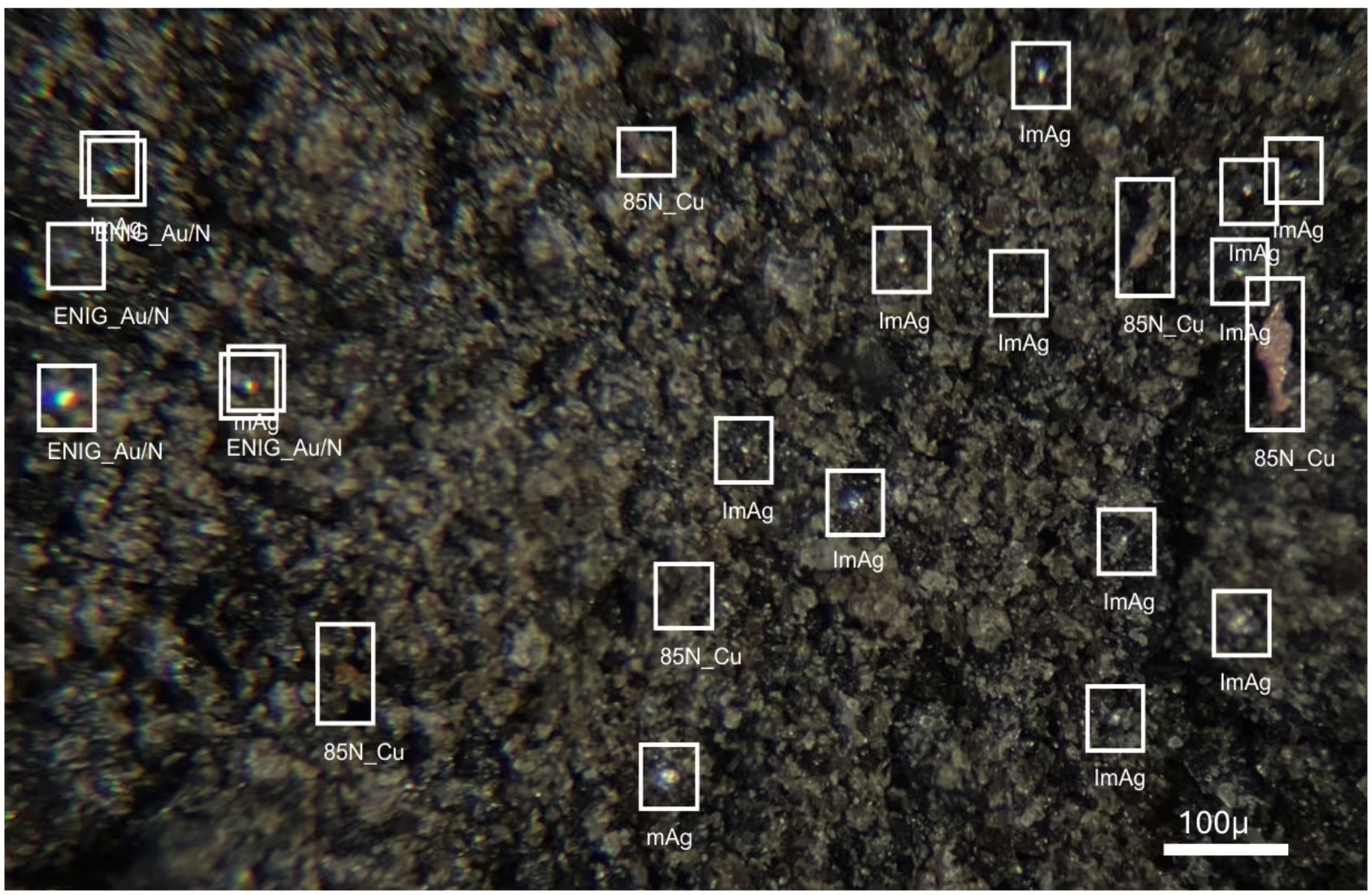
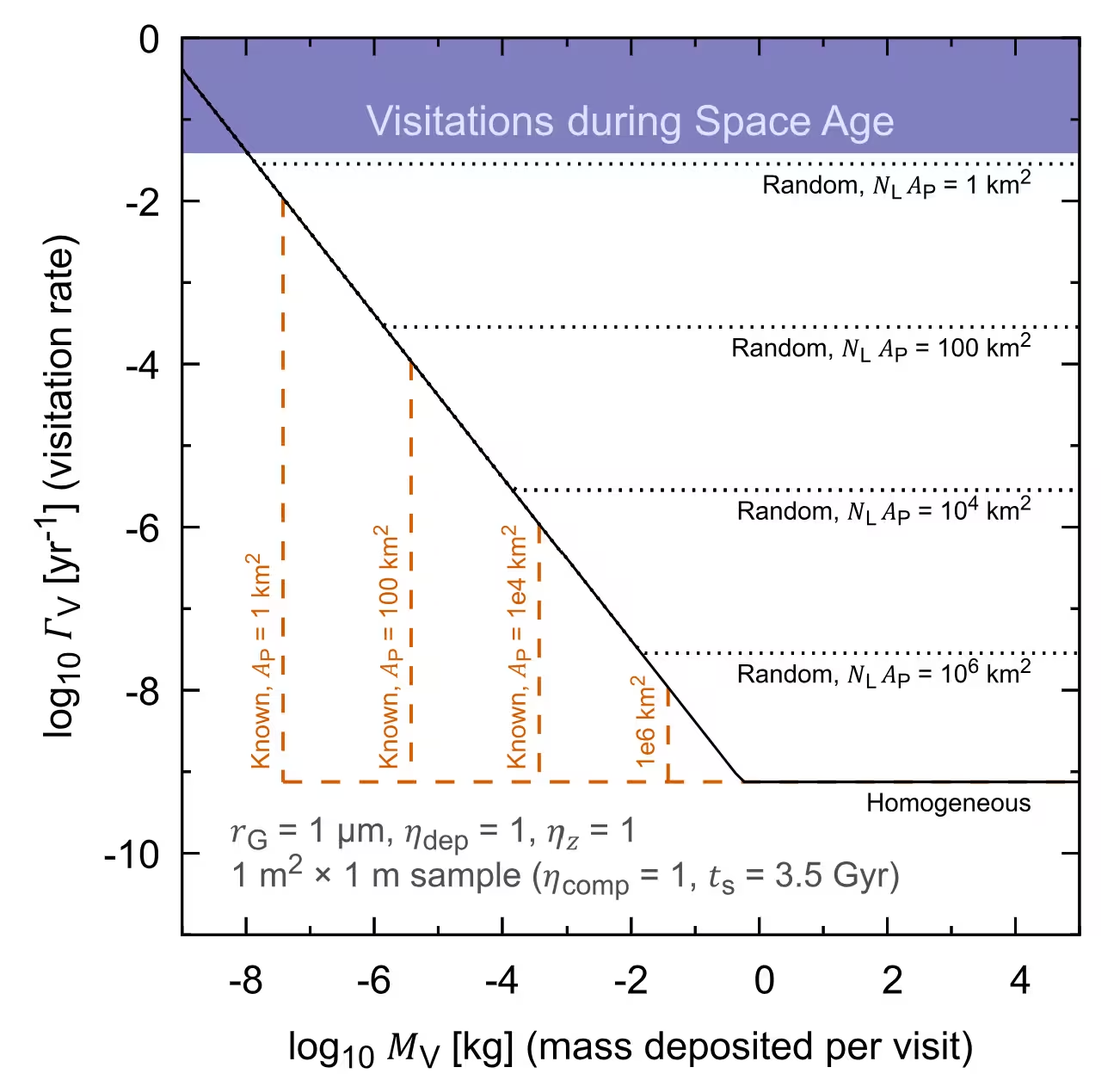
Finding such minute signatures would require a monumental shift in how we approach SETI. The researchers suggest that analyzing just one cubic meter of lunar regolith could provide enough data to begin placing quantitative limits on the prevalence of such technological material in our cosmic neighborhood.
Identifying these particles would rely on advanced laboratory techniques. Scanning electron microscopy, energy-dispersive X-ray spectroscopy, and nano-computed tomography could reveal anomalies in isotopic composition or internal structure that defy natural geological formation. Because such a search would be incredibly labor-intensive, the team proposes utilizing artificial intelligence and machine-vision tools, such as the suggested YOLO-ET framework, to sift through vast quantities of lunar soil and flag unusual grains for further study.
Defining the Limits of Discovery
A major hurdle in this “exo-archaeology” is the human-made contamination already present on the Moon, a byproduct of decades of lunar missions. Distinguishing between a piece of twentieth-century human hardware and a million-year-old extraterrestrial relic will require rigorous laboratory verification and strict contamination protocols.
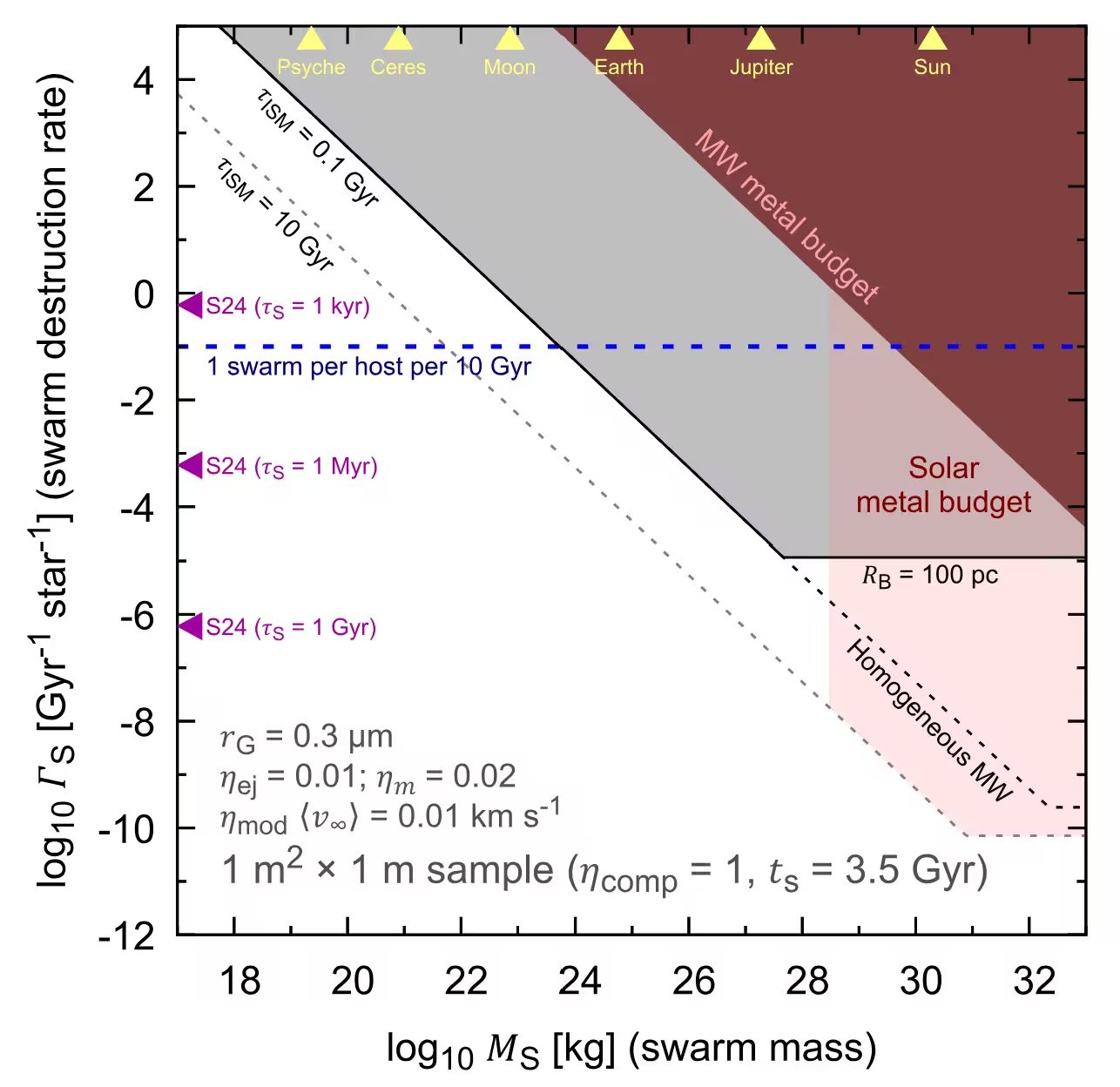
Even if researchers return empty-handed, the study notes that the exercise remains scientifically valuable. A “null result” would allow scientists to set meaningful constraints on the likelihood of large-scale technological activity elsewhere in the galaxy, effectively narrowing the search parameters for future inquiries.
As SETI Institute CEO Bill Diamond noted, the idea is as bold as it is rational, potentially transforming our neighbor in the sky into a massive, passive telescope pointing backward in time. Should we find even a single grain of convincingly engineered material, it would fundamentally rewrite our understanding of our place in the universe.
Foundational Research References
- Searching for alien artifacts on the moon: Paul Davies and Robert Wagner explore the potential for the lunar surface to preserve interstellar evidence. (Acta Astronautica, 2013)
- Nine axes of merit for technosignature searches: Sofia Sheikh provides a framework for evaluating the significance of various SETI strategies. (International Journal of Astrobiology, 2020)
- Prior indigenous technological species: Jason Wright discusses the potential longevity of ancient technological debris. (International Journal of Astrobiology, 2018)
- Lunar Regolith Sampling Technologies: A Critical Review: A comprehensive look at the logistical challenges of collecting and analyzing lunar soil. (Space Science Reviews, 2025)
- Interstellar Dust Grains: Foundational details regarding the behavior of particles moving through interstellar space. (Annual Review of Astronomy and Astrophysics, 2003)
This article has been fact checked for accuracy, with information verified against reputable sources. Learn more about us and our editorial process.
Last reviewed on .
Article history
- Latest version
Reference(s)
- “Micron-Scale Technosignatures: How a Cubic Metre of Lunar Regolith May Begin to Constrain the Number of Past Technological Civilisations in the Galaxy.” <https://arxiv.org/html/2606.24028v4>.
- Davies, P.C.W.., et al. “Searching for alien artifacts on the moon.” Acta Astronautica, vol. 89, August 1, 2013, pp. 261-265. Elsevier BV, doi: 10.1016/j.actaastro.2011.10.022. <https://doi.org/10.1016/j.actaastro.2011.10.022>.
- Sheikh, Sofia Z.. “Nine axes of merit for technosignature searches.” International Journal of Astrobiology, vol. 19, no. 3, November 19, 2019, pp. 237-243. Cambridge University Press (CUP), doi: 10.1017/S1473550419000284. <https://doi.org/10.1017/S1473550419000284>.
- Wright, Jason T.. “Prior indigenous technological species.” International Journal of Astrobiology, vol. 17, no. 1, June 1, 2017, pp. 96-100. Cambridge University Press (CUP), doi: 10.1017/S1473550417000143. <https://doi.org/10.1017/S1473550417000143>.
- Pirrone, Serena R. M.., et al. “Lunar Regolith Sampling Technologies: A Critical Review.” Space Science Reviews, vol. 221, no. 8, November 12, 2025 Springer Science and Business Media LLC, doi: 10.1007/s11214-025-01239-6. <https://doi.org/10.1007/s11214-025-01239-6>.
- Draine, B.T.. “Interstellar Dust Grains.” Annual Review of Astronomy and Astrophysics, vol. 41, no. 1, September 1, 2003, pp. 241-289. Annual Reviews, doi: 10.1146/annurev.astro.41.011802.094840. <https://doi.org/10.1146/annurev.astro.41.011802.094840>.
Cite this page:
- Posted by Aisha Ahmed