Massive New Icy World Discovered Lurking in the Outer Solar System
Astronomers have identified a potential new dwarf planet beyond Pluto using Rubin Observatory data, though its exact size remains under investigation.
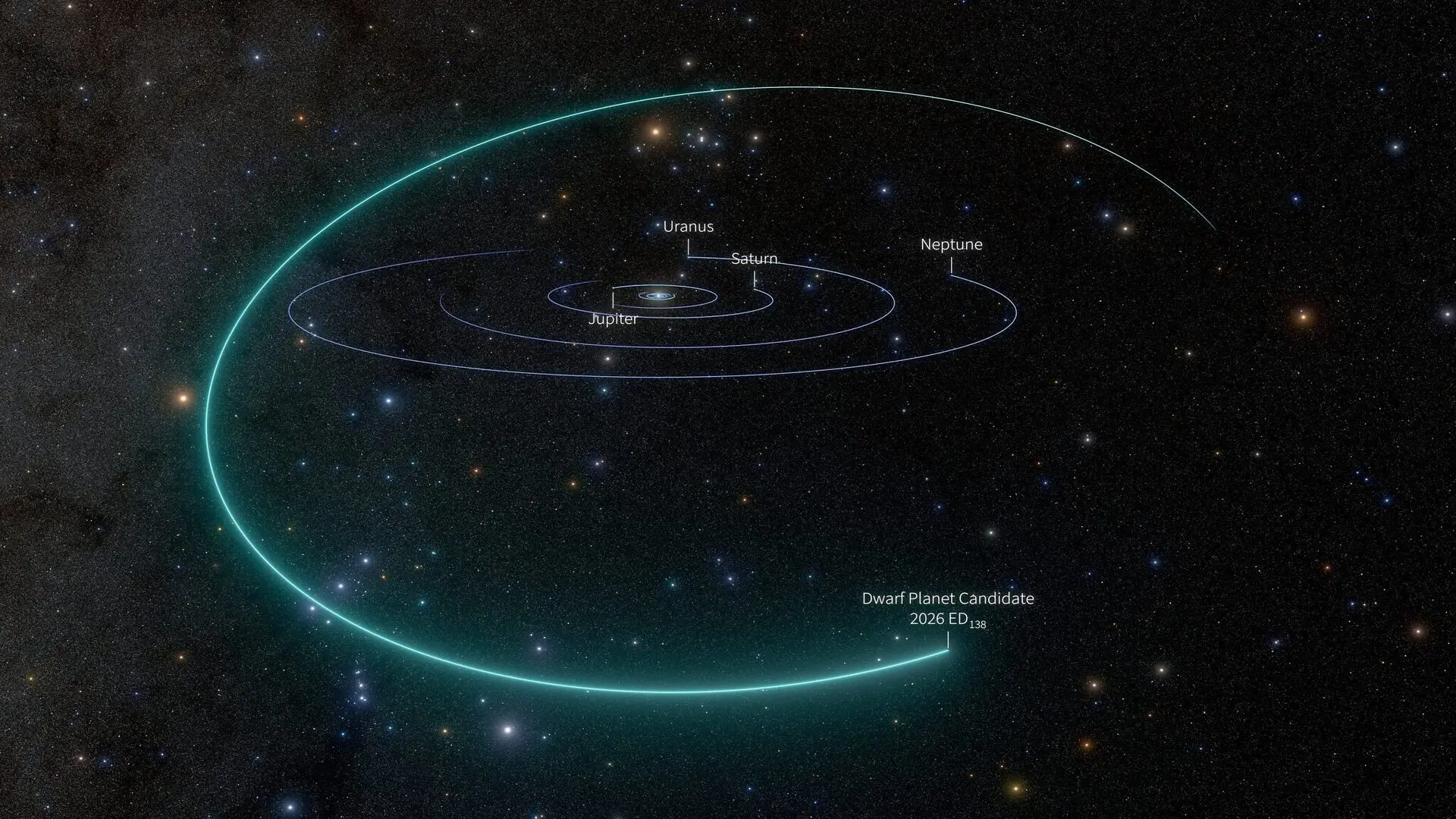
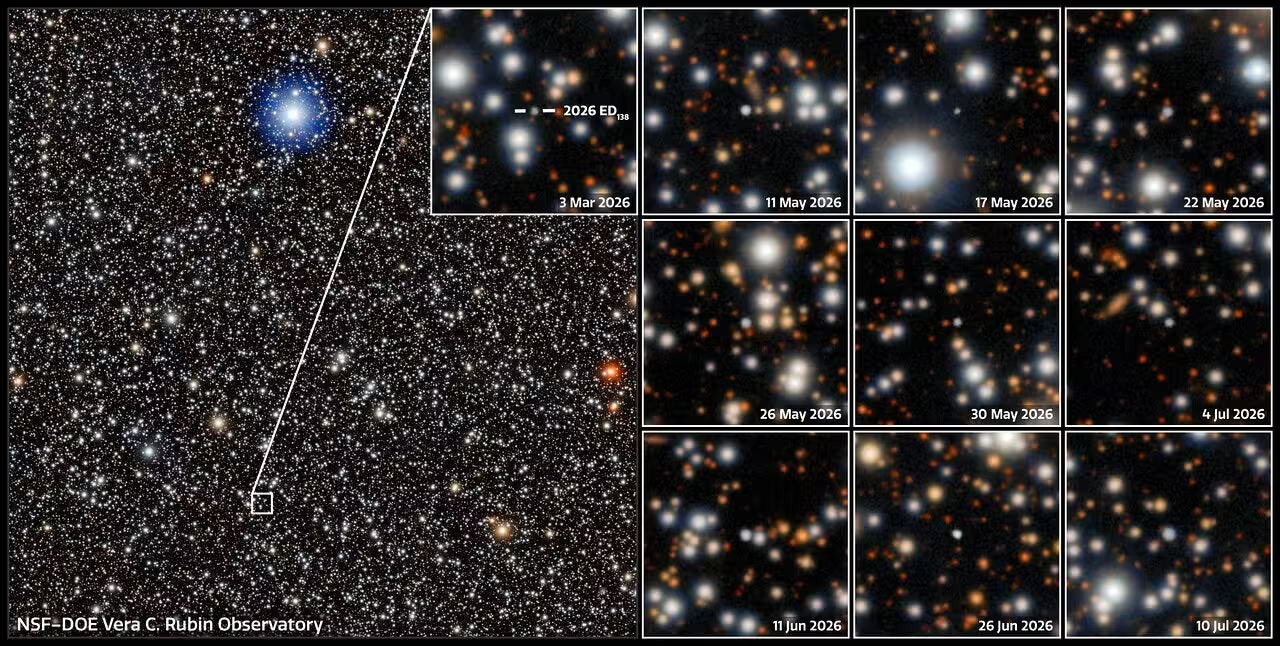
Astronomers have identified a massive, icy world lurking in the remote reaches of our solar system, a discovery that could soon expand the list of officially recognized dwarf planets. Provisionally cataloged as 2026 ED138, the object resides roughly 46 times further from the Sun than Earth, positioning it deep within the trans-Neptunian region.
The finding, announced on October 27, stems from data gathered by the NSF–DOE Vera C. Rubin Observatory’s Simonyi Survey Telescope. While the object’s sheer scale makes it a compelling candidate for dwarf planet status, researchers caution that further study is required to confirm its classification.
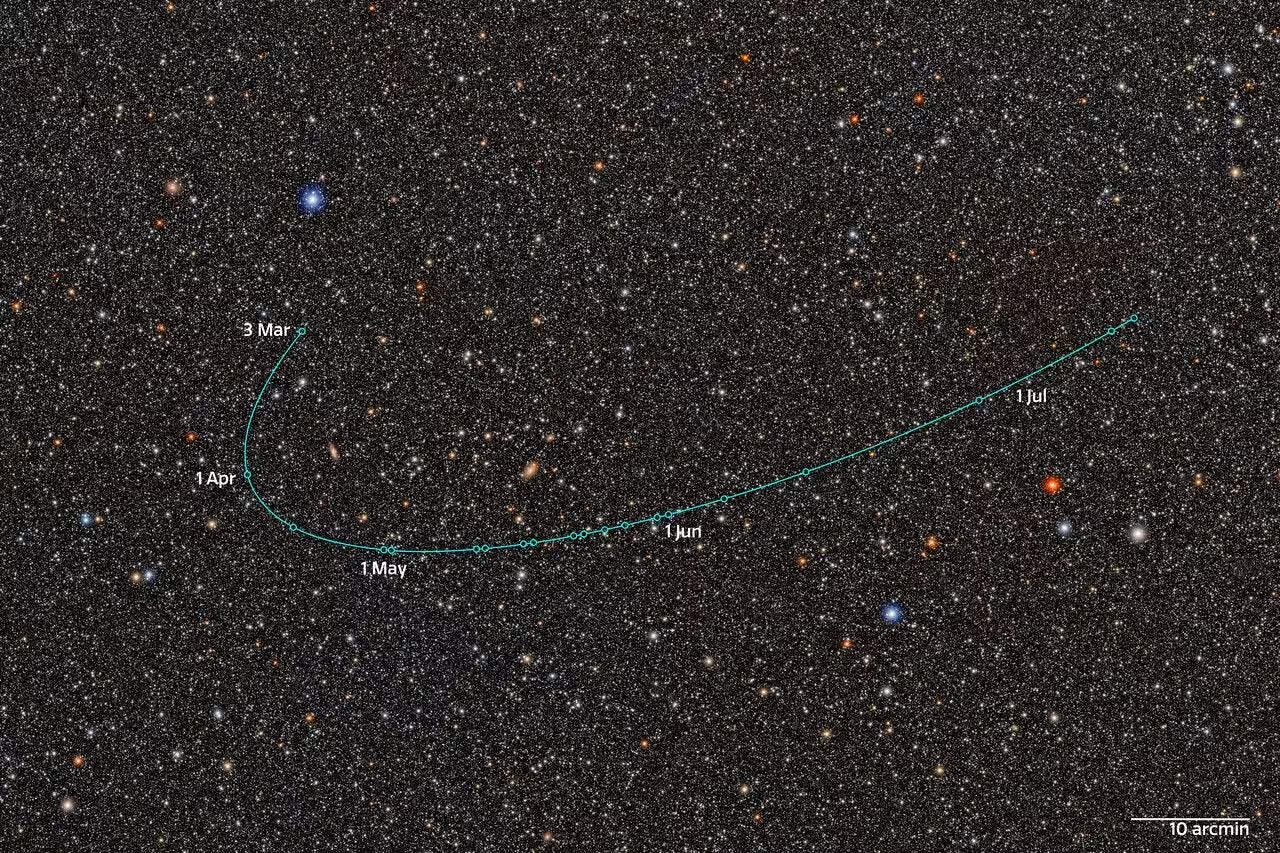
Tracking a Distant Wanderer
The identification of 2026 ED138 is a testament to the power of modern deep-sky surveying. Matthew Holman, an astrophysicist at the Center for Astrophysics | Harvard & Smithsonian, first spotted the object on October 13 while sifting through imagery captured earlier in 2026. Utilizing specialized software designed by Holman and collaborator Kevin Napier, the team managed to isolate the signal of the moving body from a backdrop of billions of stellar detections.
“My first reaction was one of excited disbelief,” Holman remarked. “Objects like this are very rare, so I immediately started checking whether I or the code had done something wrong.”
To verify the discovery, Mario Jurić of the University of Washington led an effort to comb through the Rubin Observatory’s catalog, uncovering 30 distinct sightings recorded over 20 separate nights. By pairing these new observations with “precovery” data—archival images from the Victor M. Blanco 4-meter Telescope in Chile, recovered via the Asteroid Institute’s ADAM service—astronomers were able to map the object’s trajectory across more than a decade.
Defining a Dwarf Planet
Current estimates place the diameter of 2026 ED138 between 600 and 1,500 kilometers. This significant uncertainty stems from the challenges of measuring distant, icy worlds where surface reflectivity, or albedo, can drastically alter size calculations. To meet the International Astronomical Union’s criteria for a dwarf planet, an object must be massive enough to pull itself into a nearly spherical shape, orbit the Sun, and maintain its own path without having cleared its neighborhood of other debris.
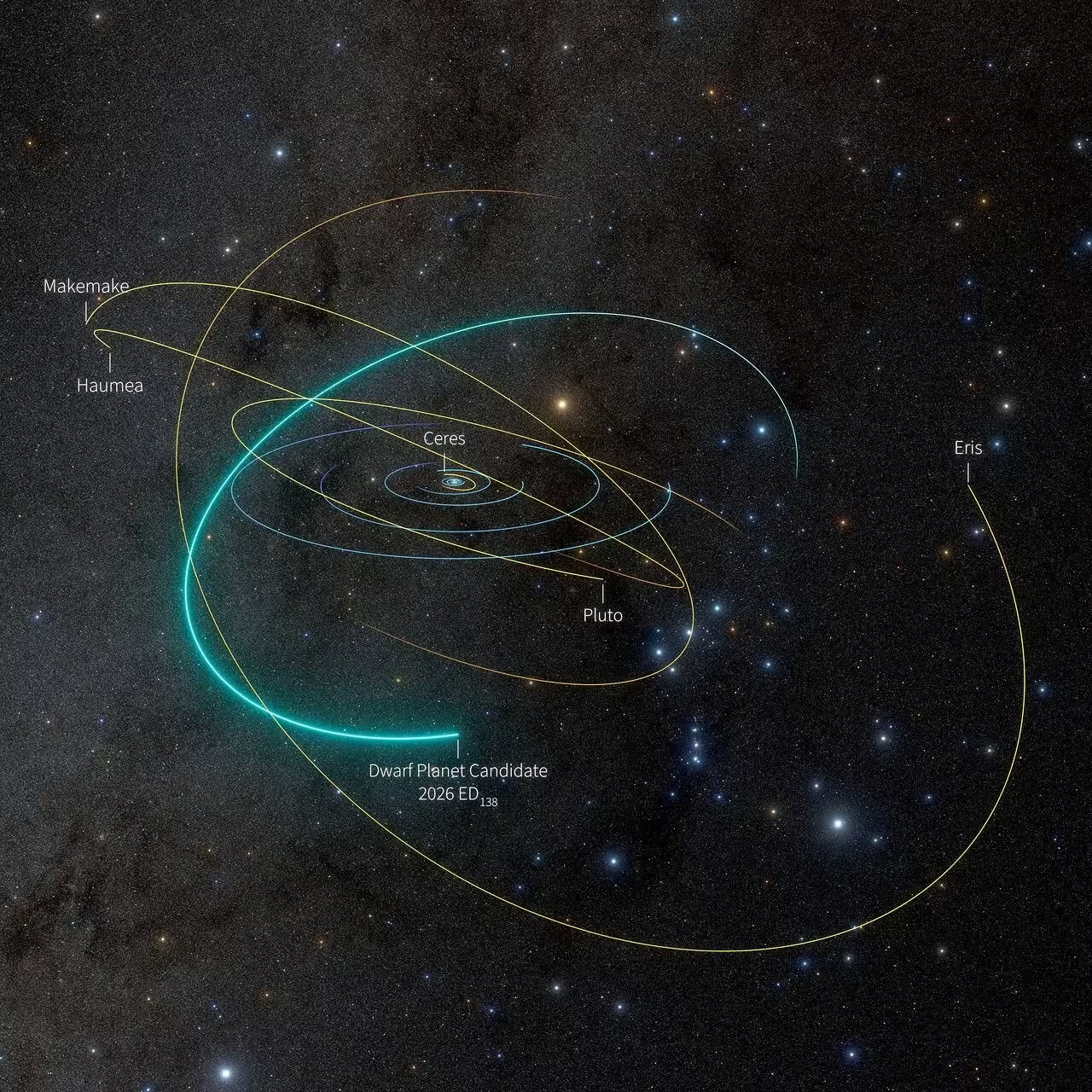
The object is classified as a “hot-classical” trans-Neptunian object, possessing an orbit tilted nearly 25 degrees relative to the plane of the solar system. This dynamic, disturbed path suggests that 2026 ED138 may have been gravitationally scattered by the gas giants in the early, chaotic history of the solar system.
The Future of Deep-Space Surveying
The discovery underscores the efficiency of the Rubin Observatory’s ongoing mission. By systematically imaging the southern sky, the facility has already begun to rapidly populate the catalogs of the outer solar system, including the submission of over 11,000 new asteroid detections earlier this year. Hidden near the dense, star-rich plane of the Milky Way, 2026 ED138 likely evaded detection for years, demonstrating that the most remote corners of our neighborhood still hold secrets waiting to be decoded.
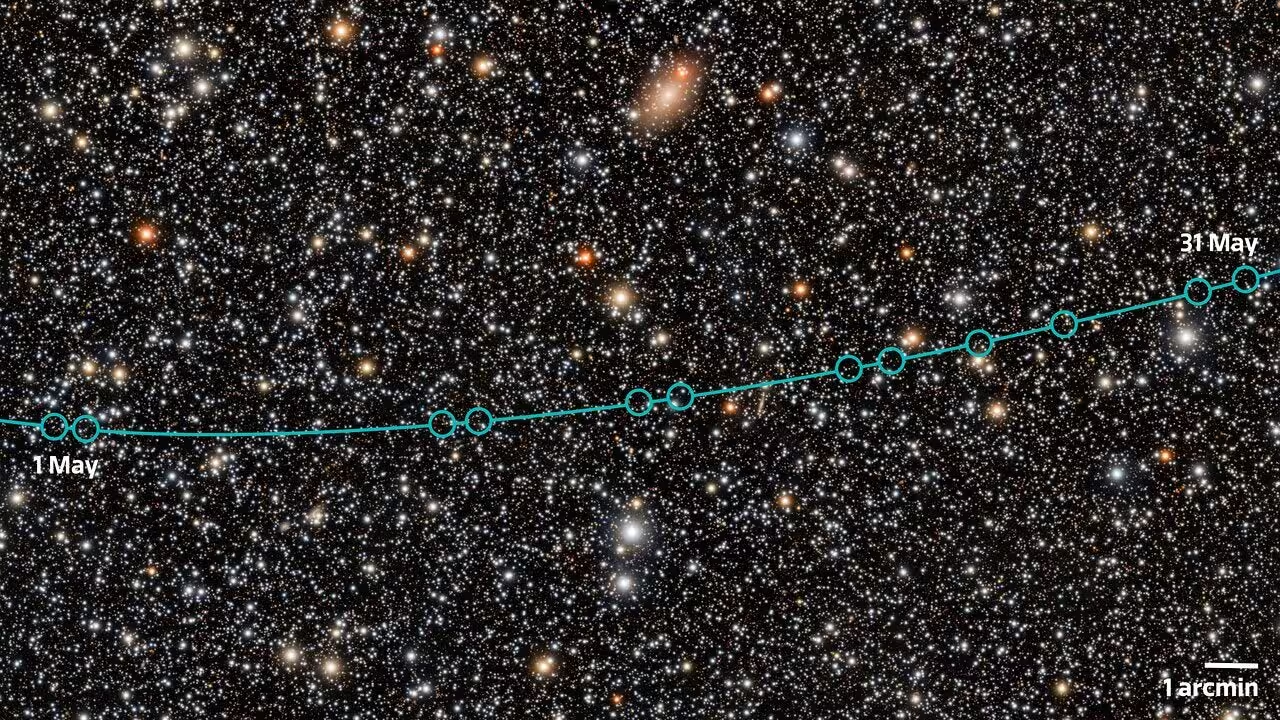
As astronomers refine their measurements of this icy candidate, the broader scientific community is keeping a close watch. Whether 2026 ED138 is eventually granted formal dwarf planet status or remains a curious member of the outer belt, its existence serves as a valuable marker for understanding the migration of small bodies in the early solar system.
Exploring the Outer Frontier
- Early Data from NSF–DOE Vera C. Rubin Observatory Reveals Over 11,000 New Asteroids
- Discovery and dynamics of a Sedna-like object with a perihelion of 66 au
- NASA’s Webb Reveals the Ancient Surfaces of Trans-Neptunian Objects
This article has been fact checked for accuracy, with information verified against reputable sources. Learn more about us and our editorial process.
Last reviewed on .
Article history
- Latest version
Reference(s)
- “Home | Center for Astrophysics | Harvard & Smithsonian.” <https://www.cfa.harvard.edu/>.
- “Home Page.” UW Homepage <https://www.washington.edu/>.
- “IAU Minor Planet Center.” <https://minorplanetcenter.net/>.
- Observatory, Rubin. “Early Data from NSF–DOE Vera C. Rubin Observatory Reveals Over 11,000 New Asteroids.”, April 2, 2026 <https://rubinobservatory.org/news/11000-new-asteroids>.
- Chen, Ying-Tung. “Discovery and dynamics of a Sedna-like object with a perihelion of 66 au - Nature Astronomy.”, vol. 9, no. 9, pp. 1309-1316. Nature, doi: 10.1038/s41550-025-02595-7. <https://www.nature.com/articles/s41550-025-02595-7>.
- Sabia, Stephen. “NASA’s Webb Reveals the Ancient Surfaces of Trans-Neptunian Objects - NASA Science.”, February 12, 2025 NASA <https://science.nasa.gov/blogs/webb/2025/02/12/nasas-webb-reveals-the-ancient-surfaces-of-trans-neptunian-objects/>.
Cite this page:
- Posted by Aisha Ahmed