Astronomers May Have Found a Major Flaw in How We Measure Mega-Earths
A mysterious rocky exoplanet once thought to break the laws of physics may be an illusion, as new data challenges our understanding of its true size.
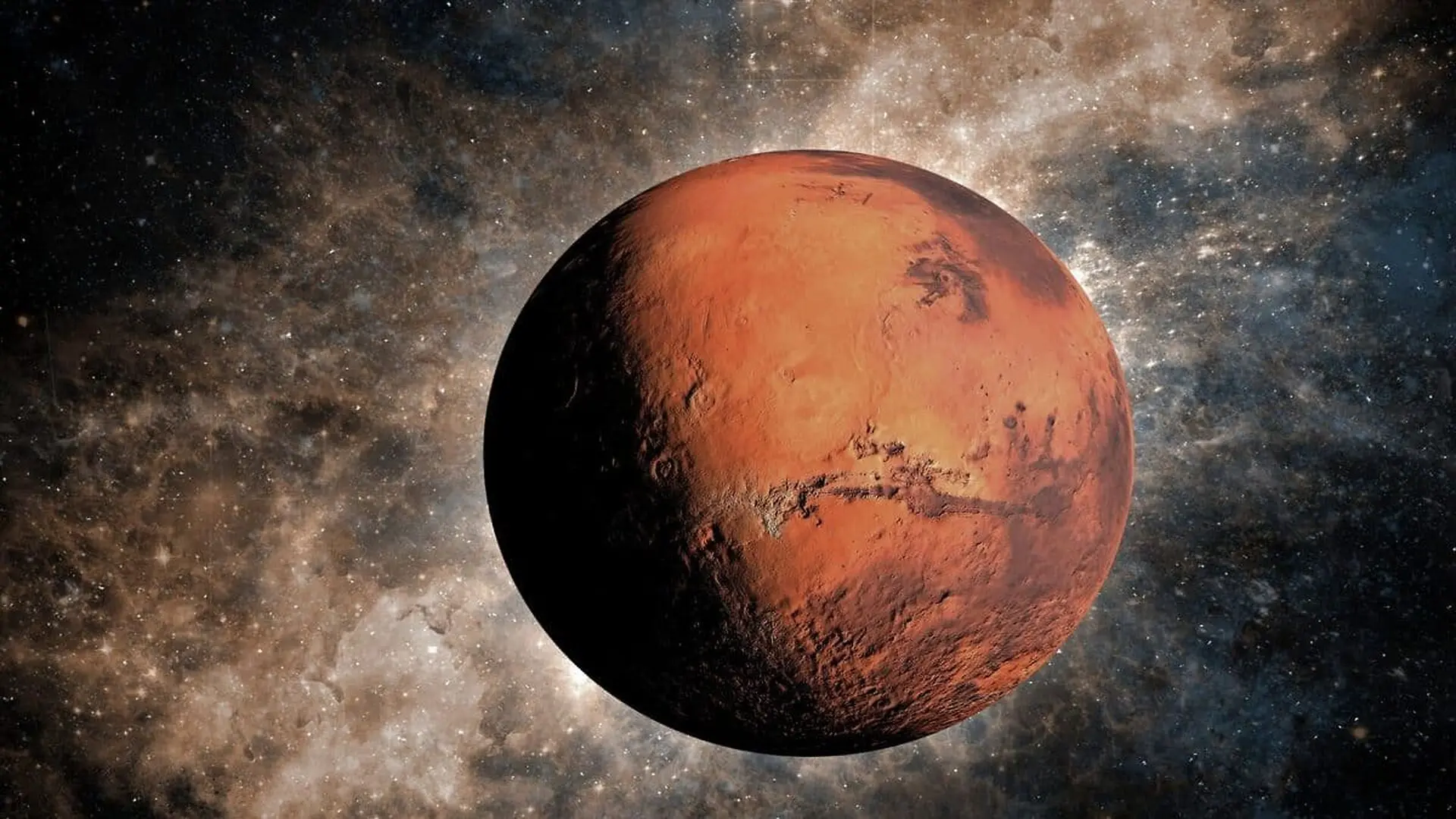
The existence of “mega-Earths”—massive, dense rocky worlds that seem to defy standard planetary formation models—may be an illusion created by the turbulent behavior of their host stars. A new analysis suggests that stellar activity is likely masquerading as gravitational influence, leading astronomers to drastically overestimate the mass of several notable exoplanets.
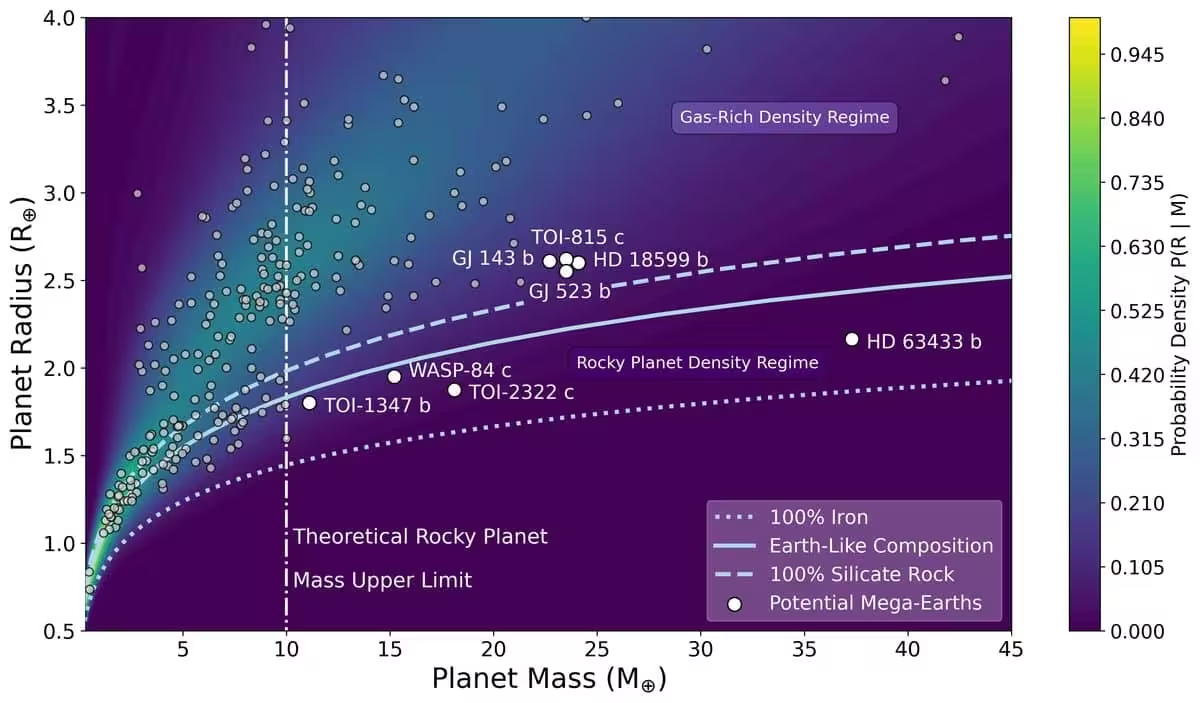
According to current astrophysical models, rocky planets generally hit a growth ceiling. Once a world reaches approximately 1.5 to 1.75 times the radius of Earth, or roughly four to five times its mass, it typically accumulates a thick, volatile atmosphere of hydrogen and helium. By the time a planet reaches about 10 Earth masses, its gravity is usually sufficient to pull in significant amounts of gas from the surrounding protoplanetary disk. However, researchers have identified a small cohort of “rule-breaking” worlds that appear solid and extremely heavy for their size, yet lack the expected gaseous envelopes.
Data Distortions and Magnetic Interference
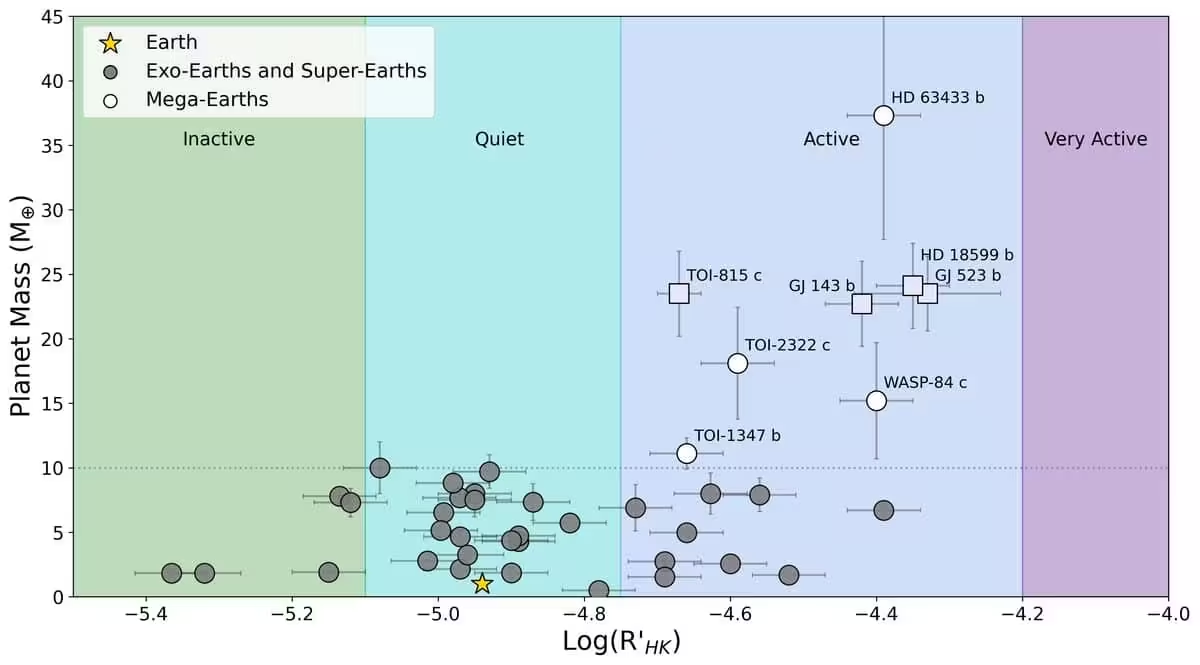
In a study uploaded to arXiv on October 8, 2026, researchers Casey Brinkman and Nicolas Cowan examined 333 exoplanets with mass measurements derived from the radial-velocity method—a technique that detects the slight gravitational tug a planet exerts on its host star. Among these, eight planets exhibited anomalous densities, suggesting they were exceptionally massive.
Upon reviewing data from NASA’s Exoplanet Archive and comparing it with stellar activity metrics from NASA’s TESS spacecraft, the team discovered a striking trend: all eight of these dense planets orbit stars that are magnetically active. The statistical probability of this occurring by chance is roughly 1% for the four most likely “mega-Earth” candidates and even lower for the full group of eight.
The core issue lies in how stellar noise is misinterpreted as planetary signals. As a star rotates, dark spots and magnetic regions move across its surface, altering its light output and shifting spectral lines. These variations can mimic the subtle “wobble” of an orbiting planet. Brinkman and Cowan noted that when a planet’s orbital period aligns closely with the rotation of its host star, distinguishing between the two becomes exceptionally difficult.
For instance, the mass estimates for exoplanet candidate HD 63433 b have varied wildly between studies, with some estimates ranging from 21 to 37 Earth masses. The researchers concluded that for many of these cases, the inflated mass figures are likely artifacts of stellar magnetic activity rather than true gravitational signatures.
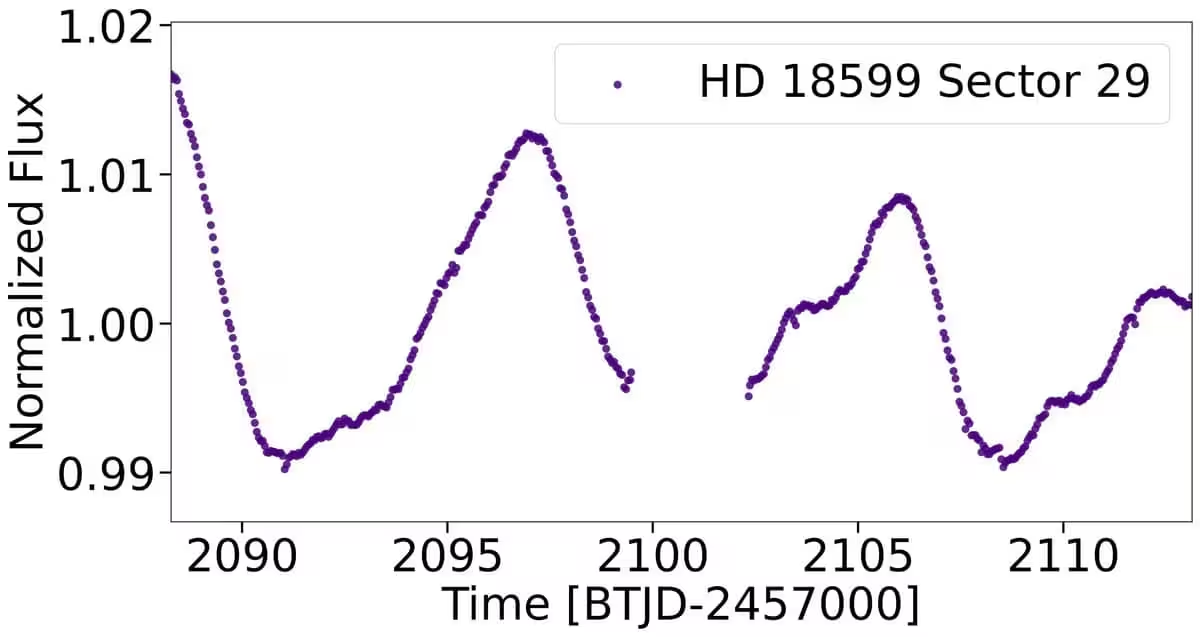
“The most likely culprit for these larger-than-expected masses is artificial inflation from stellar activity,” the authors wrote.
Challenging the Mega-Earth Paradigm
The findings also cast doubt on the theoretical necessity for such large, rocky worlds. Formation scenarios involving high-mass rocky bodies typically require older, more stable systems where repeated collisions can strip away lighter materials. Finding these objects exclusively around young, magnetically active stars contradicts this logic.
While the study does not definitively disprove the existence of all mega-Earths, it serves as a cautionary tale for planetary science. To clear up the confusion, the researchers recommend implementing higher-frequency radial-velocity observations, which would provide the resolution necessary to decouple planetary signals from the complex magnetic heartbeat of the host stars.
This article has been fact checked for accuracy, with information verified against reputable sources. Learn more about us and our editorial process.
Last reviewed on .
Article history
- Latest version
Reference(s)
- Brinkman, Casey. “"Mega-Earths" are likely an artifact of stellar activity.” arXiv.org <https://arxiv.org/abs/2610.12600>.
- “NASA Exoplanet Archive.” <https://exoplanetarchive.ipac.caltech.edu/>.
- Kazmierczak, Jeanette. “TESS (Transiting Exoplanet Survey Satellite) - NASA Science.”, April 22, 2025 NASA <https://science.nasa.gov/mission/tess/>.
Cite this page:
- Posted by Aisha Ahmed