ALMA Uncovers Nine Infant Stars Growing Side‑by‑Side in a Single Cosmic Filament
ALMA spots nine newborn stars coalescing in a massive gas filament, giving a rare glimpse into how stellar families assemble.
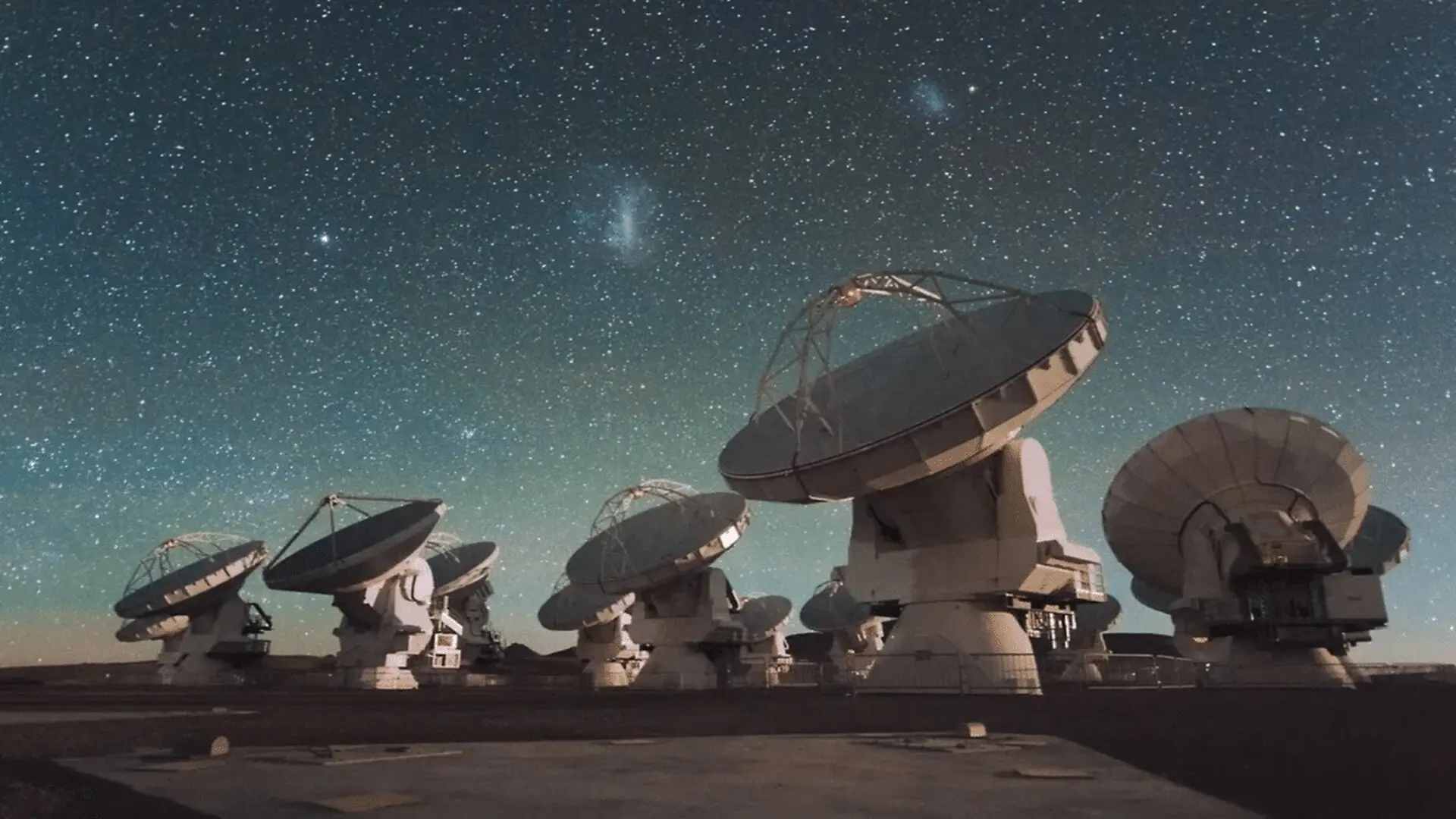
Observations with the Atacama Large Millimeter/submillimeter Array (ALMA) have uncovered a striking protostellar filament in which nine nascent stars are assembling side by side. The results, posted to arXiv, offer one of the clearest windows into the early stages of massive multiple‑star formation, giving researchers a chance to follow the birth of a complex stellar system from its inception.
Serendipitous Find Within a Well‑Known Nebula
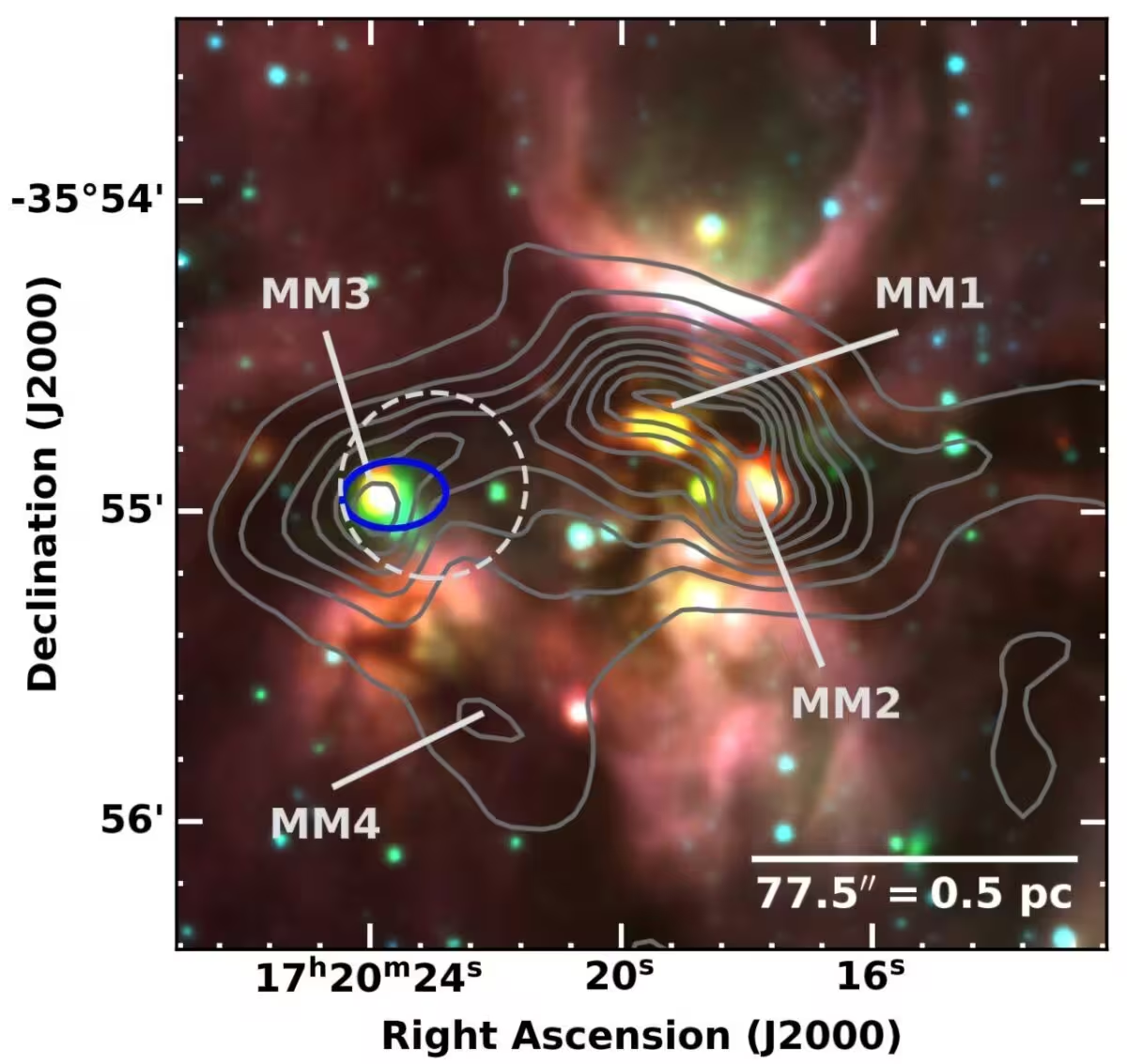
The team was originally processing data from the CoCCoA survey, a program aimed at mapping complex organic chemistry in massive star‑forming regions. One of the targets, the hot molecular core NGC 6334‑43—situated about 4,340 light‑years from Earth—was examined for its dust and gas signatures. While sifting through the high‑resolution maps, researchers noticed an unexpected clustering of compact sources aligned along a single filament.
Instead of the isolated chemical tracers they expected, the data revealed nine tightly packed objects that appeared linked rather than scattered randomly. Subsequent analysis indicated that these sources are gravitationally bound, forming a nascent stellar family. The full study is available on arXiv, underscoring how chance observations can yield breakthroughs.
A Gravitationally Linked Protostellar Chain
Measurements place the nine objects along a gaseous filament roughly 24,700 astronomical units long, with neighboring separations averaging about 7,930 astronomical units. Dynamical calculations comparing gravitational binding energy to kinetic motion suggest the ensemble is a coherent, bound system rather than a line‑of‑sight coincidence.
Capturing such a configuration is rare because massive stars evolve quickly and remain hidden within dense clouds. By the time they emerge, early formation clues have often vanished. Here, the filament still harbors its protostars, providing a unique laboratory to investigate how groups of massive stars co‑form before feedback reshapes their natal cloud.
Varied Evolutionary Stages Within One Filament
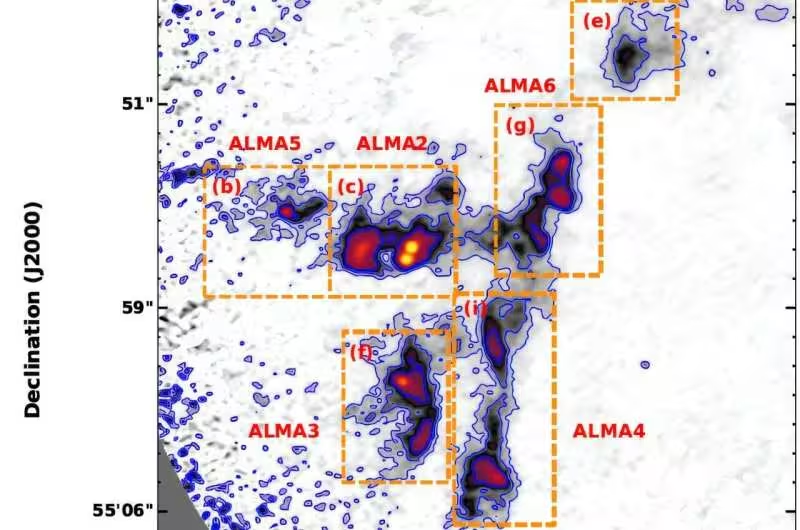
The nine members do not share a uniform age. Some exhibit energetic outflows, a sign of active accretion, while others appear much younger and lack such signatures. The authors note, “The nine sources considered here display a range of evolutionary signatures,” highlighting the filament as a natural testbed for comparative studies of stellar growth under shared conditions.
A particularly complex subgroup, labeled ALMA2, contains a hot‑core pair (ALMA2a and ALMA2b) plus a younger companion (ALMA2c). No common circumstellar disk was detected, implying the trio likely emerged from the fragmentation of a dense core. An adjacent powerful outflow remains ambiguous; current data cannot pinpoint whether one or both components drive it, prompting calls for higher‑resolution follow‑up.
Compact Binaries Offer Clues to Fragmentation Processes
Within the larger filament, the ALMA6 binary stands out. Its components are spaced roughly 1,530 astronomical units apart and are linked by a spiral‑like feature in the surrounding gas. The observations suggest that ALMA6a has progressed further along the protostellar track than its partner ALMA6b, which may still be in a pre‑stellar phase.
These smaller pairings support a layered formation picture: while the extended filament likely fragmented along its length, individual cores within it appear to have broken into tighter binaries. Such a hierarchy could explain why massive stars frequently reside in multiple‑star configurations throughout the Milky Way.
This article has been fact checked for accuracy, with information verified against reputable sources. Learn more about us and our editorial process.
Last reviewed on .
Article history
- Latest version
Reference(s)
- Taylor, D.. “A nine-member protostellar system forming via filament fragmentation in the high mass protocluster NGC 6334-43.” arXiv.org, doi: 10.48550/arXiv.2606.03261. <https://doi.org/10.48550/arXiv.2606.03261>.
Cite this page:
- Posted by Aisha Ahmed