548 Galaxies Captured From A Small Dutch Village: See The Stunning Image
Dutch astrophotographer unveils 548 galaxies including the Leo Triplet from his balcony
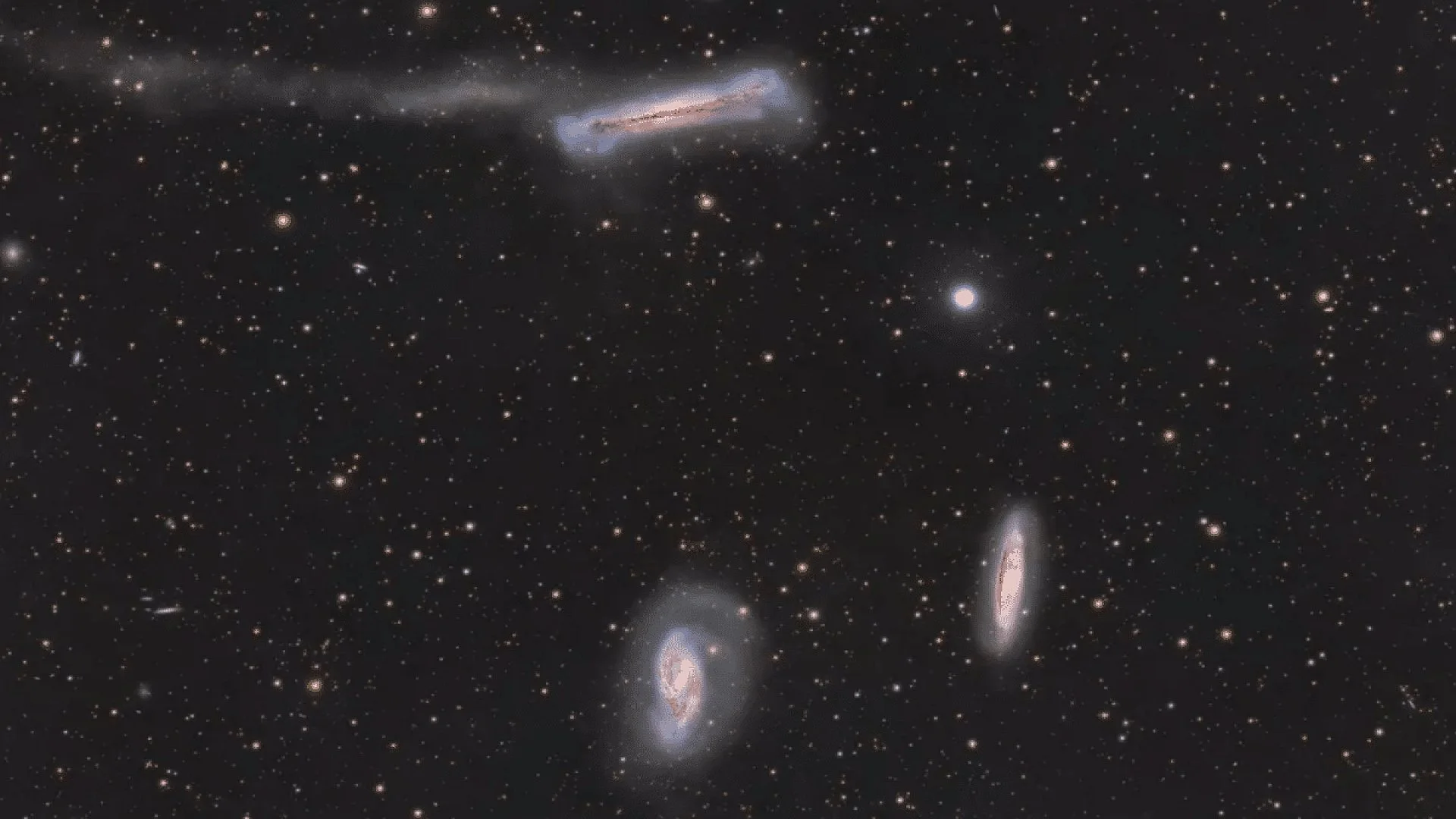
A striking composite of the Leo Triplet Galaxies has been produced from a modest balcony in the Netherlands, unveiling hundreds of remote galaxies with clarity that rivals professional facilities. The image, assembled by amateur astrophotographer Cornelis Van Zuilen, merges more than 60 hours of exposure to render a view that spans millions of light‑years. NASA notes that such detailed captures of interacting galaxies are uncommon, especially when obtained outside a major observatory.
Dutch Hobbyist Achieves Observatory‑Level Detail
Van Zuilen’s foray into deep‑sky imaging combines perseverance with technical expertise. He told Space.com that acquiring an Askar 103APO Telescope at the close of 2024 gave him the focal power needed to tackle the entire Messier Catalogue. Coupled with a ZWO ASI533MC Pro Camera, the setup enabled him to resolve fine structures in distant galaxies from the quiet village of Heiloo, delivering detail normally reserved for research‑grade instruments.
Reflecting on his decision to revisit the Leo Triplet after an earlier attempt in 2025, Van Zuilen said:
“After finishing my first image of the Leo Triplet in 2025, I really wanted to see the gigantic tidal tail of NGC 3628 and decided to return with a much more ambitious goal.”
The tidal tail—an elongated stream of stars and interstellar material extending hundreds of thousands of light‑years—offers a visual record of the gravitational dance that reshapes galaxies over eons.
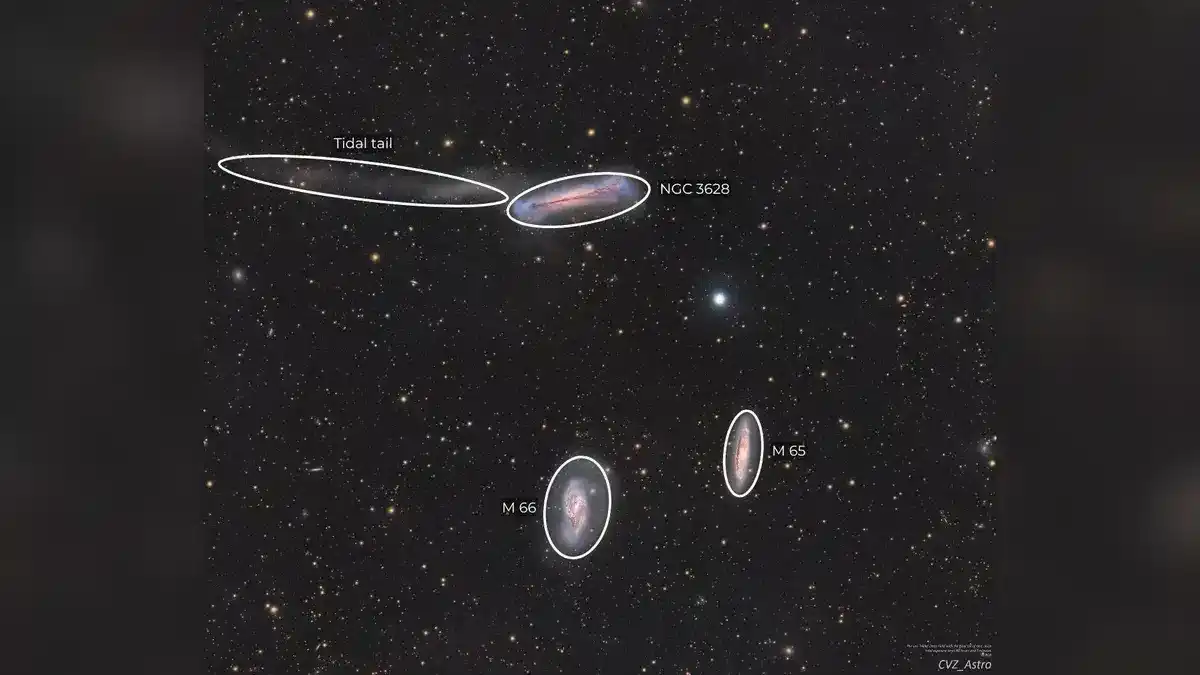
Image credit: ing. Cornelis van Zuilen
Eighteen Nights, Over Sixty Hours of Integration
From April 6 onward, Van Zuilen spent 18 clear evenings gathering data, ultimately amassing 85 hours of raw exposures. He retained only 60 hours and 3 minutes that met his strict quality criteria. Each session demanded precise alignment, calibration frames, and repeated long‑exposures to suppress atmospheric distortion and light‑pollution interference. The resulting stack showcases delicate features in M65, M66 and NGC 3628, the latter often dubbed the “Hamburger Galaxy” because of its pronounced dust lane.
Post‑processing was performed with PixInsight, where the data were combined, calibrated and enhanced to bring out faint structures throughout the field. The software’s advanced algorithms allowed the detection of numerous low‑brightness galaxies that would otherwise remain invisible.
More Than Five Hundred Galaxies Revealed
Applying a PixInsight galaxy‑identification script, Van Zuilen catalogued 548 known galaxies within the final image, a testament to the depth achieved by his integration time. The dense population highlights the richness of the Leo Constellation and provides context for the tidal interactions shaping NGC 3628, a topic under study by NASA and the National Science Foundation.
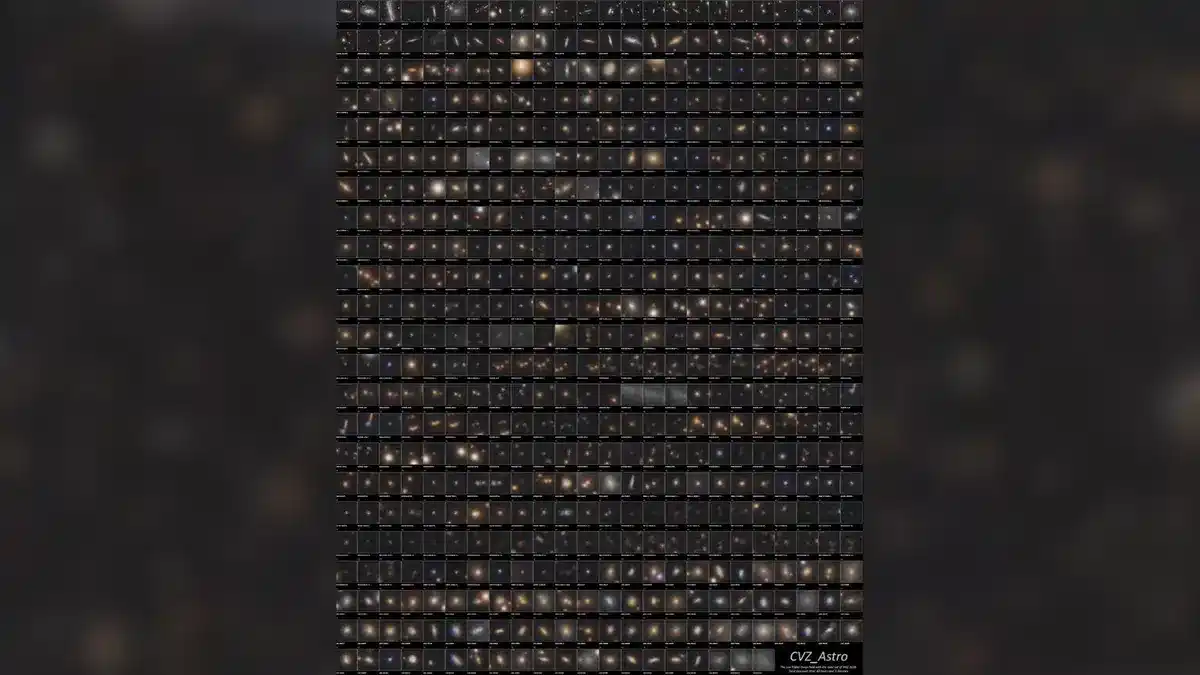
Image credit: ing. Cornelis van Zuilen
Van Zuilen expressed his enthusiasm for the outcome, noting that the image not only satisfies an artistic vision but also serves as a resource for both professional and amateur astronomers eager to explore galactic dynamics.
Tools and Techniques Behind the Portrait
The project’s success rests on a synergy of precise optics, a sensitive detector, and sophisticated processing software. The Askar 103APO delivers the focal length required to isolate fine spiral features, while the ZWO ASI533MC Pro provides high quantum efficiency and minimal read‑noise, essential for capturing the faint glow of distant structures. By accumulating exposures across many nights, Van Zuilen demonstrated how methodical, patient imaging can reveal signals that short‑term observations miss.
This work underscores that with perseverance and appropriate equipment, significant astronomical contributions can emerge from locations far removed from traditional research sites, inspiring a new generation of sky‑watchers to blend scientific inquiry with visual artistry.
This article has been fact checked for accuracy, with information verified against reputable sources. Learn more about us and our editorial process.
Last reviewed on .
Article history
- Latest version
Reference(s)
- Wood, Anthony. “Astrophotographer captures breathtaking view of 548 galaxies from a balcony.”, June 3, 2026 Space <https://www.space.com/stargazing/astrophotography/astrophotographer-captures-breathtaking-view-of-548-galaxies-from-a-balcony>.
Cite this page:
- Posted by Aisha Ahmed