This New Radio Telescope Just Lit Up The Universe Like Never Before With Stunning First Observations
Next-gen radio telescope prototype achieves ’first light,’ heralding North America’s most powerful astronomical observatory
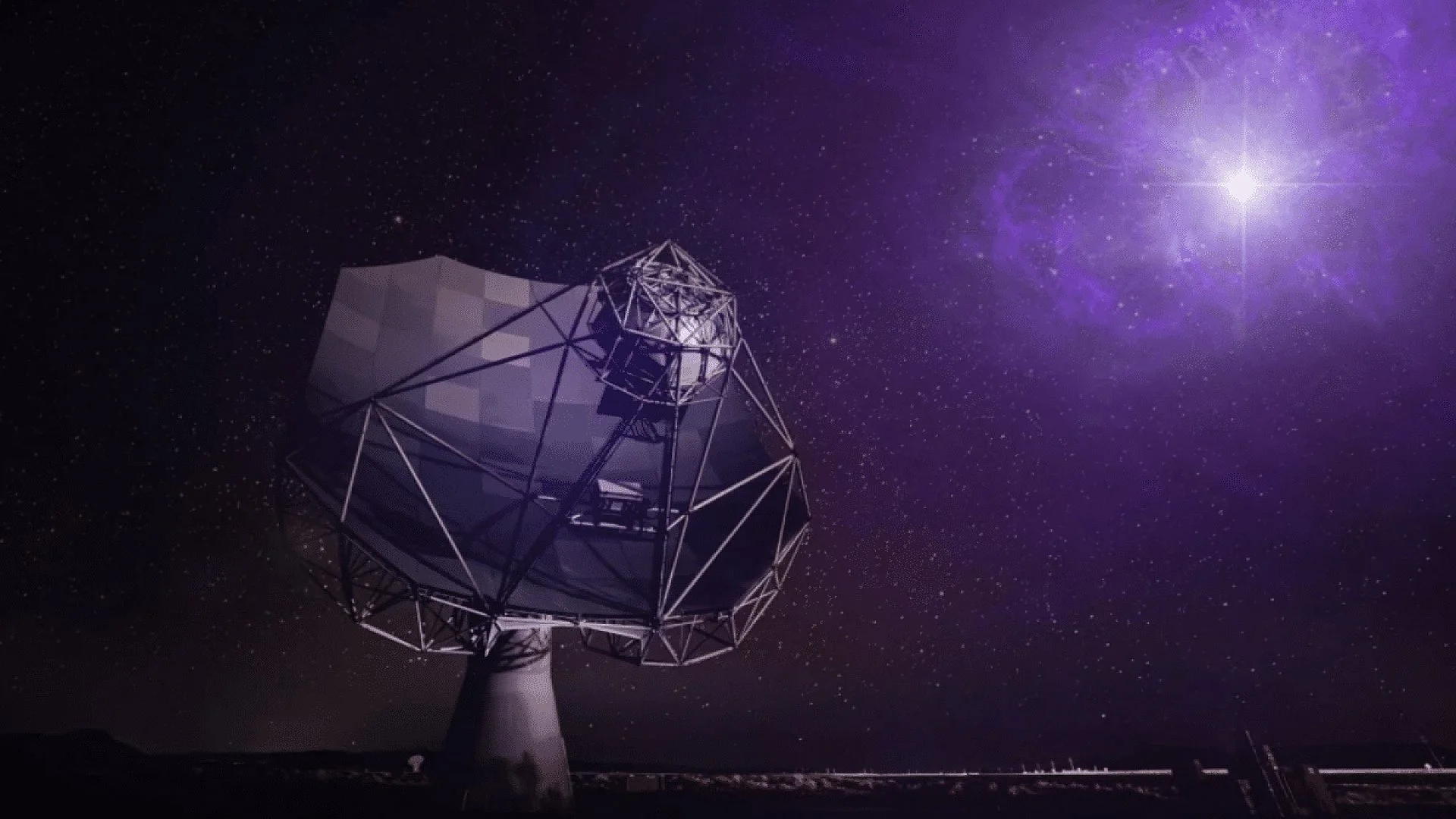
The prototype for the next‑generation Very Large Array (ngVLA) has recorded its inaugural observations, a milestone that signals the transition from construction to testing for the ambitious radio‑telescope project. Announced by NSF NRAO, the achievement paves the way for an instrument poised to reshape our astronomical perspective.
Radio Astronomy Steps Into a New Chapter
After more than four decades of pioneering work with the original Very Large Array (VLA) in New Mexico, the scientific community is gearing up for a far more powerful system. A single ngVLA antenna, positioned alongside the VLA’s historic site, has completed both solo scans and joint observations with the existing 27 dishes. Early test runs targeted familiar sources such as the Sun and the Crab Nebula, confirming the prototype’s accuracy and stability.
“This milestone reflects the leadership and expertise we’ve tapped into amongst NRAO staff, our contractors, and the U.S. and international scientific community,” said Tony Beasley, Director of NSF NRAO. The antenna serves as a tangible step toward a full‑scale network of 244 dishes that will eventually stretch across North America.
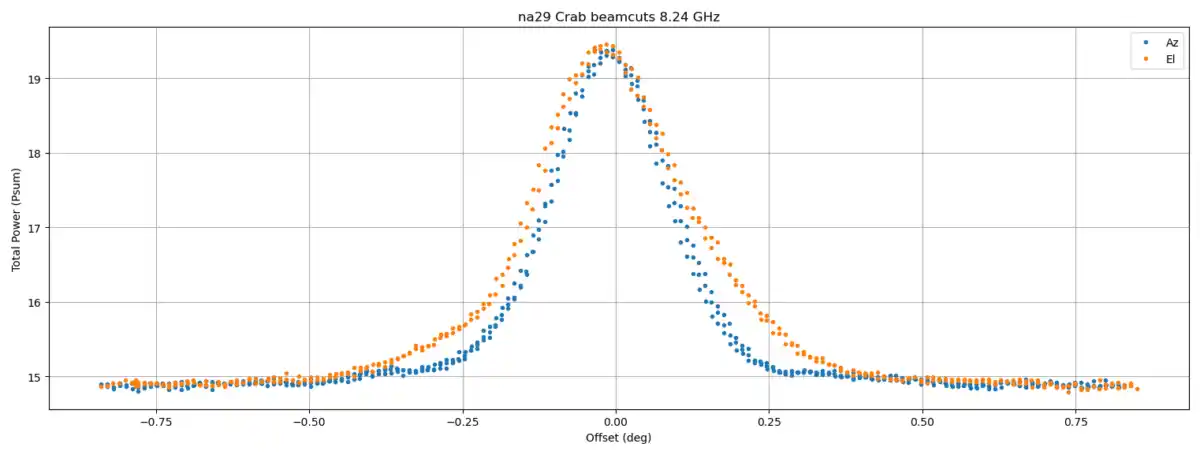
Credit: NSF/AUI/NSF NRAO
Prototype Joins Forces With Existing VLA
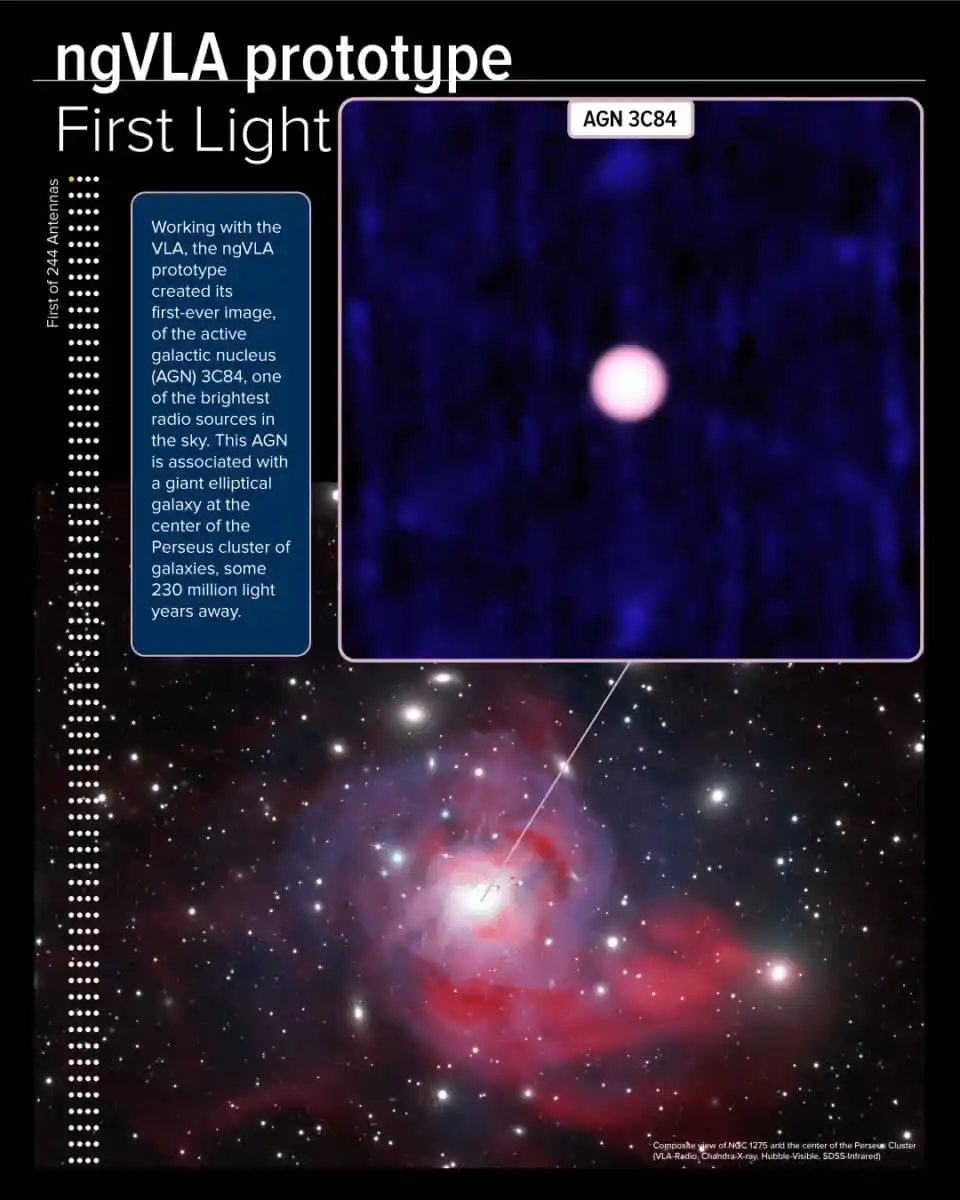
The most compelling demonstration came when the new antenna was added as a “28th element” to the VLA. “We used the ngVLA prototype as the ‘28th antenna’ with the full VLA,” explained Chris Carilli, an NSF NRAO scientist who helped coordinate the test. Together the combined array targeted Perseus A, a bright active galactic nucleus roughly 230 million light‑years distant. Paul Demorest, also with NSF NRAO, noted that the prototype integrated seamlessly, becoming “the newest element in one of the world’s most powerful radio telescopes.” This joint observation validated both hardware and software pathways essential for the future continent‑spanning configuration.
A Technological Leap and Grand Vision
When fully realized, the ngVLA will deliver sensitivity and spatial resolution that exceed the capabilities of the Atacama Large Millimeter/submillimeter Array (ALMA) at similar wavelengths. The planned network of 244 antennas will span more than 8,045 kilometers (5,000 miles) across the continent, offering roughly ten times the collecting area and resolution of the current VLA. Such an expansion will empower researchers to probe distant galaxies, black holes, and cosmic magnetic fields with unprecedented detail.
Nigel Sharp, an NSF program director, highlighted the broader impact: “This prototype antenna will prove useful for a wide range of projects because it provides high precision at a relatively low cost. The ngVLA has the potential to yield powerful new capabilities as the flagship instrument for radio astronomy, and its technological success will enable benefits for other fields of science and even new commercial applications.”
Economic and Educational Ripple Effects
Beyond scientific ambition, the ngVLA initiative promises tangible benefits for New Mexico. Construction activities, long‑term staffing, and visitor traffic are expected to boost the regional economy, while outreach and training programs aim to inspire future engineers and scientists. NSF NRAO is also expanding its footprint in the state with additional offices in Albuquerque and a new headquarters at New Mexico Tech in Socorro.
In the weeks ahead, engineers will continue refining the prototype, moving it toward a broader suite of astronomical measurements. Each incremental test brings the continental array nearer to delivering the transformative power and precision that will define the next generation of radio astronomy.
This article has been fact checked for accuracy, with information verified against reputable sources. Learn more about us and our editorial process.
Last reviewed on .
Article history
- Latest version
Reference(s)
- “NSF NRAO Leads Future of U.S. Radio Astronomy with First Light from Next Generation Very Large Array Prototype - National Radio Astronomy Observatory.”, May 18, 2026 National Radio Astronomy Observatory <https://public.nrao.edu/news/nsf-nrao-leads-future-of-u-s-radio-astronomy-with-first-light-from-next-generation-very-large-array-prototype/>.
Cite this page:
- Posted by Aisha Ahmed