This Mysterious Red Object 11.8 Billion Light-Years Away May Solve One of Astronomy’s Biggest Puzzles
This peculiar entity defies all expectations… yet NASA has just stumbled upon it in the nascent cosmos.
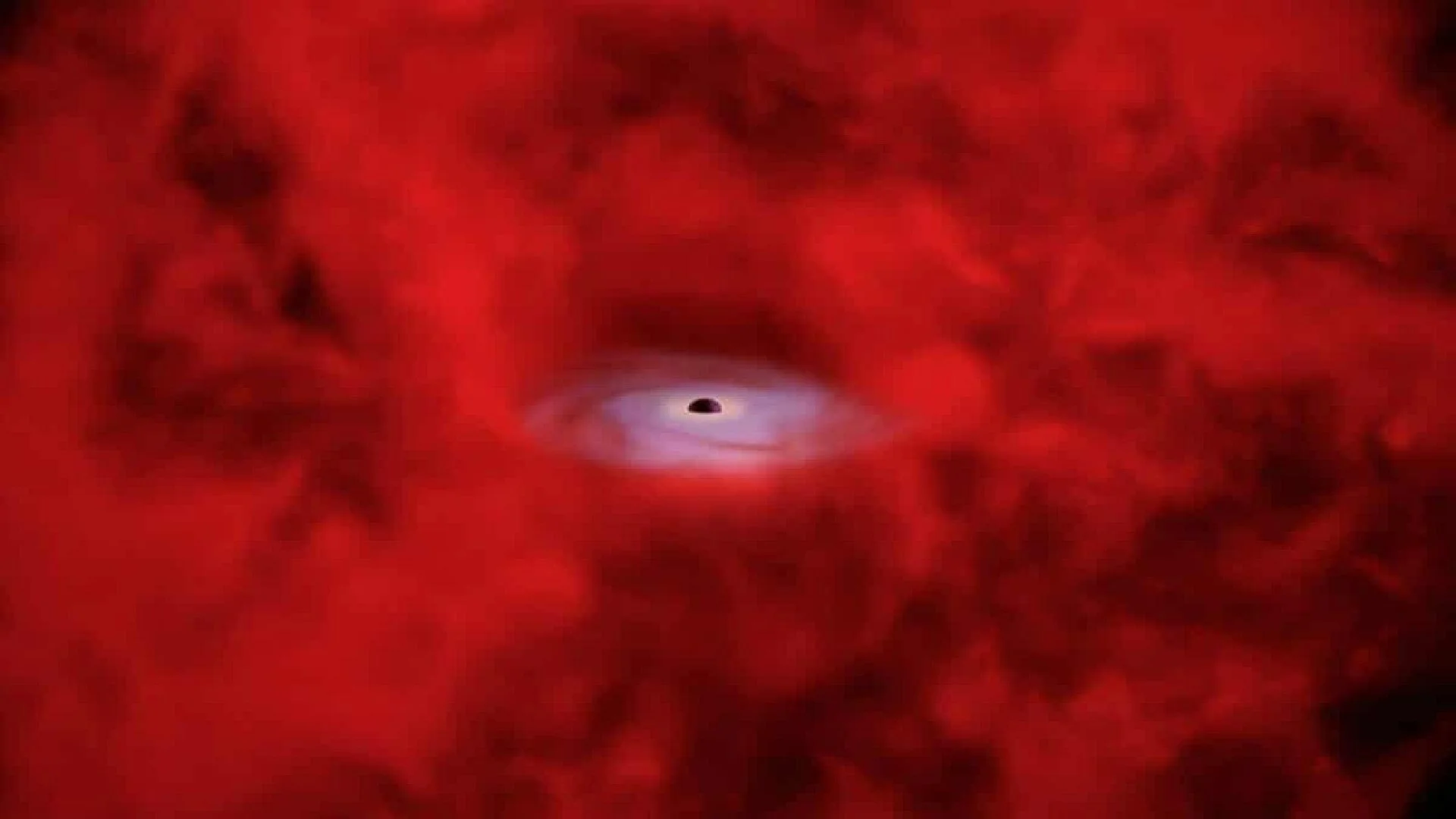
The enigmatic “little red dots” discovered by the James Webb Space Telescope have sparked a heated debate among astronomers. The NASA’s Chandra X-ray Observatory and Webb have combined their data to shed light on these compact, reddish objects. Their unusual properties have puzzled researchers since their discovery, and their existence has significant implications for our understanding of the early universe.
These LRDs are thought to be supermassive black holes embedded in dense gas clouds. The surrounding material absorbs much of the radiation, making them appear dark and red, even when they’re super active on the inside. This interpretation has led to the “black hole star” scenario, where the object’s appearance mimics a stellar atmosphere while concealing a rapidly growing black hole at its core.
A Break in the Pattern
The object 3DHST-AEGIS-12014 stands out from the rest. It shares the same characteristics as other LRDs but emits detectable X-rays. This discovery has opened up new avenues for research and has the potential to reshape current models of galaxy evolution and black hole growth.
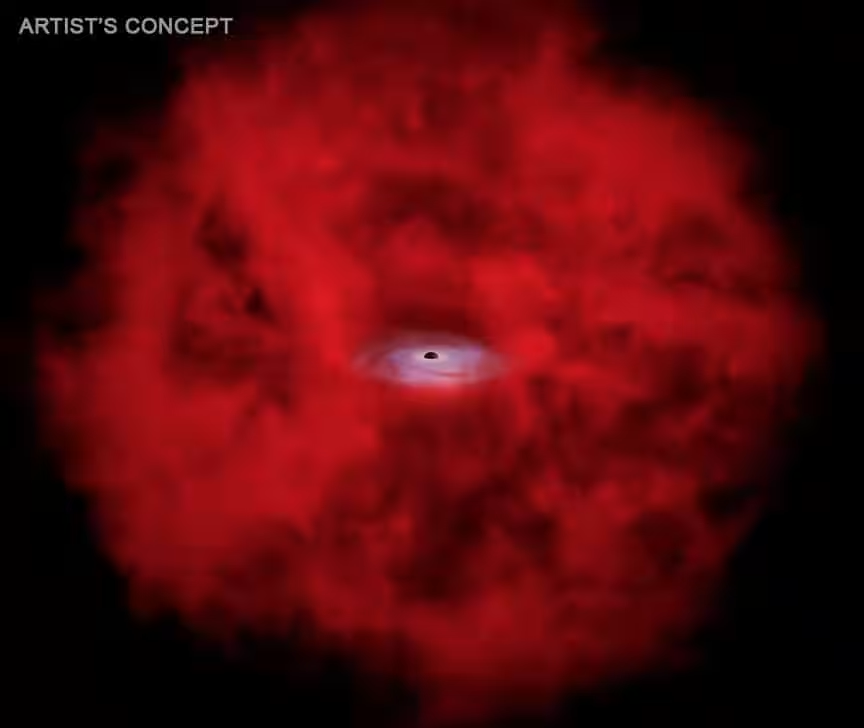
Researchers propose that this “x-ray dot” represents a transitional phase. In this model, a black hole initially buried in dense gas begins to consume its surroundings. The study indicates that gaps form in the gas cloud, allowing X-rays from infalling material to escape intermittently.
The Next Frontier
Future observations are expected to clarify the nature of LRDs. If confirmed, the “black hole star” scenario would provide the strongest evidence yet linking LRDs to black hole growth. An alternative explanation remains under consideration, with the object potentially being a conventional growing black hole hidden behind an unusual type of dust.
This article has been fact checked for accuracy, with information verified against reputable sources. Learn more about us and our editorial process.
Last reviewed on .
Article history
- Latest version
Cite this page:
- Posted by Aisha Ahmed