A Nearly Invisible Energy From Dark Matter Could Explain How the First Black Holes Formed So Fast
For decades, researchers have pondered the rapid formation of supermassive black holes. A recent theory suggests an unseen force might have influenced their development right from the start.
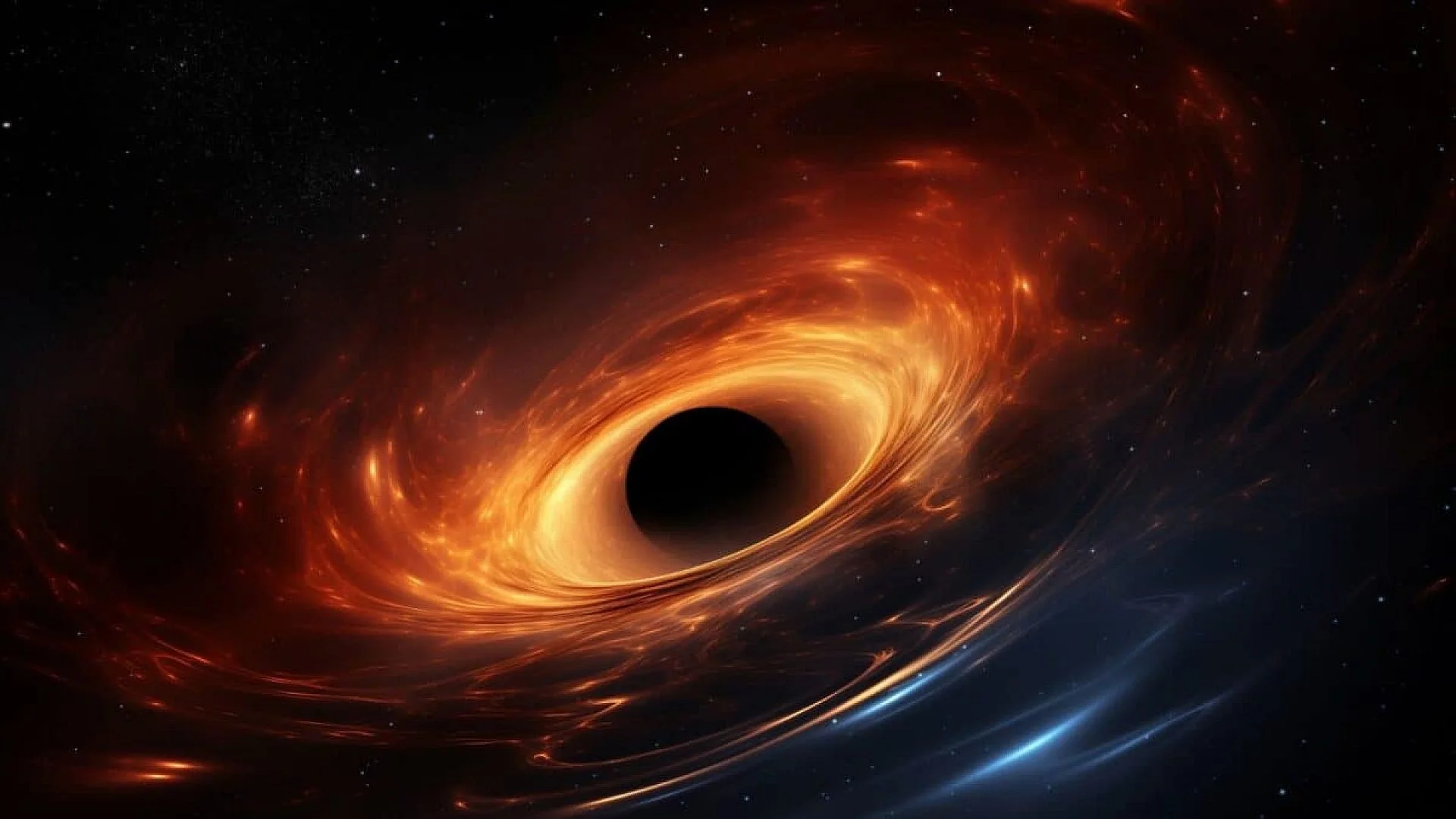
Unveiling the Secrets of the Universe’s First Supermassive Black Holes
A groundbreaking study has shed new light on the formation of the universe’s first supermassive black holes, revealing that decaying dark matter may have played a crucial role in their creation. This discovery could explain why these massive objects appeared so early in the universe’s history, challenging our current understanding of their growth.
Researchers from the University of California, Riverside and their collaborators have been studying data from the James Webb Space Telescope, which has revealed the presence of massive black holes in the early universe. This finding contradicts traditional models of black hole growth, which suggest that they should have formed more slowly.
The Tiny Spark That Ignited a Cosmic Chain Reaction
According to Yash Aggarwal, each decaying dark matter particle releases a minuscule amount of energy, equivalent to about a billion trillionth of what you’d get from a AA battery. While this may seem insignificant, in the early universe, it was enough to trigger a chain reaction that led to the formation of the first black holes.
“Our study suggests that decaying dark matter could profoundly reshape the evolution of the first stars and galaxies, with far-reaching effects across the universe,” he stated.
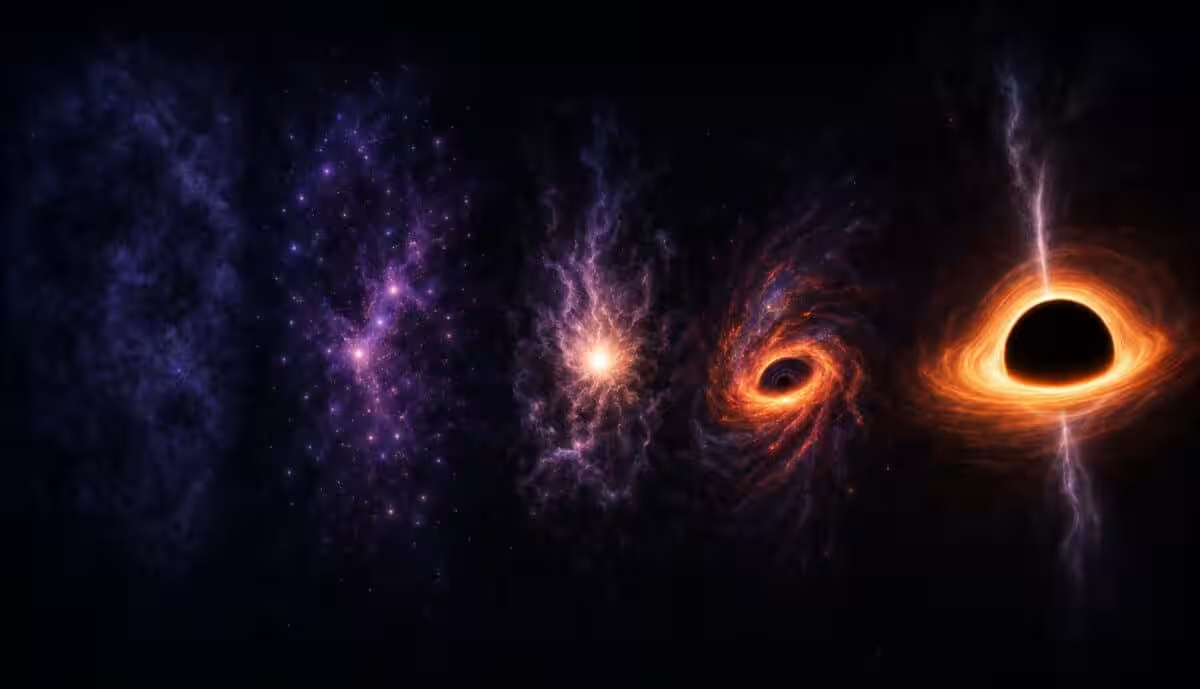
In the early universe, galaxies were essentially clouds of pure hydrogen gas, which were extremely sensitive to even the slightest energy input. This sensitivity made them react to the decay of dark matter particles, leading to a rapid collapse under gravity.
Early Galaxies as Natural Detectors
According to Dr. Flip Tanedo, the first galaxies acted like natural detectors, reacting to even the smallest energy inputs, including those from dark matter decay. Their sensitivity made them ideal for detecting the effects of dark matter on the formation of cosmic structures.
“The first galaxies are essentially balls of pristine hydrogen gas whose chemistry is incredibly sensitive to atomic-scale energy injection,” he explained. “These are the properties that we want for a dark matter detector — the signature of these ‘detectors’ might be the supermassive black holes that we see today.”
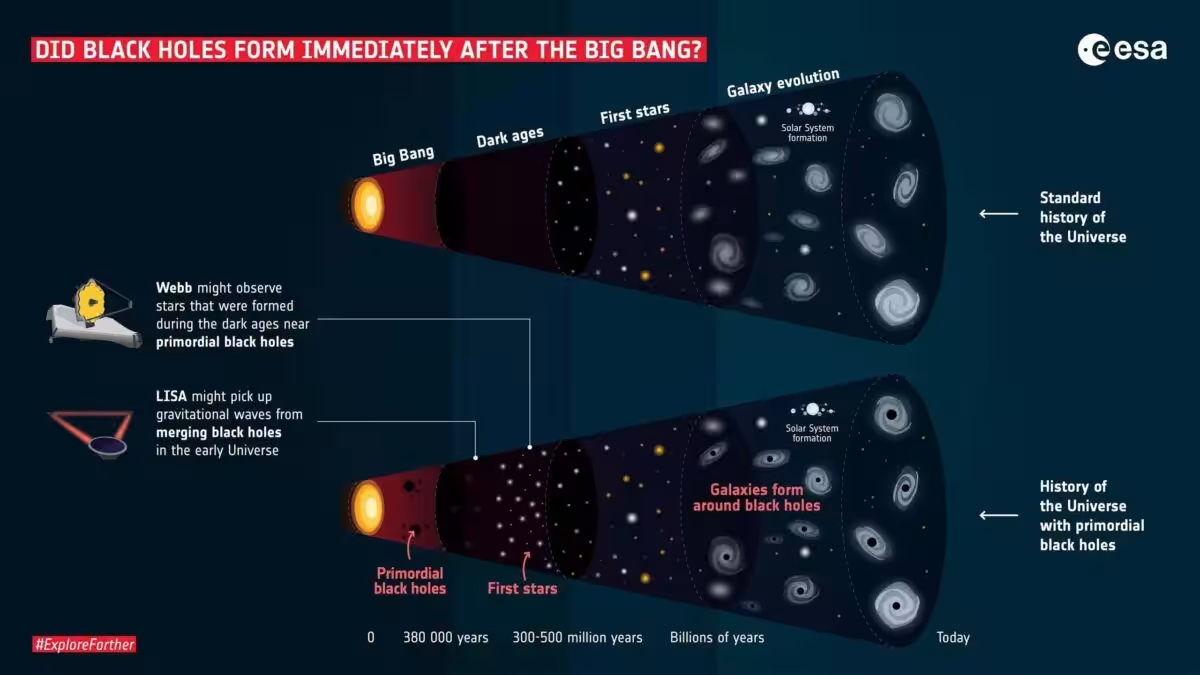
The supermassive black holes we see today may carry traces of those early interactions, providing a unique window into the universe’s history. Scientists are not detecting dark matter directly but rather its possible effects on how cosmic structures formed.
A Narrow Range That Makes It Work
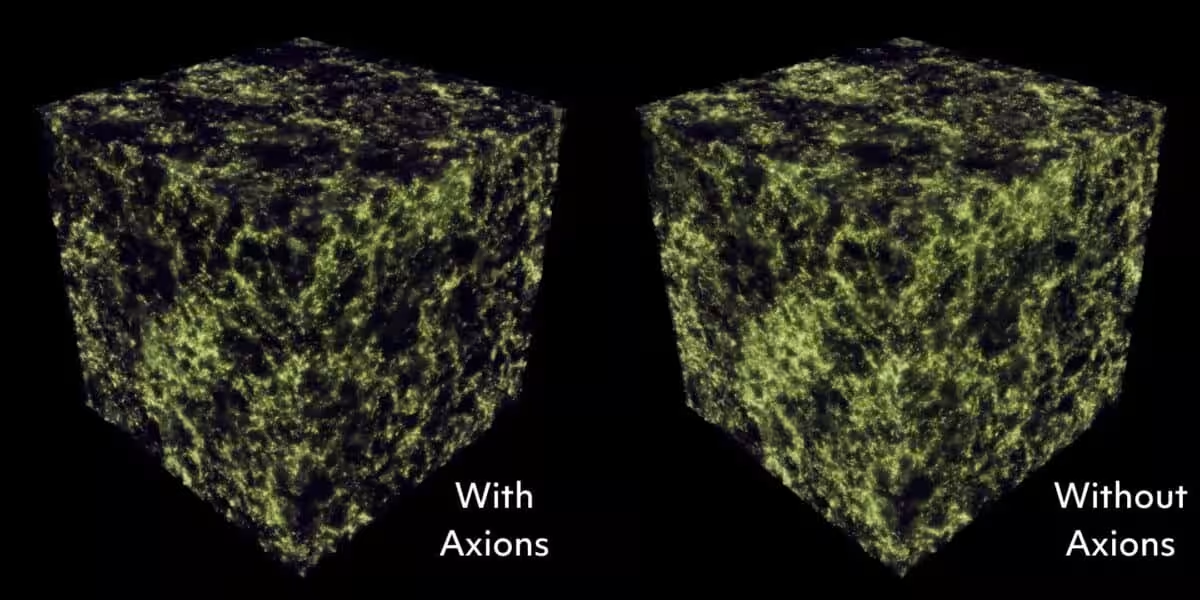
The team modeled how gas behaves when exposed to decaying particles, including candidates like axions. Their results point to a specific mass range, between 24 and 27 electronvolts, where conditions favor rapid collapse.
“We showed that the right dark matter environment can help make the ‘coincidence’ of direct collapse black holes much more likely,” said Dr. Tanedo.
The study indicates that this range makes it easier to form direct collapse black holes, which skip slower growth stages. Published on April 14, 2026, in the Journal of Cosmology and Astroparticle Physics, the work reflects collaboration between astrophysics, cosmology, and particle physics.
“The work stemmed from a series of coincidences that brought the right people together at the right time, including a series of workshops that connected particle physicists, cosmologists, and astrophysicists to discuss the big questions in their field,” he added. “In the same way, the support for interdisciplinary work helped make the ‘coincidence’ leading to this work possible.”
This article has been fact checked for accuracy, with information verified against reputable sources. Learn more about us and our editorial process.
Last reviewed on .
Article history
- Latest version
Reference(s)
- “UCR Profiles - Search & Browse.” <https://profiles.ucr.edu/app/home/profile/yagga003>.
- “UCR Profiles - Search & Browse.” <https://profiles.ucr.edu/app/home/profile/flipt>.
- Aggarwal, Yash., et al. “Direct collapse black hole candidates from decaying dark matter.” Journal of Cosmology and Astroparticle Physics, vol. 2026, no. 04, April 14, 2026, pp. 034 IOP Publishing, doi: 10.1088/1475-7516/2026/04/034. <https://iopscience.iop.org/article/10.1088/1475-7516/2026/04/034>.
Cite this page:
- Posted by Aisha Ahmed