Ancient Gold and Silver Hoard Discovered Beneath Thailand’s 1,300-Year-Old Reclining Buddha
A routine construction unearthed a hidden treasure beneath an ancient statue, prompting archaeologists to probe a centuries‑old mystery.
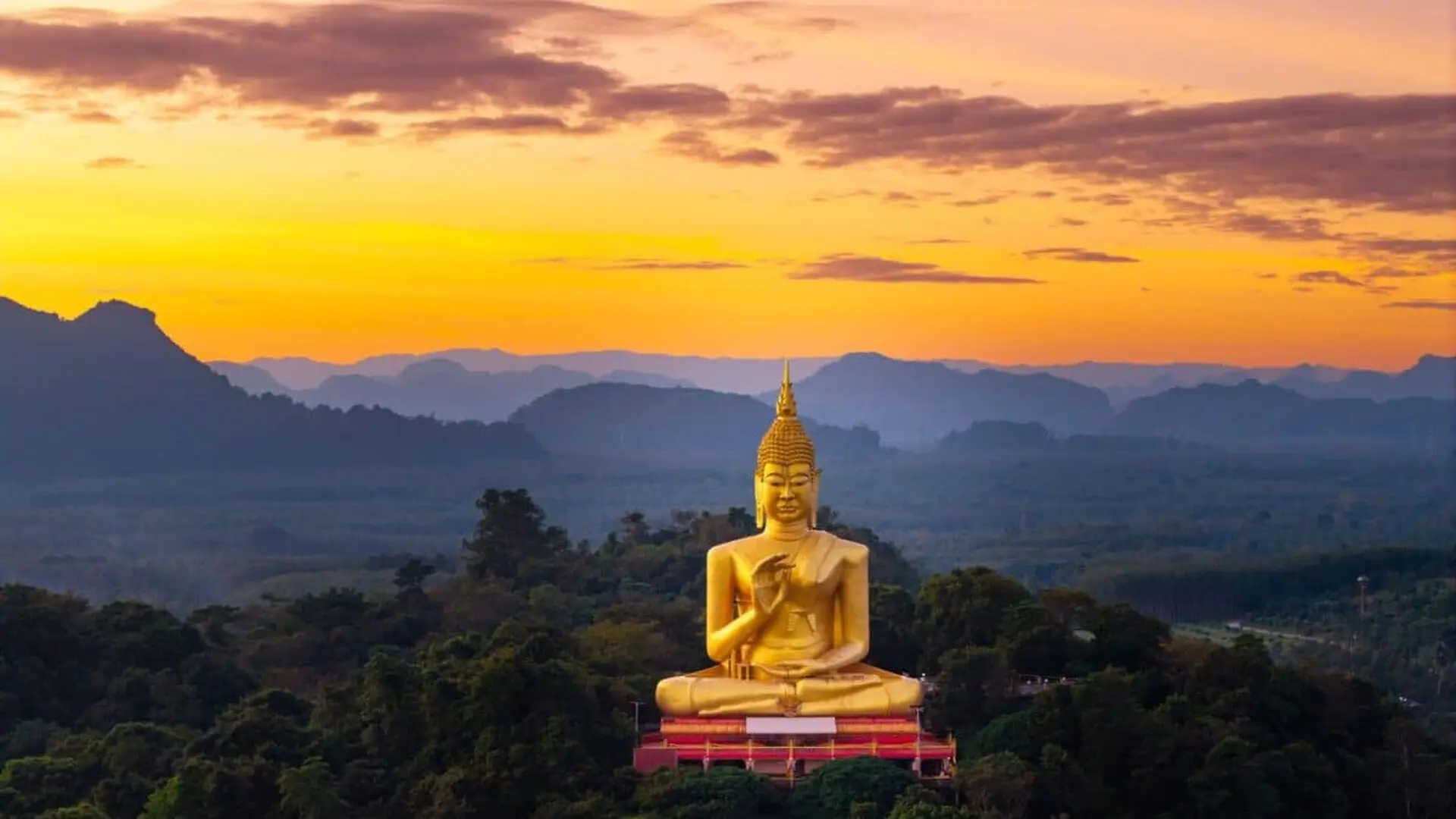
During routine drainage work at a historic temple in Thailand, workers stumbled upon a concealed cache of ancient ornaments. The find includes thirty‑three items fashioned from gold, silver and bronze, each dated to roughly 1,300 years ago.
The artifacts were discovered at the Wat Thammachak Sema Ram temple complex while conservation crews were tending the Phra Non archaeological zone. The site’s centerpiece is a sandstone reclining Buddha, measuring about 43 feet in length and believed to have been erected around 657 A.D., making it Thailand’s longest and oldest representation of the figure.
Excavation deepened to more than four feet beneath the surface, where a ceramic jar was uncovered. Inside lay a collection of ornaments linked to the Dvaravati era, featuring gold rings, silver earrings and distinctive bronze hoop earrings.
According to a statement from Thailand’s Fine Arts Department, the bronze earrings display stylistic parallels with other Dvaravati‑period pieces found nationwide. Following the initial container, archaeologists broadened the search around the Buddha statue and recovered additional groups of objects.
Buried Wealth Revealed Beneath a Sacred Reclining Figure
The first trove emerged from a modest drainage project. While workers were clearing the area surrounding the reclining Buddha, they unearthed a ceramic vessel packed with dozens of tiny metal pieces.
These items, crafted from a variety of metals, illustrate the diverse craftsmanship of the Dvaravati period, with the bronze earrings standing out for their resemblance to other contemporaneous examples.
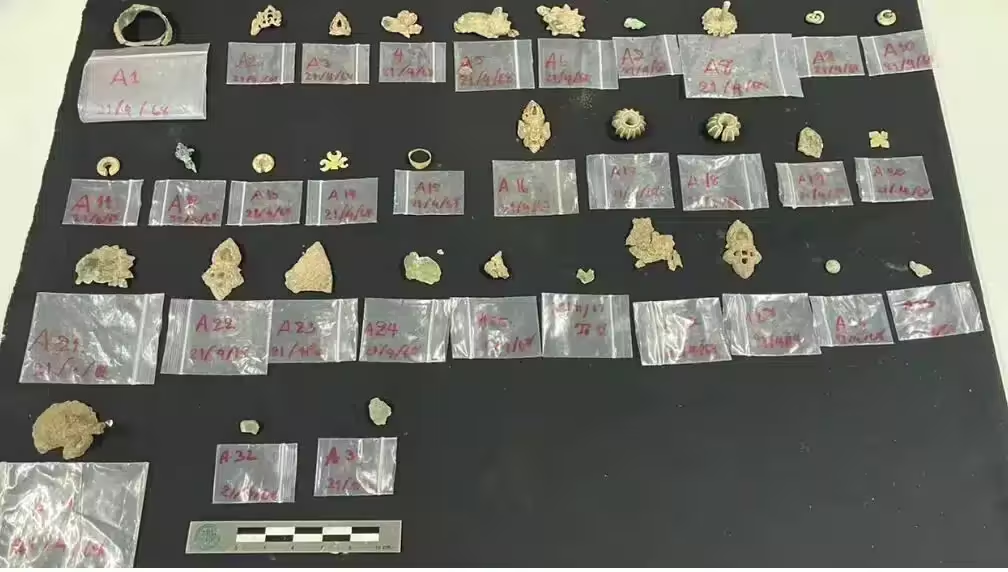
Finding the objects beneath a monument that has survived for more than a millennium adds a new layer of context for scholars studying the community that erected the statue.
Golden Relics Illuminate Early Buddhist Artistry
Among the recovered pieces is a modest rectangular gold sheet, etched with a detailed portrayal of a seated Buddha. Measuring roughly three by five inches, the artifact was fashioned using the repoussé technique, which creates raised designs by hammering the metal from the reverse side.
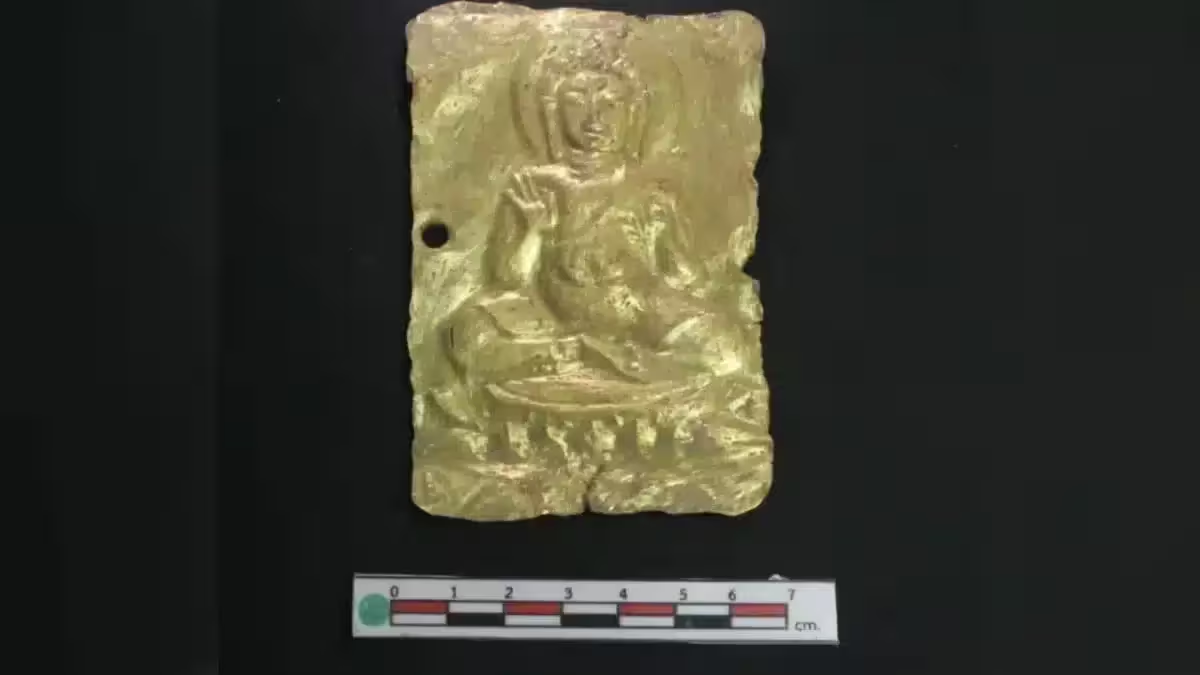
The depiction shows the Buddha in a teaching stance, complete with spiral curls, a prominent halo, elongated earlobes and a robe draped over one shoulder. A tiny perforation near the upper right corner hints that the plaque may have once been suspended or worn as an ornament.
“These finds are extraordinary,” Phanombutr Chantrachot, director‑general of the Fine Arts Department, explained in a release. “They offer significant insights into the craftsmanship and religious devotion of the period,” he added, noting that the perforation may reveal how the gold piece was originally used.
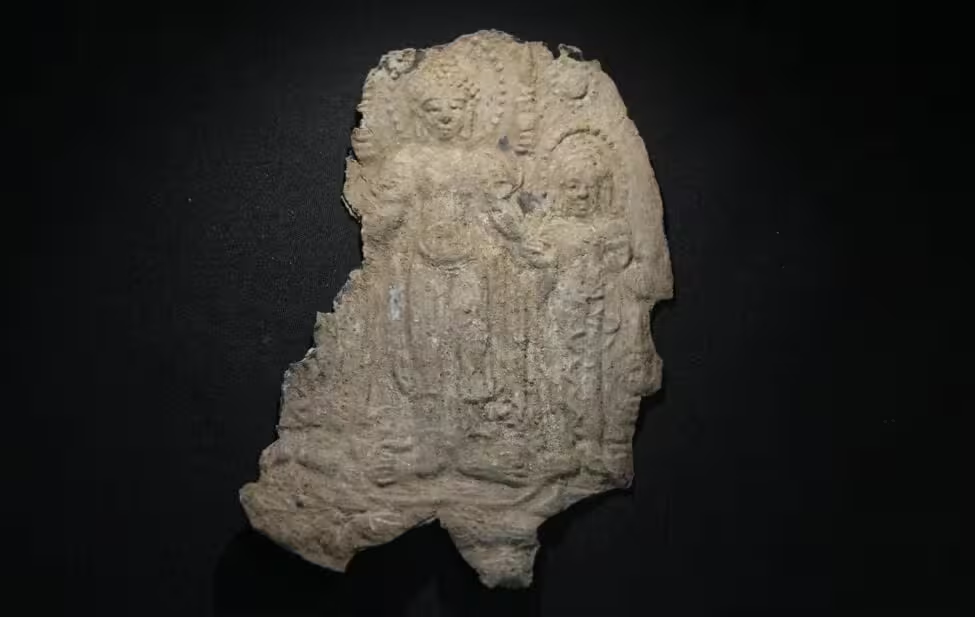
Researchers also cataloged a lead‑tin alloy panel, roughly 4.5 by 6 inches, bearing an image of a standing Buddha framed by two attendants. One attendant is too eroded for identification, while the other may represent a Thai interpretation of the Hindu deity Brahma, according to Chantrachot.
Possible Sacred Offering Discovered Beneath the Buddha’s Head
A third significant find consists of layered metal sheets encased in packed clay with cementitious material between the layers. Damage to the object prevented precise counting of the sheets and obscured several of the engraved motifs.
Its placement—directly behind the reclining Buddha’s head—suggests intentional positioning. Chantrachot indicated that the assemblage could represent a ritual offering, likely deposited as part of a devotional practice linked to the monument.
All of the newly uncovered items are now housed at the Phimai National Museum, where specialists are cataloguing the pieces and undertaking preservation measures to safeguard the fragile artifacts.
This article has been fact checked for accuracy, with information verified against reputable sources. Learn more about us and our editorial process.
Last reviewed on .
Article history
- Latest version
Reference(s)
- “Dvaravati Period: The Cultural Legacy and Iconic Buddha Statues of Ancient Southeast Asia.” Original Buddhas <https://www.originalbuddhas.com/about-buddha-statues/styles-periods/dvaravati-period-buddha-statues?srsltid=AfmBOoruvi8b3aMunqYOsuAJSM2IfUPO4hMNYbk3Ez36gcpX14uLWr2K>.
- “ฮือฮา กรมศิลป์ ขุดพบแผ่นทองคำดุนภาพพระพุทธรูป อายุกว่า 1,300 ปีใต้องค์พระนอน อ.สูงเนิน นครราชสีมา.” <https://www.finearts.go.th/promotion/view/56873-%E0%B8%AE%E0%B8%B7%E0%B8%AD%E0%B8%AE%E0%B8%B2-%E0%B8%81%E0%B8%A3%E0%B8%A1%E0%B8%B8%E0%B8%AA%E0%B8%96%E0%B9%80%E0%B8%94%E0%B9%84%E0%B8%A3%E0%B8%AA%E0%B9%8C%E0%B8%94%E0%B8%B0%E0%B8%99%E0%B8%94%E0%B8%99%E0%B9%81%E0%B8%9C%E0%B8%AD%E0%B8%99%E0%B8%AA%E0%B8%B2%E0%B8%99%E0%B8%96%E0%B9%88%E0%B8%9A%E0%B8%84%E0%B8%B4%E0%B8%99%E0%B8%AA%E0%B8%B2%E0%B8%99%E0%B8%97%E0%B8%B0%E0%B8%A5%E0%B8%8A%E0%B8%8D%E0%B8%94%E0%B8%AD%E0%B8%AD%E0%B8%94%E0%B8%99%E0%B9%86%E0%B9%8C-1-300-%E0%B8%9B%E0%B8%B5%E0%B9%83%E0%B8%95%E0%B9%89%E0%B8%AD%E0%B8%87%E0%B8%84%E0%B9%8C%E0%B8%9E%E0%B8%A3%E0%B8%B0%E0%B8%99%E0%B8%AD%E0%B8%99--%E0%B8%AD-%E0%B8%AA%E0%B8%B9%E0%B8%87%E0%B9%80%E0%B8%99%E0%B8%B4%E0%B8%99-%E0%B8%99%E0%B8%84%E0%B8%A3%E0%B8%A3%E0%B8%B2%E0%B8%8A%E0%B8%AA%E0%B8%B5%E0%B8%A1%E0%B8%B2>.
Cite this page:
- Posted by Vikram Desai