Spain’s New Giant Telescope Array Is Poised To Unlock The Secrets Of The Extreme Universe
The CTAO has completed its four Large-Sized Telescopes in Spain, launching a powerful new era in the study of extreme cosmic events and distant explosions.
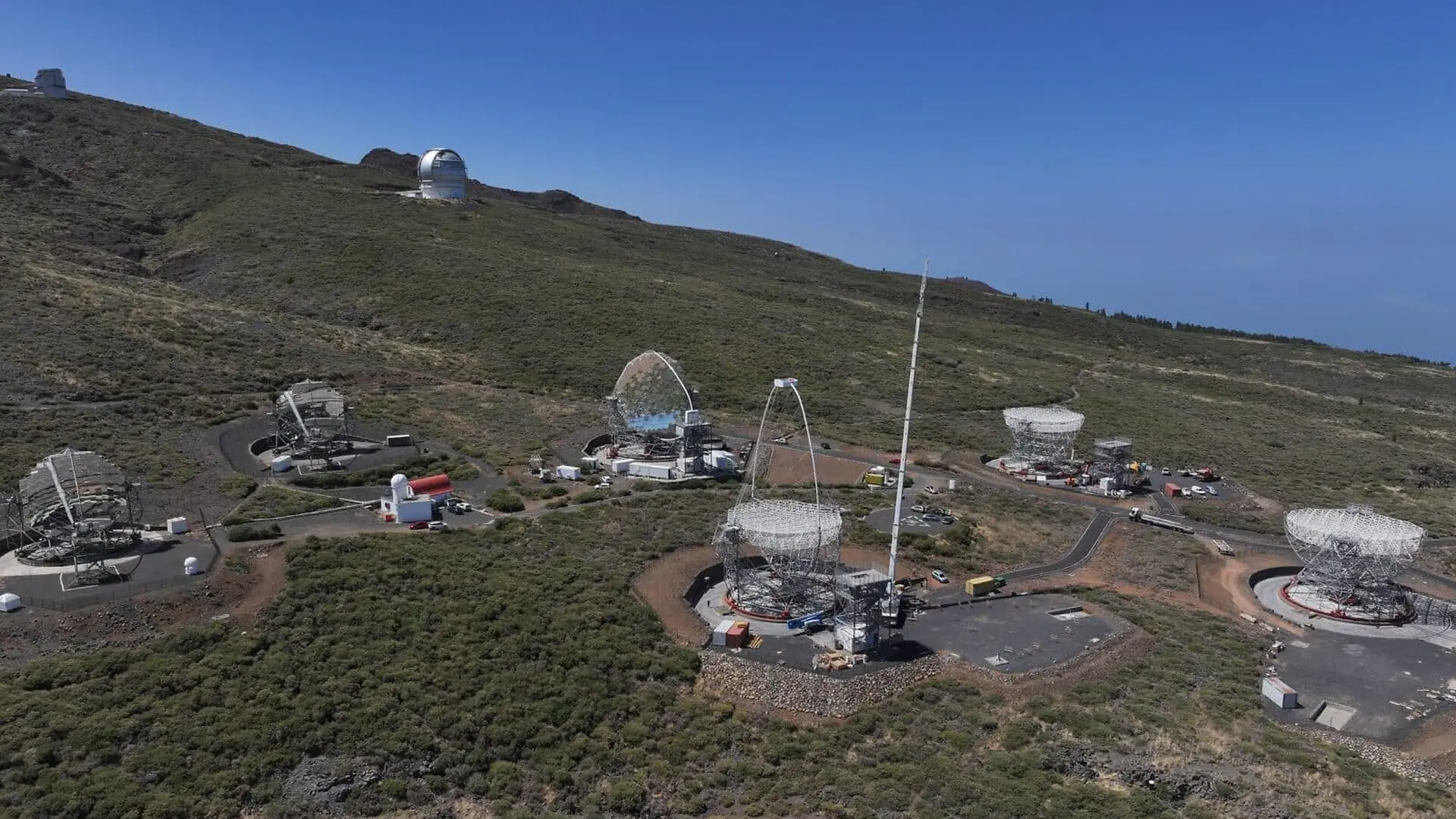
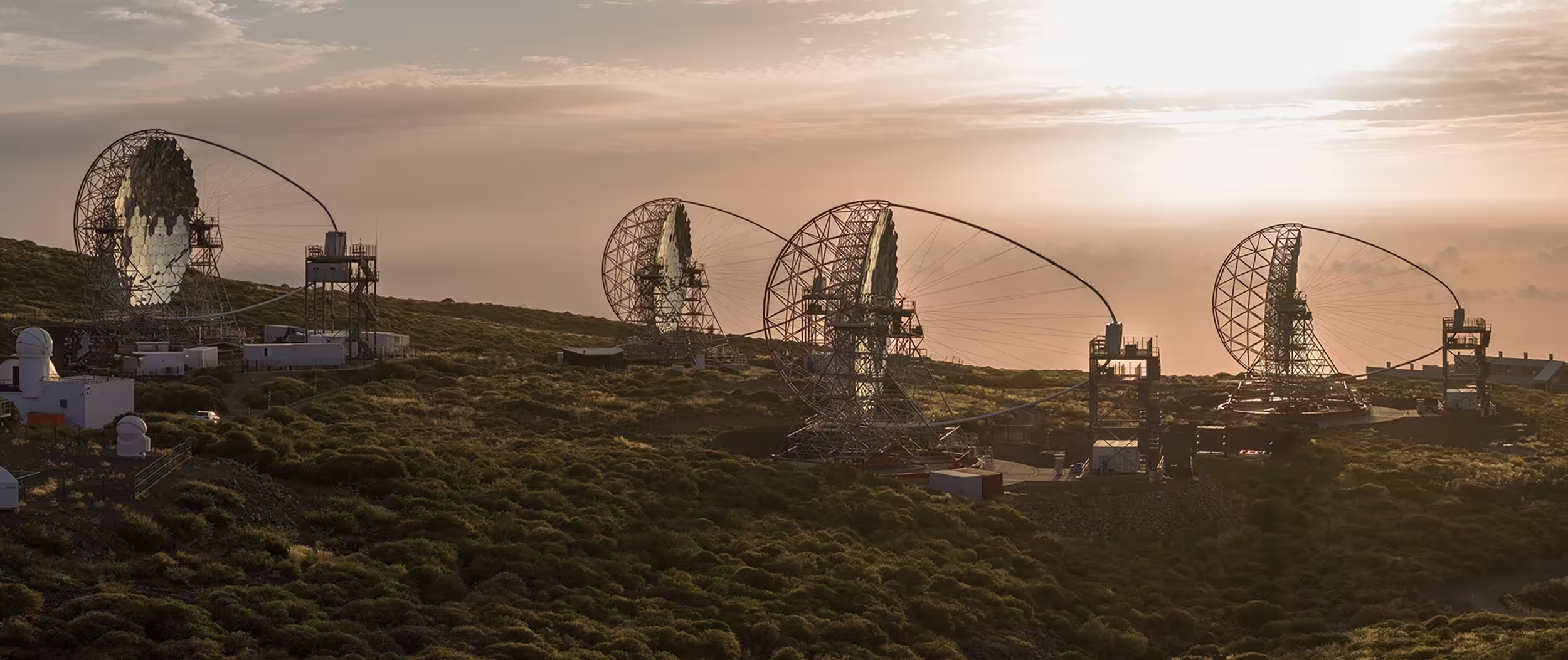
A major milestone in high-energy astrophysics was reached on October 15 as researchers celebrated the completion of the Large-Sized Telescope (LST) sub-array at the Roque de los Muchachos Observatory on the island of La Palma, Spain. This installation, consisting of four massive 23-meter telescopes, forms the low-energy anchor of the Cherenkov Telescope Array Observatory’s (CTAO) northern facility.
The inauguration brought together roughly 250 scientists and officials to mark the culmination of the construction phase. While the structures are now complete, the facility is entering a critical period of technical commissioning and formal calibration before it begins full-scale, routine operations.
Harnessing the Atmosphere as a Particle Detector
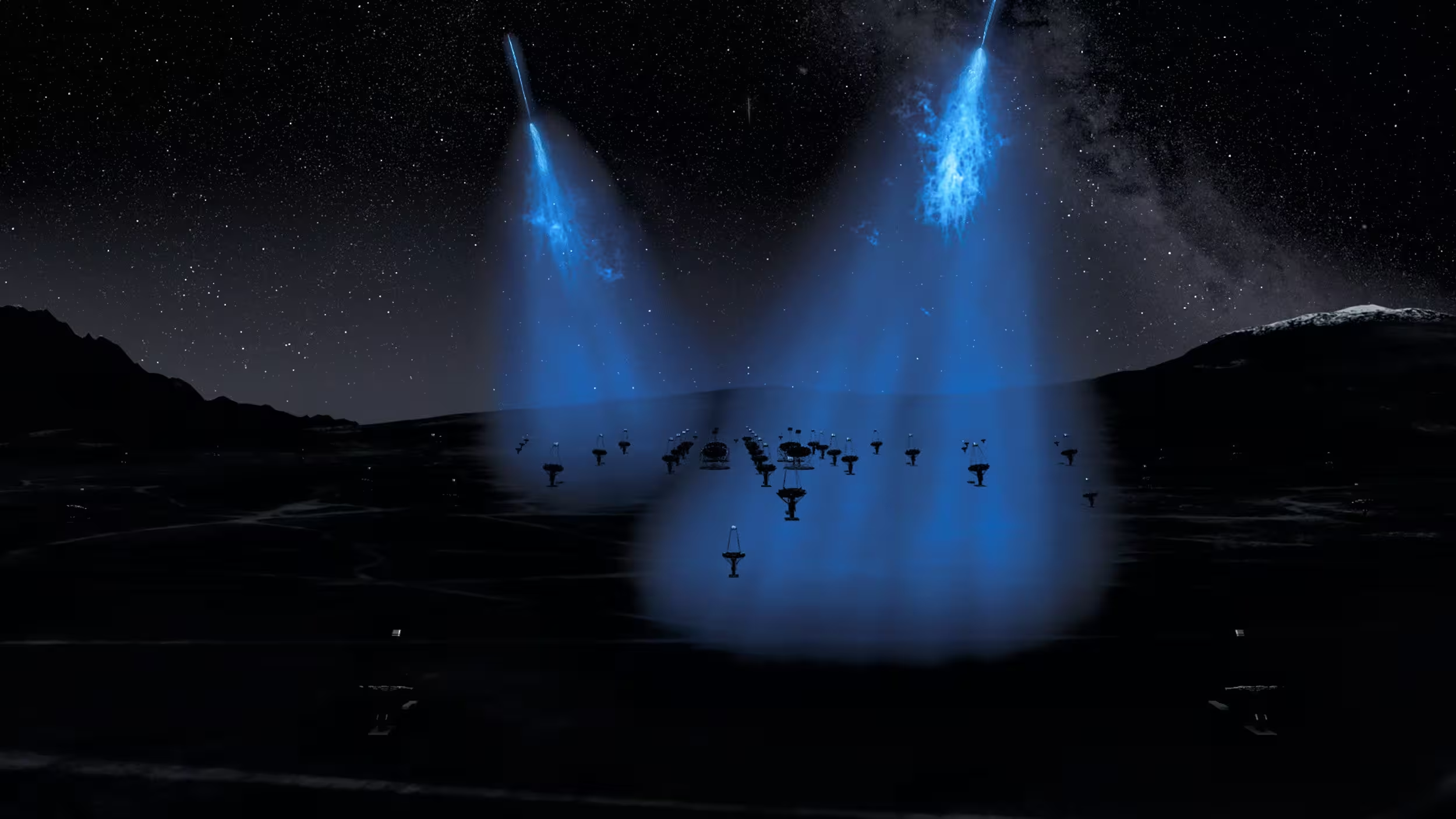
Rather than looking directly for gamma rays, these instruments utilize the Earth’s atmosphere as a massive detection medium. When high-energy cosmic gamma rays strike the upper atmosphere, they trigger cascades of secondary particles that emit brief, faint flashes of Cherenkov light. The telescopes’ primary role is to capture these fleeting optical signals and reconstruct the energy and origin of the incoming cosmic rays.
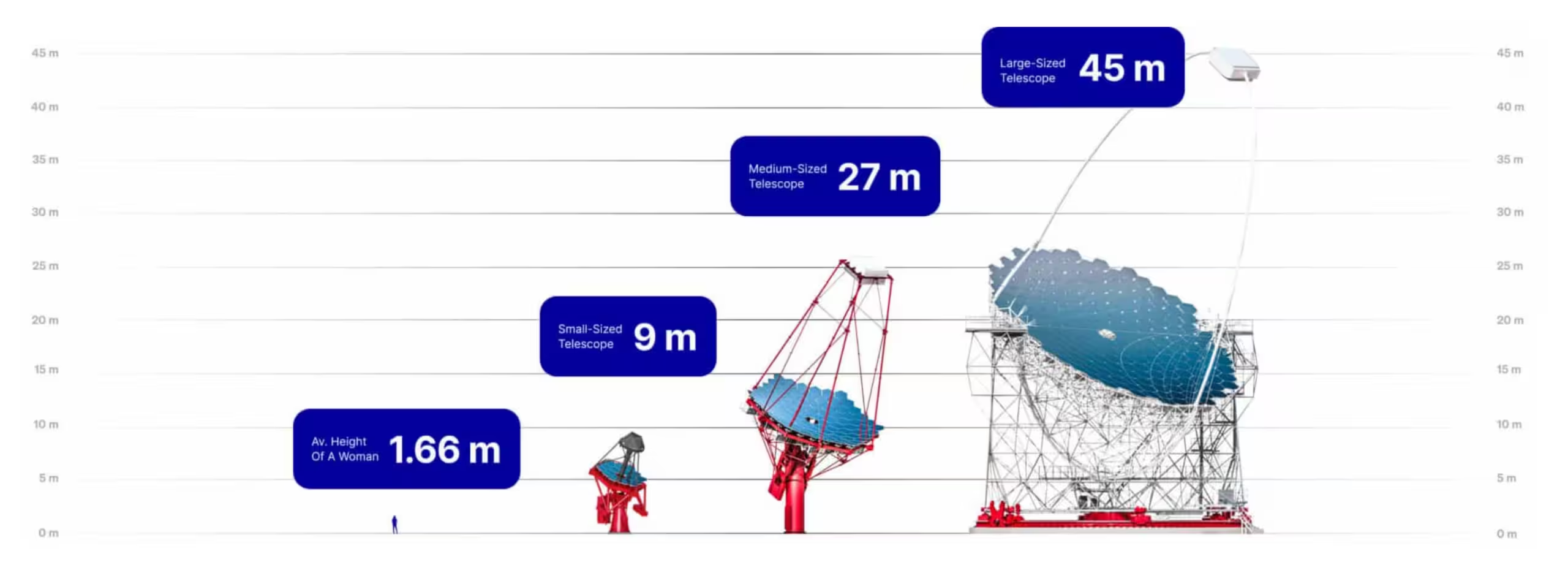
Each of the four LSTs features a parabolic reflector spanning 400 square meters, focused on a camera equipped with 1,855 photomultiplier tubes. By working in tandem, the four-telescope array can observe the same particle shower from multiple angles, significantly enhancing the precision of data reconstruction compared to single-telescope observations. Furthermore, despite their immense size—standing 45 meters tall and weighing 100 tonnes—the telescopes are capable of reorienting toward a target in under 20 seconds, a critical feature for tracking transient phenomena like gamma-ray bursts.
Proven Performance and Future Ambitions
While the three newest additions are undergoing final integration, the first telescope, LST-1, has been operational for several years, proving the efficacy of the design. Its performance was notably validated through observations of the Crab Nebula, a standard calibration source in the field. More recently, LST-1 demonstrated its reach by detecting high-energy emissions from the quasar OP 313, located roughly eight billion light-years away, a feat detailed in research published in Astronomy & Astrophysics earlier this year.
By achieving a low energy threshold—down to approximately 20 gigaelectronvolts—the LSTs are uniquely positioned to study the distant universe. At extremely high energies, gamma rays are often absorbed by background light during their long journey through space. Lower-energy detection effectively bypasses this cosmic filter, potentially allowing scientists to trace the history of high-energy phenomena back to when the universe was less than two billion years old.
Expanding the Global Network
The La Palma site is only one component of the broader CTAO project. Eventually, the observatory plans to deploy more than 60 telescopes across both Northern and Southern Hemisphere sites, with the southern array currently under development in Chile’s Atacama Desert. These arrays will feature varying sizes to cover a vast energy range spanning from 20 GeV to 300 TeV.
As the project transitions into its next phase, the focus remains on standardizing the LST array and ensuring the scientific community has reliable, calibrated access to the data. Beyond standard observations of active galactic nuclei and cosmic accelerators, the project is designed to provide the sensitivity required for high-stakes searches, including the elusive signatures of dark matter.
Further Reading
- Observations of the Crab Nebula and Pulsar with the Large-Sized Telescope Prototype of the Cherenkov Telescope Array(The Astrophysical Journal, 2023)
- Performance of the joint LST-1 and MAGIC observations evaluated with Crab Nebula data(Astronomy & Astrophysics, 2023)
- A detailed study of the very high-energy Crab pulsar emission with the LST-1(Astronomy & Astrophysics, 2024)
- LST-1 and MAGIC Telescopes Shatter Distance Record for the Very High-Energy Blazar OP 313(CTAO LST Collaboration, 2026)
- Science with the Cherenkov Telescope Array(World Scientific, 2019)
This article has been fact checked for accuracy, with information verified against reputable sources. Learn more about us and our editorial process.
Last reviewed on .
Article history
- Latest version
Reference(s)
- Abe, K.., et al. “Detection of the distant quasar OP 313 with the first Large-Sized Telescope of CTAO.” Astronomy & Astrophysics, vol. 712, August 11, 2026, pp. A91 EDP Sciences, doi: 10.1051/0004-6361/202558646. <https://doi.org/10.1051/0004-6361/202558646>.
- Abe, H.., et al. “Observations of the Crab Nebula and Pulsar with the Large-sized Telescope Prototype of the Cherenkov Telescope Array.” The Astrophysical Journal, vol. 956, no. 2, October 10, 2023, pp. 80 American Astronomical Society, doi: 10.3847/1538-4357/ace89d. <https://doi.org/10.3847/1538-4357/ace89d>.
- Abe, H.., et al. “Performance of the joint LST-1 and MAGIC observations evaluated with Crab Nebula data.” Astronomy & Astrophysics, vol. 680, December 8, 2023, pp. A66 EDP Sciences, doi: 10.1051/0004-6361/202346927. <https://doi.org/10.1051/0004-6361/202346927>.
- Abe, K.., et al. “A detailed study of the very high-energy Crab pulsar emission with the LST-1.” Astronomy & Astrophysics, vol. 690, October 8, 2024, pp. A167 EDP Sciences, doi: 10.1051/0004-6361/202450059. <https://doi.org/10.1051/0004-6361/202450059>.
- “CTAO LST Collaboration News.” <https://lst.iac.es/news/lst-magic-detect-OP313-paper>.
- “Science with the Cherenkov Telescope Array.”, February 26, 2018 WORLD SCIENTIFIC, doi: 10.1142/10986. <https://doi.org/10.1142/10986>.
Cite this page:
- Posted by Aisha Ahmed