SpaceX Just Brought A Flown Starship Back To Base For The First Time In History
SpaceX’s historic Starship has officially returned to Starbase, marking a major milestone for the company’s ambitious deep-space rocket program.
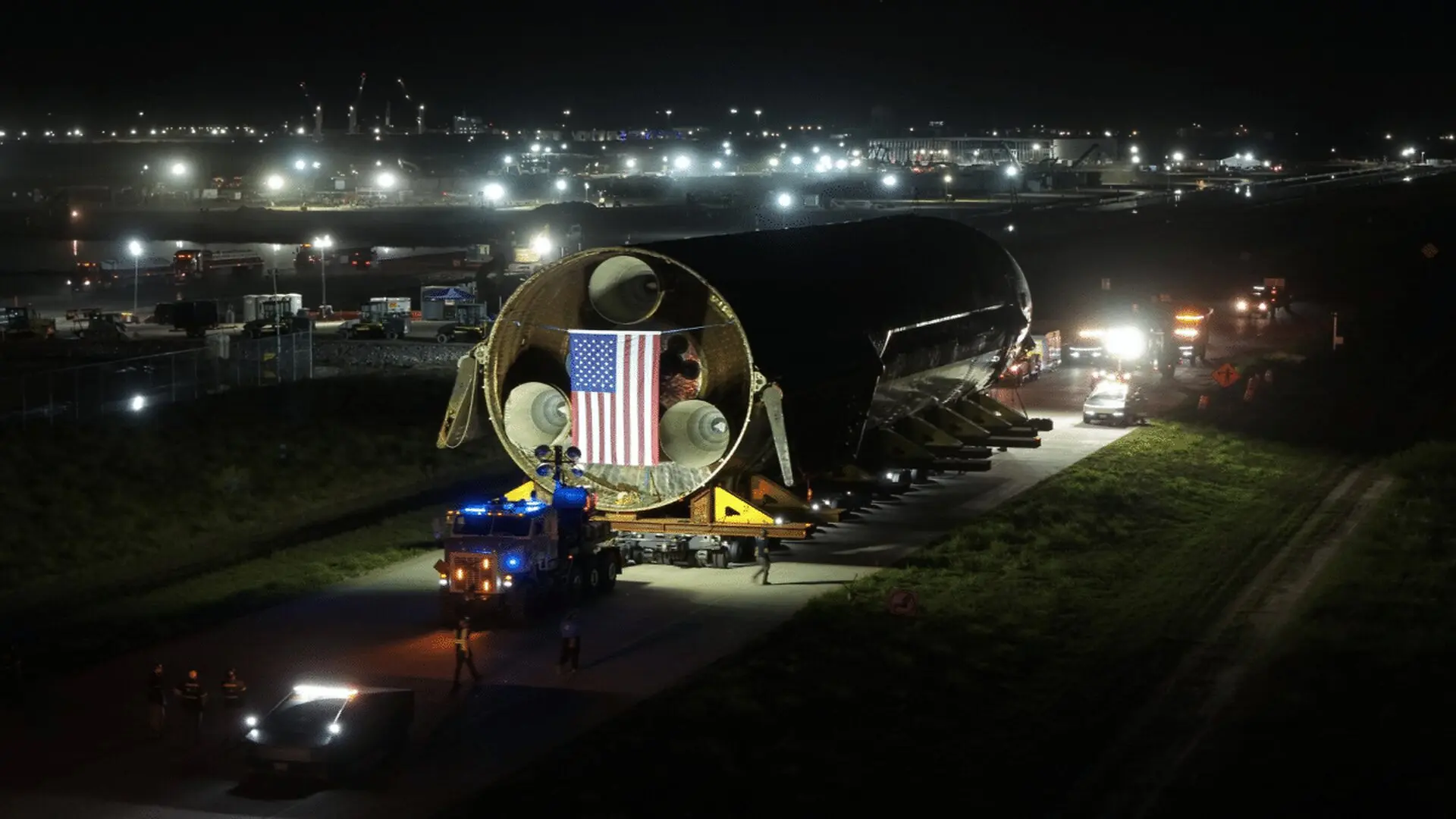
SpaceX has achieved a significant milestone in its ambitious Starship development program, marking the return of Ship 40 to its home base in Starbase, Texas. After a suborbital flight that culminated in a successful ocean splashdown, the upper stage vehicle has been transported back to the company’s Megabay facility, where it now stands alongside three newer Starship vehicles. This recovery represents the first time engineers have gained access to a flight-proven Starship upper stage for a comprehensive physical post-mission analysis.
The journey of Ship 40 began on July 24, 2026, when it launched on the 13th integrated flight test atop a Super Heavy booster. While previous attempts to land or splash down resulted in the destruction of the upper stage upon water contact, Ship 40 remained largely intact. This resilience allowed for a complex, 24-day recovery operation across the Indian Ocean, a process that faced significant risks due to unpredictable sea conditions and even drew public skepticism from CEO Elon Musk regarding the feasibility of its return.
Following a period of assessment near Christmas Island, the vehicle was secured onto the semi-submersible transport ship Forte. After arriving at the Port of Brownsville on October 7, the 171-foot-tall vessel was moved over land to the Starbase site. The opportunity to study a vehicle that has survived the rigors of launch, the vacuum of space, and the intense thermal loads of atmospheric reentry provides SpaceX with empirical data that telemetry alone cannot supply.
The first Starship to return to its launch site, Ship 40’s journey took it across air, space, and sea. Now that it is vertical alongside three other Starships in a Megabay at Starbase, it will provide first-of-its-kind data on a flown Starship heatshield, Raptor engines, avionics, and more.
— SpaceX (@SpaceX) October 13, 2026
Unprecedented Insights into Reentry Hardware
The primary objective for the engineering teams now centers on the physical condition of the spacecraft’s critical systems. According to SpaceX, the analysis of Ship 40 will focus on the thermal protection system, the Raptor engines, and the onboard avionics. Understanding how the heat shield materials reacted to the extreme temperatures of reentry is vital for optimizing future designs and ensuring the long-term reliability of the platform.
By comparing the physical state of the components with the data recorded during the mission, engineers can better calibrate their models for future flight tests. This forensic approach serves as a bridge between theoretical design and the realities of spaceflight, helping to dictate the scope of inspections and maintenance cycles required for the eventual goal of rapid vehicle reuse.
Looking Toward Future Recovery Milestones
While the successful retrieval of Ship 40 provides a wealth of information, the broader objective of the program remains the refinement of recovery techniques. Subsequent missions have already pushed the envelope, with Flight 14 involving the successful deployment of 26 next-generation Starlink V3 satellites during an orbital trajectory, though that specific vehicle did not survive its return to the Pacific Ocean.
The company has already proven it can reliably recover Super Heavy boosters by utilizing the massive mechanical arms on its launch tower. The next frontier involves attempting to apply that same “catch” technology to the upper stage itself. While an official date for the next flight test has not been confirmed, expectations remain high that the next iteration of the program could attempt to recover a Starship without relying on ocean-based recovery operations. For now, Ship 40 serves as a tangible success story and a vital laboratory for the next phase of deep space transportation.
This article has been fact checked for accuracy, with information verified against reputable sources. Learn more about us and our editorial process.
Last reviewed on .
Article history
- Latest version
Cite this page:
- Posted by Divya Iyer