Hidden Oxygen Reservoirs Found Deep Inside Earth’s Magma Could Rewrite History
Scientists have discovered oxygen trapped deep within Earth’s magma, a finding that could explain the mysterious rise of early life on our planet.
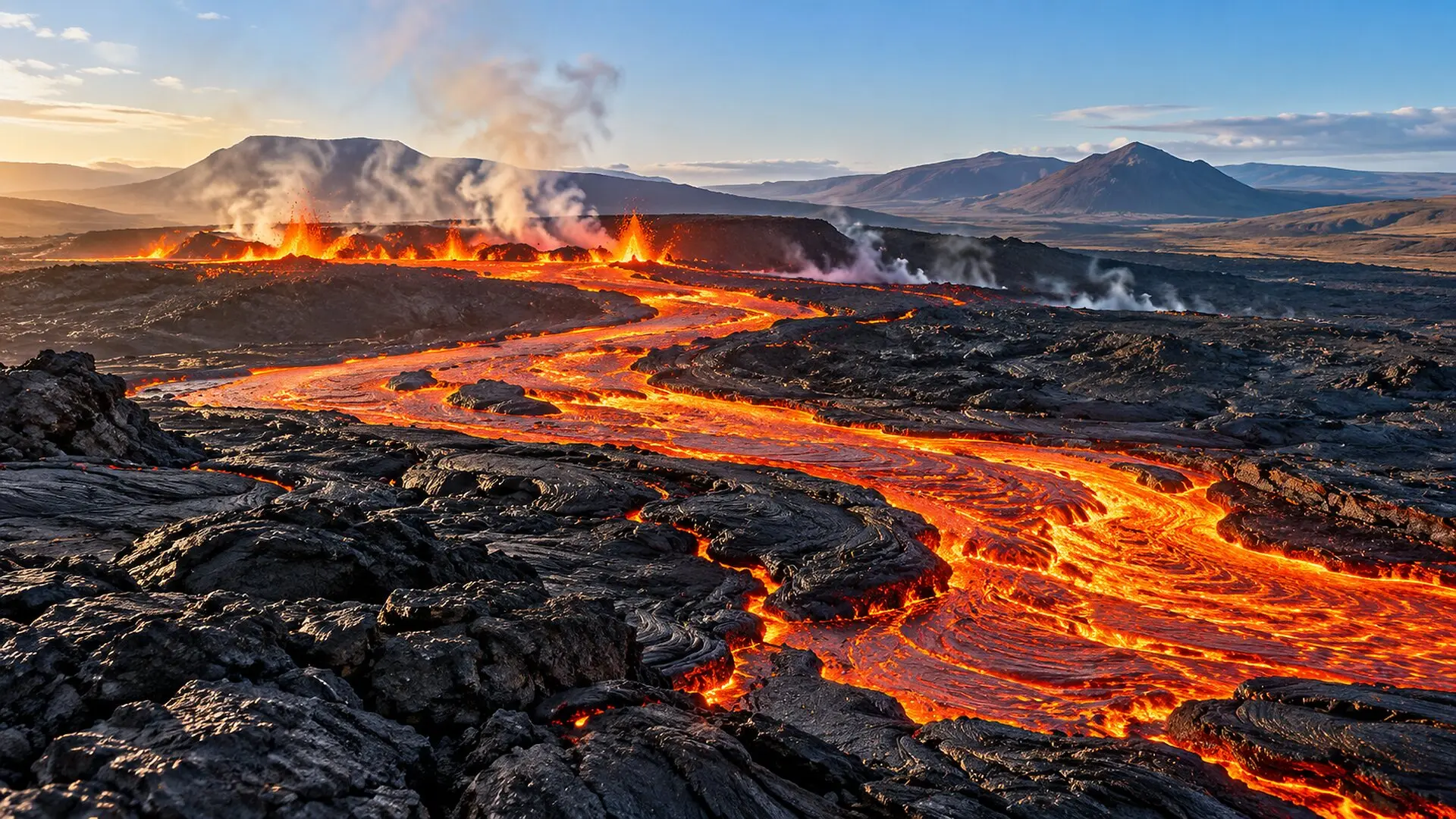
Geoscientists have long operated under the assumption that the oxygen content in Earth’s mantle is strictly dictated by the proportions of other elements within silicate minerals. However, a new study published in National Science Review challenges this conventional chemical accounting, revealing that molten rock may act as a massive, overlooked reservoir for excess oxygen.
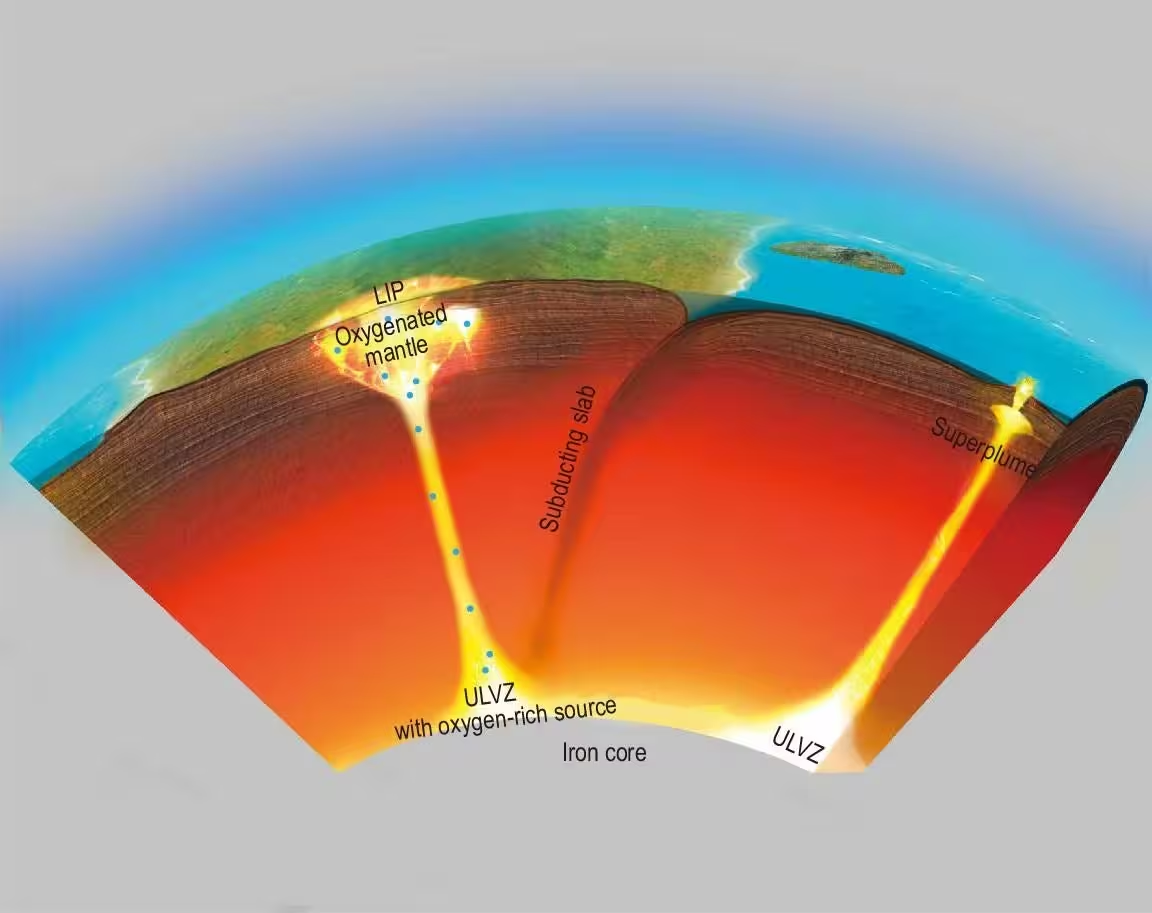
Led by researchers from the Center for High Pressure Science and Technology Advanced Research (HPSTAR), including Yanhao Lin and Ho-Kwang Mao, the team conducted high-pressure experiments that demonstrate how basaltic melts can retain significant quantities of oxygen when exposed to oxidizing conditions. While this discovery does not solve the long-standing mystery of how Earth’s atmosphere became oxygenated, it introduces a potential mechanism for transporting oxidizing power from the deep mantle toward the planet’s surface.
Beyond Conventional Chemical Models
In standard geochemical models, oxygen abundance is typically inferred from the ratios of silicon, magnesium, and iron. Because iron can exist in multiple oxidation states, these calculations often rely on fixed assumptions that may overlook how oxygen behaves under extreme pressure. Unlike volatile components such as water or carbon dioxide, which are known to dissolve in magma and escape as it rises, oxygen has traditionally been viewed as a structural constant tied to other elements.
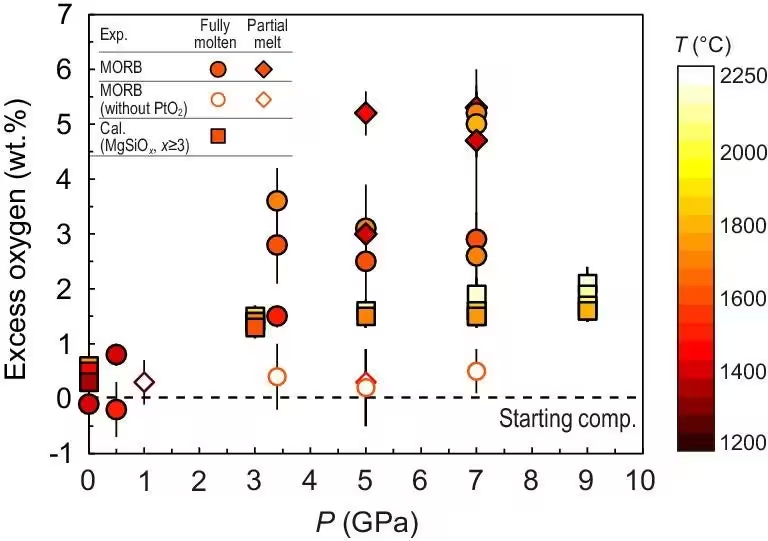
The research team sought to determine whether basaltic melts could hold oxygen independently of these structural constraints. By compressing synthetic basalt in piston-cylinder and cubic presses, the team subjected samples to conditions ranging from atmospheric pressure to seven gigapascals at temperatures between 1,200 and 1,800 degrees Celsius.
Evidence of Pressure-Dependent Storage
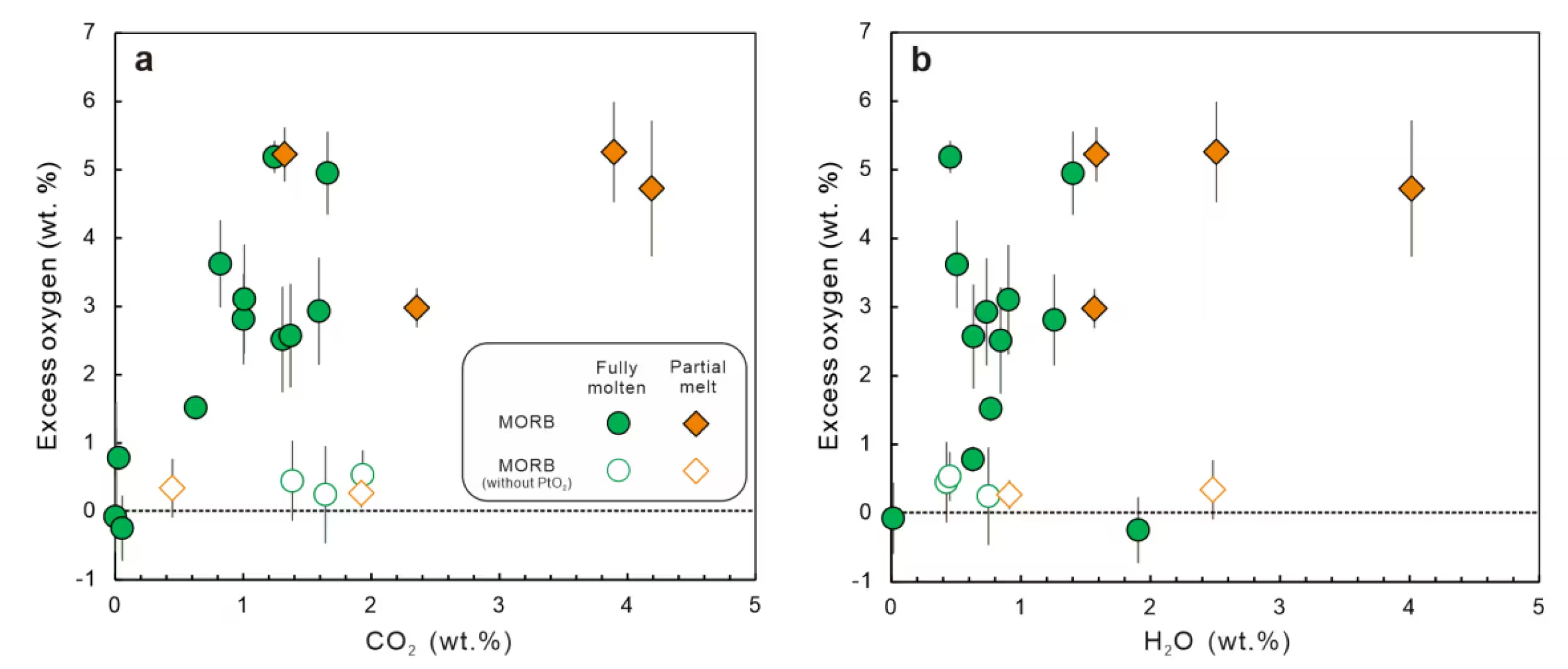
The results were striking. While the samples contained virtually no excess oxygen at atmospheric pressure, that figure climbed to 5.2% by weight at seven gigapascals. Even when applying conservative calculations that accounted for iron in its most oxidized form, the “excess” oxygen remained apparent.
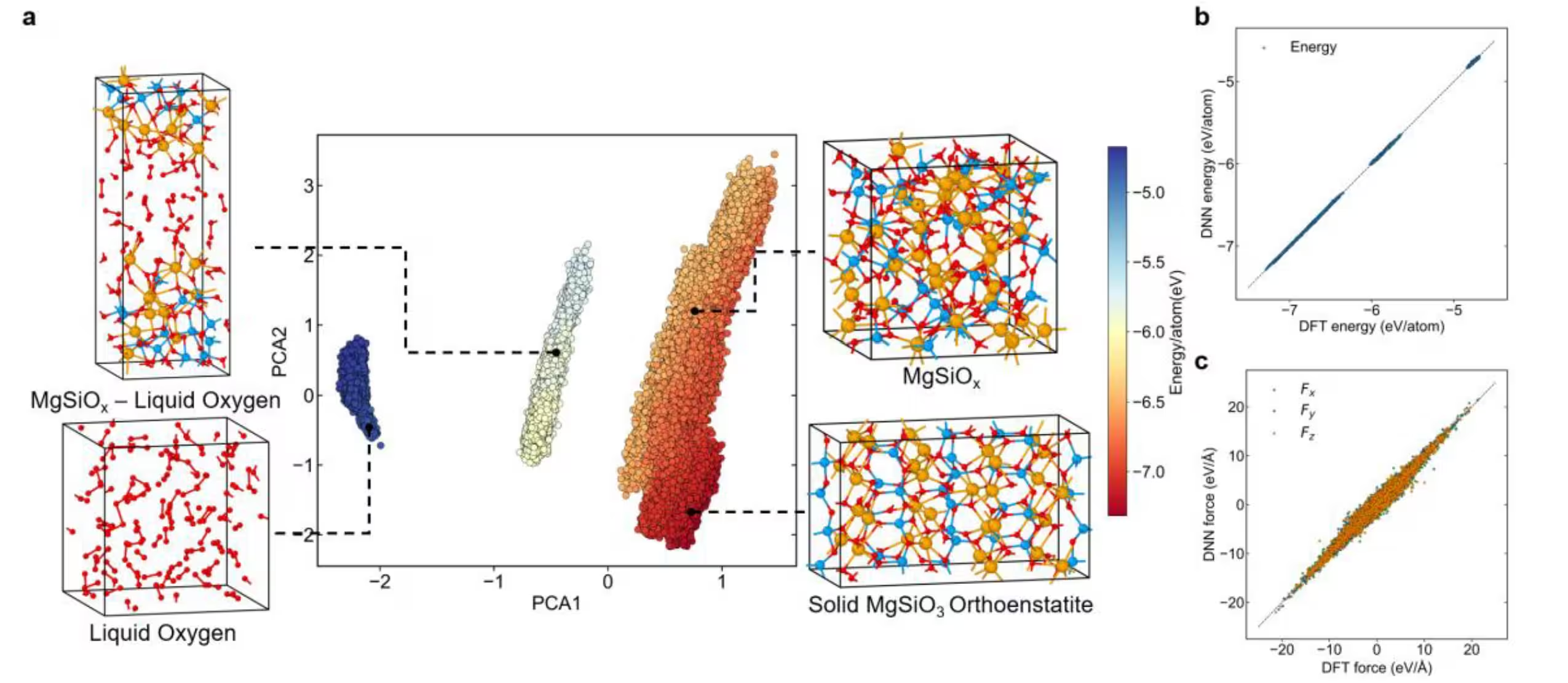
To understand the structural basis of this storage, the team employed Raman spectroscopy and atomic-scale simulations. The simulations, led by Haiyang Niu of Northwestern Polytechnical University, utilized neural-network interatomic potentials to model how oxygen integrates into molten magnesium silicate. The data suggests that as oxygen enters the melt, it occupies varied electronic environments, with a small fraction forming short-lived oxygen-oxygen bonds reminiscent of peroxide—a configuration not accounted for in standard silicate chemistry.
Implications for Planetary Evolution
The researchers emphasize that their experiments represent an extreme case designed to test the physical limits of oxygen storage. While they do not claim that all mantle magmas carry high levels of excess oxygen, the findings provide a proof-of-concept for how deep-seated mantle regions could influence the chemical composition of the surface.
As magma rises and pressure decreases, this stored oxygen would be released, potentially contributing to the oxidation of the surrounding mantle and the crust. The study points toward a possible link between large-scale volcanic events 2.5 to 2 billion years ago and the historical oxygenation of Earth’s atmosphere. Although this mechanism alone is not a comprehensive explanation for atmospheric oxygen, it highlights a previously unmodeled pathway for chemical exchange between the planet’s deep interior and its atmosphere.
Future research will be required to measure these oxygen-retention dynamics under real-time, high-temperature conditions to confirm how much oxygen remains in the melt during ascent versus what might be lost during cooling. By refining these models, scientists hope to better understand the role of interior chemistry in the habitability and atmospheric evolution of both Earth and other rocky planets.
Relevant Scientific Literature
- Oxygen controls on magmatism in rocky exoplanets(PNAS, 2021)
- FeO2 and FeOOH under deep lower-mantle conditions and Earth’s oxygen–hydrogen cycles(Nature, 2016)
- Mantle data imply a decline of oxidizable volcanic gases could have triggered the Great Oxidation(Nature Communications, 2020)
- Marine phosphorus and atmospheric oxygen were coupled during the Great Oxidation Event(Nature Communications, 2025)
- The rise of oxygen in Earth’s early ocean and atmosphere(Nature, 2014)
This article has been fact checked for accuracy, with information verified against reputable sources. Learn more about us and our editorial process.
Last reviewed on .
Article history
- Latest version
Reference(s)
- Lin, Yanhao., et al. “Oxygen controls on magmatism in rocky exoplanets.” Proceedings of the National Academy of Sciences, vol. 118, no. 45, November 1, 2021 National Academy of Sciences, doi: 10.1073/pnas.2110427118. <https://doi.org/10.1073/pnas.2110427118>.
- Hu, Qingyang. “FeO2 and FeOOH under deep lower-mantle conditions and Earth’s oxygen–hydrogen cycles - Nature.”, vol. 534, no. 7606, pp. 241-244. Nature, doi: 10.1038/nature18018. <https://www.nature.com/articles/nature18018>.
- Kadoya, Shintaro. “Mantle data imply a decline of oxidizable volcanic gases could have triggered the Great Oxidation - Nature Communications.”, vol. 11, no. 1, June 2, 2020, pp. 2774 Nature, doi: 10.1038/s41467-020-16493-1. <https://www.nature.com/articles/s41467-020-16493-1>.
- Dodd, Matthew. “Marine phosphorus and atmospheric oxygen were coupled during the Great Oxidation Event - Nature Communications.”, vol. 16, no. 1, October 15, 2025, pp. 9151 Nature, doi: 10.1038/s41467-025-64194-4. <https://www.nature.com/articles/s41467-025-64194-4>.
- Lyons, Timothy. “The rise of oxygen in Earth’s early ocean and atmosphere - Nature.”, vol. 506, no. 7488, pp. 307-315. Nature, doi: 10.1038/nature13068. <https://www.nature.com/articles/nature13068>.
Cite this page:
- Posted by Aisha Ahmed