The Sun Just Unleashed a Massive Solar Flare, Boosting Chances for Stunning Northern Lights This Week!
A significant solar flare burst from the sun on May 10, increasing the chances of spectacular aurora borealis sightings in the coming days.
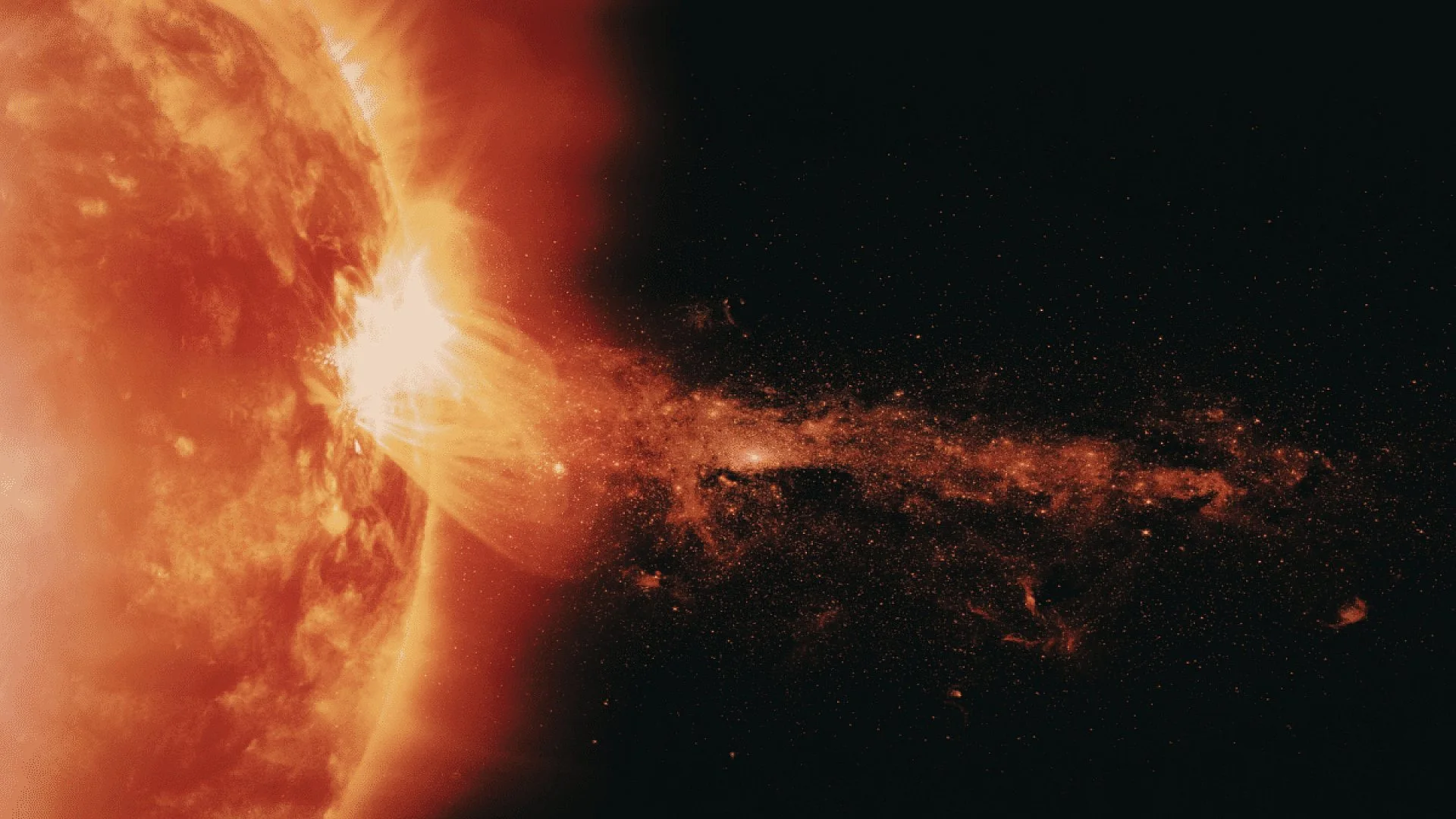
A powerful solar flare exploded from the sun on May 10, 2026, setting the stage for one of the most highly anticipated space weather events of the year. The M5.7 flare unleashed a massive coronal mass ejection (CME), sending a wave of solar material hurtling towards Earth. This dramatic space weather event has the potential to trigger spectacular northern lights displays across high latitudes, particularly in regions not typically associated with such celestial shows. The flare’s intensity and its potential to disrupt Earth’s atmosphere make this a critical moment for space weather enthusiasts and scientists alike.
The Impact of Solar Flares and CMEs on Earth
Solar flares and CMEs are massive explosions on the sun’s surface, releasing bursts of radiation and charged particles into space. When these particles reach Earth, they can interact with our planet’s magnetic field, sometimes causing geomagnetic storms. These storms can produce breathtaking auroras, streams of light that typically appear near the poles but can sometimes extend to more southern regions during intense solar activity.
On May 10, the solar flare reached an M5.7 rating, categorizing it as a medium-strength event capable of affecting Earth’s communication systems. Solar flares are ranked on a scale from A to X, with X-class flares being the most powerful. The M-class flare, though not the most powerful, was still significant enough to cause a temporary radio blackout over the Atlantic Ocean. This phenomenon occurs when intense radiation ionizes Earth’s upper atmosphere, disrupting high-frequency radio signals used by aviators, mariners, and amateur radio operators.
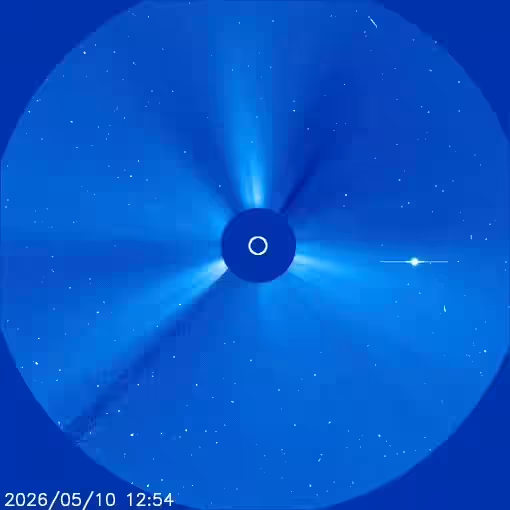
(Image credit: SOHO LASCO C3)
The CME from this flare, though mostly directed away from Earth, may still graze the planet. Space weather forecasters have warned that this glancing blow could trigger minor geomagnetic storm conditions. These storms, while relatively mild, can enhance aurora displays, providing an opportunity for skywatchers to witness the northern lights in regions that rarely experience such phenomena.
According to NOAA’s Space Weather Prediction Center and the U.K. Met Office, a weak but significant CME impact is expected around May 13. While the event won’t be as extreme as the historic solar storm of May 2024, which painted the skies in vibrant auroras visible as far south as Florida and Mexico, the upcoming flare could still bring a fascinating light show to places like northern parts of the U.S. and the U.K. The chances for northern lights are particularly high in areas close to the Arctic Circle, where auroras are most commonly seen.
NOAA and U.K. Met Office Forecast More Solar Activity Ahead
The solar flare of May 10 is just the beginning. Both NOAA’s Space Weather Prediction Center and the U.K. Met Office have warned that more solar activity could be on the way. As sunspot regions AR4436 and AR4432 continue to evolve, there’s a chance for additional solar flares, possibly even X-class eruptions, over the coming days.
These sunspots, areas of intense magnetic activity on the sun’s surface, are often the source of powerful solar flares and CMEs. As they rotate toward Earth’s line of sight, their potential to affect our planet increases. Forecasters are closely monitoring these sunspots, as any flare or CME directed toward Earth can lead to an uptick in geomagnetic activity, further boosting the likelihood of spectacular aurora displays.
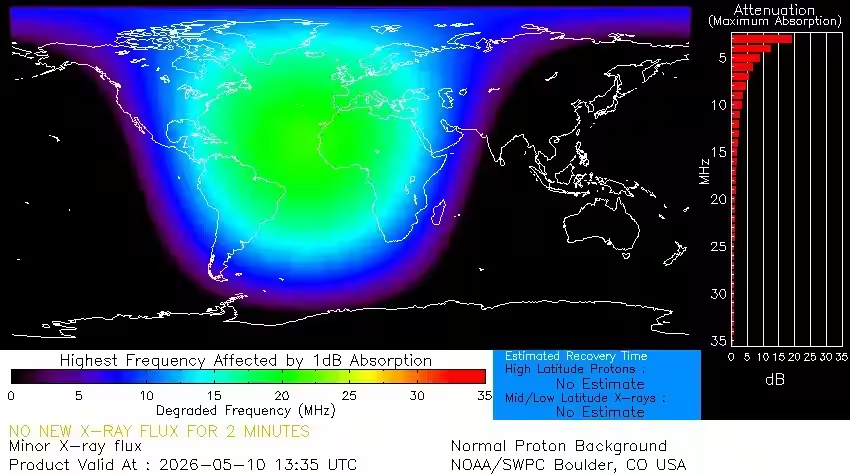
(Image credit: NOAA Space Weather Prediction Center)
Space weather enthusiasts and scientists are eagerly watching for signs of new flare activity, as each event offers valuable insight into the sun’s behavior. With solar activity ramping up as we approach the solar maximum in the coming years, the chances for more breathtaking auroras are expected to increase.
What Does This Mean for Aurora Chasers?
For aurora chasers, the upcoming days could be an exciting time. While the solar flare’s effects won’t be as extreme as the G5 storm of May 2024, which caused auroras to appear as far south as Mexico, the minor geomagnetic storm expected later this week could still produce dazzling light displays. These displays are typically visible in areas closer to the poles, such as northern Canada, Alaska, and Scandinavia, but the intensity of the solar activity may allow observers in lower latitudes to catch a glimpse of the northern lights.
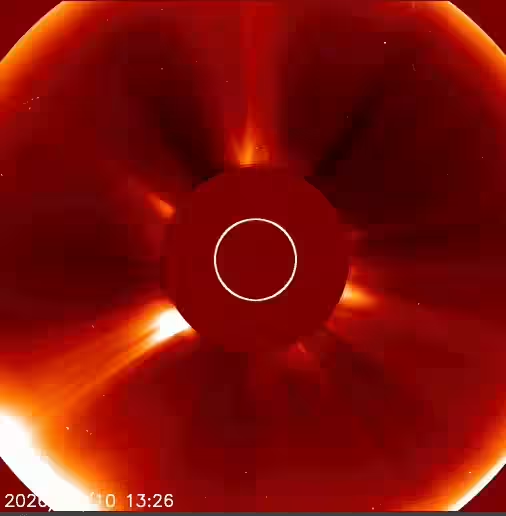
(Image credit: SOHO LASCO C2)
For skywatchers in the northern U.S., parts of the U.K., and northern Europe, the best chances for aurora sightings will likely occur during the evenings and nights of May 13 and 14. However, the auroras are not guaranteed to reach these southern regions, and conditions will depend on the severity of the geomagnetic storm and the clarity of the skies.
This article has been fact checked for accuracy, with information verified against reputable sources. Learn more about us and our editorial process.
Last reviewed on .
Article history
- Latest version
Reference(s)
- “10 May R2 (Moderate) Radio Blackout | NOAA / NWS Space Weather Prediction Center.” <https://www.spaceweather.gov/node/1484>.
- “Space Weather.” Met Office <https://weather.metoffice.gov.uk/specialist-forecasts/space-weather>.
Cite this page:
- Posted by Divya Iyer