Record-High Atlantic Sargassum Belt Swells Sparking Ecological and Economic Crisis
A 5,000-mile seaweed belt sweeps the Atlantic, unexpectedly endangering beaches, reefs and tourism – the largest bloom ever recorded.
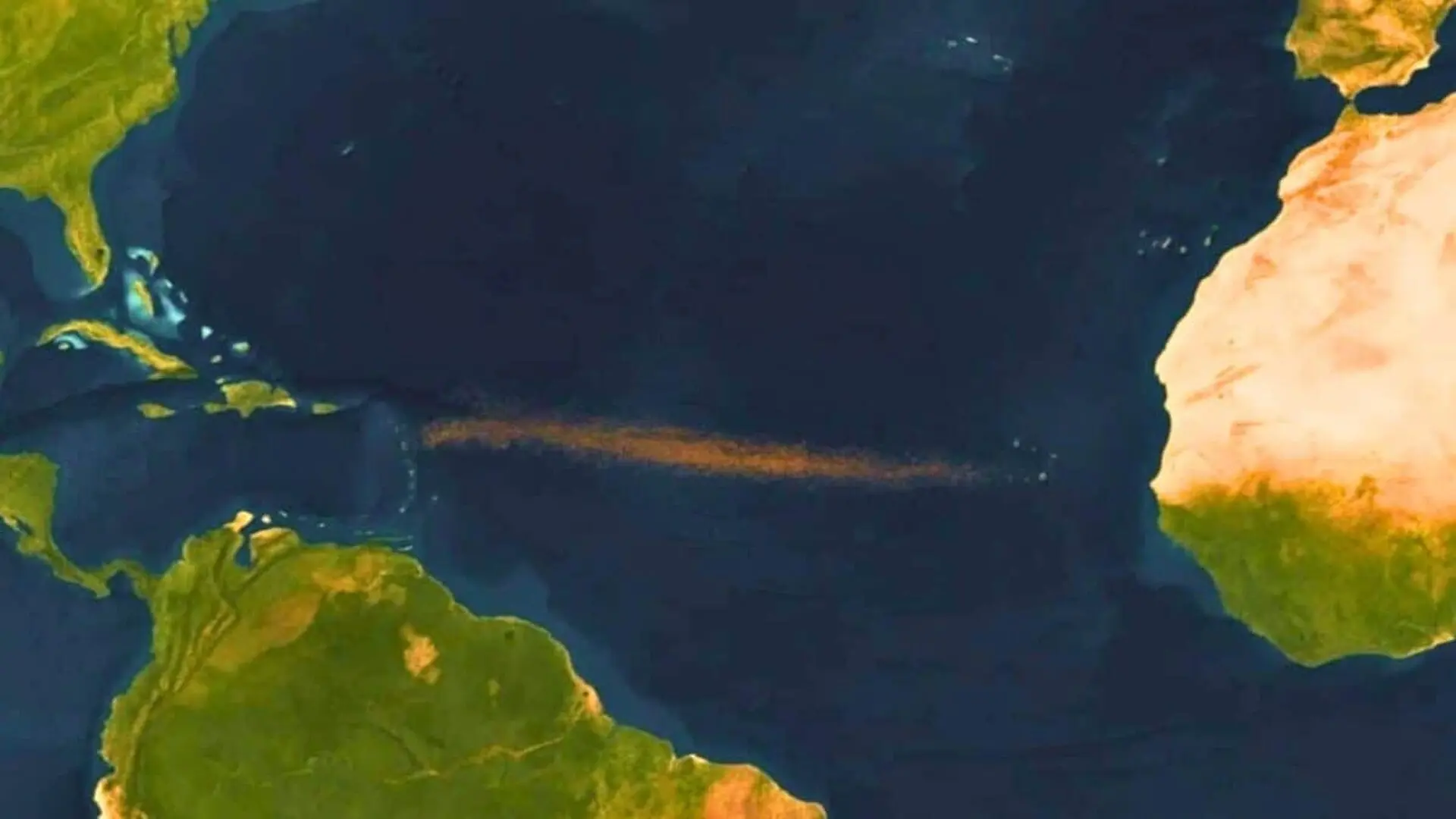
A massive stretch of brown seaweed, spanning roughly 5,000 miles across the Atlantic, has resurfaced this summer, and satellite data indicate it is reaching unprecedented concentrations.
Rather than a single block, the phenomenon known as the Great Atlantic Sargassum Belt consists of a chain of dense, drifting mats that ride the prevailing currents from the tropical Atlantic through the Caribbean and into the Gulf of Mexico. Once a sporadic curiosity, it now forms a predictable element of the region’s seasonal rhythm, with tangible effects on shorelines, reefs, and island economies.
At its peak, the belt transports more than 20 million metric tons of biomass. Favorable warm‑water conditions and abundant nutrients can double its mass in under 11 days. Ongoing satellite surveillance by the University of South Florida and the National Oceanic and Atmospheric Administration confirms that July’s observations recorded the highest levels on record.
Equatorial Atlantic Emerges as a New Sargassum Hub
For most of recorded history, large gatherings of Sargassum were confined to the tranquil Sargasso Sea, a zone in the North Atlantic bounded by circulating currents. Small drifts occasionally reached southern waters but rarely caused trouble. Around 2011, a secondary bloom took root in the warm equatorial waters between Africa and South America, displaying a productivity far beyond earlier expectations.
Optical oceanographer Chuanmin Hu of the University of South Florida identified this shift through NASA satellite imagery and coined the term Great Atlantic Sargassum Belt. His analysis shows the belt now recurs each spring and summer, amassing biomass before the North Equatorial Current pushes it westward toward the Caribbean.
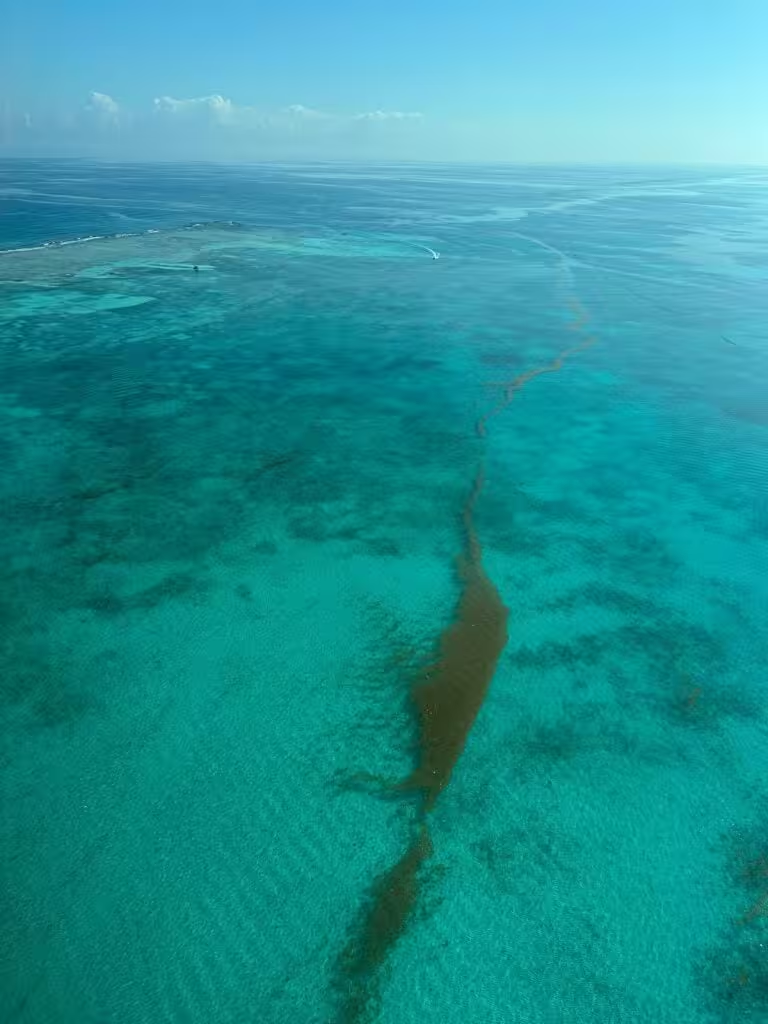
Research published in Harmful Algae by Julien Jouanno of the Institut de Recherche pour le Développement points to elevated nutrient loads as the primary catalyst. The Amazon River’s discharge of nitrogen and phosphorus into the tropical Atlantic fertilizes the waters where the belt forms, and shifts in regional ocean chemistry now make large, annual blooms the norm rather than the exception.
Decomposition Emits Hazardous Gas and Blocks Sunlight
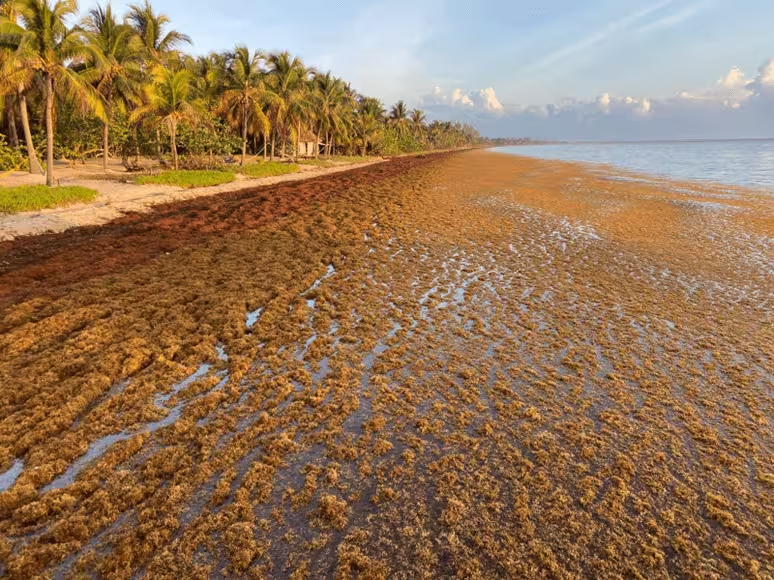
When the mats wash ashore, they pile up in meters‑high mounds along Caribbean beaches. As the seaweed rots, it releases hydrogen sulfide, a foul‑smelling gas that can irritate the respiratory system of nearby residents. The decay process also depletes dissolved oxygen, spawning dead zones where fish and other marine life cannot survive.
The floating mats also create a barrier that prevents sunlight from reaching the seafloor. This darkness endangers seagrass beds and coral reefs, which rely on photosynthesis. Prolonged shading can kill these habitats, destabilizing food webs and reducing shelter for juvenile fish, sea turtles, and other shallow‑water species.
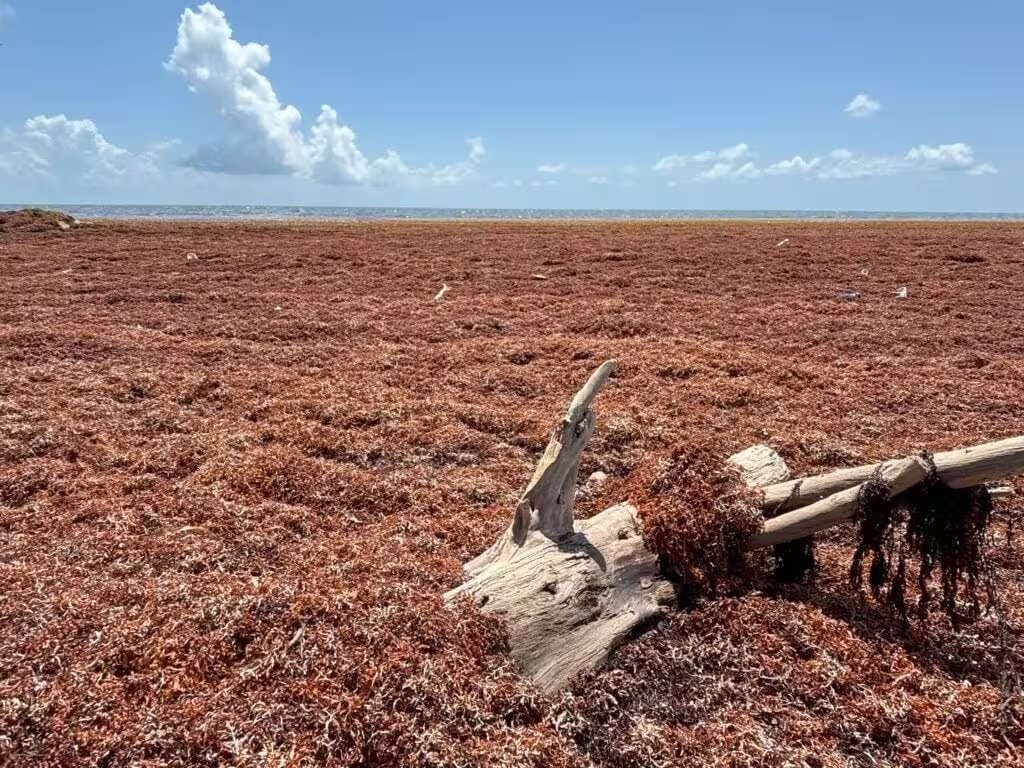
While the mats can provide temporary refuge and food for small fish, sea turtles, and other marine organisms in open waters, the scale of coastal accumulation now outweighs these ecological benefits for the human communities that line the affected shorelines.
Tourism and Coastal Infrastructure Under Repeated Strain
The annual influx of seaweed imposes heavy economic pressure. In several Caribbean destinations, hotels have been forced to restrict beach access during peak tourist seasons. Removing the material requires heavy machinery that can erode beaches and disturb sea turtle nesting sites, creating secondary environmental damage while attempting to solve the first.
Island economies that depend on crystal‑clear waters and healthy reefs for tourism face mounting costs from cleanup, lost bookings, and reef degradation—burdens that accumulate year after year without a reliable mitigation strategy.
Scientists have explored turning the seaweed into fertilizer, building materials, or even biofuel. However, its high salt content and traces of heavy metals such as arsenic hinder large‑scale processing, and no commercial application has moved beyond early‑stage research.
Coordinated Satellite Tracking Guides Seasonal Forecasts
Monitoring the belt has become a joint effort among NOAA’s Atlantic Oceanographic and Meteorological Laboratory, NOAA’s National Environmental Satellite Data, Information Service, and the University of South Florida. Together they issue weekly Sargassum Inundation Reports that use satellite sensor data to map the belt’s extent and density, evaluating the risk of shorelines in the Caribbean, southeast Florida, and the Gulf of Mexico.
The belt’s dynamics are also linked to the Atlantic Equatorial Mode, a climate pattern that modulates sea‑surface temperatures and wind intensity across the tropical Atlantic. Weak winds encourage the mats to coalesce into larger, denser patches, whereas stronger breezes disperse them more widely.
Field campaigns complement satellite observations, with NOAA’s AOML deploying tracking buoys and surface drifters to capture real‑time movement. The University of South Florida continues to refine its monitoring system ahead of the anticipated 2026 bloom season.
This article has been fact checked for accuracy, with information verified against reputable sources. Learn more about us and our editorial process.
Last reviewed on .
Article history
- Latest version
Reference(s)
- Lapointe, Brian E.., et al. “Productivity, growth, and biogeochemistry of pelagic Sargassum in a changing world.” Harmful Algae, vol. 150, December 1, 2025, pp. 102940 Elsevier BV, doi: 10.1016/j.hal.2025.102940. <https://www.sciencedirect.com/science/article/abs/pii/S1568988325001428?via%3Dihub>.
- “NOAA's Atlantic Oceanographic & Meteorological Laboratory.”, September 10, 2018 NOAA's Atlantic Oceanographic and Meteorological Laboratory <https://www.aoml.noaa.gov/>.
Cite this page:
- Posted by Linda Wilson