Genetic Break Uncovers Sudden End of Europe’s Megalith Builders 5,000 Years Ago
DNA from a Paris‑area prehistoric tomb reveals a stark split between two Stone Age groups, suggesting a major upheaval during Europe’s megalith era.
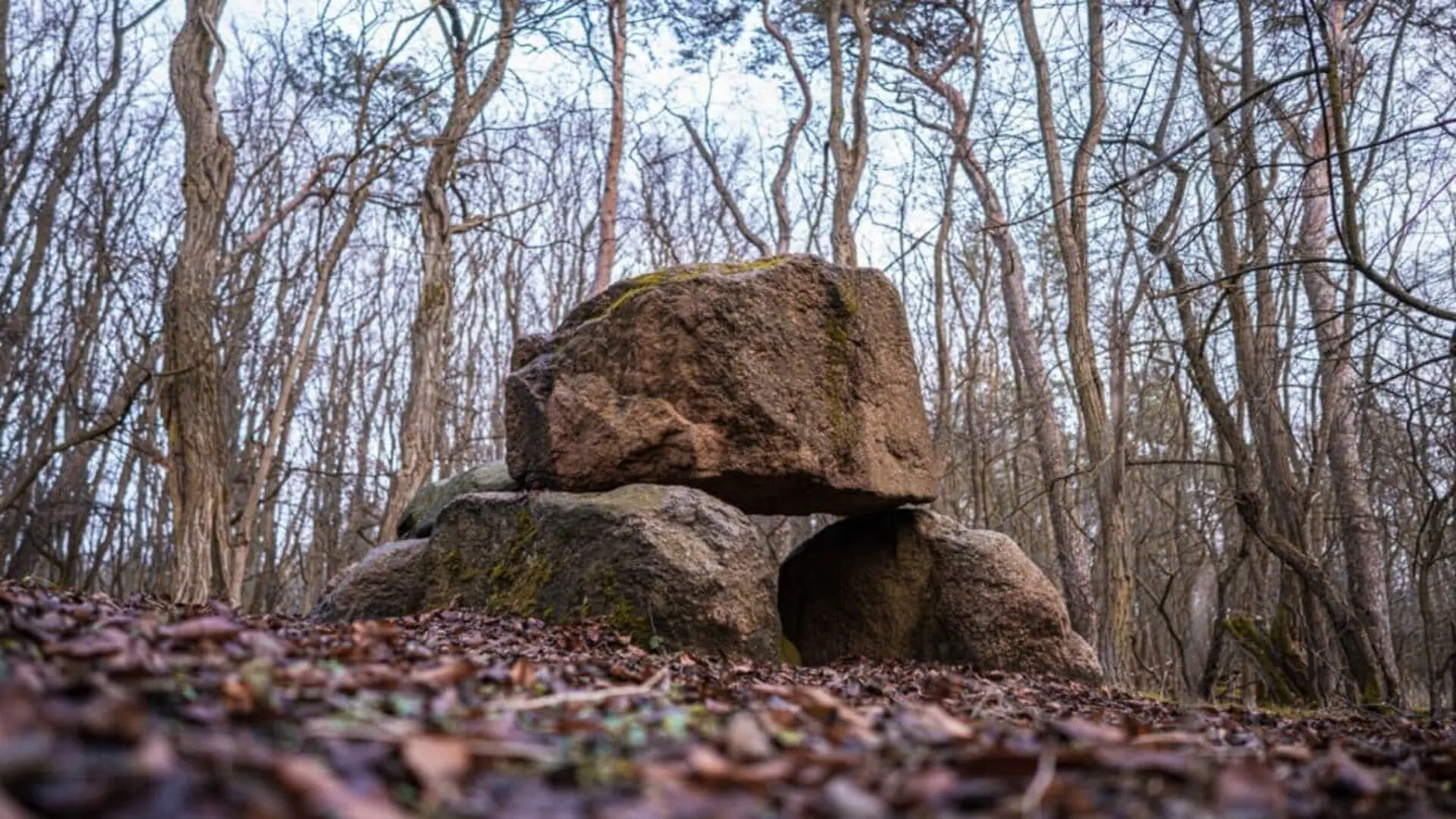
Analysis of DNA from individuals interred in a 5,000‑year‑old megalithic tomb near Paris has uncovered a pronounced genetic discontinuity between two Stone Age communities. The data imply that the societies responsible for constructing many of Europe’s large stone monuments largely vanished after a demographic downturn and were subsequently supplanted by genetically distinct groups originating from southern France and the Iberian Peninsula.
Researchers date the population turnover to around 3000 BC, a period already linked to the broader cessation of megalith building across north‑western Europe, according to the University of Copenhagen.
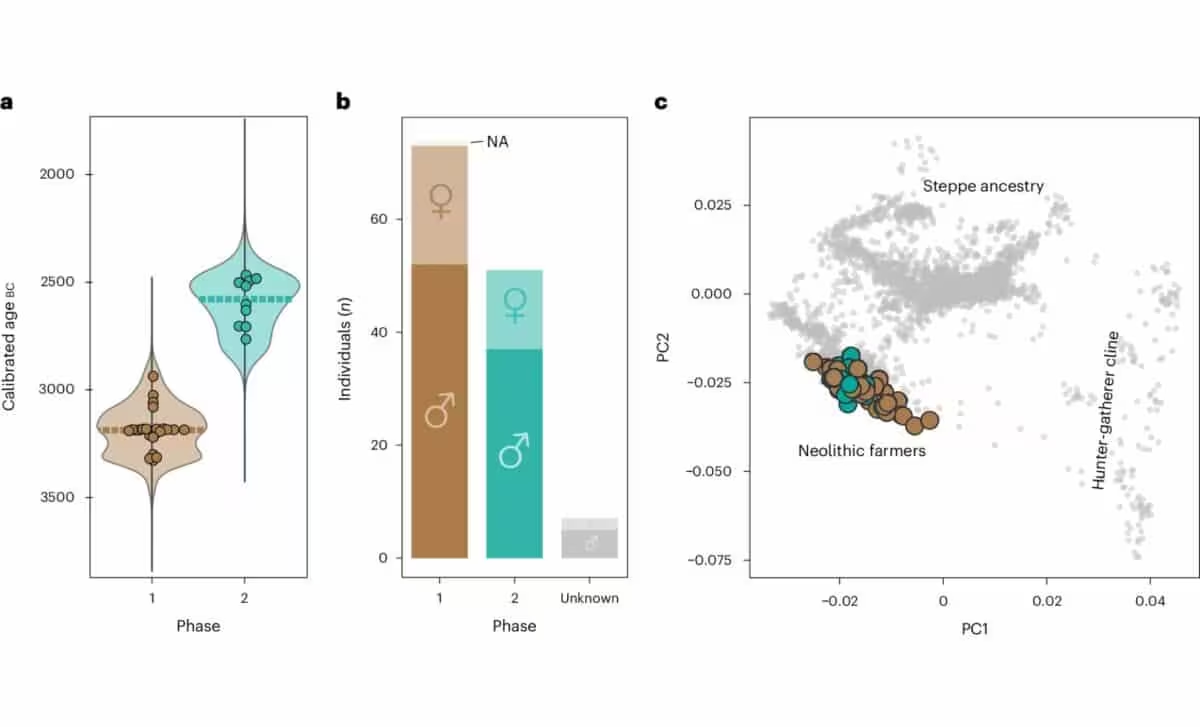
The investigation examined 132 ancient genomes recovered from the collective burial site at Bury, situated roughly 50 kilometers north of Paris. The tomb was occupied in two separate phases with an intervening hiatus; genetic testing shows that the individuals from the two periods share little ancestry, indicating a major demographic rupture rather than simple local continuity.
Genomic Data Reveal a Sharp Population Shift in the Neolithic
The study, published in Nature Ecology & Evolution, found that the earlier occupants bore close genetic affinity to early farming groups from northern France and Germany, whereas the later burials displayed much stronger links to populations from southern France and the Iberian Peninsula.
“We see a clear genetic break between the two periods,” said Frederik Valeur Seersholm, assistant professor at the Globe Institute, University of Copenhagen and co‑author of the paper.
The authors conclude that the original community experienced a substantial decline before new groups moved northward, and that the later assemblage represents a separate genetic lineage rather than a direct descendant of the earlier population.
According to the research article, this demographic shift aligns with the end of large‑scale megalith construction throughout continental north‑western Europe, suggesting that the disappearance of the initial population may help explain why the building of monumental stone tombs halted at roughly the same time.
Signs of a Broader Crisis and Evolving Social Practices
Ancient DNA screening also uncovered several pathogens, including Yersinia pestis, the bacterium that causes plague, and Borrelia recurrentis, responsible for louse‑borne relapsing fever.
“We can confirm that plague was present, but the evidence does not support it as the sole cause of the population collapse,” explained Martin Sikora, associate professor at the University of Copenhagen and senior author of the study. He added that disease, environmental stress and other disruptive factors likely acted together.
Skeletal analysis points to unusually high mortality among children and young adults during the first phase of the tomb’s use, a pattern researchers interpret as evidence of a severe crisis.
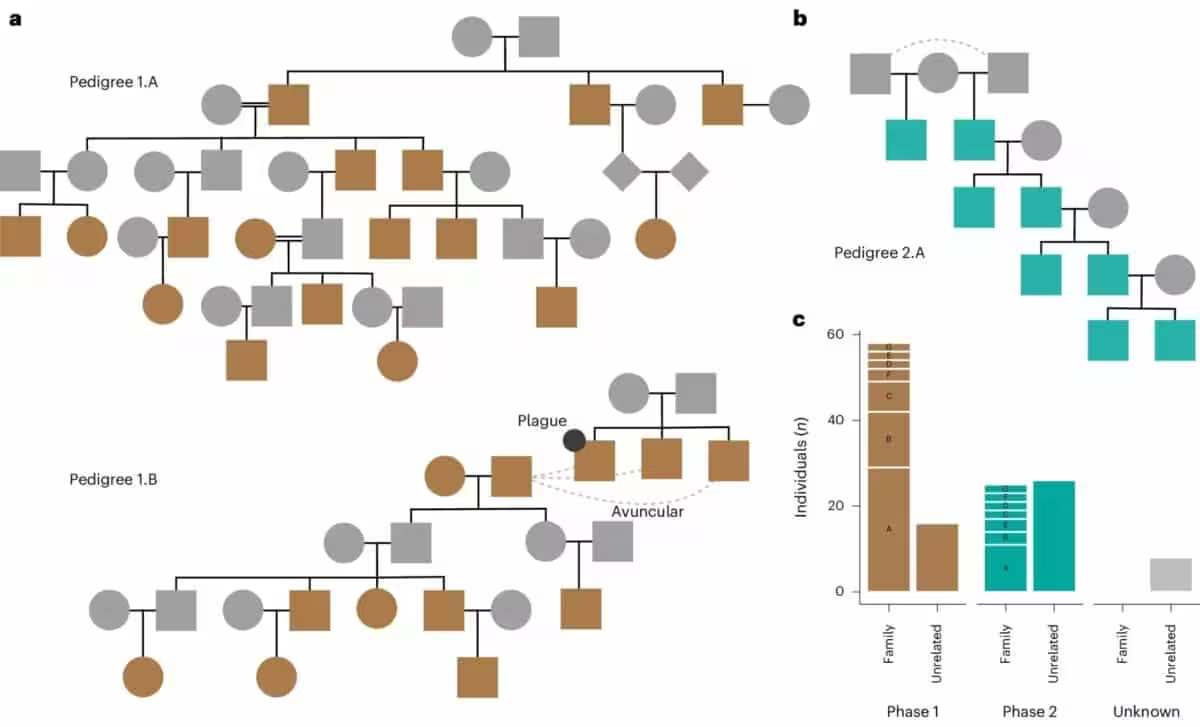
Genetic patterns also reveal a shift in burial customs. In the earlier stage, multiple generations of extended families were interred together, suggesting tightly knit community structures. By contrast, the later phase shows a more selective approach dominated by a single male lineage, reflecting a different social organization.
“This indicates that the population change was accompanied by a shift in how society was structured,” Seersholm noted.
The authors argue that these results reinforce mounting evidence of a widespread Neolithic population decline across northern and western Europe, and that the disappearance of the original megalith‑building groups coincides with the end of their monumental construction activities.
This article has been fact checked for accuracy, with information verified against reputable sources. Learn more about us and our editorial process.
Last reviewed on .
Article history
- Latest version
Reference(s)
- Administration, Globe. “Staff – University of Copenhagen.” <https://globe.ku.dk/staff-list/?pure=en/persons/395171>.
- Seersholm, Frederik. “Population discontinuity in the Paris Basin linked to evidence of the Neolithic decline - Nature Ecology & Evolution.”, vol. 10, no. 4, pp. 677-688. Nature, doi: 10.1038/s41559-026-03027-z. <https://www.nature.com/articles/s41559-026-03027-z>.
- Administration, Globe. “Staff – University of Copenhagen.” <https://globe.ku.dk/staff-list/?pure=en/persons/475540>.
Cite this page:
- Posted by Linda Wilson