World’s Smallest Chameleon Brookesia Nana Found On A Human Finger
Madagascar reveals the tiniest chameleon ever, Brookesia nana, a miniature marvel showcasing remarkable evolutionary adaptations.
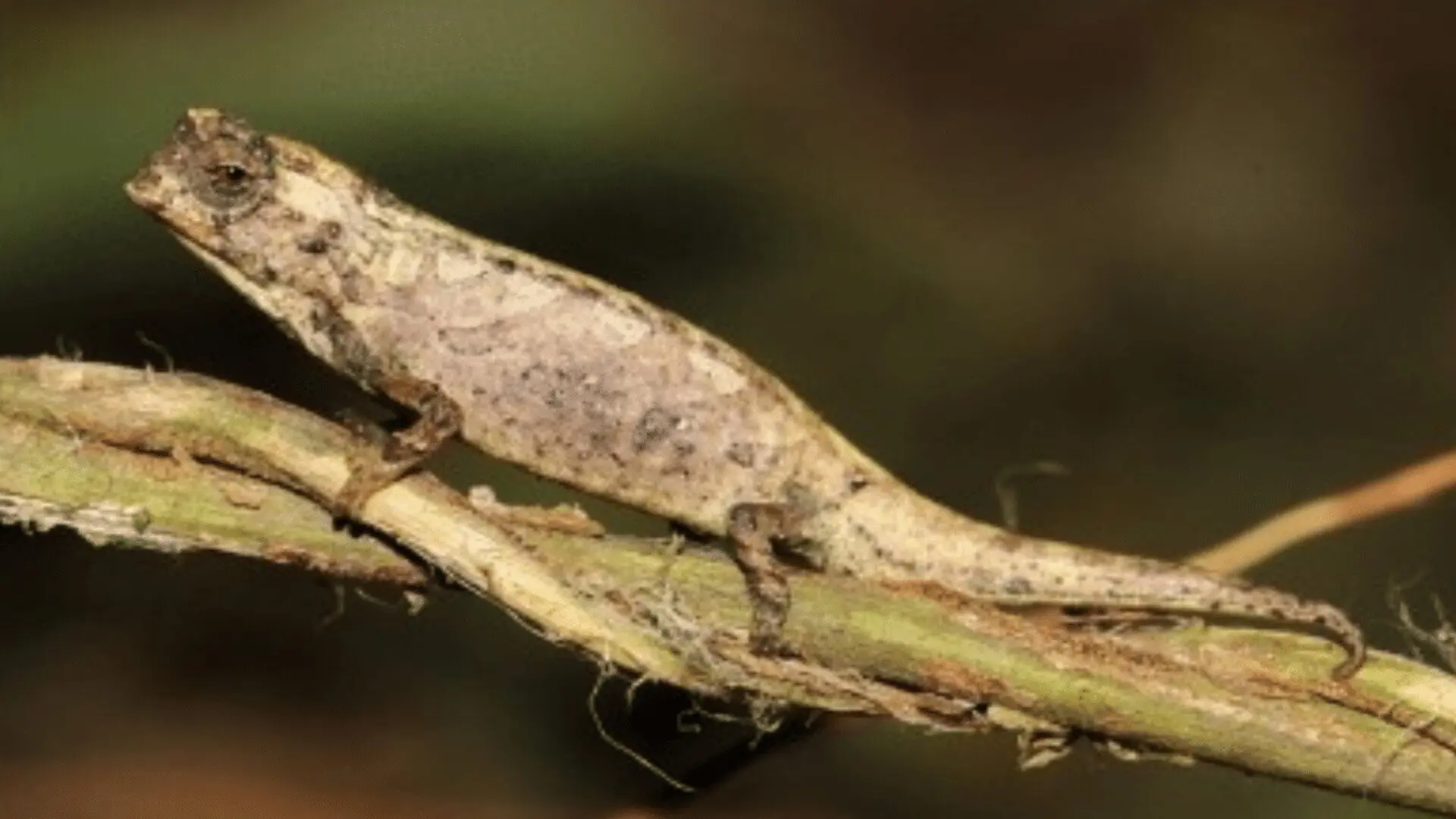
A research team has announced the discovery of Brookesia nana, a chameleon so diminutive it can perch on a human fingertip. The description, published in Scientific Reports, adds to the extraordinary diversity of Madagascar’s fauna and offers novel clues for evolutionary biology.
Chasing Micro‑Reptiles Through Forest Debris
Locating an animal that fits on a fingertip requires meticulous fieldwork, as these reptiles blend seamlessly with leaf litter. “Patience and a keen eye are essential,” said co‑author Mark D Scherz in an interview with IFLScience. “With experience you become fairly adept, but we also rely heavily on local guides who specialize in spotting these tiny chameleons.” The effort underscores both the difficulty and excitement of cataloguing new species in Madagascar, a region famed for its isolated and distinctive wildlife. Each minute observation helps scientists piece together how such organisms survive, adapt, and evolve amid intense competition.
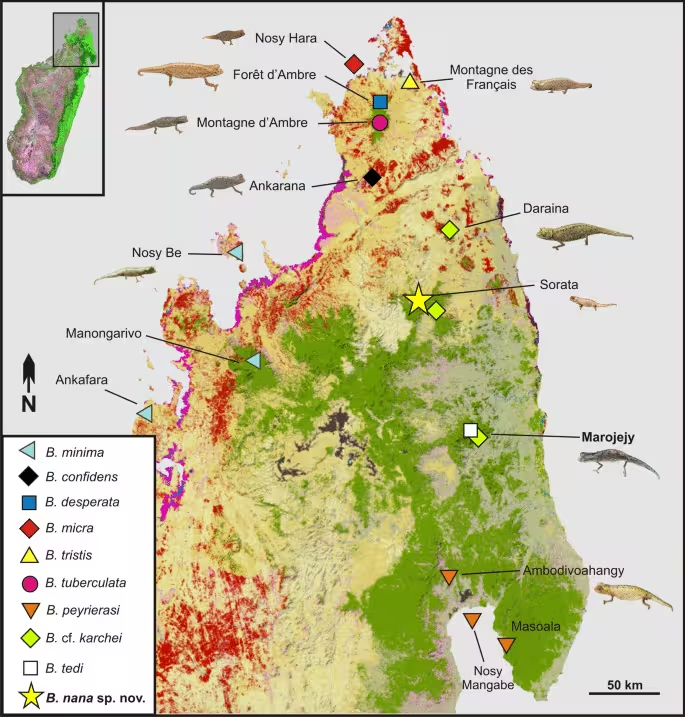
Why the Name Reflects Its Minute Scale
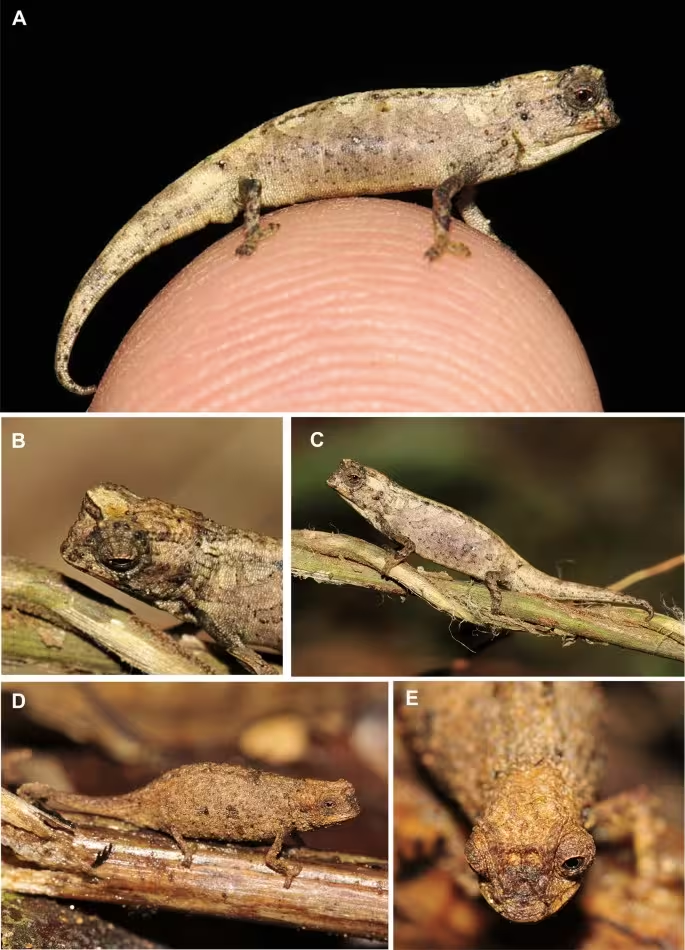
The new taxon received the epithet nana, drawn from the Latin/Greek root that also underlies the term “nanotechnology,” a nod to its exceptionally small dimensions. “The word ‘nana’ comes from the same ancient root used for ‘nanotech,’” Scherz explained, “and we apply it here to emphasize the creature’s tiny size.” At less than half the length of its closest relative, Brookesia micra, B. nana now claims the title of the smallest known chameleon, a feature that contributes to a broader picture of evolutionary adaptation beyond mere size.
Unusual Reproductive Morphology in a Miniature Chameleon
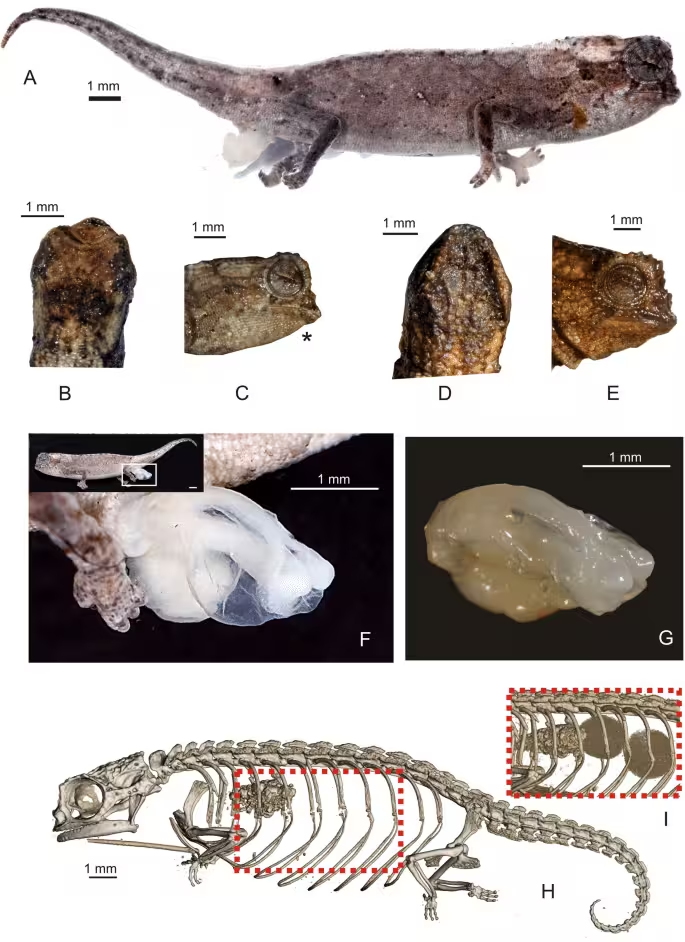
A striking characteristic of B. nana lies in its male reproductive organs: the hemipenes extend to roughly 18.5 % of the animal’s total length, a proportion that is unusually large for such a tiny species. This feature likely compensates for the considerably larger females, facilitating successful copulation. While B. nana holds the record for overall diminutiveness, other members of the genus, such as Brookesia tuberculata, surpass it in relative hemipenis length, reaching more than 30 % of body size thanks to a specialized structural extension. These variations illustrate how evolution fine‑tunes reproductive anatomy alongside body size in extreme miniaturization scenarios.
Madagascar’s Ecosystem Remains a Hotspot for Discovery
The island continues to act as a natural laboratory for biologists probing biodiversity, with new taxa emerging regularly—many of them minute or highly specialized, like B. nana. The study, appearing in Scientific Reports, underscores the urgency of documenting these habitats before they are altered by environmental pressures. “Even among the charismatic chameleons, there is a vast amount we still don’t understand,” Scherz noted, stressing that findings such as this provide valuable insights into long‑standing evolutionary and ecological dynamics.
This article has been fact checked for accuracy, with information verified against reputable sources. Learn more about us and our editorial process.
Last reviewed on .
Article history
- Latest version
Reference(s)
- <https://www.iflscience.com/in-2021-scientists-found-the-worlds-smallest-chameleon-and-discovered-it-has-surprisingly-large-genitals-83854?utm_source=pushly>.
- Glaw, Frank. “Extreme miniaturization of a new amniote vertebrate and insights into the evolution of genital size in chameleons - Scientific Reports.”, vol. 11, no. 1, January 28, 2021, pp. 2522 Nature, doi: 10.1038/s41598-020-80955-1. <https://www.nature.com/articles/s41598-020-80955-1>.
Cite this page:
- Posted by Linda Wilson