2024 Vampire Squid ’New Species’ Debunked as a Misidentified Twin
New research on the vampire squid reveals unexpected traits that upend previous assumptions about this deep‑sea creature.
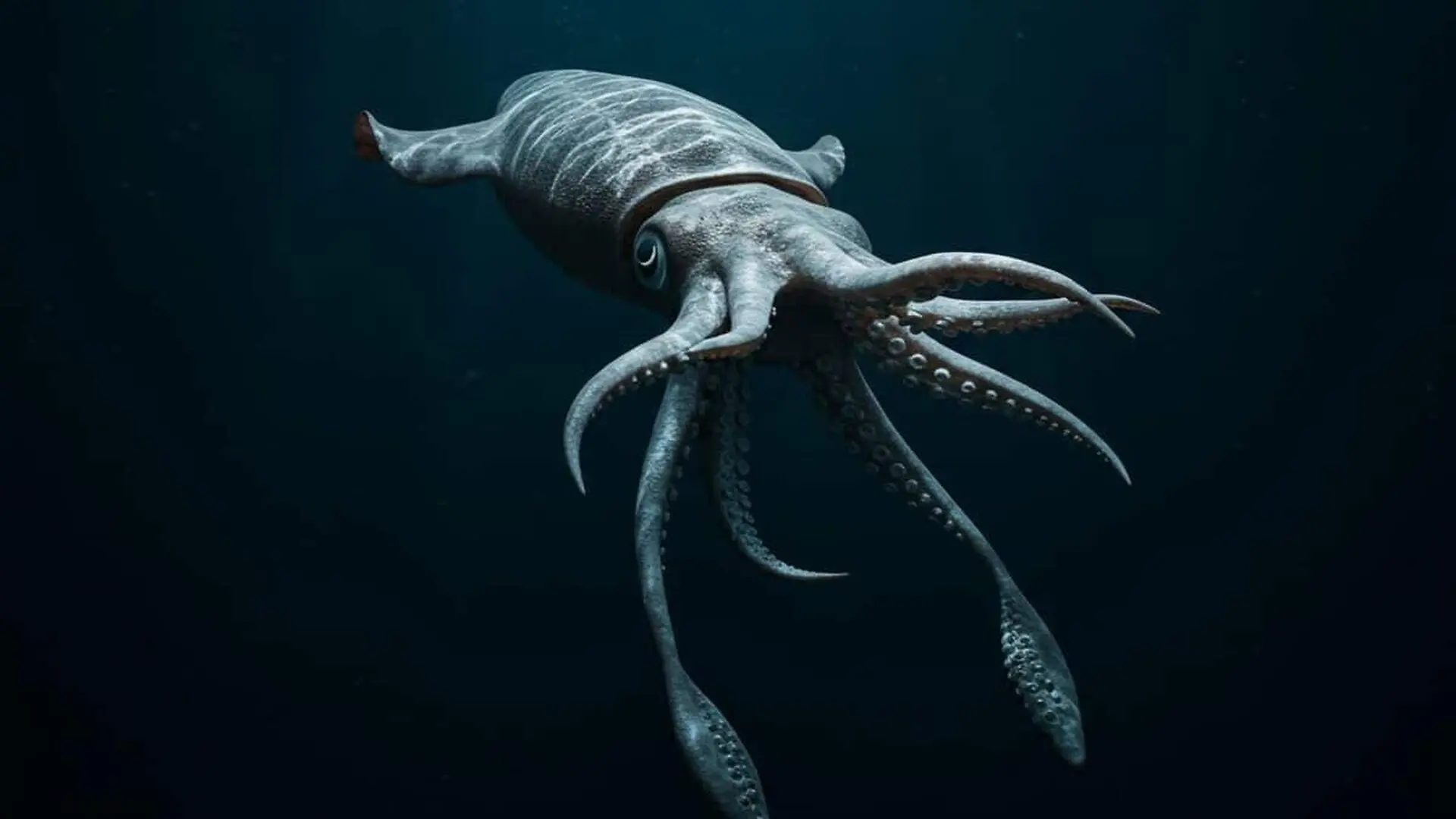
A cephalopod once thought to represent a second species of vampire squid has been folded back into the original taxon, confirming that the iconic deep‑sea creature remains a single living species.
The revision follows a thorough re‑examination of the 2024 specimen that had been christened Vampyroteuthis pseudoinfernalis. By comparing its morphology and DNA with a broader collection of known vampire squids, researchers concluded that the observed differences fell within normal intraspecific variation.
A Glimpse into the Vampire Squid’s History
The creature now known as the vampire squid was first recorded in 1898 by German zoologist Carl Chun from samples gathered during the SS Valdivia expedition. His description, published in the Bulletin of Marine Science, highlighted a lineage that had survived from ancient cephalopod orders.
Although called a squid, the animal belongs to the order Vampyromorphida and is the only extant member of that group. It sports eight web‑connected arms, large eyes, and a dark body that can reach roughly a foot in length. Adapted to oxygen‑poor depths, the vampire squid feeds on “marine snow”—a drifting mix of dead plankton, mucus, and organic debris.
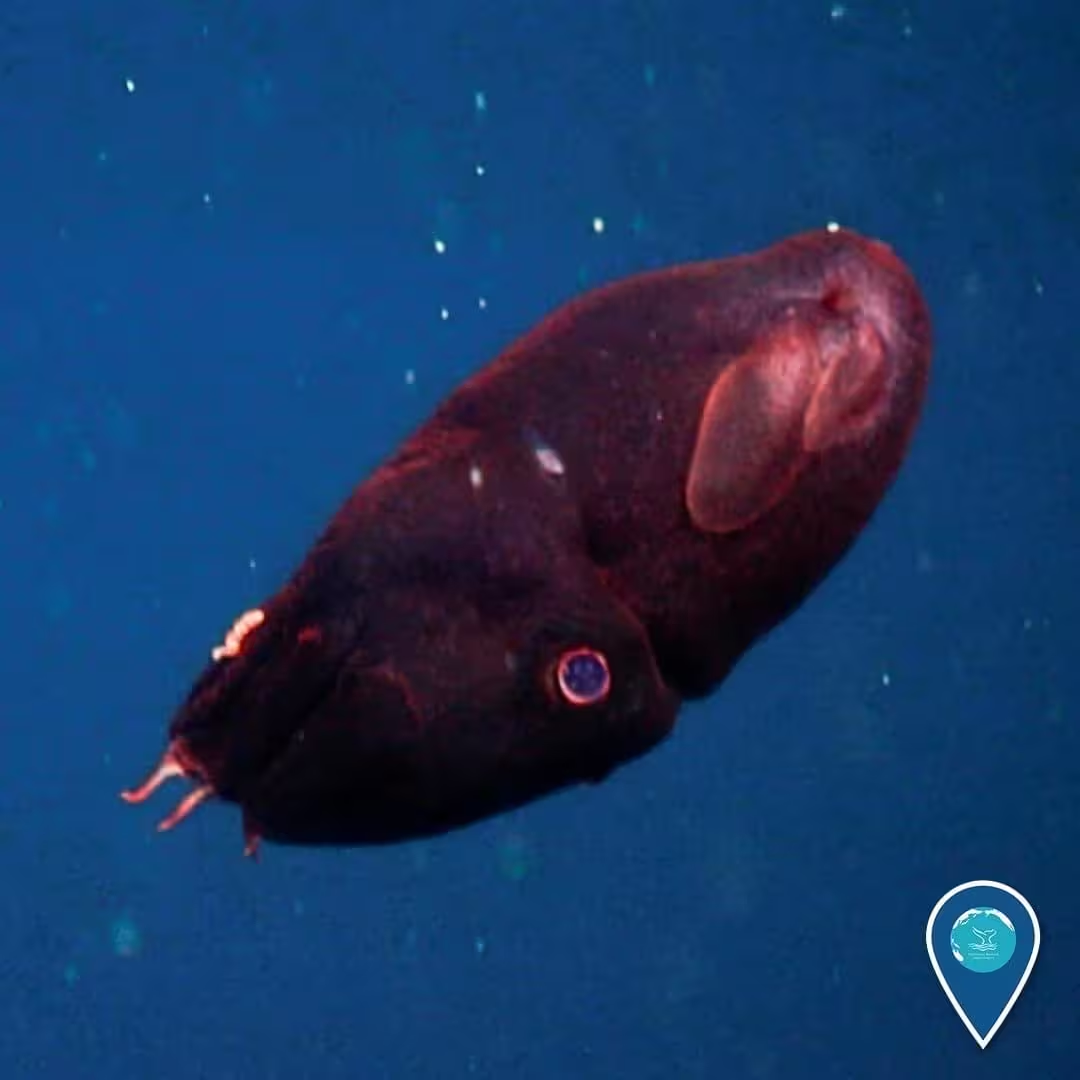
When threatened, the animal does not eject ink; instead it releases a cloud of bioluminescent mucus from the tips of its arms, creating a glowing veil that can confuse predators.
The Alleged Second Species
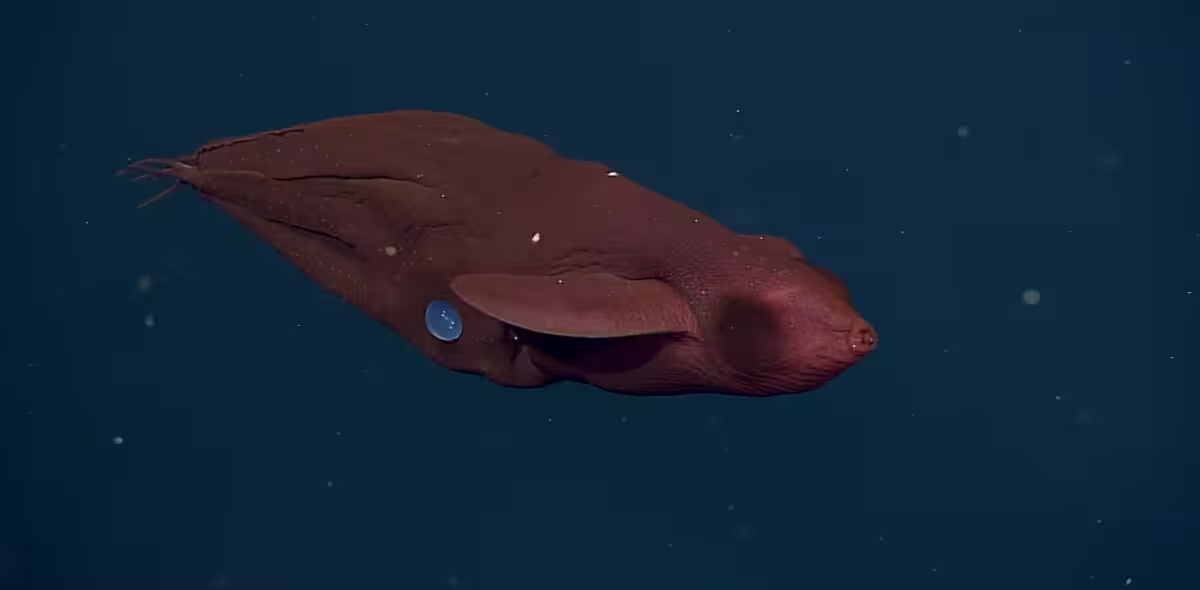
In September 2016, a deep‑sea expedition by the South China Sea Institute of Oceanology recovered a specimen from 800–1,000 m depth in the South China Sea. The animal displayed a pointed mantle tip, a distinct lower beak shape, and an unusual arrangement of its photophores, prompting researchers to compare mitochondrial COI and nuclear rDNA sequences against other vampire squid samples, including those from the Gulf of Mexico.
Those genetic and morphological quirks led to the formal naming of Vampyroteuthis pseudoinfernalis in 2024, suggesting that the ancient lineage might be more diverse than previously believed.
Re‑evaluation Confirms a Single Species
A consortium of cephalopod experts, including Smithsonian marine biologist Michael Vecchione, revisited the evidence. By expanding the comparative dataset and accounting for age‑related variation, they found that the beak morphology and photophore spacing fell within the known range of Vampyroteuthis infernalis.
The team also highlighted the difficulty of preserving soft‑bodied deep‑sea organisms; rapid pressure changes during ascent can alter external features, complicating taxonomic assessments.
Genetic analyses ultimately revealed that the mitochondrial and nuclear markers did not provide sufficient divergence to justify a separate species designation. Consequently, Vampyroteuthis pseudoinfernalis has been relegated to a junior synonym of Vampyroteuthis infernalis.
The vampire squid therefore retains its unique status as the sole extant representative of the order Vampyromorphida, while the deep ocean continues to test scientists with its hidden diversity.
This article has been fact checked for accuracy, with information verified against reputable sources. Learn more about us and our editorial process.
Last reviewed on .
Article history
- Latest version
Cite this page:
- Posted by Elizabeth Taylor