Tiny 30‑Gram Fossil Pushes Australian Marsupial Family Tree Back 3 Million Years
Australian micro‑fossil reveals a hidden discovery that stunned scientists after millions of years of preservation.
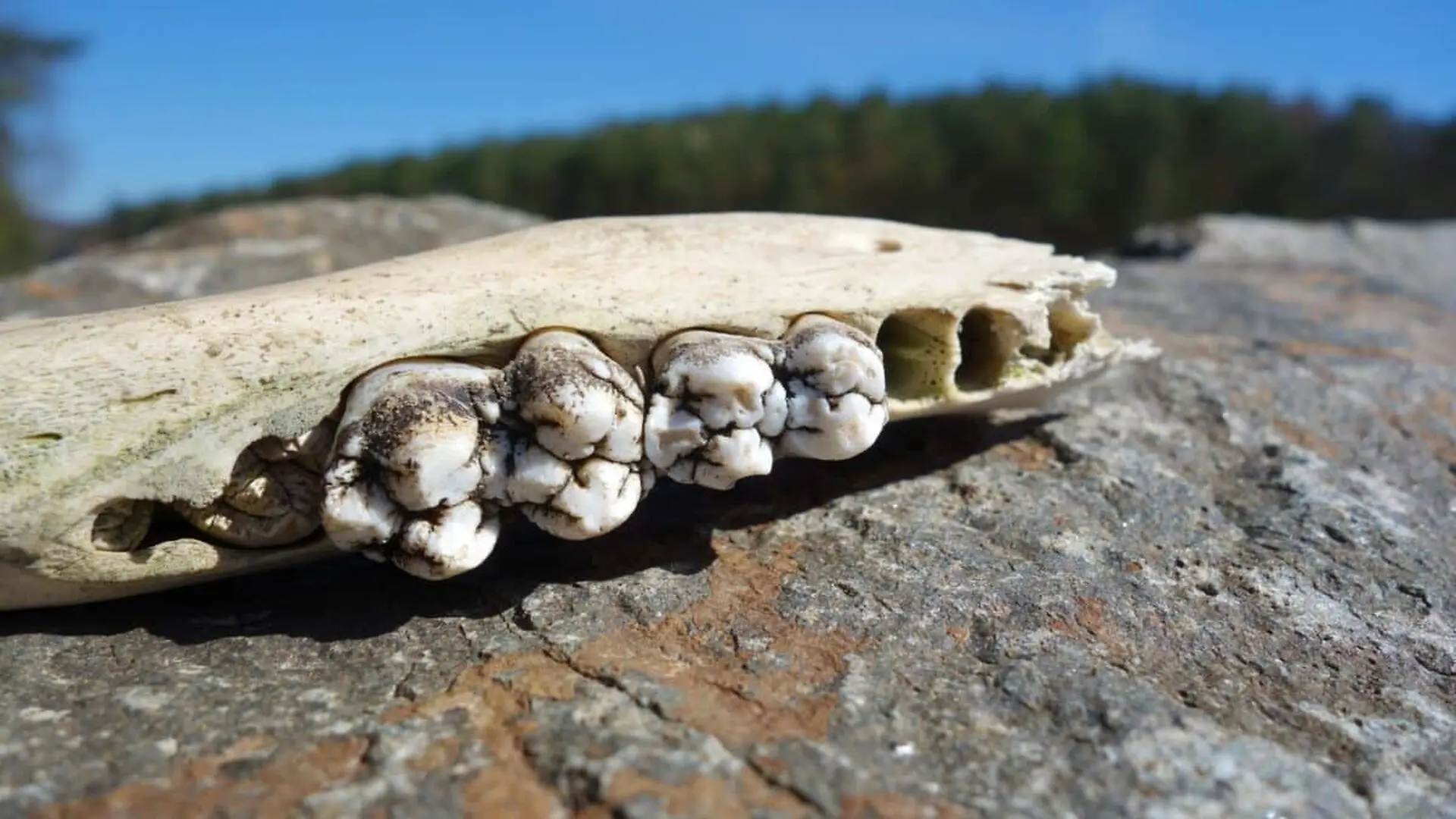
A fragmentary jaw recovered from Queensland’s Riversleigh World Heritage Area has reshaped the evolutionary story of Australia’s carnivorous marsupials. The newly named species Miyumba chrisdickmani dates to roughly 18 million years ago and now holds the title of the earliest known member of the Dasyuridae family, which today includes quolls, Tasmanian devils and antechinuses.
The find emerged from a series of lower‑jaw pieces examined by scientists from the University of New South Wales. By analysing these remnants, the team uncovered fresh clues about a lineage that has long evaded clear reconstruction.
Living in Early Miocene rainforests, Miyumba chrisdickmani was a diminutive predator weighing between 23 and 33 grams, a size range comparable to modern antechinuses and dunnarts. Its tiny stature indicates that the first dasyurids were already nimble, small‑bodied hunters.
Today’s dasyurid clade comprises 67 extant species across 21 genera, making it one of the most varied marsupial groups in Australia. Pinpointing such an ancient representative helps clarify how this diversity arose.
Tiny Jaw, Big Insight
Although the material consists of only partial lower jaws, the specimens yielded a wealth of information. Researchers employed micro‑CT scanning to render the teeth in three dimensions and then compared them with a broad sample of extinct and living marsupials.
The study, published in Australian Zoologist, identified a dental trait that appears universal among dasyurids. This characteristic offers the first reliable anatomical marker to recognize the entire family.
For decades, paleontologists lacked a clear morphological signal to separate early dasyurids from their close marsupial relatives. The newly documented tooth pattern now supplies a reference point for tracing the group’s origins.
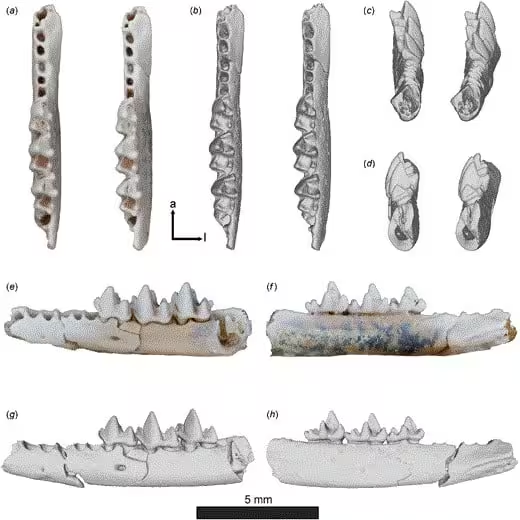
Analyses suggest that Miyumba chrisdickmani diverged from other dasyurids before any known member of the family, cementing its status as the most basal and oldest dasyurid discovered to date.
Timeline Pushes Dasyurid Roots Back
Integrating the fossil evidence with genetic data from living dasyurids, the researchers estimate that the broader dasyurid lineage emerged around 25.6 million years ago. This pushes the origin of the group back by roughly three million years compared with earlier timelines.
While the fossil record already included several later dasyurid forms, the presence of Miyumba chrisdickmani demonstrates that the family was established much earlier in Australia’s geological past.
“The fossil record contains 20 dasyurid species in eight genera that include living species and two genera that include only living species known from Australian Plio‑Pleistocene deposits,” Dr. Timothy Churchill, lead author of the study, and his colleagues from the University of New South Wales noted.
The new species bridges a temporal gap between the earliest dasyurid origins and the more recent fossils that have been easier to identify, confirming that ancient dasyurids already inhabited rainforest habitats.
Connections to New Guinea Rainforest Lineages
Dental comparisons reveal affinities between Miyumba chrisdickmani and present‑day rainforest marsupials of New Guinea, including members of the genus Murexia. This suggests a shared evolutionary heritage across the former supercontinent of Sahul.
“New Guinea has retained extensive rainforest cover since the Miocene, preserving a faunal assemblage that likely reflects the ecological structure of Sahul’s former lowland rainforests,” said the study authors.
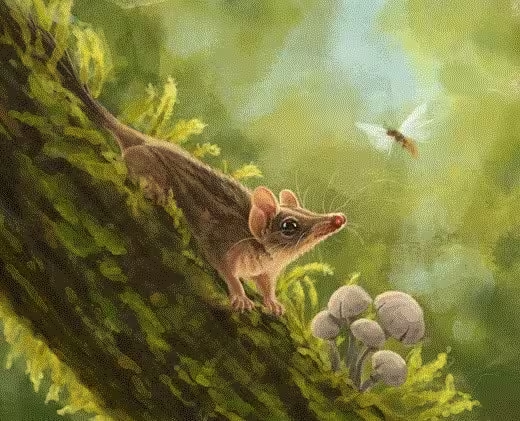
Because New Guinea has maintained large tracts of rainforest since the Miocene, its living marsupial communities may echo the ecosystems that once spanned the combined Australian‑New Guinea landmass known as Sahul.
The authors propose that Miyumba chrisdickmani represents another lineage that was once widespread across Sahul but later persisted primarily in New Guinea’s forested refugia.
This article has been fact checked for accuracy, with information verified against reputable sources. Learn more about us and our editorial process.
Last reviewed on .
Article history
- Latest version
Reference(s)
- <https://connectsci.au/az/article/45/2/AZ26024/274299/A-new-genus-of-dasyurid-Miyumba-chrisdickmani>.
- “Timothy Churchill, MD - Cardiology.” Massachusetts General Hospital <https://www.massgeneral.org/doctors/20927/tim-churchill>.
Cite this page:
- Posted by Elizabeth Taylor