Ancient Cambrian Fossil Unveils First Spider‑Like Jaws and Birth of Horseshoe Crab Gills
A 518‑million‑year‑old Chinese fossil reveals the earliest precursors of spider fangs and chelicerate pincers, uncovered by X‑ray microtomography.
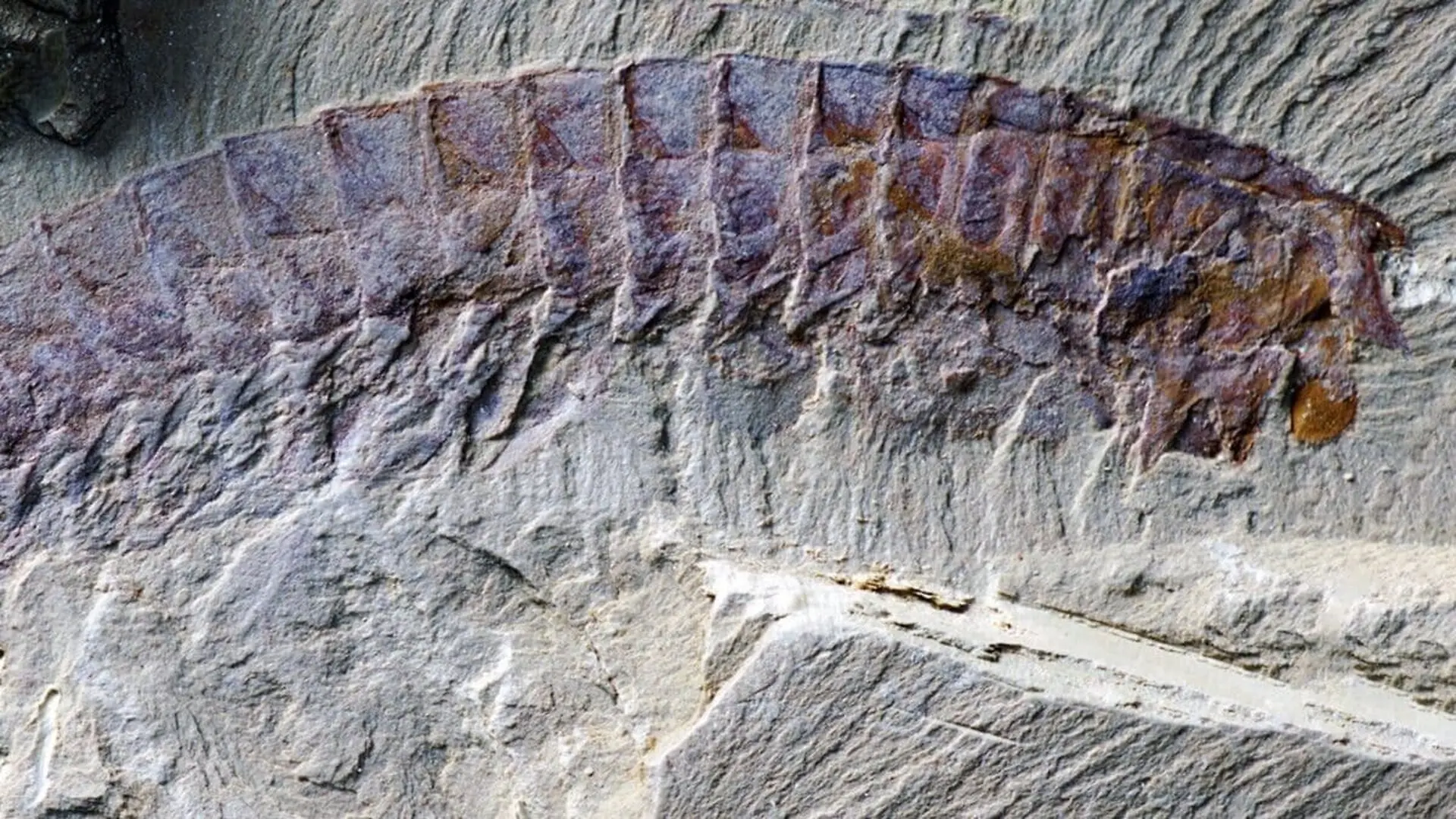
A newly described Cambrian arthropod from the Chengjiang Lagerstätte appears to sit at the root of the lineage that later diversified into spiders, scorpions, ticks and modern horseshoe crabs. The fossil also retains structures that bolster long‑standing ideas about how the distinctive book‑gill respiratory system of horseshoe crabs first evolved.
The specimens were extracted from the Chengjiang biota in Yunnan Province, one of the world’s most celebrated early‑Cambrian fossil sites. Their remarkable preservation captured internal details that have remained locked in stone for more than 500 million years.
A team from Yunnan University together with researchers at the University of Leicester applied high‑resolution X‑ray microtomography to generate three‑dimensional models of the creature without physically altering the rock. The concealed anatomical traits revealed by the scans proved decisive for positioning the animal within the early chelicerate family tree.
Ancient Fossil Sheds Light on the First Chelicerae
The animal, named Urokodia, measured only about 2–3 cm long and bore little resemblance to today’s spiders or scorpions. It featured a slender, segmented torso, several pairs of jointed limbs beneath the body, and prominent stalked eyes at the front of the head.
Because its external morphology offered few clues, scientists turned to X‑ray microtomography to explore the internal architecture. The scans uncovered exceptionally well‑preserved soft tissue—a rarity, since such material typically decays soon after death.
Most striking were a pair of short, pincer‑like appendages located just behind the eyes. According to the Nature paper, these structures represent an intermediate form between the great appendages of Cambrian megacheirans and the true chelicerae that characterize later chelicerates.
Phylogenetic analyses consistently positioned Urokodia as the earliest‑branching member of the upper stem‑group chelicerates discovered to date. The results bridge earlier megacheiran forms with more derived taxa such as Mollisonia and Megachelicerax, clarifying the sequence of anatomical innovations that gave rise to modern chelicerates.
Professor Yu Liu of Yunnan University, who led the investigation, described the moment the pincer‑like limbs were first visualized. “During X‑ray tomography we saw soft anatomy that had been sealed in rock for hundreds of millions of years, and the front‑located grasping appendages stood out immediately,” Liu explained. “It became clear we were looking at a very early relative of the chelicerates that include scorpions and spiders today.”
New Clues Connect Early Limb Structures to Book‑Gill Origins
Beyond the anterior appendages, the imaging revealed additional trunk‑limb structures that likely operated as primitive book gills—layered, plate‑like organs used by aquatic animals to extract oxygen from water. Modern horseshoe crabs still rely on comparable respiratory sheets.
The spatial arrangement of these limbs supports the proposal that book gills evolved from the trunk appendages of Cambrian megacheirans. The authors argue that this single fossil captures anatomical evidence for both the emergence of chelicerae and the development of book‑gill systems.
These fossils were recovered from the Chengjiang deposit, a site that preserves a richly diverse marine community from the early Cambrian. The study coincided with the 42nd anniversary of the Chengjiang discovery, a formation that has yielded over 200 distinct animal types and continues to illuminate the early diversification of complex life.
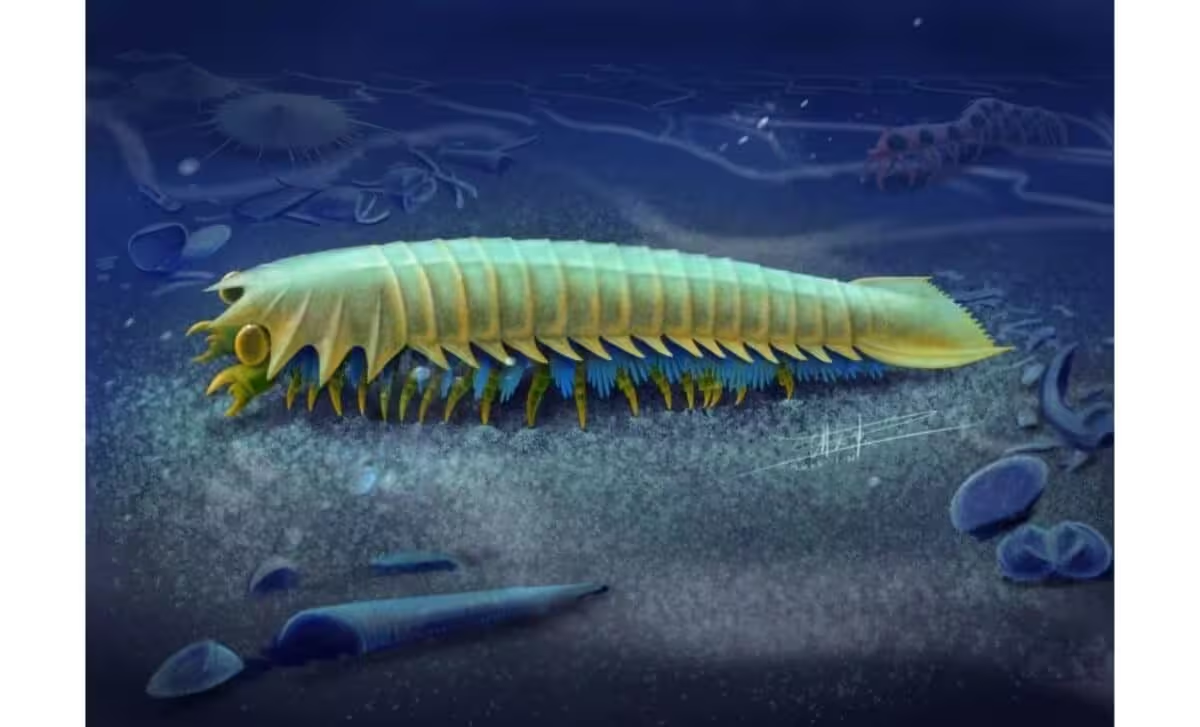
Co‑author Professor Mark Williams of the University of Leicester highlighted the broader ecological implications. “Urokodia was part of an ancient community that included more than 200 different animal species thriving in seas over half a billion years ago,” he said. “These exquisitely preserved fossils provide a window into the early experiments in animal evolution that set the stage for modern biodiversity.”
Overall, the discovery furnishes direct anatomical links between early Cambrian megacheirans and later chelicerate groups, offering a clearer view of how one of the most successful arthropod lineages originated.
This article has been fact checked for accuracy, with information verified against reputable sources. Learn more about us and our editorial process.
Last reviewed on .
Article history
- Latest version
Reference(s)
- Liu, Yu. “Urokodia sheds light on the origin of chelicerae and book gills of Chelicerata - Nature.”, July 1, 2026, pp. 1-6. Nature, doi: 10.1038/s41586-026-10713-2. <https://www.nature.com/articles/s41586-026-10713-2>.
- <https://www.researchgate.net/profile/Yu-Liu-172>.
- “Mark | University of Leicester.” University of Leicester <https://le.ac.uk/people/mark-williams>.
Cite this page:
- Posted by Elizabeth Taylor